

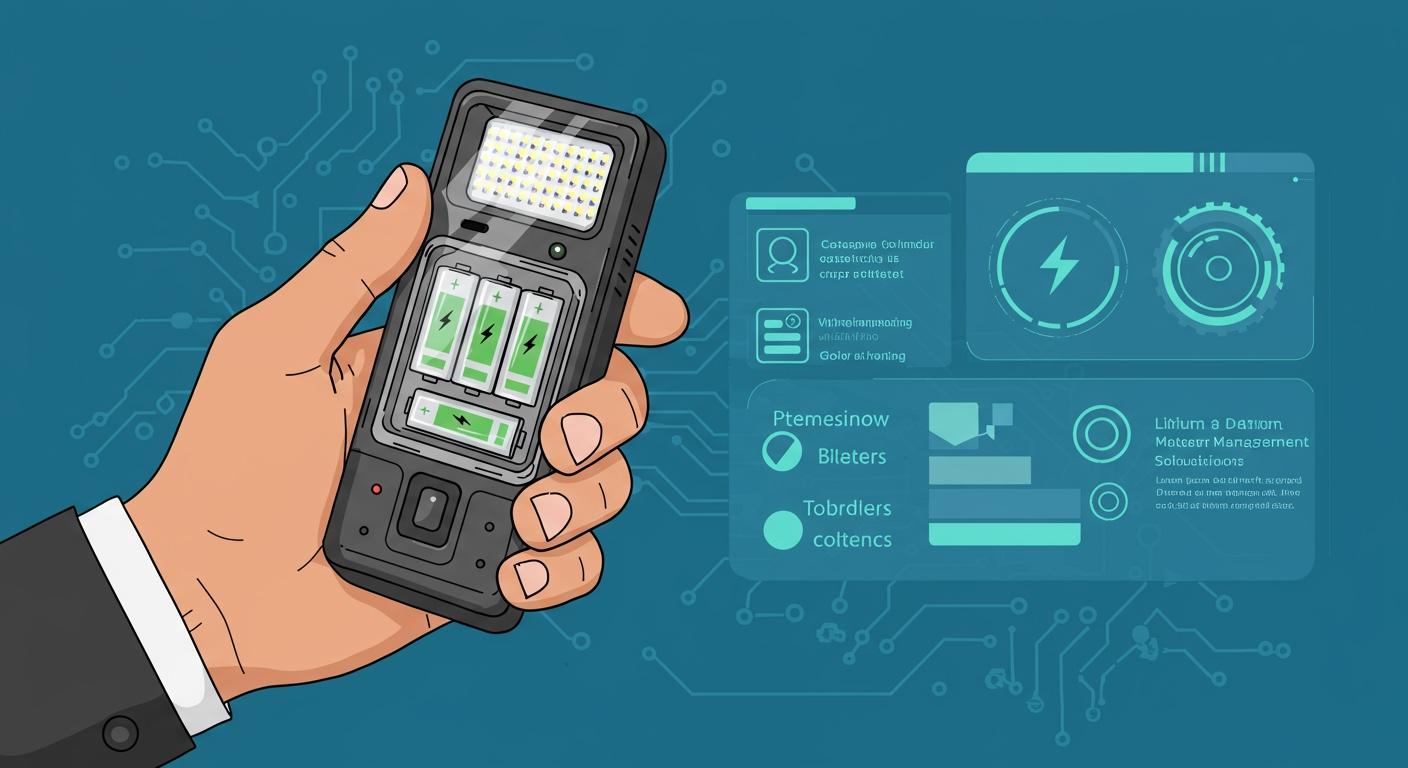
You need dependable options when picking a Portable Lighting Power Supply for your work. The worldwide portable lithium-ion battery market was worth USD 17.90 billion in 2023 and is still growing fast. Makers now use smart battery management systems to check battery health, temperature, and voltage all the time. These upgrades help stop dangerous problems and make batteries last longer. You can get the best mix of runtime and brightness by picking batteries with the right capacity and power output.
Key Takeaways
Know how much power you need for your lights. Different places, like hospitals or building sites, need different power levels.
Pick the best lithium battery for your use. Lithium-ion batteries are small and strong. LiFePO4 batteries last longer and are safer to use.
Always look for safety marks on batteries. Find labels like UL 1642 or IEC 62133-2. These show the battery is safe to use.
Use a battery management system, or BMS. A BMS checks battery health and stops it from getting too hot. This helps the battery last longer.
Follow good rules for charging and storing batteries. Charge batteries only part way. Store them half charged. Keep them in a cool and dry place.
Part 1: Portable Lighting Power Supply Needs

1.1 Power Requirements
It is important to know how much power each portable lighting power supply needs. In hospitals, portable lighting helps doctors during emergencies and when moving equipment. Robots use portable lighting to see better and fix things far away. Security teams use portable lighting to watch areas and set up quickly. Construction workers need strong lighting to build and fix things safely. People use portable lighting in gadgets and factories to stay safe and work well.
Most portable lighting uses lithium-ion battery packs. These batteries last a long time and store lots of energy. LED lights often use AC 100-277V or DC 10.8V or 24V. Battery size can change, but many use batteries from 4.0Ah to 9Ah. The table below shows some common voltage and battery sizes:
Product Type | Voltage Specifications | Battery Capacity |
|---|---|---|
LED Portable Explosion Proof Light | 10.8V (Battery), AC 100V/277V (Charger) | 10.8V, 9Ah |
LED Work Light Portable | Input Voltage: 100-277 Volt | N/A |
Deployable Lights | Voltage: AC 110-240 V | N/A |
LED Portable Explosion Proof Light SPOT/FLOOD | AC 100-277V, B24V-24V DC | Rated Capacity: 4.0Ah |
Different portable power stations can help with different lighting jobs. The chart below shows how much power and how long some models can run:

1.2 Reliability and Safety
Portable lighting power supplies must be safe and work well, especially for businesses. You need to follow rules like UL 924. This rule makes sure emergency lights and batteries work right and are safe. These rules help your lights turn on if the power goes out and make sure they are bright enough.
You should test and check your batteries and lights often. This keeps them ready for emergencies. Look for safety labels on lithium batteries, like UL 1642, UL 2054, and IEC 62133-2. The table below lists some important safety rules for lithium battery devices:
Standard | Description |
|---|---|
UL 1642 | Standard for Lithium Batteries |
UL 2054 | Standard for Household and Commercial Batteries |
UL 1989 | Standard for Valve Regulated or Vented Batteries |
UL 4200A | Standard for Products Incorporating Button Batteries or Coin Cell Batteries |
UL 2271 | Standard for Batteries for Use in Light Electric Vehicle (LEV) Applications |
UL 2056 | Standard for Power Banks |
UL/CSA/IEC 60950 | Standard for Information Technology Equipment |
UL/CSA/IEC 60065 | Standard for Audio, Video and Similar Electronic Apparatus |
IEC 62133-1 | Safety Requirements for Portable Sealed Secondary Cells – Nickel Systems |
IEC 62133-2 | Safety Requirements for Portable Sealed Secondary Cells – Lithium Systems |
Tip: Always pick lithium-ion battery packs with the right safety labels. Charge and check them often. This helps your batteries last longer and keeps you safe.
Part 2: Lithium Battery Types
2.1 Li-ion vs. LiFePO4
When picking lithium batteries for portable lighting, you usually look at lithium-ion battery packs and lithium iron phosphate (LiFePO4) batteries. Each battery type has its own good points. Li-ion cells have more energy in a smaller and lighter size. This makes them great for small lighting devices. LiFePO4 batteries last much longer. They can work for up to 10 years or even more. This makes them a good choice for projects that need batteries to last a long time.
Here is a table that shows the main differences between these two battery types:
Battery Type | Energy Density | Cycle Life |
|---|---|---|
Higher energy density | Lower cycle life | |
Lower energy density | Higher cycle life (up to 10 years or more) |
You should also think about thermal runaway risk. Li-ion cells can get too hot if not managed well. This can cause safety problems. LiFePO4 batteries are less likely to have this problem. This makes them safer for important lighting jobs.
2.2 Selection Criteria
To pick the right battery for your portable lighting, you need to look at a few things. Make sure the battery voltage and capacity fit your device. Always check for safety certifications like MSDS, UN38.3, and RoHS. These show the battery is safe to use.
Here are some key points to help you choose:
Make sure the battery voltage and power match your lighting system.
Pick the battery size based on how long you want the lights to work.
Use li-ion cells if you need a small and powerful battery.
Choose LiFePO4 batteries if you want them to last longer and need less care.
Always check for safety certifications to lower the risk of thermal runaway.
Think about the battery’s size and weight. Light weight li-po cells make your lights easier to carry and set up.
Think about long-term savings. LiFePO4 batteries cost more at first but save money because you do not need to replace them often.
Criteria | Description |
|---|---|
Voltage and Capacity Matching | Ensure the battery voltage and capacity align with the device requirements. |
Safety Certifications | Look for certifications like MSDS, UN38.3, and RoHS to ensure safety standards are met. |
Battery Chemistry | Choose stable chemistries such as Lithium Iron Phosphate (LFP) for safety and longevity. |
Cycle Life Ratings | Evaluate how many charge cycles the battery can handle before performance degrades. |
Maximum Depth of Discharge | Consider how deeply the battery can be discharged without damage. |
Reputable Brands | Opt for batteries from well-known manufacturers to ensure quality and reliability. |
Note: Lightweight li-po cells and small battery packs make your lights easy to move. Rechargeable batteries and solar charging help you use lights in far away places.
Part 3: Portable Lighting Power Supply Solutions
3.1 Integrated Battery Packs
Integrated battery packs are good for portable lighting. They are simple and small. These packs have the battery, controls, and sometimes the charger together. Many use lithium batteries because they last long and store lots of energy. You can find these packs in products like the RADIANZ BATT-LI series. These are made for quick setup and easy use.
Here is a table with main features of integrated battery packs for portable lighting:
Feature Description | Details |
|---|---|
Power Source | Powered by 8 AA batteries (not included) |
Compatibility | 100% compatible with AMP® fixtures |
On/Off Switch | Prevents unintended battery discharge |
Carrying Pouch | Includes carrying pouch with belt clip |
Testing Capability | Suitable for testing individual fixtures or small limited runs up to 25W |
Integrated battery packs are best for small jobs or when you move lights a lot. They are easy to carry because of their small size. The on/off switch stops battery drain. This keeps you safe and helps the battery last longer. Always look for safety labels before using them. Safety labels show the battery meets strict rules.
3.2 Modular Systems
Modular battery systems give you more choices and flexibility. You can add or take away battery modules to fit your needs. This works well for big lighting setups or different LED lighting systems like 12V, 24V, or 350mA. Modular systems often use lithium iron phosphate batteries(LiFePO4). These batteries last longer and are safer.
Here is a table comparing modular and integrated battery packs:
Feature | Modular Battery Packs | Integrated Battery Packs |
|---|---|---|
Scalability | Easy expansion or reduction by series and parallel. | Limited scalability. |
Customization | Customizable configurations for specific needs. | Less customizable. |
Space Requirement | May require more physical space. | Typically more compact. |
Modular battery systems have many benefits in the field:
Advantage | Description |
|---|---|
Faster Recovery Times | Quick repairs lead to improved recovery times, enabling rapid deployment in critical situations. |
Enhanced Reliability | Modular systems can be quickly repaired or replaced, ensuring consistent performance. |
Scalability | Modular designs allow for easy expansion or reduction of capacity based on needs. |
Cost Savings | Long-term savings from avoiding overprovisioning and aligning investments with actual consumption. |
Sustainability | Modular systems can be designed to be more environmentally friendly, reducing waste. |
Adaptability | Flexibility in design allows for adjustments based on changing requirements in the field. |
Reduced Lifetime Costs | Modular systems may have higher initial costs but lead to savings over time. |
Flexibility | Users can adjust their energy storage based on actual consumption rather than upfront overprovisioning. |
You can use modular systems for different LED voltage needs. This helps control heat better and makes cables smaller. It also helps your lights work better and last longer. Here is a table that shows these benefits:
Benefit | Description |
|---|---|
Reduced heat generation | Easier thermal management due to higher bus voltage. |
Reduced cabling | Saves costs, size, and weight by using 48V instead of lower voltages. |
Increased LED performance | Improves display quality with higher efficiency. |
Longer panel life | Enhances reliability over the equipment’s lifetime. |
Higher power efficiency | Lowers overall power usage, making systems more sustainable. |
Always use a battery management system with modular setups. This system checks voltage, current, and temperature. It keeps you safe and helps batteries last longer. Test your batteries often to stop problems and keep them working well.
3.3 Charging Options
There are many ways to charge portable lighting power supplies. DC charging is fast and works well. Some products, like Goal Zero power stations, work with both 12V and 24V LED lights. You can also use solar panels for places without power. Solar panels like Goal Zero Nomad 50 or FlexSolar 40W give clean energy. They can connect to portable power stations.
Here is a table of popular charging options for portable lighting:
Product Name | Output Types | Notes |
|---|---|---|
Goal Zero Nomad 50 | USB-A, DC | Compatible with portable power stations, can connect multiple panels. |
Goal Zero Nomad 20 | USB-A, DC | Compatible with portable power stations, can connect multiple panels. |
FlexSolar 40W | USB-A, DC | High-output model, easy to set up, capable of 19 watts output. |
BigBlue SolarPowa 30 | USB-A, DC | Multiple output types for various devices. |
Blavor 30W Foldable | USB-A, DC | Multiple output types for various devices. |
Smart charging features protect batteries from getting too full or too hot. Always use a battery management system to watch charging and discharging. This keeps you safe and helps batteries last longer. Test your charging systems often to make sure they work right.
Tip: Pick charging options that match your lighting system’s voltage and current. Solar charging is a good way to get clean energy in places without power.
Part 4:Battery Management Systems
Battery management systems, or BMS, are very important for portable lighting that uses lithium battery packs. You need a BMS to watch over your batteries and keep them safe. This helps your batteries last longer and work safely. If you want to learn more about BMS and PCM, check out our BMS and PCM solutions page.
4.1 Monitoring Features
A BMS checks important things all the time. It gives you updates on voltage, current, and temperature for each cell. This helps you find problems early and stop failures. The table below lists the main things a BMS watches:
Feature | Description |
|---|---|
Continuous Cell Monitoring | Monitors voltage, current, and temperature at the cell level to detect deviations from normal conditions. |
Safety Protection Systems | Implements overvoltage, undervoltage, and overcurrent protections to prevent dangerous conditions. |
Cell Balancing Technology | Ensures all cells operate at similar capacities to enhance performance and safety. |
Advanced BMS units check these things many times every second. This is like having a health monitor for your battery packs. It helps your batteries last longer and keeps them working.
4.2 Protection Functions
BMS protection keeps your lithium battery packs safe and working well. These systems do many things to help you:
Watch each cell’s temperature and act before it gets too hot.
Turn off power right away if a cell gets too hot.
Slow down charging or discharging to stop fast heating.
Shut down parts or all of the system if it gets too hot.
Warn you with lights or messages about the system.
Hardware and software work together to keep things safe. This stops cells from getting old too soon and keeps battery life steady. Good thermal protection keeps batteries at the right temperature, which is very important for safety and battery life.
4.3 Charging Best Practices
Charging your lithium battery packs the right way helps them last longer. Here are some best ways to charge:
Use the charger that comes with your battery or one that works with it.
Charge the battery partway instead of all the way to make it last longer.
Do not let the battery run out all the way to keep it working well.
Keep your device’s software updated for better charging.
Charge between 68-77ºF to stop overheating.
Store batteries at about half charge if you will not use them for a while.
Change old batteries when needed to keep things working.
How you charge your battery affects how well it works and how safe it is. Fast charging can be risky and cause problems like overheating. Always follow the maker’s rules and do not charge in very hot or cold places. This helps your battery last longer and keeps it safe.
Tip: Charging too much can make batteries too hot and not last as long. Always follow the right charging steps for the best results.
4.4 Storage and Maintenance
Storing and taking care of your batteries the right way helps them last longer. You should:
Store lithium batteries at about half charge to stop them from losing power.
Wipe battery ends with a soft cloth to stop rust.
Keep batteries in a cool, dry place to slow down aging.
Good storage lowers the chance of fire or overheating, especially with big batteries. You also help your batteries last longer by using the right chargers and not letting them run out all the way. Checking your batteries often makes sure they stay safe and work well for your lighting needs.
Picking the right lithium battery pack helps your lights work well. These batteries are light and hold a lot of energy. They are also safe to use. You need a battery management system to stop overheating and overcharging. Here are some easy tips to follow:
Check emergency lights every month and change batteries if needed.
Keep batteries at normal temperatures and half-charged.
Always use chargers that are approved.
Key Aspect | Description |
|---|---|
Energy Density | High for portable lighting needs |
Battery Management | Prevents safety risks and extends lifespan |
Compliance | Meets UL and ANSI standards |
If you want a special solution, talk to our team here. You can also look at our technical FAQ for more help.
FAQ
What are the main benefits of using lithium battery packs in portable devices for industrial lighting?
Lithium battery packs hold a lot of energy and last a long time. They give steady power to portable devices. These packs make lights lighter and easier to carry. They also help keep workers safe and stop work from being delayed.
How do battery management systems improve safety in portable lighting applications?
Battery management systems check voltage, current, and temperature in portable devices. They stop batteries from getting too full or too hot. This lowers the chance of fire and helps batteries last longer. Safety features help you follow important rules for portable lighting.
Why should you choose LiFePO4 over other lithium chemistries for portable devices?
LiFePO4 batteries have a platform voltage of 3.2V and energy density of 90-120 Wh/kg. They last for more than 2,000 cycles. These batteries are stable and very safe. They are good for portable devices that need to work well for a long time.
Chemistry | Platform Voltage | Energy Density (Wh/kg) | Cycle Life (cycles) |
|---|---|---|---|
Li-ion | 3.7V | 150-200 | 500-1,000 |
LiFePO4 | 3.2V | 90-120 | 2,000+ |
Where can you get expert advice on custom lithium battery packs for portable devices?
You can talk to Large Power for special help. Their team can help you make safe and strong lithium battery packs for any portable device or lighting system.


