
Industrial Lithium Battery Solutions for Critical Equipment
Power different industrial applications from surveying machine to power tools and monitor devices.
- Li-ion
- LiPo
- LiFePO4
- Low Temperature

Industrial battery solutions
Lithium battery solutions for industrial applications provide reliable, durable, and high-performance power to support continuous operation of critical equipment. Compared with traditional lead-acid batteries, lithium batteries offer higher energy density, longer service life, and rapid charging, making them ideal for automated machinery, AGVs, forklifts, data centers, power tools, and other industrial systems that demand stable and efficient energy. With strong adaptability to harsh environments such as high temperatures, dust, vibration, and heavy-duty usage, lithium batteries reduce downtime, lower maintenance costs, and ensure safety and productivity in modern industrial operations.
Customer Pain Points
Production Disruption – Power outages or grid instability can stop critical machinery, causing costly downtime.
Short Battery Lifespan – Traditional lead-acid UPS batteries degrade quickly, requiring frequent replacement and driving up OPEX.
Space & Weight Limitations – Industrial facilities often need compact, modular battery systems that can fit into existing UPS cabinets.
High Safety Requirements – Batteries must operate safely under heavy load, with low fire risk in sensitive industrial environments.
Solutions:
Large Power develops custom lithium battery packs for industrial backup applications. Define backup duration, DC voltage window, load profile, charger compatibility and installation limits before selecting the architecture.
Transfer time and uninterrupted operation depend on the complete UPS and power-path design, not the battery pack alone. Validate mains-loss, recovery and protection transitions with the actual equipment. Cycle life and maintenance benefits require model-specific evidence and stated operating conditions.
Smart Industrial Power – Reliable Backup for Critical Operations
Industrial backup power requirements should be verified with the complete system:
- Measure transfer time and confirm the permitted host response during mains loss and restoration.
- Validate backup runtime at the required temperature and service age.
- Review BMS monitoring and communication functions against the host interface specification.
- Agree on inspection, replacement and recovery procedures. Cost savings and service life depend on the actual duty and maintenance plan.
Battery and Electrical Configuration
- Select chemistry, series count and capacity from the UPS input window, required power and backup duration.
- Check full-charge voltage, low-SOC sag and available energy at the intended service age.
BMS and Power-Path Integration
- Define protection thresholds, balancing, SOC reporting and the CAN or RS-485 interface where required.
- Validate source transfer and restart at system level. A BMS does not itself guarantee uninterrupted power or prevent every thermal fault.
Mechanical and Document Review
- Confirm enclosure fit, retention, insulation, cooling and cable interfaces.
- Review battery safety, transport and market documentation for the exact model and use. No blanket certification is implied for every custom pack.
Customer Pain Points
- Define the actual dust, moisture, vibration and temperature exposure for the intended equipment.
- Where an explosive atmosphere is present, identify the jurisdiction, equipment classification and required protection concept before selecting a battery system.
- Specify the measured continuous and peak loads, runtime and charging or replacement procedure.
- Separate ordinary industrial use from hazardous-location deployment; requirements are not interchangeable.
Solutions
Large Power can assess custom battery requirements for mining-related inspection, monitoring and industrial equipment. Chemistry, pack size, current capability and enclosure design must be matched to the actual equipment duty.
LiFePO4 chemistry and a monitoring BMS do not establish intrinsic safety or explosion protection by themselves. For hazardous locations, confirm the exact assembly, protection concept and applicable certification scope before deployment.
Smart Industrial Power – Reliable Energy for Mining
For mining-related applications, define runtime and replacement intervals using measured loads and service-age criteria. Validate enclosure sealing, vibration, thermal behavior and connection handling under specified conditions.
Remote monitoring, firmware updates, IP ratings and hazardous-location approvals are model- and project-specific. Confirm documented capabilities and acceptance tests rather than assuming these features are included in every pack.
Battery Cell Configuration
- Select chemistry, voltage window and capacity from equipment load and environmental requirements.
- Specify cycle-life acceptance conditions; chemistry alone does not establish pack life or hazardous-location suitability.
BMS and System Safety
- Define current, voltage and temperature limits, fault responses and recovery.
- Assess the complete equipment protection concept where explosive atmospheres are possible. Monitoring is not equivalent to intrinsic-safety certification.
Mechanical and Compliance Review
- Verify retention, sealing, shock, vibration, corrosion and thermal provisions for the finished assembly.
- Check ATEX or IECEx approval for the exact product, classification and conditions of use. Transport and general battery safety evidence do not replace hazardous-location approval.
Check Out Our Technology
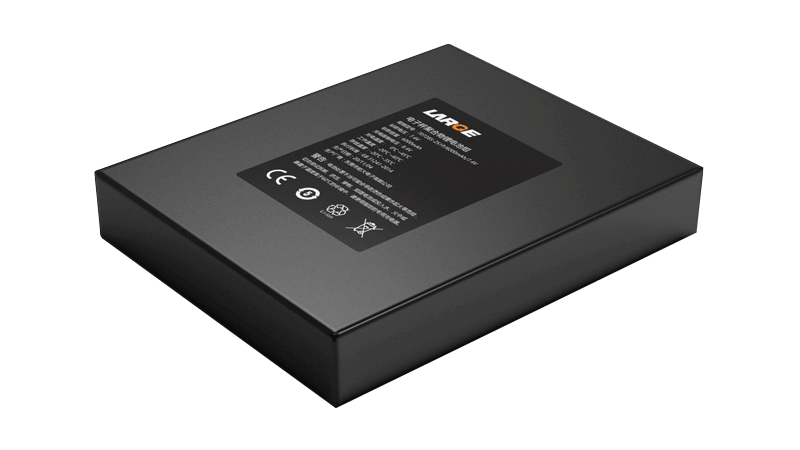
7.4V 6000mAh polymer lithium battery pack for electronic scale
7.4V 6000mAh polymer lithium battery pack for electronic scales—long runtime, stable 2S output for precise readings; BMS protection, wide-temperature, customizable leads.
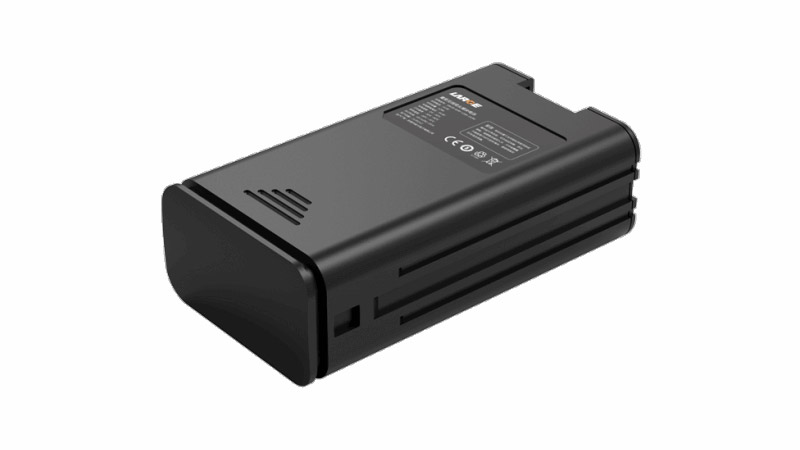
Lithium battery for infrared thermal imager
Lithium battery for infrared thermal imagers—long runtime, low-temp stability, steady power for high-rate imaging, BMS protections, rugged, customizable.

Lithium battery pack for ultrasonic flaw detection equipment
Lithium battery pack for ultrasonic flaw detection equipment—long runtime, low-noise stable power for high-frequency pulses; wide-temperature, BMS protection, durable, customizable.

Application scenarios
Industrial battery solutions can be widely applied in industries such as intelligent manufacturing, energy, power, transportation, communication, and mining, covering key scenarios like AGV material handling robots, communication base stations, UPS uninterruptible power supplies, microgrid energy storage systems, rail transit vehicles, and heavy mining equipment. These fields usually put forward higher requirements for the stability, continuity and environmental adaptability of power supply systems. Industrial batteries, with their advantages of high energy efficiency, long life, resistance to high and low temperatures, and fast charging and discharging, have become the ideal choice to ensure the stable operation of the system.
System composition
A complete industrial battery system typically consists of high-performance lithium battery cells (such as lithium iron phosphate, ternary lithium, lithium titanate, etc.), an intelligent BMS battery management system (with temperature control, overvoltage/overcurrent/short circuit protection and remote communication functions), standardized modules or frame structures (such as 48V/96V/240V battery packs), an industrial charging system and necessary conversion devices . The system can be combined in series and parallel according to different application scenarios, featuring excellent scalability and compatibility, and can be embedded in various industrial control or energy storage platforms.


Service System
Discuss project scope, engineering support, sample and production milestones, documentation and after-sales arrangements with our team. Agree on response times, installation responsibilities and any on-site support in the quotation; availability and lead times depend on the project and destination.
Professional knowledge of the battery life cycle
Industrial battery projects require controlled specifications, cell and component traceability, documented verification and change control. Review quality-system certification separately from model-specific battery test reports and market conformity documentation.
Define electrical, environmental, mechanical and fault-response tests for the actual application. Harsh-environment performance must be demonstrated against agreed acceptance criteria. Do not assume all packs share the same temperature range, lifetime, ingress rating or regulatory approval.

ISO 9001

UL Certification

IEC Certification

CB Certification

European Union CE

FCC
Join the industrial power revolution
Are you ready to upgrade your industrial equipment project?
Share the equipment voltage window, measured load profile, backup or runtime requirement, mechanical limits and target markets. Our team can review the battery concept, required validation and proposed supply plan with you.
WHAT OUR PARTNERS SAY
FAQ – Battery Solutions for Industrial Applications
LiFePO4 batteries provide 3–4 times longer cycle life (4000+ cycles), higher energy efficiency, and faster charging compared to lead-acid. For industrial UPS, forklifts, and mining equipment, this means reduced downtime, lower total cost of ownership (TCO), and improved safety.
Yes. Our batteries are designed with high-discharge capability, supporting heavy-duty equipment such as forklifts, conveyors, and drilling machines. Advanced BMS ensures stable output even under peak current loads.
Our industrial packs feature IP54–IP67 rugged housings, vibration-resistant design, and corrosion-proof coating. They operate reliably in dusty, humid, high-vibration, or extreme temperature environments (−30 °C to +70 °C).
Yes. Our modular designs (48V, 72V, 96V, etc.) allow parallel or series connection for capacity expansion. This makes them adaptable for small-scale factory UPS to large mining equipment.
Absolutely. Our BMS supports CAN, RS485, and Modbus protocols, allowing integration with SCADA, PLCs, and fleet management systems. Remote monitoring provides real-time data on SOC, SOH, temperature, and alarms.
All industrial solutions comply with UN38.3, IEC62619, CE, and RoHS, with optional certifications such as ATEX/IECEx for mining environments or UL1973 for energy storage. This ensures safe global deployment.
Industrial Battery Engineering Resources
Explore practical battery-system guidance for inspection, testing, communications, backup power, and harsh-environment equipment.
Low-Temperature Battery Solutions
Cell and pack engineering for dependable operation in cold storage, outdoor sites, and severe climates.
BMS and PCM Engineering
Protection, cell balancing, diagnostics, and communication for reliable industrial battery systems.
Custom Battery Development
Match chemistry, voltage, enclosure, connectors, and charging strategy to your industrial equipment.


