

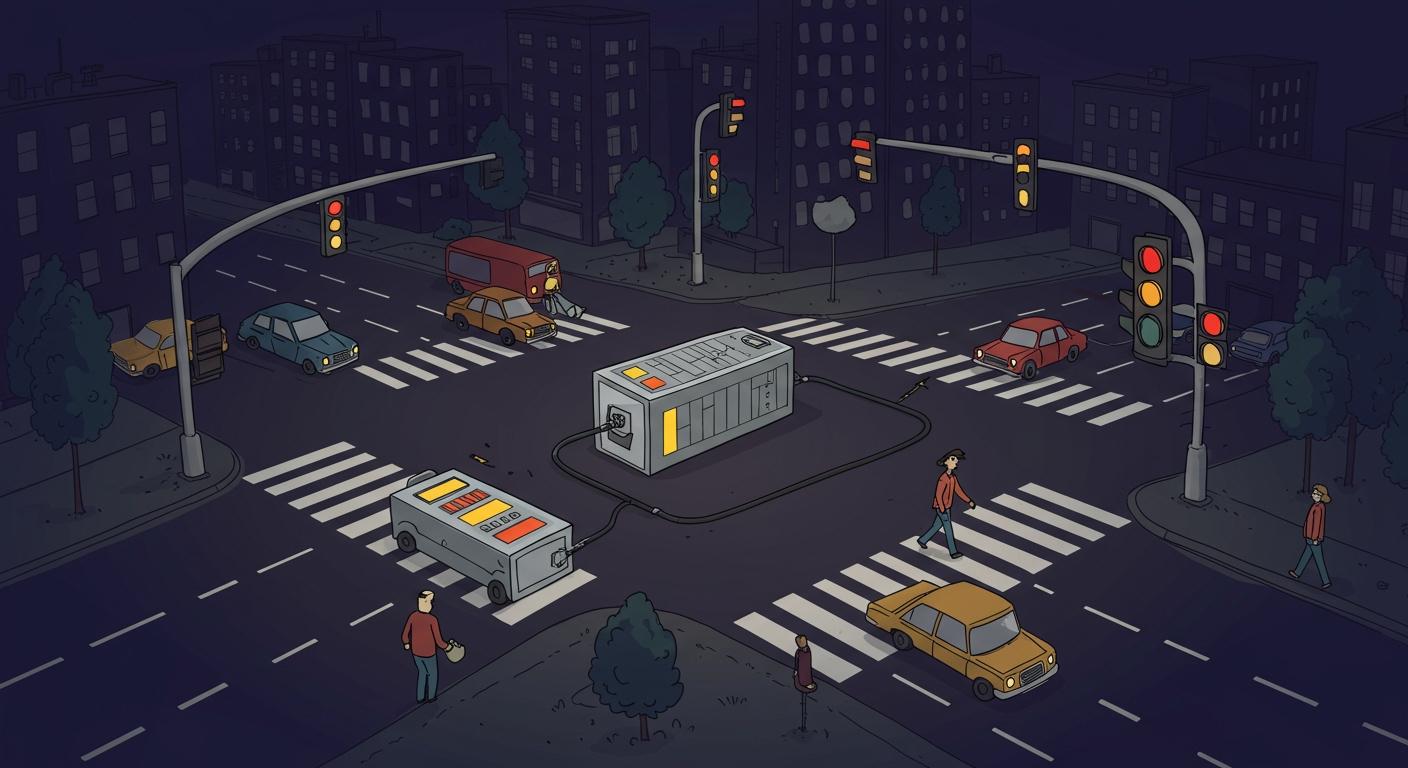
You rely on traffic signals to guide every intersection, even when the grid fails. Lithium battery backup systems, featuring rapid charging and automatic activation, keep signals operational through eight to ten outages each year. This endurance artifact ensures public safety and smooth traffic flow, reinforcing resilience in urban traffic management.
Traffic signals remain functional during power disruptions.
Congestion and safety risks decrease with reliable backup systems.
Key Takeaways
Lithium battery backup systems keep traffic signals operational during power outages, enhancing public safety and reducing congestion.
These systems recharge quickly, ensuring minimal downtime and continuous traffic flow, even during extended outages.
Investing in lithium battery packs leads to lower maintenance costs and longer service life, making them a smart choice for urban infrastructure.
Part1: Endurance Artifact in Traffic Signals

1.1 Lithium Battery Backup Overview
You depend on traffic signals to operate reliably, even when the power grid fails. The Endurance Artifact concept captures the reliability and resilience that lithium battery backup systems bring to urban intersections. These systems use advanced lithium chemistries such as LiFePO4, NMC, LCO, LMO, and lithium-polymer, each offering unique platform voltages, energy densities, and cycle lives. For example, LiFePO4 batteries deliver a platform voltage of 3.2V, energy density of 90-160 Wh/kg, and cycle life exceeding 2,000 cycles. NMC batteries provide 3.7V, 150-220 Wh/kg, and up to 2,000 cycles. You can explore more about lithium-ion batteries, LiFePO4, NMC, LCO, LMO, LTO, solid-state, and lithium-polymer.
Lithium battery backup systems for traffic signals consist of several key components:
Battery backup system: Delivers complete backup power for traffic signal equipment.
Power transfer switch: Instantly shifts electrical load to backup during outages.
Maintenance-free batteries: Housed in outdoor-rated enclosures for durability.
Utility power connection: Supports standard terminal blocks or generator power.
Optional bypass switch: Enables service without interrupting signal operation.
These systems supply up to 4,000 watts of pure sine wave power, maintain controller memory during outages, and protect all loads with breakers and fuses. You gain uninterrupted operation at critical intersections, reducing the need for manual traffic direction and preventing costly reprogramming.
Component | Description |
|---|---|
Battery Backup System | Provides a complete backup power solution for traffic signal equipment. |
Power Transfer Switch | Transfers the signals’ electrical load to the backup system if utility power is lost. |
Maintenance-Free Batteries | Housed in an outdoor-rated enclosure, ensuring durability and reliability. |
Utility Power Connection | Allows connection for normal utility power using standard terminal blocks or generator power. |
Optional Bypass Switch | Redirects utility power to the load, allowing for service without disrupting traffic signal operation. |
1.2 Endurance Artifact Benefits
You experience the true value of the Endurance Artifact when lithium battery backup systems activate automatically during sudden power outages. Intelligent battery management systems monitor power levels and switch to backup mode instantly, eliminating delays and manual intervention. This rapid response ensures that traffic signals continue to operate, even during natural disasters, supporting urban infrastructure resilience. Facilities maintain continuous and reliable power, which is essential for public safety and operational continuity.
Lithium battery backup systems have demonstrated the ability to power traffic signals for up to 20 hours, covering extended outages and nighttime operations.
These systems maintain the memory of traffic signal controllers, preventing the need for reprogramming after outages.
You benefit from reduced maintenance, as the batteries are designed to be maintenance-free and housed in robust enclosures.
Safety remains a top priority. Lithium battery backup systems comply with international certifications and standards, including UL 991, UL 1973, UL 1989, IATA/UN DOT/UN 38.3, IEC 62133, ISO/FDIS 12405-3, SAE J2464, SAE J2929, CNS 15364, CNS 15387, CE Marking, KC Mark, PSE Mark, ANATEL Certification, and GS Mark. These certifications guarantee safe operation and transport, supporting your commitment to responsible sourcing and sustainability. For more on sustainability, visit our approach. Review our conflict minerals statement for details on ethical sourcing.
You see the Endurance Artifact at work not only in traffic signals but also in medical devices, robotics, security systems, infrastructure, consumer electronics, and industrial sectors. The resilience and reliability of lithium battery backup systems make them a critical line of defense for intersection safety and urban infrastructure, especially during emergencies.
Part2: Ensuring Smooth Traffic Flow

2.1 Rapid Charging System
You need traffic signal backup systems that recharge quickly and safely. The Endurance Rapid Charging System uses advanced lithium battery chemistries, such as LiFePO4, NMC, LCO, LMO, and LTO, to deliver fast, reliable energy replenishment. These chemistries offer high platform voltages, energy densities, and long cycle lives, which means you can restore full backup capacity in a fraction of the time compared to traditional systems.
A rapid charging system maximizes your investment in traffic signal infrastructure. You reduce downtime between outages, ensuring that intersections remain protected even during frequent or prolonged power disruptions. The system’s intelligent battery management monitors charging rates and temperature, preventing overheating and extending battery life. This technology supports your operational goals by minimizing the risk of unexpected failures and reducing the need for emergency maintenance.
Tip: Choose lithium battery packs with built-in safety features and certified compliance to ensure both rapid charging and long-term reliability.
2.2 Operational Efficiency
Uninterrupted operation of traffic signals plays a vital role in road safety and energy resilience. When your signals stay active during power outages, you prevent confusion at intersections and lower the risk of accidents. The following table highlights the impact of reliable battery backup systems on road safety:
Evidence Type | Description |
|---|---|
Reliable Performance | Traffic signals that remain functional during power outages prevent confusion at intersections and reduce collision risks. |
Emergency Response | Maintaining traffic control during outages facilitates quicker emergency response efforts. |
Battery Backup Systems | Systems with battery backups ensure traffic signals operate even when grid power fails, keeping intersections safe. |
You benefit from continuous operation, which supports emergency services and keeps traffic flowing smoothly. The Endurance Artifact in your traffic management system ensures that even during severe weather or grid failures, intersections remain safe and efficient.
Maintenance requirements decrease with lithium battery backup systems. These batteries are designed for long service life and minimal upkeep. You avoid frequent replacements and reduce labor costs, which improves your overall operational efficiency. The robust design of lithium battery packs also means fewer disruptions and less time spent on repairs.
You can apply these solutions across various sectors, including medical, robotics, security systems, infrastructure, consumer electronics, and industrial applications. The same principles that keep your traffic signals running can enhance reliability and safety in these fields as well.
Note: Investing in lithium battery backup systems not only safeguards your intersections but also strengthens your city’s energy resilience and public safety record.
Part3: Comparison and Implementation
3.1 Lithium vs. Traditional Backup
You face a critical decision when selecting backup systems for traffic signals. Lithium battery packs, including LiFePO4, NMC, LCO, LMO, LTO, solid-state, and lithium-polymer batteries, deliver superior performance compared to traditional lead-acid systems. The following table highlights key differences:
Feature | Lead-acid Batteries | |
|---|---|---|
Lifespan | Longer lifecycle, preferred for high performance | Shorter lifespan, requires frequent maintenance |
Total Cost of Ownership | Declining costs, lower maintenance needs | Low upfront cost, but higher long-term costs due to maintenance and replacement |
Weight | Lightweight design | Heavier, impacting installation and transport |
Environmental Impact | More sustainable alternatives | Environmental concerns with lead disposal |
You gain longer service life, reduced maintenance, and improved sustainability with lithium battery packs. These systems support smart city initiatives and integrate seamlessly with intelligent transportation networks, enhancing urban mobility and energy management.
3.2 Deployment Best Practices
You maximize reliability and efficiency by following proven deployment strategies. Use weather-resistant enclosures to shield batteries from moisture and dust. Ensure proper ventilation to prevent overheating and extend battery life. Install surge protectors to guard against power surges. Implement Battery Management Systems (BMS) for real-time monitoring and timely interventions.
Best Practice | Description |
|---|---|
Weather-resistant enclosures | Protect batteries from environmental hazards like moisture and dust, ensuring consistent performance. |
Proper ventilation | Prevents overheating, which can damage batteries and reduce lifespan. Regular checks are essential. |
Surge protectors | Safeguard against power surges that can disrupt operations and damage batteries. |
Smart monitoring systems | Provide real-time data on battery health, enabling timely interventions and reducing downtime. |
Energy-efficient LED modules | Reduce power demand on batteries, extending their life and minimizing flicker. |
High-quality batteries | Offer better performance and longevity, reducing maintenance costs and ensuring efficiency. |
You should also maintain batteries by keeping terminals clean, inspecting charge status, and monitoring run time. Replace batteries when performance drops below 80% of the original run time. Conduct regular inspections for physical damage and maintain consistent storage temperatures. These practices ensure optimal results for traffic signals and other applications in medical, robotics, security, infrastructure, consumer electronics, and industrial sectors.
💡 Tip: Advanced lithium battery packs support renewable energy integration and smart city technologies, helping you future-proof your urban infrastructure.
You see the Endurance Artifact in action as lithium battery backup systems deliver uninterrupted traffic flow, rapid charging, and long operational times. Cities report safer evacuations and efficient maintenance. The table below highlights how rapid charging and flexible capacities support your urban management goals.
Feature | Description |
|---|---|
Rapid Charging | Full charge in one hour for continuous operation |
Flexible Capacity | Tailored solutions for diverse intersection needs |
You support sustainability by integrating lithium chemistries like LiFePO4, NMC, LCO, LMO, and LTO. These solutions align with trends in infrastructure, medical, robotics, and industrial sectors. For tailored solutions, request a custom battery consultation.
FAQ
What advantages do lithium battery chemistries like LiFePO4, NMC, LCO, LMO, and LTO offer for traffic signal backup?
You benefit from high platform voltages (3.2–3.7V), energy densities (90–220 Wh/kg), and long cycle lives (up to 2,000 cycles), ensuring reliable, long-term operation.
How can you customize a lithium battery backup solution for your infrastructure project?
You can request a custom battery consultation with Large Power here. Experts will tailor solutions for medical, robotics, security, or industrial applications.
Why should you choose lithium battery packs over traditional options for B2B applications?
You gain longer service life, rapid charging, and reduced maintenance. Lithium battery packs support critical infrastructure, medical devices, and industrial systems with superior reliability.


