

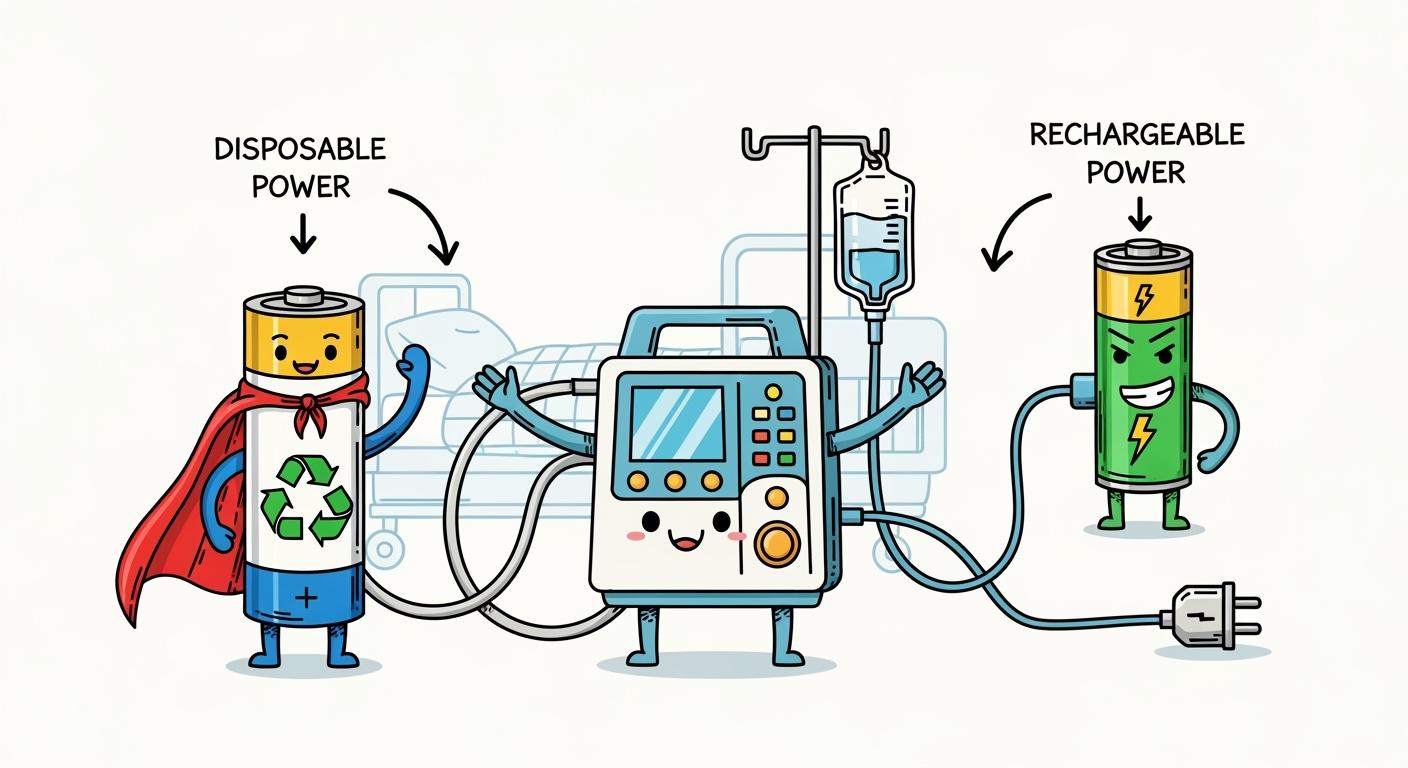
You must choose the right power solution for infusion pumps to meet strict safety standards in medical equipment. Disposable and rechargeable batteries each offer unique benefits for medical equipment. Rechargeable technology supports reusable batteries, while disposable batteries remain critical for certain medical equipment. Battery safety, cost, and reliability drive decisions in medical equipment for critical applications.
Key Takeaways
Choose disposable batteries for emergency and sterile environments. They provide immediate power and have a long shelf life, ensuring reliability when needed most.
Opt for rechargeable batteries in high-frequency use settings. They offer cost savings and sustainability, supporting hundreds of reuse cycles and reducing landfill waste.
Evaluate both upfront and long-term costs when selecting batteries. While disposable batteries have lower initial costs, rechargeable options can save money over time due to their longevity.
Part1: Power Solution Overview

1.1 Disposable Battery Basics
You encounter disposable batteries in many medical equipment applications, especially infusion pumps. These batteries provide single-use power, making them ideal for emergency and sterile environments. Disposable batteries, including lithium primary cells, deliver reliable energy without the need for recharging infrastructure. You benefit from their extended shelf life and immediate readiness, which supports critical medical equipment during unpredictable situations. Disposable batteries offer standardized safety and reliability, verified by over 14 years of market application. You find them best suited for backup systems and environments where charging is not practical.
Tip: Disposable batteries minimize maintenance but contribute to waste, so you must consider environmental impact when selecting a power solution.
1.2 Rechargeable Battery Fundamentals
Rechargeable batteries, such as lithium-ion, LiFePO4, lithium-polymer (LiPo), and solid-state battery chemistries, power infusion pumps in high-frequency use settings. You gain cost-effectiveness and sustainability by choosing rechargeable batteries for medical equipment that requires repeated cycles. These batteries support 300-1,000 reuse cycles before replacement, reducing landfill waste and lowering long-term costs. Advanced lithium battery packs offer enhanced durability and align with evolving portable medical device trends. You can customize battery packs to meet specific medical device requirements, ensuring optimal performance and safety.
Feature | Rechargeable Batteries | Disposable Batteries |
|---|---|---|
Reuse Cycles | 300-1,000 cycles before replacement | Single-use, contributes to waste |
Environmental Impact | Reduced waste, less landfill contribution | Significant waste from single-use consumption |
Durability | Enhanced materials for repeated use | Limited durability, designed for one-time use |
Suitability for Applications | Ideal for high-frequency use | Best for emergency and sterile applications |
You must balance immediate convenience with long-term economic benefits when selecting batteries for infusion pumps. The right battery choice ensures reliable operation and supports sustainability goals in medical equipment.
Part2: Performance and Reliability
2.1 Power Output and Consistency
You rely on consistent power output to maintain the safe operation of infusion pumps in medical equipment. Disposable batteries deliver predictable energy, especially in critical environments. You can see the typical power output ranges for disposable batteries in the table below:
Battery Type | Power Output Range |
|---|---|
Disposable AA Batteries | 96 hours at rates below 5 mL/hr |
48 hours at rates 5 mL/hr to below 25 mL/hr | |
24 hours at rates 25 mL/hr to below 125 mL/hr | |
3000 mL at rates 125 mL/hr or higher | |
Lithium-ion Rechargeable | Output varies by pack design and device requirements |
Disposable batteries provide stable voltage and current, which supports battery safety and meets safety standards for medical equipment. You benefit from immediate readiness and minimal risk of power fluctuation. Rechargeable batteries, especially lithium-ion and LiFePO4 chemistries, offer advanced battery management systems that optimize battery performance and protect against overcharge or deep discharge. You can learn more about battery management systems here.
Note: You must select the right power solution to ensure uninterrupted infusion pump operation and patient safety.
2.2 Battery Life and Charge Cycles
You need to evaluate battery longevity and cycle life to maximize cost-effectiveness and operational efficiency. Disposable batteries offer a short lifespan, which limits their use in continuous medical equipment operation. Rechargeable batteries provide extended battery life and support repeated use.
Feature | Disposable Batteries | Rechargeable Batteries |
|---|---|---|
Average Battery Life | 3 to 20 days | 8–14 hours per charge |
Cycle Life | Single-use | 1500+ cycles |
Longevity | Short-term | Up to 5 years with maintenance |
Rechargeable batteries, including lithium-ion and LiFePO4, deliver long operational life and high cycle counts. You reduce waste and lower long-term cost by choosing rechargeable technology for medical equipment that requires frequent use. Disposable batteries suit short-term or emergency scenarios, but you must plan for regular replacement and inventory management.
Nickel-Metal Hydride batteries: Up to 500 cycles
Lithium-Ion batteries: Up to 1,000 cycles
Tip: You extend battery longevity and reliability by following manufacturer guidelines for charging and maintenance.
2.3 Reliability in Medical Use
Reliability remains a top priority for infusion pumps in medical environments. You must trust that batteries will perform under demanding conditions and meet strict safety standards. Disposable batteries offer proven reliability for backup and emergency use. You benefit from their long shelf life and immediate activation, which supports critical medical equipment during power outages or field operations.
Rechargeable batteries, especially lithium battery packs, provide consistent performance in high-frequency medical equipment applications. You gain reliability through advanced battery management systems, which monitor temperature, voltage, and charge cycles. These systems help prevent failures and ensure battery safety.
Reliability Factor | Disposable Batteries | Rechargeable Batteries |
|---|---|---|
Shelf Life | Long | Moderate |
Maintenance | Minimal | Regular checks required |
Failure Risk | Low (single-use) | Low with proper management |
Suitability | Emergency, backup | Continuous, portable use |
Callout: You must balance reliability, safety, and cost when selecting batteries for medical equipment. The right power solution supports patient care and operational efficiency.
You ensure optimal battery performance and reliability by choosing the appropriate battery type for each medical scenario. Disposable batteries provide immediate, stable power for emergencies. Rechargeable batteries deliver long operational life and cost-effectiveness for continuous use. You support safety standards and medical equipment reliability by integrating advanced lithium battery packs and battery management systems.
Part3: Cost and Maintenance
3.1 Upfront vs Long-Term Cost
You must evaluate both the initial investment and the ongoing expenses when selecting a power solution for infusion pumps. Disposable batteries offer a lower upfront cost, but frequent replacements drive up long-term expenses. Rechargeable batteries require a higher initial outlay, yet their longevity and reuse cycles reduce overall cost over time. The following table highlights the differences:
Battery Type | Initial Cost | Long-term Cost Impact |
|---|---|---|
Disposable Batteries | $8-10 | Higher due to frequent replacements |
Rechargeable Batteries | $20 | Lower over time due to longevity |
Disposable batteries suit environments where single-use consumption is necessary, such as emergency or sterile settings. You may find rechargeable batteries more cost-effective for medical equipment used continuously in hospitals or clinics. The choice impacts your operational budget and resource allocation.
Tip: You can optimize cost by matching battery type to the frequency and duration of medical equipment use.
3.2 Maintenance for Rechargeable Batteries
Rechargeable batteries require regular attention to maintain safety and reliability in medical equipment. You must follow manufacturer instructions for battery maintenance and charging. The following steps help you maximize battery performance and extend service life:
Familiarize yourself with the manufacturer’s instructions for battery maintenance and charging.
Replace the battery promptly if it fails to hold a charge or shows signs of degraded performance.
Maintenance costs for rechargeable batteries play a significant role in your overall operational expenses. Battery reliability and replacement frequency affect your budget. You can implement Reliability-Centered Maintenance (RCM) strategies to enhance battery management and prolong service life. Advanced lithium battery packs often include battery management systems (BMS) that monitor charge cycles, temperature, and voltage, further improving safety and performance.
Note: Regular maintenance ensures optimal battery performance and supports safety standards in medical environments.
3.3 Inventory and Supply for Disposable
Managing inventory and supply for disposable power sources presents unique challenges in medical equipment operations. You must account for regulatory changes, supply chain complexity, and increased production costs. The table below outlines key challenges:
Challenge | Description |
|---|---|
Regulatory Changes | New tariff measures on imported components have increased production costs for manufacturers. |
Supply Chain Complexity | Elevated duties on overseas components force manufacturers to reassess procurement strategies. |
Increased Production Costs | The tariffs have led to higher costs, impacting pricing models for disposable infusion pumps. |
You need to maintain a steady supply of disposable batteries to ensure uninterrupted operation of medical equipment. Supply chain disruptions can affect availability and cost, requiring proactive inventory management. Disposable power sources offer immediate readiness, but you must balance convenience with the impact on budget and environment.
Callout: You can reduce supply chain risks by diversifying suppliers and monitoring regulatory developments.
You must weigh the cost, maintenance, and supply factors when choosing between disposable and rechargeable batteries for infusion pumps. The right power solution supports reliability, safety, and operational efficiency in medical environments.
Part4: Environmental Impact

4.1 Waste from Disposable Batteries
You face significant waste management challenges when using disposable batteries in medical equipment. Healthcare systems handle alkaline, lead acid, and lithium-ion batteries differently. The table below shows how disposal methods and key considerations vary:
Battery Type | Disposal Method | Key Considerations |
|---|---|---|
Alkaline Batteries | Can be disposed of in trash or recycled according to local guidelines | No special handling required. |
Lead Acid Batteries | Must be properly maintained and handled; crushed during recycling | Contains toxic compounds; requires specific recycling protocols. |
Lithium-Ion Batteries | Should be disinfected before recycling; cannot be crushed | Contains toxic materials; improper handling can lead to fires. |
You must consider the reliability and safety of battery disposal practices. Improper handling of lithium-ion batteries can cause fires and environmental harm. Disposable batteries contribute to landfill waste and increase long-term cost for medical organizations.
4.2 Recycling Rechargeable Batteries
You improve sustainability and reduce hazardous waste by recycling rechargeable batteries in medical equipment. States like Maryland, Minnesota, and New York enforce strict regulations for recycling rechargeable batteries. The table below summarizes key regulations:
State | Regulation Description |
|---|---|
Maryland | Requires manufacturers to have a recycling and management program for non-removable batteries, Ni-Cd, and SSLA/Pb. |
Minnesota | Enacted laws covering the recycling of any rechargeable battery; illegal to dispose of in a landfill. |
New Jersey | Prohibits landfill disposal of Ni-Cd and SSLA-Pb batteries; emphasizes recycling under U.S. regulations. |
New York | Retailers must offer on-site recycling programs for rechargeable batteries. |
Vermont | Requires recycling of Ni-Cd and SSLA/Pb batteries; includes a law for single-use battery recycling. |
Washington | Manufacturers must join a Battery Stewardship Organization; outlines rules for battery disposal by 2029. |
Washington, D.C. | Requires manufacturers to be part of a Battery Stewardship Organization under the Zero Waste Omnibus Amendment Act. |
You must follow these regulations to ensure battery safety and compliance. Recycling rechargeable batteries supports reliability and performance in medical equipment while reducing environmental impact.
4.3 Sustainability in Healthcare
You align your power solution choices with sustainability goals by selecting rechargeable batteries for medical equipment. Rechargeable batteries reduce CO2 emissions, improve energy efficiency, and minimize hazardous waste. You can see the benefits in the table below:
Benefit | Description |
|---|---|
Reduction in CO2 emissions | Smaller, rechargeable batteries lead to lower carbon emissions throughout their lifecycle. |
Energy efficiency | Rechargeable batteries require less energy to recharge compared to disposable batteries. |
Hazardous waste reduction | Using rechargeable batteries minimizes hazardous waste generated from disposables. |
You can eliminate the need for hundreds of thousands of disposable batteries by replacing telemetry monitors with rechargeable lithium battery packs.
You save significant cost and reduce paper waste by integrating bedside and telemetry monitoring.
Philips telemetry monitors use rechargeable lithium-ion batteries, supporting sustainability and reliability.
You must consider the long-term environmental impact of your battery choices. Rechargeable batteries can replace thousands of disposable batteries, reducing waste and carbon footprint. However, you should use rechargeable batteries efficiently to maximize their environmental benefits. For more on sustainability in healthcare, visit the sustainability page.
Part5: Application Scenarios
5.1 Hospital and Clinical Use
You need batteries that deliver consistent performance and meet strict safety standards in hospital and clinical environments. Medical equipment in these settings relies on rechargeable battery packs with advanced battery management systems. These systems use switch-mode voltage regulators for efficiency and low-dropout linear regulators for low power circuits. You benefit from accurate battery fuel gauges, which use Coulomb counting to ensure reliable operation during patient transport. Rechargeable batteries support continuous use and align with UL® and IEC safety compliance. Disposable batteries serve as backup power sources, providing immediate readiness in case of primary battery failure. You can explore custom lithium battery solutions for medical equipment at Large Power.
Scenario | Preferred Power Solution | Key Features |
|---|---|---|
Hospital/Clinical | Rechargeable | Battery management, safety, reliability |
Backup/Emergency | Disposable | Immediate activation, long shelf life |
Tip: You should always verify that batteries meet medical safety standards before deployment.
5.2 Home and Portable Care
You require batteries that support portability and ease of use for home care and mobile medical equipment. Rechargeable lithium-ion and lithium-polymer batteries offer high energy density and long cycle life, making them ideal for repeated use. Disposable batteries provide convenience for short-term or low-frequency applications. You can select battery packs that match your device’s platform voltage and energy requirements. Medical equipment in home settings benefits from rechargeable batteries due to reduced waste and lower long-term cost.
Rechargeable batteries: Best for frequent use and sustainability.
Disposable batteries: Suitable for occasional use or backup.
5.3 Emergency and Field Settings
You face unique challenges in emergency and field environments. Reliability and portability become critical for medical equipment. Lithium batteries, including lithium-ion and lithium-polymer, deliver high energy density and compact design. Disposable batteries ensure uninterrupted operation when charging infrastructure is unavailable. You must prioritize battery reliability to maintain accurate medication delivery and prevent power interruptions. Redundant battery systems help you safeguard against failures in critical situations.
Note: You should always maintain a supply of disposable batteries for emergency use, while deploying rechargeable batteries for primary operation when possible.
You can find lithium battery applications in robotics, security, infrastructure, consumer electronics, and industrial sectors. Learn more about lithium battery solutions for these industries at Large Power.
You must select a power solution for medical infusion pumps by weighing reliability, safety, and sustainability. Disposable batteries suit emergency and backup medical scenarios, while rechargeable batteries excel in continuous clinical use. Consider real-world workflow, user training, and compliance to ensure batteries meet medical standards and support safe, reliable operation.
FAQ
What lithium battery chemistries suit infusion pumps best?
Chemistry | Platform Voltage | Energy Density (Wh/kg) | Cycle Life (cycles) |
|---|---|---|---|
Lithium-ion | 3.6 V | 150–250 | 1,000+ |
LiFePO4 | 3.2 V | 90–160 | 2,000+ |
Lithium-polymer | 3.7 V | 100–200 | 500–1,000 |
You should select lithium-ion or LiFePO₄ for high reliability and long cycle life in medical environments.
How do you ensure battery safety and compliance for medical devices?
You must use lithium battery packs with integrated battery management systems. You should verify UL® and IEC certifications for every device. Consult Large Power for custom compliance solutions.
Where can you get custom lithium battery packs for infusion pumps?
You can request a custom consultation with Large Power. Their team designs lithium battery packs tailored for medical device requirements and B2B healthcare applications.


