

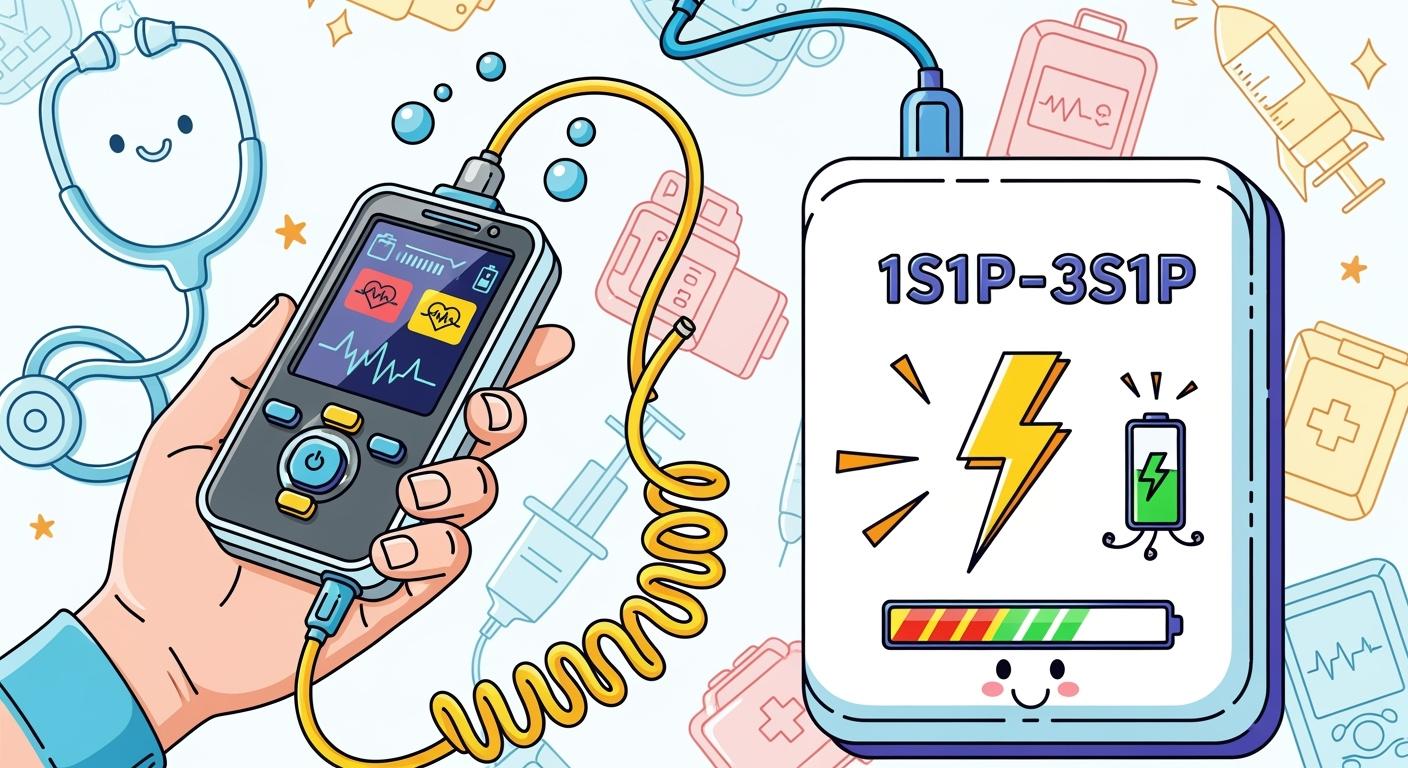
You demand fast-charging design for handheld medical devices to maximize operational efficiency and charging speed. Fast charging solutions and wireless charging for medical devices boost device independence and readiness for emergency response in healthcare. Effective battery optimization and safety protocols ensure safety features, reliability, and efficiency in portable medical devices. Explore powering medical devices wirelessly and ultra-fast charging with advanced wireless power solutions for lithium battery packs. For more information, visit our medical battery solution.
Key Takeaways
Select the right battery pack by evaluating voltage and capacity. This choice impacts device compatibility and emergency readiness.
Implement advanced charging algorithms to protect battery health. Use constant current/constant voltage methods to prevent overheating.
Prioritize safety features like overvoltage protection and temperature monitoring. These measures ensure reliability in critical healthcare environments.
Part 1: Battery Pack Selection for Fast-Charging Devices
1.1 Voltage and Capacity in Medical Devices
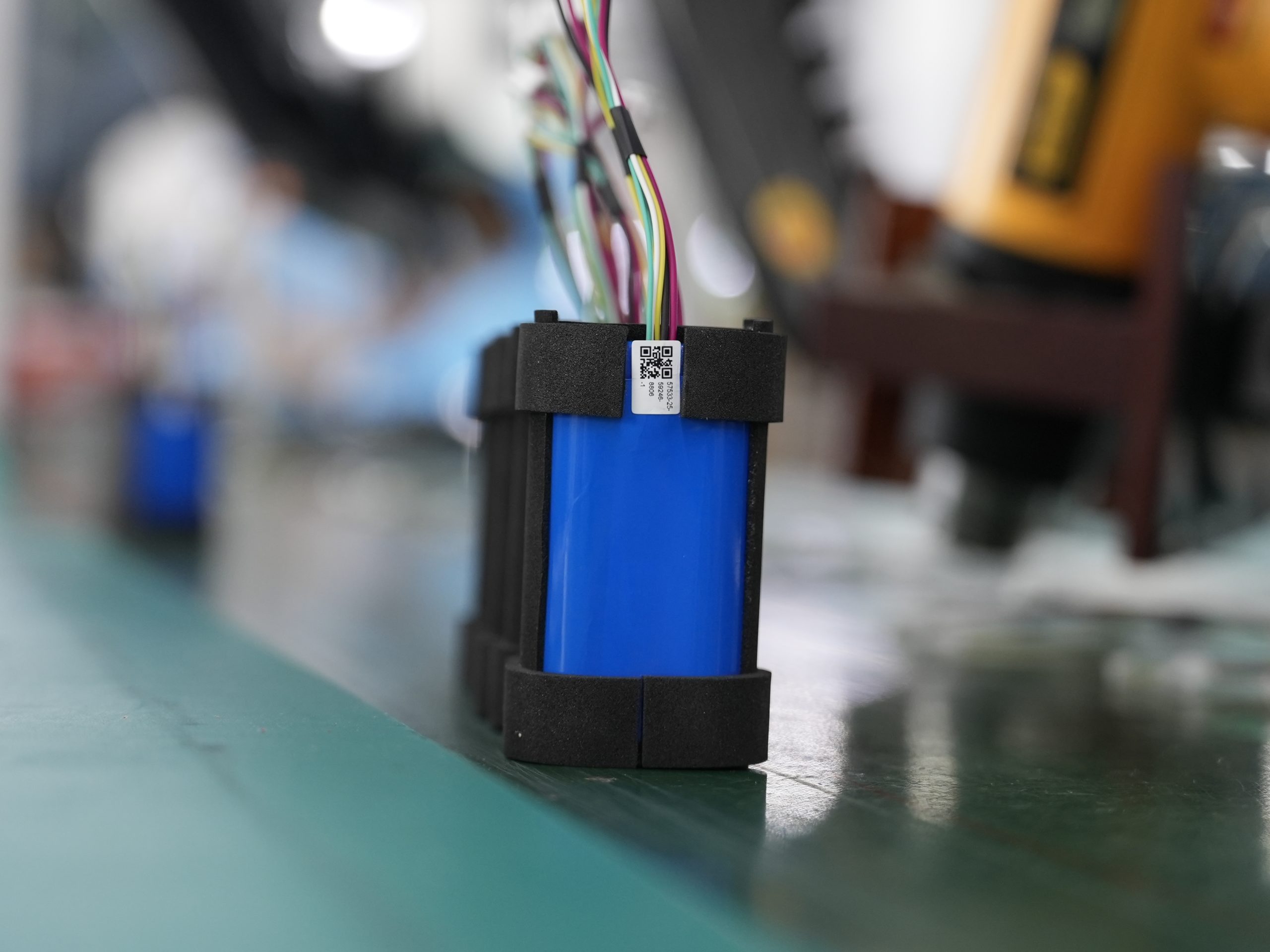
You must evaluate voltage and capacity when selecting battery packs for fast charging in medical devices. Voltage determines compatibility with device electronics, while capacity affects runtime and readiness for emergency use in healthcare. The table below compares common lithium battery chemistries used in medical, robotics, and industrial sectors:
Chemistry | Platform Voltage | Energy Density (Wh/kg) | Cycle Life (cycles) |
|---|---|---|---|
NMC Lithium battery | 3.7 V | 180–220 | 500–1000 |
LiFePO4 Lithium battery | 3.2 V | 90–120 | 2000–4000 |
Lithium-polymer/LiPo | 3.7 V | 150–200 | 300–800 |
Solid-State Battery | 3.7 V | 250–350 | 1000–5000 |
Tip: Higher energy density supports longer device operation, but you must balance it with cycle life for optimal efficiency.
1.2 1S1P–3S1P Pack Choices
You can choose between 1S1P, 2S1P, or 3S1P configurations for fast charging. 1S1P packs offer simplicity and compactness for handheld medical devices, while 2S1P and 3S1P packs provide higher voltage for advanced medical applications. Fast charging technology and wireless charging for medical devices require packs with robust safety features and reliable safety protocols. You should consult with experts for custom battery consultation to match pack selection with device requirements and healthcare standards.
1.3 Form Factor and Integration
You must consider form factor and integration to maximize device independence and efficiency. Slim, lightweight packs support wireless power solutions and fast charging solutions in portable medical devices. Proper integration ensures safety features and maintains device performance. You should work with design teams to optimize battery placement and charging circuit layout for seamless operation in healthcare environments.
Part 2: Fast-Charging Circuit Design in Medical Devices

2.1 Fast Charging Technology Options
You must select the right fast charging technology to maximize device readiness and operational efficiency in healthcare. Fast charging enables you to minimize downtime for medical devices and maintain independence in critical environments. You can choose between wired and wireless charging for medical devices, depending on your workflow and integration needs.
Wired Fast Charging: USB Type-C Power Delivery (PD) offers high power density and flexible voltage profiles. You can achieve rapid charging for lithium-ion battery packs, which are standard in medical, robotics, and industrial sectors. Learn more about lithium-ion batteries.
Wireless Charging: Wireless power solutions provide cable-free charging for handheld medical devices. You can improve device independence and reduce wear on connectors. Wireless charging for medical devices supports sealed enclosures, which enhance safety features and simplify cleaning protocols in healthcare.
Note: You should evaluate the compatibility of fast charging solutions with your device’s battery chemistry and platform voltage. Consult with experts for custom battery consultation to optimize your charging strategy.
2.2 Charge Algorithms and Current Limits
You must implement advanced charge algorithms to protect battery health and ensure safety protocols. Fast charging relies on precise control of current and voltage to prevent overheating and extend battery life. You can use constant current/constant voltage (CC/CV) algorithms, which are standard for lithium-ion and LiFePO4 battery packs.
Algorithm | Description | Application Sectors |
|---|---|---|
CC/CV | Maintains constant current, then voltage | Medical, robotics, security |
Pulse Charging | Delivers current in pulses | Industrial, infrastructure |
Taper Charging | Gradually reduces current near full charge | Consumer electronics |
You must set current limits based on battery specifications and device requirements. High current can accelerate charging, but you must balance it with safety features and cycle life. You should integrate power delivery controllers to manage charging profiles and prevent overcurrent events.
Tip: You should always verify current limits against battery manufacturer recommendations. This step ensures compliance with healthcare standards and protects devices from damage.
2.3 Thermal Management for Safety
You must prioritize thermal management to maintain safety protocols during fast charging. Rapid charging generates heat, which can compromise battery integrity and device reliability. You can use temperature sensors and active cooling systems to monitor and control heat in medical devices.
Temperature Monitoring: You should install sensors near the battery and charging circuit. Real-time monitoring allows you to shut down charging if temperatures exceed safe thresholds.
Active Cooling: You can use fans or heat sinks in high-power devices. These solutions help dissipate heat and maintain efficiency during fast charging.
Software Controls: You should implement firmware that adjusts charging rates based on temperature feedback. This approach protects battery packs and ensures compliance with medical safety standards.
Callout: You must integrate safety features such as thermal cutoffs and redundant sensors. These measures prevent overheating and support device reliability in emergency healthcare scenarios.
You should work with engineering teams to optimize thermal management and charging circuit layout. You can request custom battery consultation to address unique device requirements and ensure robust safety protocols.
Part 3: Safety and Compliance in Fast Charging
3.1 Overvoltage and Overcurrent Protection
You must implement robust overvoltage and overcurrent protection to maintain safety in fast charging for medical devices. These protection systems form the backbone of reliable battery management. You can use advanced battery management systems (BMS) that integrate voltage protection mechanisms to prevent excessive voltage during charging. Current protection systems control the flow of current and stop dangerous spikes. Thermal sensors monitor temperature and trigger shutdowns if unsafe conditions arise.
Note: Overvoltage and overcurrent protection technologies work together to prevent battery failures. You increase operational safety and reliability, which is essential in healthcare and emergency environments.
You should select BMS solutions that support lithium battery packs in medical, robotics, and industrial sectors. You can request custom battery consultation to match protection features with your device requirements. Fast charging technology demands precise control, so you must verify that your protection systems meet the latest standards.
Protection Feature | Function | Application Sector |
|---|---|---|
Overvoltage Cutoff | Stops charging at unsafe voltage | Medical, robotics, security |
Overcurrent Limiting | Prevents current spikes | Industrial, infrastructure |
Thermal Shutdown | Halts charging if temperature rises | Medical, consumer electronics |
3.2 Temperature Monitoring Systems
You must use temperature monitoring systems to ensure safe fast charging in handheld medical devices. These systems detect heat buildup during charging and help you avoid battery damage. You can install sensors near the battery and charging circuit. Real-time data lets you adjust charging rates or stop charging if temperatures exceed safe limits.
Place sensors close to lithium battery packs for accurate readings.
Use software controls to change charging speed based on temperature feedback.
Add redundant sensors for extra safety in healthcare and industrial settings.
Temperature monitoring supports efficiency and reliability. You protect devices from overheating and extend battery life. Fast charging technology increases heat, so you must prioritize thermal management. You can improve device safety and compliance by integrating advanced monitoring systems.
Tip: You should always test temperature monitoring systems under real-world conditions. This step ensures your devices perform safely in emergency and healthcare scenarios.
3.3 Medical Standards and Certifications
You must comply with strict medical standards and certifications when designing fast charging for medical devices. These standards guarantee safety, reliability, and performance in sensitive healthcare environments. You should follow guidelines from organizations such as IEC, UL, and ISO. These standards cover battery chemistries, platform voltage, energy density, and cycle life.
Standard/Certification | Focus Area | Sector |
|---|---|---|
IEC 60601 | Medical electrical safety | Medical, robotics |
UL 2054 | Battery safety | Medical, industrial |
ISO 13485 | Quality management | Medical devices |
You must document all safety features, including overvoltage, overcurrent, and temperature protection. You should maintain records for audits and regulatory reviews. Fast charging technology must meet compliance requirements for wireless and wired charging. You can improve sustainability by following best practices for battery sourcing and recycling. For more information, visit our sustainability blog.
Callout: You should consult with experts to ensure your fast charging design meets all medical standards. Custom battery consultation helps you address unique device needs and regulatory challenges.
You must prioritize compliance, safety, and sustainability in every stage of fast charging design. You protect patients, healthcare workers, and device users by following industry standards and integrating advanced safety features.
Part 4: Reliability and Battery Longevity
4.1 Fast Charging Impact on Battery Life
You need to understand how fast charging affects the longevity of lithium battery packs in medical devices. Fast charging increases the rate of chemical reactions inside the battery, which can accelerate wear and reduce overall capacity. The table below shows how different charging rates influence capacity retention after 100 cycles:
Cycling Rate | Capacity Retention After 100 Cycles |
|---|---|
1C | Approximately 80% |
2C | Decreased to 70% |
You see that higher charging rates can lead to faster degradation. In healthcare, this means you must balance device readiness with long-term efficiency. Fast charging supports rapid turnaround, but you should monitor battery health closely to avoid unexpected failures in critical environments.
4.2 Design Strategies for Longevity
You can extend the life of lithium battery packs by adopting smart design strategies. Select battery chemistries with high cycle life, such as LiFePO4 or solid-state, for medical and industrial applications. Integrate advanced battery management systems that regulate charging profiles and prevent overcharging. Use wireless charging to reduce mechanical wear on connectors, which improves device reliability. Optimize charging algorithms to limit high current exposure, especially in devices that require frequent fast charging.
Tip: Collaborate with engineering teams to tailor charging protocols for your specific devices. Custom battery consultation can help you achieve the right balance between fast charging and longevity.
4.3 Maintenance and Replacement Planning
You must plan for regular maintenance and timely replacement of battery packs in medical devices. Schedule routine diagnostics to monitor charging cycles, capacity, and temperature trends. Use predictive analytics to identify batteries approaching end-of-life. Establish clear replacement intervals based on device usage patterns and healthcare requirements. Wireless charging systems can simplify maintenance by reducing physical wear. For organizations focused on sustainability, review our sustainability blog for best practices in battery recycling and responsible sourcing.
Track charging history for each device.
Train staff to recognize early signs of battery degradation.
Maintain a stock of certified replacement packs to ensure uninterrupted healthcare operations.
Callout: Proactive maintenance planning increases device efficiency and supports patient safety in demanding medical and industrial settings.
You optimize fast charging for handheld medical devices by selecting the right lithium battery packs. You implement charging protocols and integrate wireless solutions to boost device readiness. You prioritize safety and compliance in fast charging design. You balance speed, battery longevity, and reliability. You enhance medical workflow with advanced fast charging and wireless charging. You improve patient outcomes by using fast charging in medical devices. You maintain charging efficiency and device reliability. You consult experts for custom battery consultation. You support medical, robotics, and industrial sectors with fast charging. You choose wireless charging for sealed medical devices. You achieve operational excellence with fast charging.
FAQ
What are the main benefits of fast charging for lithium battery packs in medical and industrial devices?
Fast charging reduces downtime and increases readiness. You keep your devices operational for critical tasks. Large Power offers custom battery solutions for fast charging in demanding environments.
How does wireless fast charging improve workflow in robotics and security system applications?
Wireless fast charging eliminates cable management. You streamline device maintenance and reduce connector wear. This approach supports sealed designs and enhances reliability in robotics and security system operations.
Why should you consult Large Power for custom fast charging solutions?
You gain access to expert guidance on lithium battery packs, fast charging, and wireless integration. Click here for custom battery consultation to optimize your devices for performance and safety.


