

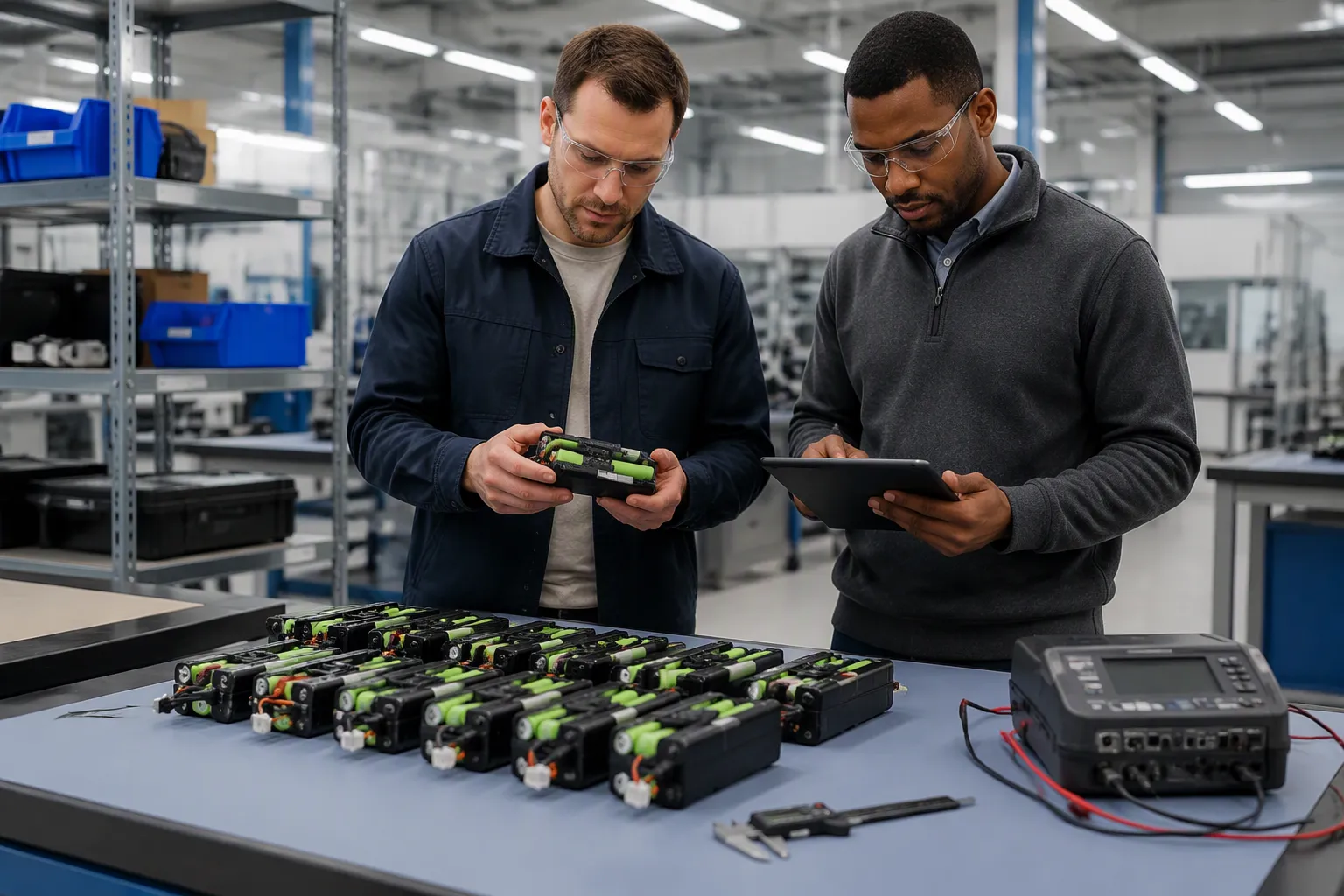
Pilot production checks whether a custom battery design can be built consistently using the intended materials, processes and controls. It bridges engineering prototypes and volume orders, but it does not replace design qualification or routine end-of-line testing.
Part 1: Define the Pilot Objective
1.1 Start with a controlled baseline
Identify the approved cell model, BOM, drawings, firmware and protection configuration. Record any prototype methods that will change for production. Hand-built samples may not represent production welding, insulation placement, enclosure assembly or test fixtures.
1.2 Set acceptance before the build
Agree on the pilot quantity, sampling plan, operating conditions and release criteria before collecting results. There is no universal requirement for three lots or a fixed number of packs in every project. The plan should reflect risk, process maturity and the quality agreement.
Part 2: Verify Mechanical and Electrical Variation
2.1 Measure distributions, not only averages
Record finished dimensions, cable location, connector alignment and assembly fit. Evaluate variation against the actual battery bay and mounting requirements. A mean value inside tolerance does not establish that all units will fit.
2.2 Match tests to their purpose
Use agreed screening and functional checks for production, supplemented by sampled capacity, resistance, pulse-load or thermal testing where required by the validation plan. Do not assume that every pack must undergo a complete cycle-life test or that a short functional check establishes runtime.
Separate design-qualification evidence from unit-level end-of-line records and batch-level process checks. Each answers a different question.
Part 3: Review Manufacturing Process Controls
3.1 Confirm production-intent methods
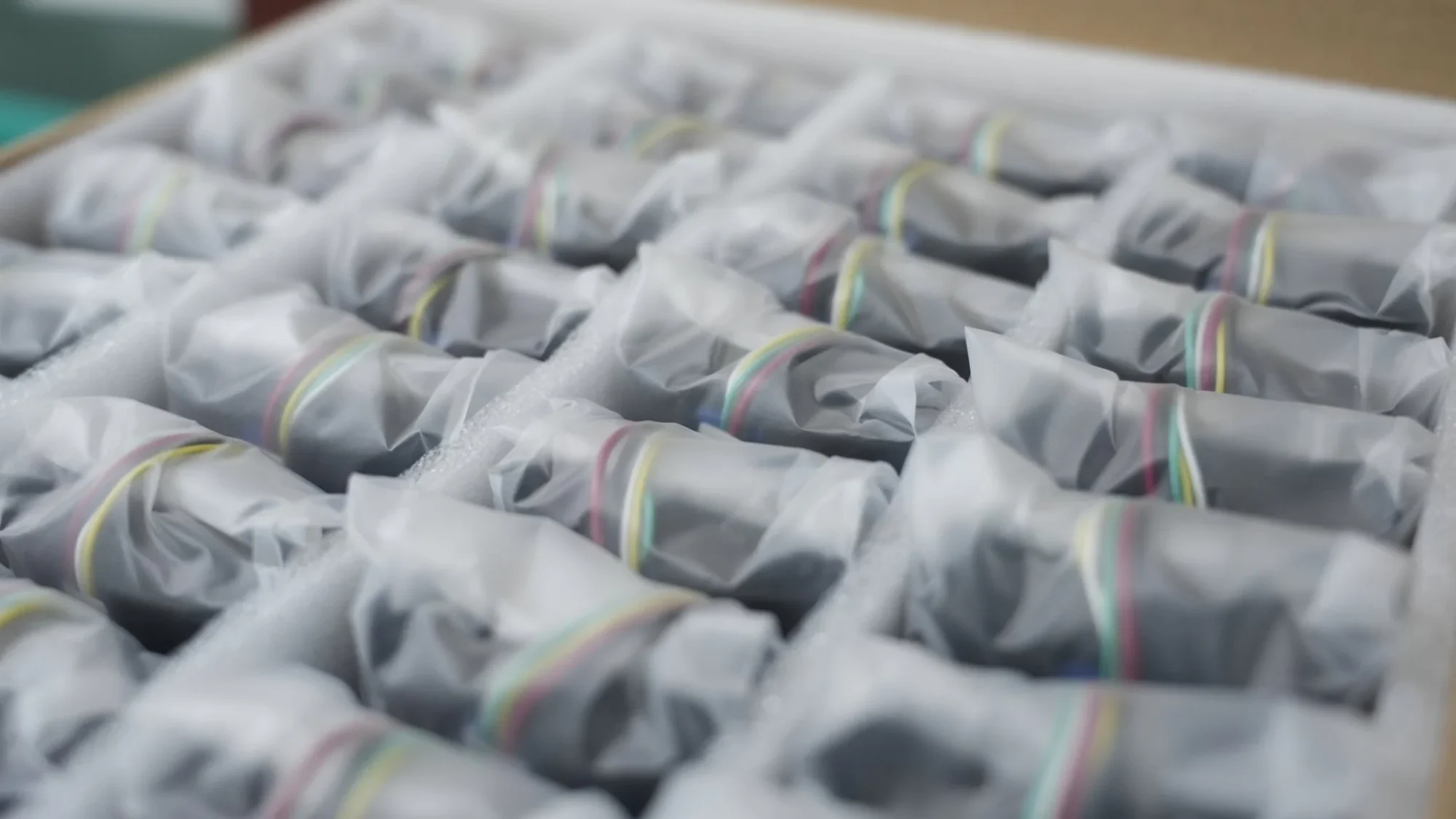
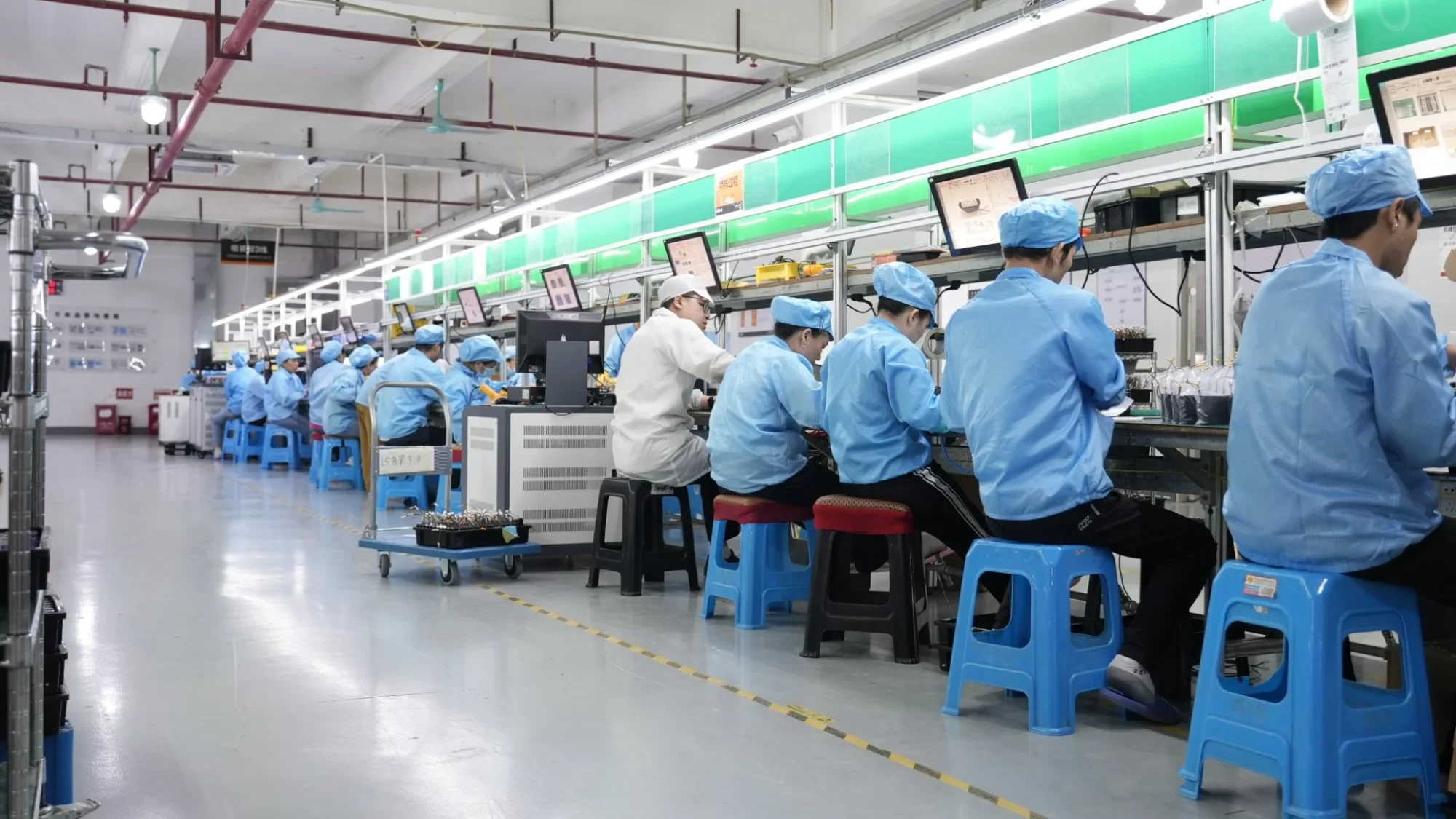
Review cell receipt, traceability, joining, insulation, routing, enclosure assembly and inspection. Verify process instructions, operator training and fixture suitability. Define how tooling, measurement equipment and software revisions are controlled.
3.2 Analyze defects and rework
Track first-pass yield separately from final yield after rework. Classify defects and investigate their causes. A low defect count in a small pilot is not statistical proof that rare failures cannot occur.
Document rework approval and the checks required afterward. Do not conceal repeated assembly problems by shipping only the units that passed after repeated adjustment.
Part 4: Validate the Host Interface
4.1 Test production-intent packs in the equipment
Use the released host hardware, charger and relevant firmware. Check startup, load transitions, charging, expected runtime and shutdown behavior under the agreed conditions. Where communication is used, verify units, scaling, stale-data handling and fault reporting.
4.2 Check configuration consistency
Confirm that BMS and PCM settings match the approved revision across units. Record programming and verification evidence. A physically identical pack may behave differently if its configuration differs.
Part 5: Make an Evidence-Based Release Decision
Controlled design and production-intent configuration.
Pilot build records and component traceability.
Measured variation against acceptance criteria.
Defect, rework and corrective-action records.
Host-integration and applicable qualification evidence.
Approved deviations and outstanding-risk ownership.
Release, conditional release or another pilot should follow a documented review. Any unresolved issue needs an owner, containment plan and closure criteria; a delivery deadline does not by itself justify acceptance.
FAQ
Is a pilot the same as design validation?
No. Pilot production evaluates repeatable manufacturing, while design validation addresses whether the product meets its intended requirements.
Must every unit receive a full capacity test?
Define the appropriate screening and sampling from risk, test capability and the agreed control plan.
What should an OEM provide before a pilot quotation?
Share the baseline drawings, requirements and target production quantities through the custom battery project inquiry.


