

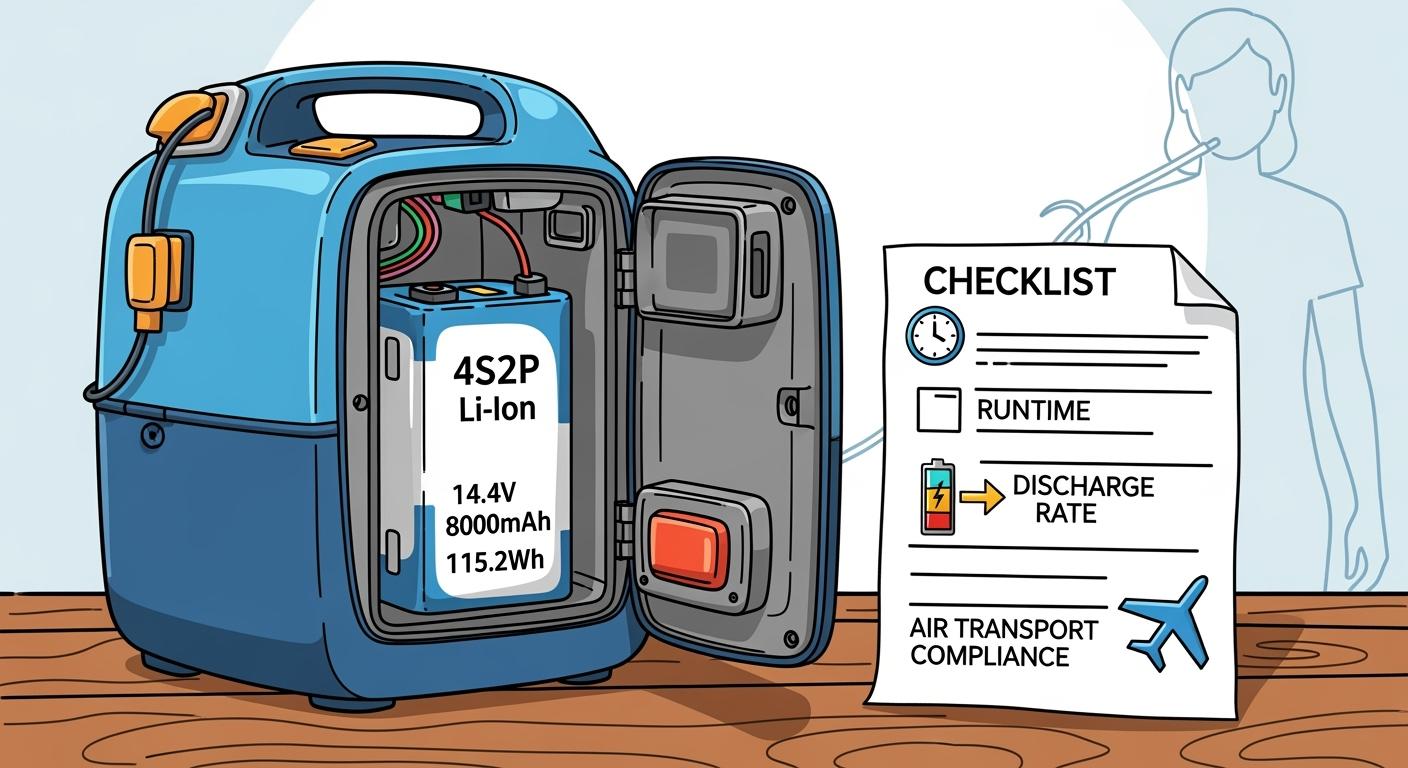
You rely on consistent power to deliver oxygen therapy without interruption. A 4s2p lithium battery pack enhances runtime and discharge rate, supporting safe operation and regulatory compliance. Power supply reliability ensures therapeutic effectiveness and patient health.
Aspect | Impact on Patient Outcomes |
|---|---|
Power Supply Reliability | Ensures continuous oxygen delivery, crucial for therapeutic effectiveness and patient health. |
Instability (e.g., voltage fluctuations) | Compromises device effectiveness, posing health risks to patients. |
Key Takeaways
The 4s2p lithium battery pack offers extended runtime, allowing portable oxygen concentrators to operate continuously for up to 10 hours, ensuring uninterrupted therapy for patients.
This battery configuration enhances reliability with a stable nominal voltage of 14.8V, preventing sudden power loss and ensuring consistent oxygen delivery.
Compliance with air transport regulations, such as FAA and IATA, ensures safe shipping of lithium battery packs, making them suitable for global medical applications.
Part1: 4S2P Lithium Battery Pack Basics
1.1 Series-Parallel Configuration Explained
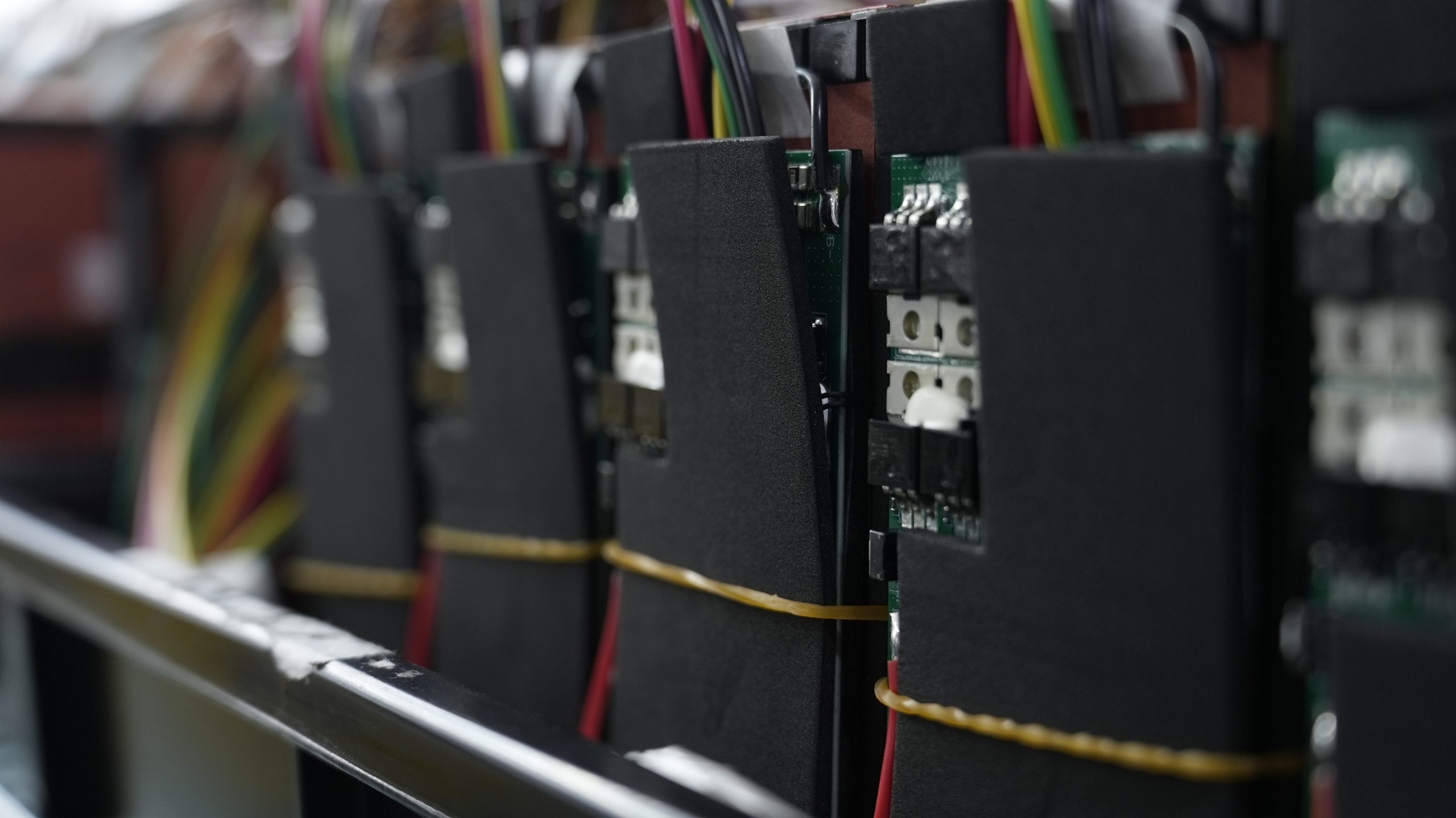
You need a lithium battery pack that delivers both high voltage and capacity for demanding medical devices. The 4s2p lithium battery uses a series-parallel structure, which means you connect four cells in series and two in parallel. This arrangement creates a pack with eight cells in total. The series connection increases the voltage, while the parallel connection boosts the capacity and reliability.
Configuration | Description |
|---|---|
Series Cells | 4 cells in series |
Parallel Cells | 2 cells in parallel |
Total Cells | 8 cells (4S2P) |
Full Charge Voltage | 16.8 volts |
Nominal Voltage | 14.8 volts |
Discharged Rating | 12 volts |
This structure allows you to achieve higher energy density and extended runtime, which are essential for portable oxygen concentrators and medical infusion pumps. The 4s2p lithium battery doubles the capacity compared to a 4S1P pack, supporting longer runtime and reducing the frequency of battery changes.
1.2 Voltage and Reliability for Concentrators
You benefit from a stable nominal voltage of 14.8V, which matches the requirements of most concentrator designs. This voltage ensures continuous operation and prevents sudden power loss. The parallel cell arrangement adds redundancy, so if one cell fails, the pack continues to function. A battery management system monitors each cell, preventing overcharge, over-discharge, and overheating—critical features for patient safety.
The 4s2p lithium battery provides:
Higher reliability for continuous operation.
Uninterrupted performance during power outages.
Enhanced safety through built-in monitoring and redundancy.
You can trust this configuration to deliver consistent power, minimize downtime, and support the demanding needs of medical environments.
Part2: Performance and Compliance
2.1 Longer Runtime and Oxygen Concentrator Performance
You need a lithium battery pack that delivers longer runtime and reliable operation for portable oxygen concentrators. The 4s2p lithium battery configuration provides extended runtime, supporting continuous oxygen delivery for critical medical applications. You can expect runtimes ranging from 2 to 10 hours, depending on the number of battery packs used and the concentrator’s power consumption.
Battery Configuration | Runtime (hours) |
|---|---|
Single Battery | 2.4 |
Double Battery | 4.8 |
Triple Battery | 7.2 |
This longer runtime ensures uninterrupted therapy, reducing the need for frequent battery changes and minimizing downtime. You benefit from higher energy density and high gravimetric energy density, which allow for compact designs without sacrificing performance. The 4s2p lithium battery supports higher reliability, making it ideal for medical infusion pumps and oxygen concentrators that require stable power for extended periods.
You can rely on custom lithium battery packs to deliver consistent oxygen concentrator performance, even in demanding environments. These packs maintain reliable operation during emergencies and travel, supporting patient safety and comfort.
2.2 Discharge Rate and Power Output
You require a lithium battery pack that meets the high discharge rates demanded by portable oxygen concentrators. The 4s2p lithium battery provides a max continuous discharge current of 5.2A, ensuring sufficient power output for medical infusion pumps and oxygen concentrators during peak demand.
Parameter | Value |
|---|---|
Max Continuous Discharge Current | 5.2A |
Nominal Voltage | 3.7V |
Nominal Capacity | 5200mAh |
Stable power output is essential for oxygen concentrator performance in medical and industrial settings. Lithium iron phosphate (LiFePO4) batteries offer high capacity, long cycle life, and reliable operation, making them suitable for continuous use. High-capacity battery packs help maintain stable operation, even when environmental conditions change. Safety certifications, such as IEC 62133 and UL 1642, ensure reliable oxygen delivery during critical procedures.
Key Point | Explanation |
|---|---|
Stable operation | Essential for oxygen concentrators in medical and industrial settings where reliability is crucial. |
Lithium iron phosphate (LiFePO4) batteries | Known for stability and long cycle life, ideal for consistent operation of oxygen concentrators. |
High-capacity battery packs | Help maintain stable operation even under changing environmental conditions. |
Safety certifications | Ensure reliable oxygen delivery during critical procedures. |
You can further enhance safety and reliability by integrating advanced battery management systems (BMS), which monitor cell health, prevent overcharge, and manage discharge rates.
2.3 Air Transport Compliance for Lithium Battery Packs
You must comply with strict air transport regulations when shipping lithium battery packs for medical devices. The 4s2p lithium battery meets international standards, including FAA, UN38.3, and IATA guidelines. These regulations require proper packaging, labeling, and certification to ensure safe transport.
Regulation | Key Requirements |
|---|---|
FAA | Guidelines for the transport of lithium batteries, including packaging and labeling requirements. |
IATA | Updated Lithium Battery Guidance Document includes packing instructions and FAQs for compliance with Dangerous Goods Regulations. |
UN38.3 | Certification required for lithium batteries, ensuring they meet safety tests. State of Charge limit of ≤30% for standalone batteries. |
You must insulate each battery to prevent contact with other batteries or metal objects. Strong outer packaging must pass drop and compression tests. Some airlines require fireproof bagging for lithium-ion batteries. The following table summarizes compliance aspects for custom lithium battery packs:
Compliance Aspect | Details |
|---|---|
UN 38.3 Certification | Batteries must be UN 38.3 certified to ensure safety during transport. |
IATA Dangerous Goods Regulations | Adherence to IATA regulations is essential for safe air transport of lithium batteries. |
Packaging and Labeling Requirements | Specific packaging and labeling are required to comply with international safety standards. |
State of Charge (SoC) Limitations | Batteries must be shipped at no more than 30% of their rated capacity unless approved. |
Short Circuit Protection | Each battery pack must be protected against short circuits using original packaging or insulation. |
Transport Restrictions | Standalone lithium-ion batteries are prohibited on passenger aircraft and must be shipped on cargo aircraft only. |
You should select custom lithium battery packs that pass vibration, shock, external short-circuit, crush, overcharge, and forced discharge tests. These tests ensure no disassembly, fire, or leakage of toxic substances during transport.
Tip: For more information on sustainability practices, visit Our Approach to Sustainability. For conflict minerals compliance, see Conflict Minerals Statement.
2.4 Selecting Custom Lithium Battery Packs
You must evaluate several criteria when choosing custom lithium battery packs for portable oxygen concentrators. Performance and quality validation are essential. You should ensure continuous operation at high altitudes, low noise levels, and rapid startup times. Third-party lab reports can confirm output consistency over 500+ hours.
Criteria | Details |
|---|---|
Performance & Quality Validation | – Continuous operation at high altitudes (up to 10,000 ft) for plateau travel. |
– Noise level <45 dB for comfort during sleep. | |
– Startup time ≤1 minute for emergency readiness. | |
– Third-party lab reports for output consistency over 500+ hours. | |
Cost-Efficiency Analysis | – Evaluate total cost of ownership (TCO) including purchase price and service contracts. |
– Bulk orders of 500+ units can reduce unit cost by 15–25%. | |
– Consider pay-per-use leasing models to lower initial costs. | |
Custom Query-Specific Criteria | – Prioritize models clinically validated in multi-center trials for sustained oxygen saturation improvement (SpO₂ ≥90%). |
– Ensure operational safety compliance with low-oxygen alerts and fail-safe mechanisms. |
You should also consider safety certifications, such as IEC 62133, UL 1642, UN 38.3, CE Marking, ANSI C18.2M, IEEE 1725, and FDA approval. These certifications confirm compliance with medical standards and international regulations.
Low self-discharge rates in lithium battery packs, such as the ICR18650, ensure that batteries maintain their charge even when not actively used. This feature minimizes maintenance needs and enhances reliable operation, keeping portable oxygen concentrators ready for emergencies.
You can rely on battery management systems to monitor cell health and optimize performance. For more details, visit BMS and PCM.
Note: When selecting custom lithium battery packs, prioritize higher energy density, extended runtime, and higher reliability. These features support reliable operation and oxygen concentrator performance in medical, industrial, and emergency settings.
You gain extended runtime, high capacity, and robust protection features with custom lithium battery packs for critical applications. Advanced safety features ensure improved safety and compliance with medical standards and safety standards. Air transport compliance enhances global transportability.
Safety Feature | Benefit |
|---|---|
Built-in thermal protection | Prevents overheating and potential fires |
Overcharge protection | Stops battery from exceeding safe charge levels |
Short-circuit prevention | Reduces risk of electrical failures |
Solid construction | Minimizes risk of leaks or ruptures |
FAQ
What advantages do custom lithium battery packs offer for portable oxygen concentrators?
You gain longer runtime, higher energy density, and gravimetric energy density. Custom lithium battery packs ensure reliable power for your concentrator and medical infusion pumps in critical applications.
How do custom lithium battery packs support air transport compliance for medical devices?
You meet IATA and UN38.3 standards with custom lithium battery packs. Large Power provides certified solutions for safe global shipping.
Can custom lithium battery packs improve performance in medical infusion pumps and other B2B applications?
You achieve stable output and extended cycle life with custom lithium battery packs. These packs support medical infusion pumps and concentrator systems, ensuring consistent operation in demanding environments.


