

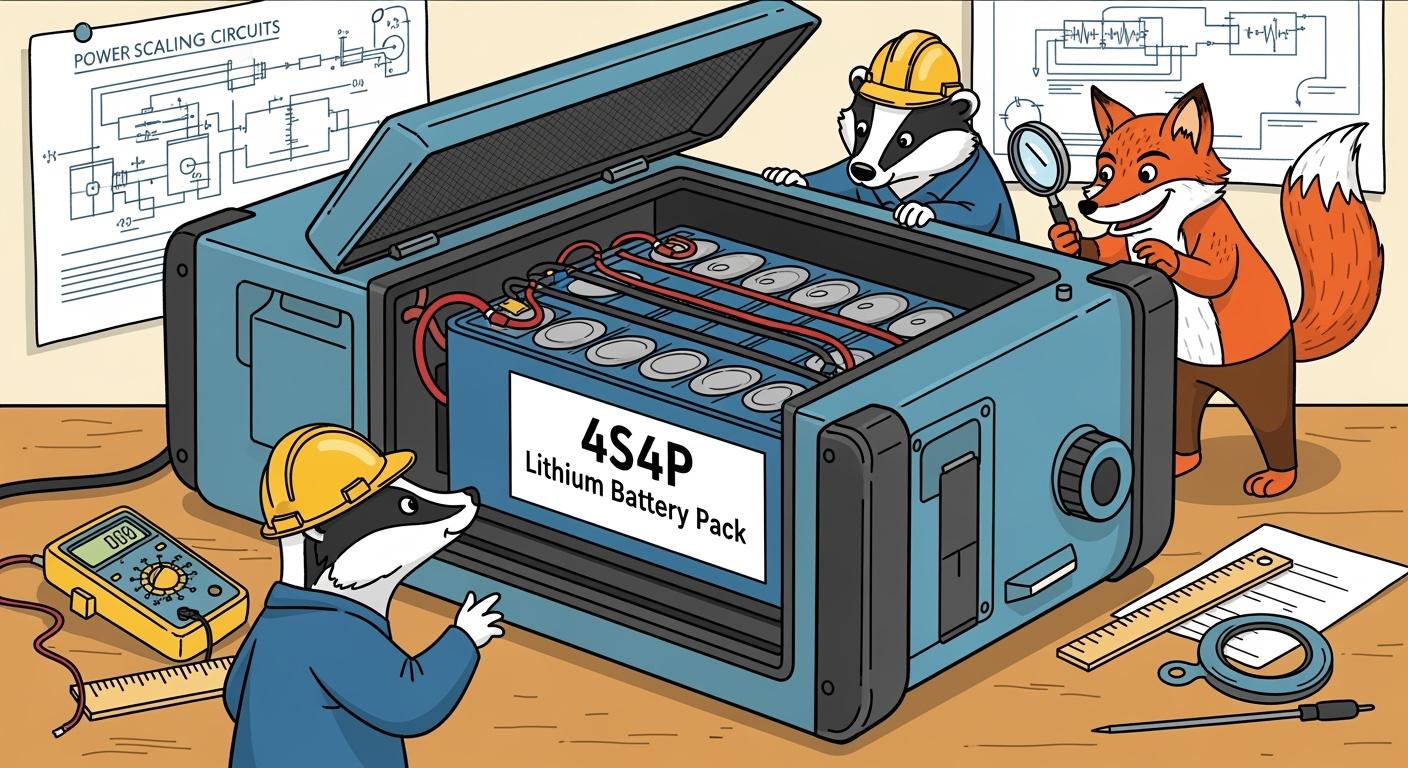
You need reliable power for Heavy-Duty Testing Instruments in demanding industrial environments. The 4S4P lithium battery architecture gives you modularity, high energy density, and stable power delivery. These features help you increase operational efficiency and improve test accuracy. Lithium battery packs offer consistent performance, which supports your requirements for precision and reliability.
Key Takeaways
The 4S4P lithium battery architecture offers modularity, allowing easy upgrades and replacements without system downtime.
This battery design optimizes space utilization, enabling higher-capacity installations in tight industrial environments.
Stable voltage output from 4S4P packs ensures accurate test results, reducing measurement errors in critical applications.
Longer cycle life of 4S4P batteries leads to lower maintenance costs and fewer replacements, enhancing operational efficiency.
Safety features in 4S4P systems protect equipment and personnel, ensuring reliable performance in demanding settings.
Part1: Scalability for Heavy-Duty Testing Instruments
1.1 Modular Battery Design
You need scalable solutions when powering Heavy-Duty Testing Instruments in industrial settings. The 4S4P lithium battery architecture gives you a modular approach, allowing you to build battery banks that match your specific power requirements. Each module operates independently, so you can replace or upgrade individual units without shutting down the entire system. This design reduces downtime and simplifies maintenance. If one module fails, the rest continue to supply power, which increases reliability for your operations.
Modular battery packs offer flexibility and adaptability. You can expand capacity by adding more modules or adjust energy output for different applications. Manufacturers in sectors like off-highway vehicles, marine, and industrial machinery use modular batteries to create multiple product variants with minimal design changes. This approach helps you decrease time to market and reduce risk, especially when you need to validate and certify new products quickly.
Modular batteries support:
Faster maintenance and replacement
Easy scalability for growing energy needs
Reduced risk of system failure
Customization for diverse industrial applications
1.2 Efficient Space Utilization
Space is often limited in industrial environments. The 4S4P configuration allows you to optimize battery placement and maximize available space. You can arrange modules to fit into tight compartments or stack them to save room. This efficient use of space means you can install higher-capacity battery banks without increasing the footprint of your equipment.
Manufacturers in construction and agriculture rely on modular systems to adjust energy storage capacity for different machines. You benefit from a design that supports easy upgrades and replacements, which keeps your equipment running smoothly. The modular structure also simplifies the validation process, helping you bring new products to market faster.
When you choose a modular lithium battery pack, you gain the ability to scale power and energy storage as your needs change. This flexibility is essential for maintaining productivity and reliability in demanding industrial environments.
Part2: Technical Structure of 4S4P Lithium Battery Packs
2.1 Series and Parallel Explained
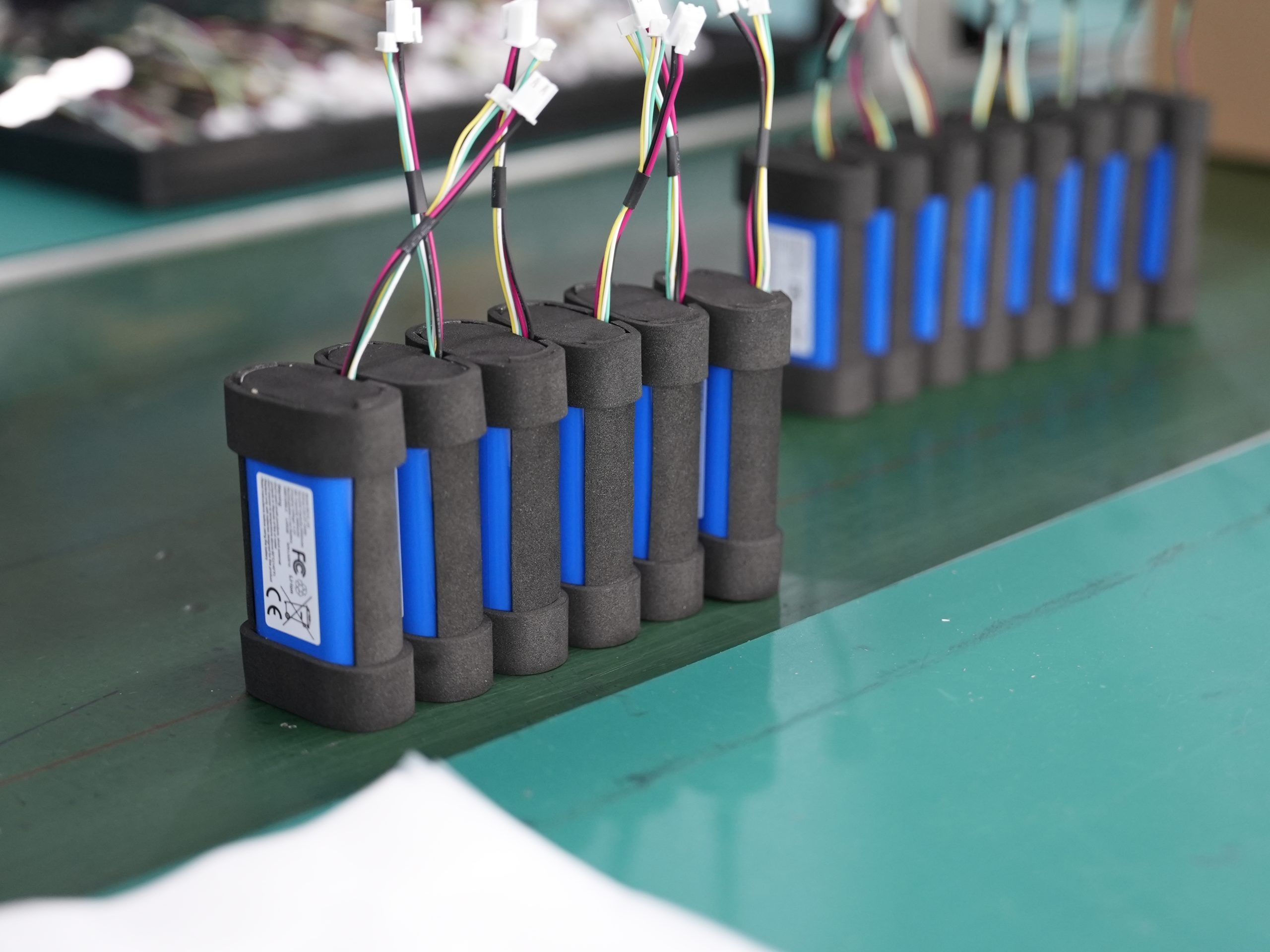
You often need both high voltage and large capacity for Heavy-Duty Testing Instruments. The 4S4P lithium battery architecture achieves this by combining series and parallel connections. In a series configuration, you connect four lithium-ion cells end-to-end. Each cell adds its voltage, so you reach a total of 14.4V (for NMC, LCO, or LMO chemistries; LiFePO4 typically delivers 12.8V). This higher voltage supports demanding equipment in industrial, medical, and robotics sectors.
Parallel connections work differently. You link four cells side-by-side, which increases the total ampere-hour (Ah) capacity. This setup lets you run devices longer without increasing the voltage. You get more energy storage in the same space, which is crucial for security systems and infrastructure monitoring.
Series connections boost voltage. Parallel connections increase capacity. The 4S4P design gives you both, making it ideal for industrial applications.
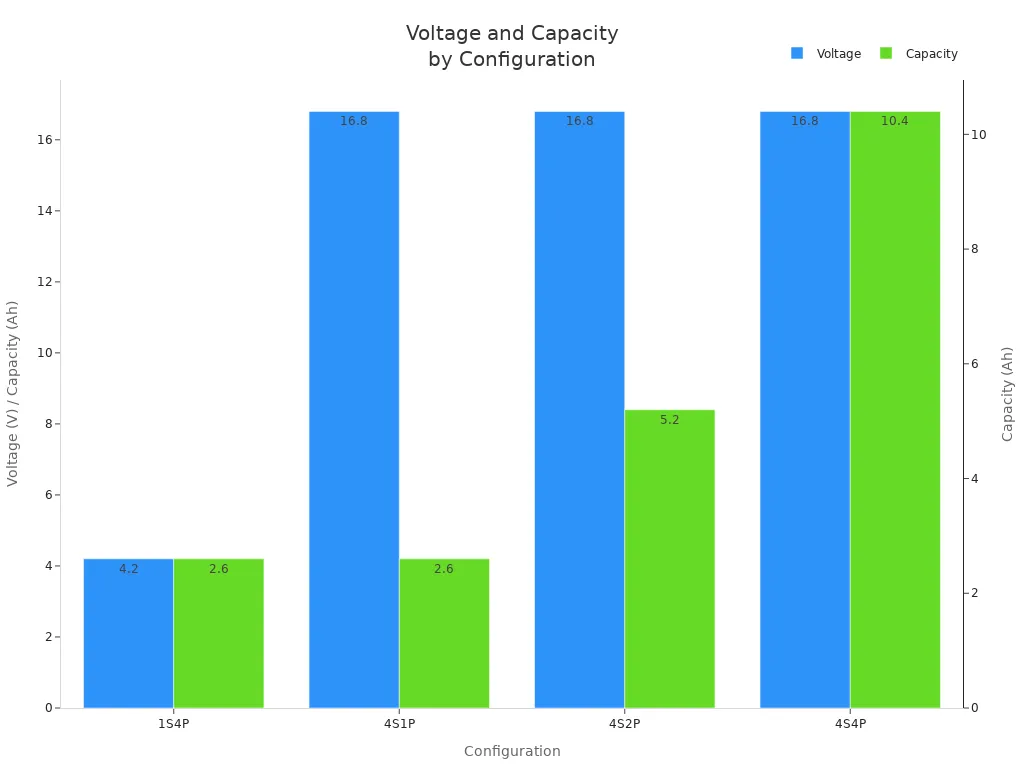
Here’s a quick comparison of battery configurations:
Configuration | Voltage (V) | Capacity (Ah) |
|---|---|---|
1S4P | 4.2 | 2.6 |
4S1P | 16.8 | 2.6 |
4S2P | 16.8 | 5.2 |
4S4P | 16.8 | 10.4 |
2.2 Load Leveling and Peak Shaving
You face fluctuating power demands in industrial environments. The 4S4P structure helps you manage these changes through load leveling and peak shaving. Load leveling spreads energy use evenly, preventing sudden drops or spikes. Peak shaving reduces the impact of short bursts of high demand, protecting your equipment and extending battery life.
A battery management system (BMS) monitors each cell and balances charging and discharging. This ensures stable performance, especially when you use lithium chemistries like LiFePO4 for longer cycle life or NMC for higher energy density. You maintain consistent output, which improves test accuracy and safety in medical devices, robotics, and infrastructure monitoring.
Tip: A well-designed BMS maximizes the benefits of 4S4P packs, helping you avoid downtime and costly repairs.
You gain reliable power delivery, longer operational periods, and safer testing environments. The 4S4P architecture supports your need for precision and efficiency in every application.
Part3: Reliability and Performance Benefits
3.1 Stable Voltage Output
You rely on stable voltage to achieve accurate and repeatable results with Heavy-Duty Testing Instruments. The 4S4P lithium battery architecture delivers consistent voltage, even under heavy load or fluctuating demand. This stability comes from the combination of series and parallel connections, which balance the electrical load across all cells.
A steady voltage supply is essential for laboratory scales, medical analyzers, and precision robotics. When voltage remains constant, your instruments operate within their optimal range. This reduces measurement errors and ensures that test results match the resolution of your equipment.
Consistent power means you can trust your data. Voltage fluctuations often cause unreliable readings, but a stable battery pack keeps your instruments performing at their best.
The following table highlights the voltage stability and performance characteristics of 4S4P lithium battery packs:
Specification | Details |
|---|---|
Charge/Discharge Cycles | Minimum 1,000 cycles at >80% capacity retention |
Thermal Stability | Stable under high-load conditions (≤60°C) |
Third-party Test Reports | Recommended to request from suppliers |
Manufacturers use proprietary low temperature and high current assembly processes. These methods ensure that your battery packs operate efficiently, even in challenging industrial environments.
3.2 Longer Cycle Life
You need batteries that last through thousands of charge and discharge cycles. The 4S4P configuration extends the cycle life of lithium battery packs by distributing the workload across multiple cells. This reduces stress on each cell and helps maintain high capacity over time.
LiFePO4 batteries, for example, can endure over 3,000 shallow cycles. This far exceeds the 500-800 cycles typical of lead-acid batteries. You benefit from fewer replacements, lower maintenance costs, and less downtime for your equipment.
Longer cycle life means:
Reduced total cost of ownership
Fewer interruptions for battery changes
Reliable performance for industrial, medical, and security applications
You can trust your battery packs to deliver consistent energy, whether you use them in infrastructure monitoring, robotics, or laboratory testing.
3.3 Safety and Accuracy
You must prioritize safety when deploying lithium battery packs in industrial settings. The 4S4P architecture integrates multiple safety features to protect your equipment and personnel. These features include cell balancing, overvoltage protection, and short circuit protection.
Safety Feature | Description |
|---|---|
Cell Balancing | Ensures all cells in the battery pack are charged equally to prolong lifespan. |
Overvoltage Protection | Disconnects the battery from the charger if the voltage exceeds safe limits. |
Short Circuit Protection | Prevents damage by disconnecting the battery during a short circuit event. |
Undervoltage Protection | Disconnects the battery to prevent damage when voltage drops below safe levels. |
Overcharge Protection | Disconnects the battery from the charger to prevent overcharging. |
Over Discharge Protection | Disconnects the battery to prevent damage when voltage drops too low. |
Overcurrent Protection | Safeguards against excessive current that could damage the battery. |
You should always request third-party test reports from your suppliers to verify these safety features. For responsible sourcing, review the conflict minerals statement.
Tip: Advanced battery management systems monitor each cell and activate protection features automatically. This keeps your operations safe and your test results accurate.
Stable voltage output also improves the accuracy of your measurements. Consistent power prevents errors and keeps your instruments within their specified tolerances. You can depend on your test data, even during long or demanding test cycles.
Part4: Comparing Battery Architectures
4.1 4S4P vs. Other Setups
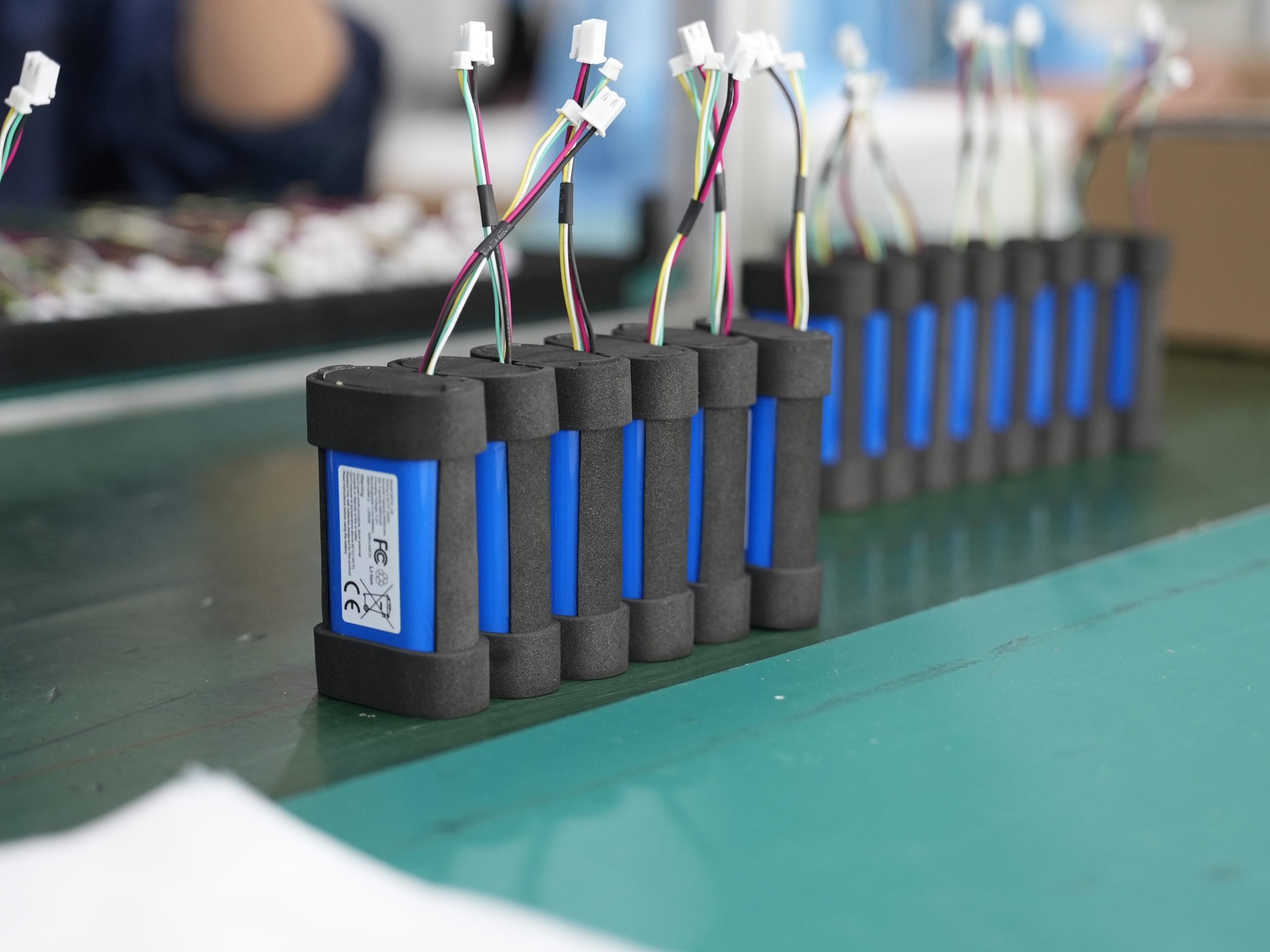
You need to choose the right battery architecture for your application. The 4S4P setup stands out when you compare it with other common configurations like 8S or 2P. Each setup offers different strengths for lithium battery packs used in industrial, medical, and robotics sectors.
Here is a table that compares 4S4P with 8S and 2P setups:
Configuration | Platform Voltage (LiFePO4) | Platform Voltage (NMC/LCO/LMO) | Typical Capacity (Ah) | Energy Density (Wh/kg) | Cycle Life (cycles) | Scalability | Application Fit |
|---|---|---|---|---|---|---|---|
4S4P | 12.8V | 14.4V | High | High | 2000+ (LiFePO4) | Excellent | Heavy-Duty Testing Instruments, Medical, Robotics, Security Systems |
8S | 25.6V | 28.8V | Medium | Medium | 2000+ (LiFePO4) | Moderate | Industrial, Infrastructure |
2P | 3.2V | 3.6V | Low | Low | 2000+ (LiFePO4) | Limited | Consumer Electronics |
Note: You get higher voltage with 8S, but 4S4P gives you better modularity and capacity. The 2P setup works for small devices but cannot support high-power needs.
4.2 Practical Impact for Heavy-Duty Testing Instruments
You want reliable power and easy maintenance for your Heavy-Duty Testing Instruments. The 4S4P architecture gives you both. You can scale your battery bank by adding or removing modules. This flexibility helps you adapt to changing energy needs in industrial and medical environments.
With 4S4P, you reduce downtime because you can replace one module without stopping the whole system. You also get stable voltage and longer cycle life, which means fewer battery replacements and lower maintenance costs. These benefits matter for B2B users who need to keep operations running smoothly.
You also support sustainability goals by choosing modular lithium battery packs. Modular designs reduce waste and make recycling easier. If you want to learn more about sustainability in battery systems, visit our approach to sustainability.
Tip: Choose 4S4P when you need high reliability, easy upgrades, and long-term cost savings for your industrial applications.
You gain measurable business outcomes when you choose 4S4P lithium battery packs for heavy-duty testing instruments. Modularity streamlines assembly and maintenance, reliability lowers battery failure rates, and performance reduces total cost of ownership.
Improvement Type | Measurable Outcome |
|---|---|
Modularity | Streamlined assembly and simplified maintenance, reducing downtime. |
Reliability | Reduced battery failure rates by over 30%, enhancing operational efficiency. |
Performance | Lower total cost of ownership by up to 17%, contributing to cost efficiency. |
Consistent internal layout makes maintenance easier.
Modular design maximizes space and improves technician access.
Intelligent Battery Management Systems reduce failures through real-time analysis.
You can improve operational efficiency and test accuracy. Consider 4S4P solutions to power your industrial applications with confidence.
FAQ
What does 4S4P mean in lithium battery packs?
You see “4S4P” to describe a battery pack with four cells in series and four cells in parallel. This setup increases both voltage and capacity, making it ideal for heavy-duty testing instruments in industrial, medical, and robotics sectors.
How does 4S4P architecture improve reliability?
You benefit from 4S4P because it distributes the electrical load across multiple cells. This design reduces stress on each cell, extends cycle life, and ensures stable voltage output for your testing instruments.
Which lithium battery chemistries work best in 4S4P packs?
You can use LiFePO4, NMC, LCO, or LMO chemistries in 4S4P packs. LiFePO4 offers 12.8V platform voltage and over 2,000 cycles. NMC, LCO, and LMO provide 14.4V and high energy density for demanding industrial and medical applications.
Can you scale 4S4P battery packs for different applications?
You can easily scale 4S4P packs by adding or removing modules. This flexibility supports various needs in infrastructure, security systems, and robotics. Modular design helps you adapt quickly to changing power requirements.
What safety features should you expect in a 4S4P lithium battery pack?
You should expect cell balancing, overvoltage protection, short circuit protection, and thermal management. These features protect your equipment and personnel, ensuring safe operation in industrial and medical environments.


