

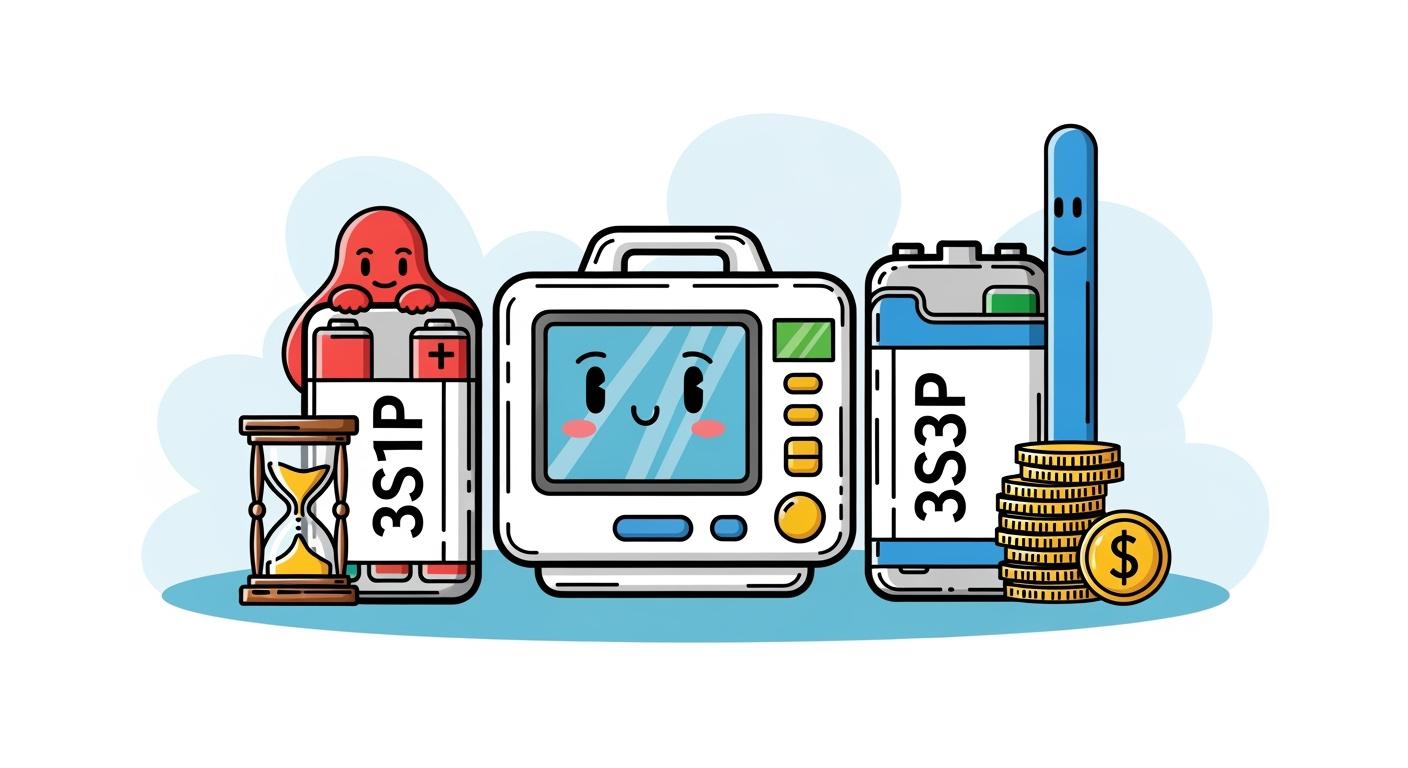
You gain longer lifespan and lower total cost of ownership when you choose the 3S3P battery configuration for patient monitors. This direct comparison in Backup Battery Solutions matters because it affects your maintenance schedules, device reliability, and budget planning. The right selection improves operational efficiency and supports patient safety.
Key Takeaways
Choose the 3S3P battery pack for patient monitors to enjoy a longer lifespan and lower total cost over time. This choice reduces maintenance needs and improves device reliability.
Monitor environmental factors like temperature and charging habits to maximize the lifespan of your batteries. Proper care can extend battery life and reduce replacement frequency.
Investing in 3S3P packs may cost more upfront, but it leads to fewer replacements and lower labor costs, making it a smarter long-term investment for healthcare facilities.
Part1: Backup Battery Solutions Overview
1.1 3S1P vs. 3S3P Summary Table
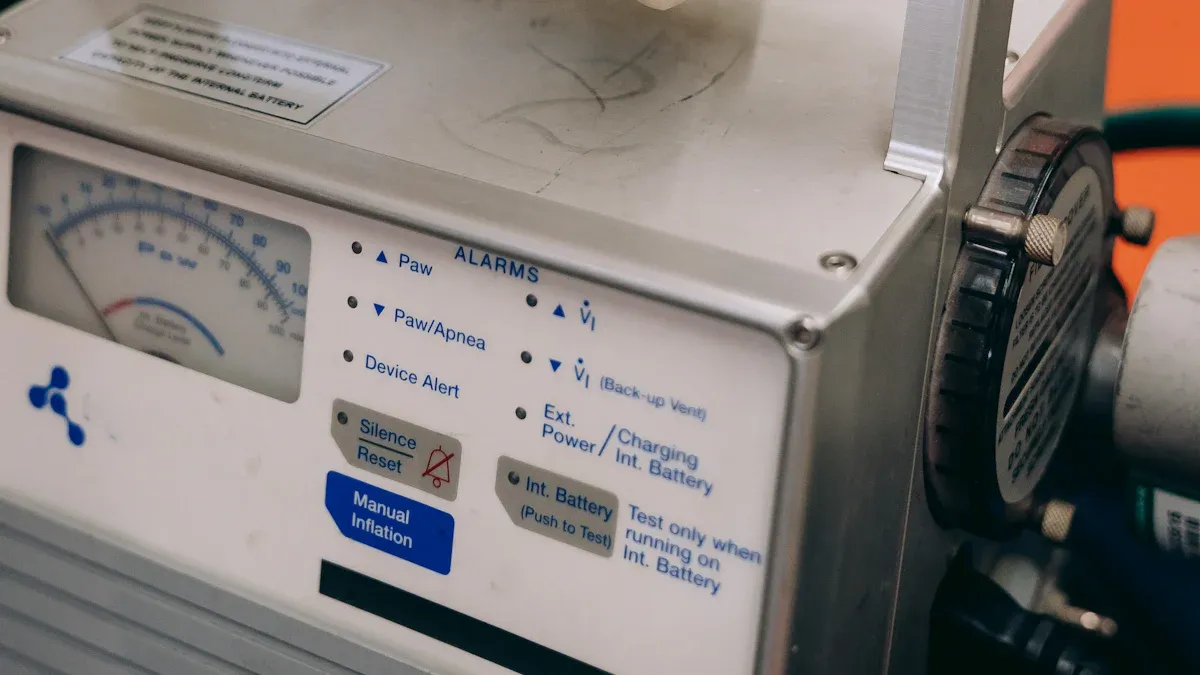
You need a clear comparison when evaluating Backup Battery Solutions for patient monitors. The table below outlines the main differences between 3S1P and 3S3P lithium-ion battery pack configurations, focusing on lifespan, cost, and essential features.
Feature | 3S1P Lithium-Ion Pack | 3S3P Lithium-Ion Pack |
|---|---|---|
Battery Chemistry | Lithium-ion | Lithium-ion |
Configuration | 3 cells in series, 1 in parallel | 3 cells in series, 3 in parallel |
Typical Capacity | Lower | Higher |
Cycle Life | 500–800 cycles | 500–800 cycles |
Expected Lifespan | 1–2 years | 2–4 years |
Initial Cost | Lower | Higher |
Replacement Frequency | More frequent | Less frequent |
Maintenance Requirements | Higher | Lower |
Application Suitability | Low-demand devices | High-reliability monitors |
Note: Hospitals worldwide now prefer high energy density lithium-ion battery packs for portable medical devices. These batteries deliver reliable storage and long cycle life, supporting continuous patient monitoring with fewer interruptions.
1.2 Key Features Compared
When you select Backup Battery Solutions, you must consider several factors that impact device performance and patient safety:
Lifespan and Reliability: 3S3P packs offer a longer cycle life and extended service intervals. This reduces the risk of unexpected downtime in critical care environments.
Cost Efficiency: Although 3S3P packs require a higher initial investment, you benefit from fewer replacements and lower long-term costs.
Maintenance: 3S3P configurations demand less frequent maintenance. This aligns with the trend toward smart battery management systems, which use predictive analytics to reduce failures.
Patient Outcomes: Reliable battery performance ensures continuous monitoring, which improves patient outcomes and safety.
Healthcare purchasing managers often evaluate battery options based on lifespan, replacement costs, and maintenance needs. You can optimize your device fleet by choosing a configuration that matches your operational priorities and budget.
Part2: Lifespan Comparison
2.1 3S1P Lifespan Factors
You need to understand what affects the lifespan of a 3S1P lithium-ion battery pack in medical devices. Several environmental and usage factors play a significant role in how long these batteries last.
High Temperatures: Accelerate chemical degradation, which shortens battery life.
Low Temperatures: Reduce electrochemical activity, limiting power output and efficiency.
Temperature Fluctuations: Cause mechanical stress, which can lead to cracks in battery components.
Charging Habits: Charging between 20% and 80% state of charge extends battery life. Full charges and deep discharges reduce cycle count.
Depth of Discharge (DoD): Shallow discharges increase cycle life. Deep discharges wear out the battery faster.
Current Draw: High current demands generate heat, which speeds up degradation.
Idle Time: Leaving batteries inactive at extreme states of charge leads to capacity loss.
You must monitor these factors closely to maximize the lifespan of your Backup Battery Solutions. In most hospital environments, you see 3S1P packs lasting between 1 and 2 years, with 300–500 charge cycles. Frequent replacements and higher maintenance needs can disrupt device availability.
2.2 3S3P Lifespan Factors
You benefit from a longer lifespan when you choose a 3S3P lithium-ion battery pack. The parallel arrangement and built-in redundancy provide several advantages for medical applications.
Feature | Benefit |
|---|---|
Redundancy | If one cell fails, the others continue operating, which improves system resilience in critical care. |
Parallel Cells | Lower current per cell reduces heat and chemical stress, extending overall battery life. |
Higher Capacity | More energy storage means fewer deep discharges, which increases cycle life. |
You can expect 3S3P packs to deliver 800–1,200 cycles and last 2–4 years under typical hospital use. The design reduces the risk of sudden failures and supports continuous operation in high-reliability monitors.
Tip: Always use battery management systems that monitor cell health and balance charging. This practice further extends the lifespan of your Backup Battery Solutions.
2.3 Practical Impact on Patient Monitors
You see a direct impact on maintenance schedules and device uptime when you select the right battery configuration. The following table summarizes how battery lifespan affects your operations:
Aspect | Impact on Maintenance and Uptime |
|---|---|
Battery Lifespan | Longer-lasting batteries reduce replacement frequency, which minimizes unexpected downtime and costs. |
Maintenance Scheduling | Predictable battery life helps you plan maintenance, reducing emergency repairs and associated expenses. |
Device Uptime | Effective battery management prevents sudden failures, ensuring critical devices remain operational. |
You improve patient safety and operational efficiency by choosing a battery pack with a longer lifespan. Fewer replacements mean less disruption in patient monitoring and lower total cost of ownership. For hospitals and clinics, the 3S3P configuration offers a clear advantage in reliability and long-term value.
Part3: Cost Analysis
3.1 3S1P Initial and Long-term Costs
You often choose the 3S1P lithium-ion battery pack for its lower upfront price. This configuration uses three cells in series and one in parallel, which keeps material and assembly costs down. However, you need to consider more than just the purchase price.
Cost Factor | 3S1P Lithium-Ion Pack |
|---|---|
Initial Purchase Price | $40–$60 per pack |
Typical Cycle Life | 300–500 cycles |
Expected Lifespan | 1–2 years |
Replacement Frequency | Every 12–18 months |
Maintenance Labor | Higher (frequent replacements) |
Downtime Risk | Higher |
You pay less at first, but you face more frequent replacements. Each replacement requires labor and may cause device downtime. Over five years, you could replace the battery three to five times. These costs add up quickly, especially in large healthcare facilities.
Note: Lithium-ion batteries lose capacity with each cycle, making frequent replacements necessary in high-use environments.
3.2 3S3P Initial and Long-term Costs
You invest more upfront when you select the 3S3P lithium-ion battery pack. This configuration uses three cells in series and three in parallel, which increases capacity and redundancy. The higher initial cost often pays off over time.
Cost Factor | 3S3P Lithium-Ion Pack |
|---|---|
Initial Purchase Price | $90–$120 per pack |
Typical Cycle Life | 800–1,200 cycles |
Expected Lifespan | 2–4 years |
Replacement Frequency | Every 30–48 months |
Maintenance Labor | Lower (fewer replacements) |
Downtime Risk | Lower |
You replace the battery less often, which reduces labor costs and device downtime. Over five years, you may only need one or two replacements. This longer service interval supports continuous patient monitoring and lowers the risk of unexpected failures.
Tip: The 3S3P configuration aligns with best practices for high-reliability medical devices, as recommended by Nature Energy for lithium-ion battery longevity.
3.3 ROI and Total Cost of Ownership
You need to look beyond the sticker price to understand the true value of each Backup Battery Solutions option. The table below compares the five-year total cost of ownership (TCO) for both configurations, including purchase, labor, and downtime costs.
Cost Component | 3S1P Lithium-Ion Pack | 3S3P Lithium-Ion Pack |
|---|---|---|
Initial Purchase | $50 | $100 |
Replacements (5 yrs) | 3–5 | 1–2 |
Total Battery Cost | $150–$250 | $100–$200 |
Labor (per swap) | $20 | $20 |
Total Labor Cost | $60–$100 | $20–$40 |
Downtime Cost | Higher | Lower |
5-Year TCO | $210–$350 | $120–$240 |
You see that the 3S3P pack, despite its higher initial price, delivers a lower total cost over five years. Fewer replacements mean less labor and less risk of device downtime. This makes the 3S3P configuration a better investment for most healthcare organizations.
Key Takeaway: You maximize ROI and minimize operational disruptions when you choose the 3S3P lithium-ion battery pack for patient monitors. This approach supports long-term reliability and cost savings, which are critical in medical environments.
You should always evaluate Backup Battery Solutions based on both immediate and long-term costs. The right choice ensures reliable patient care and efficient resource management.
Part4: Choosing the Right Solution
4.1 Use Cases for 3S1P and 3S3P
You must match the battery configuration to your device’s operational demands. The 3S1P lithium-ion pack suits low-demand patient monitors and devices with short usage cycles. You see this option in basic monitoring equipment where cost control is essential and downtime poses minimal risk.
You should select the 3S3P lithium-ion pack for high-reliability patient monitors. These batteries excel in environments where continuous monitoring and rapid response are critical. You find 3S3P packs in:
Critical care units and intensive care monitors
Emergency and mobile healthcare units
Field hospitals and transport monitors
Devices requiring predictable discharge curves and low failure rates
You benefit from rigorous testing and compliance with medical safety standards when you choose 3S3P packs. This ensures suitability for both hospital and field use.
4.2 Maintenance and Reliability Considerations
You need to consider how redundancy and capacity affect patient safety and operational efficiency. The 3S3P configuration provides built-in redundancy, which means your device continues to operate even if one cell fails. You experience fewer maintenance interruptions and longer service intervals.
The following table shows how battery reliability impacts patient safety outcomes:
Description | Impact on Patient Safety Outcomes |
|---|---|
Battery reliability is crucial; a single failure can disrupt monitoring or delay treatment. | Disruption in monitoring can lead to delayed treatment, affecting patient safety. |
Advanced lithium-ion batteries ensure reliable performance in medical devices. | Reliable performance is essential for ongoing patient care and safety. |
Reliable battery performance ensures continuous monitoring and therapy. | Continuous monitoring and therapy directly enhance patient safety and satisfaction. |
Lightweight, compact devices with extended battery life and rapid charging improve usability and quality of care. | Uninterrupted therapy and monitoring improve health outcomes and patient confidence. |
Tip: You improve operational efficiency and patient safety when you choose battery packs with higher capacity and redundancy. You reduce downtime and maintenance costs, supporting better health outcomes and satisfaction.
You gain superior lifespan and lower total cost by choosing the 3S3P lithium-ion battery pack for patient monitors. This configuration boosts device reliability and reduces maintenance costs. You should standardize on 3S3P packs and implement preventive maintenance strategies to maximize operational efficiency and patient safety.
FAQ
What makes 3S3P lithium-ion battery packs better for medical devices?
You gain longer lifespan and higher reliability with 3S3P packs. These packs support continuous operation in medical environments.
How often should you replace backup batteries in patient monitors?
You should replace 3S1P packs every 12–18 months. You can expect 3S3P packs to last 30–48 months. This reduces maintenance and downtime.
Can Large Power customize lithium battery solutions for healthcare applications?
You receive tailored lithium-ion battery packs from Large Power. Request a custom consultation for your medical device needs.


