


You can count on lithium battery packs to deliver stable performance in cold weather and outdoor environments when you choose the right solutions. Battery stability remains critical for industries such as robotics, medical, and infrastructure, especially during exposure to extreme conditions. Cold weather can cause a 20-30% drop in rated capacity for lithium batteries, and as temperatures fall, internal resistance rises, reducing efficiency. Many businesses use lithium batteries in cold storage, electric vehicles, and security systems to prevent downtime and maintain operations. Some believe lithium batteries become unsafe or stop working in low temperatures, but managed charging and proper handling ensure reliable operation in these conditions.
Key Takeaways
Choose lithium batteries designed for cold weather to ensure reliable performance in extreme conditions.
Monitor battery temperature before charging to prevent damage and maintain battery life.
Use thermal management solutions like battery heaters and blankets to keep batteries warm in cold environments.
Select battery chemistries like LiFePO4 or LTO for better capacity retention and safety in low temperatures.
Regularly inspect and maintain batteries to avoid failures and ensure stable operation in outdoor applications.
Part 1: Battery Stability in Cold Weather
1.1 Key Factors
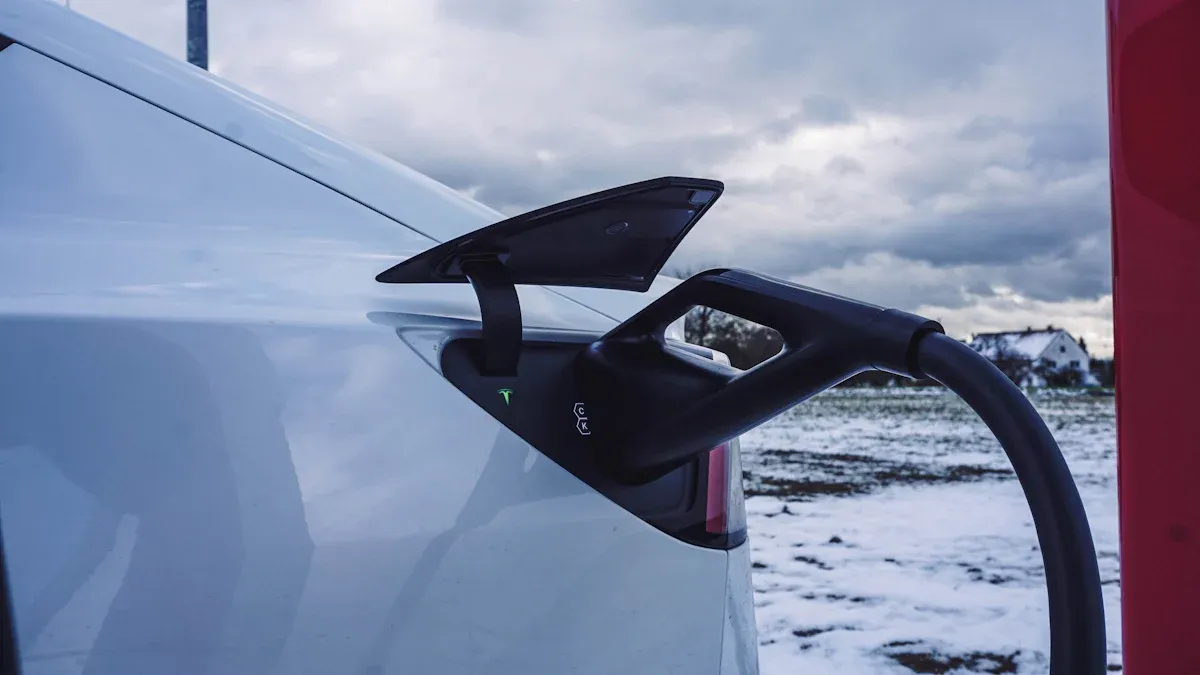
You need to understand battery stability when you use lithium battery packs in cold weather. Battery stability means the battery can deliver reliable power and maintain its rated performance, even when temperatures drop. In cold weather, lithium batteries face several changes that affect how well they work. The chemical reactions inside the battery slow down. This reduces both efficiency and capacity. You will notice that the battery does not last as long or deliver as much power as it does in warmer conditions.
The internal resistance of lithium batteries increases in cold weather. This makes it harder for the battery to supply energy to your devices. The electrolyte inside the battery becomes less conductive, which slows the movement of lithium ions. These ions are important for charging and discharging. When the temperature drops, lithium plating can occur during charging. This means lithium ions deposit on the anode surface instead of moving into the battery structure. This process reduces capacity and can create safety risks.
Cold weather also affects the electrochemical processes inside the battery. The desolvation kinetics and ionic conductivity drop, which slows down the battery’s reactions. The solvation structure becomes more important for battery performance. You will see that electrolyte viscosity increases, which makes ion movement slower. For example, a lithium battery rated at 100% capacity at 25°C may only deliver about 50% at -18°C. The migration and diffusion of lithium ions become much harder, and charge transfer resistance rises below -20°C. This creates a barrier for ion transport and leads to high polarization.
1.2 Industry Demands
Many industries rely on battery stability in cold weather. You see this need in medical devices, robotics, security systems, and infrastructure. These sectors require lithium battery packs that can perform well in harsh conditions. Industry standards set clear expectations for how batteries should work in low temperatures. The table below shows how low-temperature lithium batteries compare to standard batteries:
Performance Aspect | Low-Temperature Lithium Batteries | Standard Batteries |
|---|---|---|
Internal Resistance | Higher in cold weather | Typically lower |
Voltage Drops | More likely in cold conditions | Less likely |
Longevity | Longer cycle life | Shorter cycle life |
Charging Speed | Faster in cold | Slower |
Capacity in Cold Conditions | Maintained | Reduced |
Material Composition | Specialized for cold | Standard materials |
Effects of Temperature Changes | Can cause damage | Less affected |
Performance in Extreme Cold | Reliable power | Reduced efficiency |
You must choose lithium battery packs designed for cold weather if you want reliable performance. These batteries use special materials and chemistries to handle low temperatures. You will find them in applications where downtime is not an option, such as medical monitoring, industrial automation, and outdoor security systems. Battery stability in cold weather ensures your operations run smoothly, even in the harshest conditions. Consult Large Power for reliable custom battery solutions in cold weather.
Part 2: Performance Challenges at Low Temperatures
2.1 Efficiency Loss
You face significant efficiency loss when you operate lithium battery packs in cold weather. The chemical reactions inside the battery slow down, which reduces battery performance and usable capacity. The electrolyte can solidify or lose conductivity, causing rapid degradation in cold weather performance. You see increased polarization, which lowers the discharge voltage and wastes energy. The Li+ ions struggle to move through the battery, making charging and discharging difficult. This process leads to lower coulombic efficiency and can even cause lithium dendrites to grow during charging, which poses safety risks.
Tip: Always monitor battery temperature before charging. Charging a cold lithium battery can result in permanent damage.
You notice that the discharge capacity of lithium-ion batteries drops sharply below 0°C. For example, at -40°C, you may see up to a 12% capacity retention compared to room temperature. The physical changes in the electrolyte slow down ion movement, and the electrochemical processes become sluggish. These factors combine to reduce battery stability and cold weather performance, especially in critical applications like medical devices, robotics, and security systems.
2.2 Capacity and Lifespan
Cold weather affects both the capacity and battery life of lithium batteries. The chemical reactions needed for energy generation slow down, which means you get less power output and shorter runtime. The intercalation rate of lithium ions drops, so the battery cannot deliver its full rated capacity. Freezing temperatures make it harder for lithium ions to transfer, and the electrolyte loses efficiency. You may experience a loss of up to 40% capacity at -20°C, which impacts battery performance in industrial and infrastructure applications.
Repeated freeze-thaw cycles create additional challenges. Lithium plating can occur during charging at low temperatures, which is irreversible and shortens battery life. Increased internal resistance and decreased usable capacity become more common with each cycle. Over time, you may see sudden power drops, inability to hold a charge, or even total shutdown under moderate load. These failure modes threaten the reliability of lithium battery packs in outdoor and cold weather conditions.
Challenge | Impact on Battery Packs | Application Risk |
|---|---|---|
Reduced Capacity | Shorter runtime, less power output | Downtime in robotics, security |
Increased Resistance | Higher energy demand, lower efficiency | System failure in infrastructure |
Lithium Plating | Permanent damage, shorter lifespan | Medical device malfunction |
Freeze-Thaw Damage | Sudden shutdown, loss of charge | Industrial process interruption |
2.3 Safety Concerns
Safety remains a top priority when you use lithium batteries in cold weather. Charging or discharging at low temperatures increases the risk of lithium plating. This process causes metallic lithium to form on the anode surface instead of embedding properly. Dendritic structures from lithium plating can puncture the separator, leading to internal short circuits. If a short circuit occurs, you face the risk of thermal runaway, which can cause overheating, fires, or explosions.
Note: Always follow manufacturer guidelines for charging lithium battery packs in cold weather. Use battery management systems to monitor temperature and prevent unsafe charging.
You also encounter cumulative cold damage, which increases internal resistance and reduces usable capacity. Over time, these safety risks can compromise battery stability and cold weather performance. You must select battery packs with advanced safety features and robust chemistries like LiFePO4, NMC, or LTO for demanding environments. These solutions help maintain battery performance and protect your operations in medical, robotics, security, and industrial sectors.
Part 3: Low-Temperature Battery Solutions

3.1 Advanced Chemistries
You need advanced chemistries to achieve battery stability in cold weather. Low-temperature battery technologies use unique electrolyte compositions and solid-state designs to maintain performance in harsh conditions. You see these solutions in medical devices, robotics, security systems, and industrial infrastructure.
Batteries with dibutyl ether and lithium salt electrolytes deliver reliable power in sub-zero environments. Dibutyl ether remains liquid even at high temperatures, so you get stable operation across a wide temperature range.
All-solid-state batteries (ASSBs) use solid-state electrolytes (SSEs). These electrolytes resist temperature changes and avoid problems like increased viscosity or reduced solubility that affect liquid electrolytes.
Lithium-ion chemistries such as LiFePO4, NMC, LTO, and lithium metal offer different advantages for cold weather. You should select the chemistry that matches your application’s needs.
Battery Type | Key Features |
|---|---|
All-solid-state batteries (ASSBs) | Solid-state electrolytes resist temperature changes, improving low-temperature battery stability. |
Dibutyl Ether Electrolyte | Weak molecular interactions allow better lithium ion mobility at sub-zero temperatures. |
You can explore sustainable battery technologies for your business.
3.2 Thermal Management
Thermal management plays a critical role in maintaining lithium battery performance in cold weather. You must keep your battery packs warm to prevent capacity loss and extend battery life. You can use several thermal management solutions:
Battery heaters ensure optimal operation and efficient charging, even in freezing conditions.
Battery blankets provide insulation and maintain consistent temperatures, reducing the risk of sudden failures.
Preheating during start-up boosts discharging power and improves charging efficiency in cold regions.
Heating during fast-charge reduces charging time and energy consumption.
Heating Strategy | Effectiveness | Energy Consumption |
|---|---|---|
External Air Heating | Low heating efficiency, high energy use | Significant electricity use, reduces EV range by 22% |
Preheating during start-up | Essential for cold regions, increases power | Lower consumption compared to external methods |
Tip: Preheating your lithium battery before charging can decrease charging time from hours to under 60 minutes, even at -20°C. The additional heating cost stays below $1.
You see thermal management solutions in electric vehicles, renewable energy storage, and industrial automation. These strategies help you maintain battery stability and reduce downtime in critical applications.
3.3 Battery Management Systems
Battery management systems (BMS) optimize lithium battery operation in cold weather. You need a smart BMS to monitor cell temperatures and activate heating elements when necessary. This prevents freezing and keeps your battery within safe operating limits.
A BMS protects your low-temperature battery from reduced capacity and lithium plating during charging. You avoid permanent damage and maintain battery life. The BMS controls temperature, charging rates, and safety protocols, ensuring reliable performance in medical, robotics, security, and infrastructure sectors.
Note: Always use a BMS with your lithium battery packs in cold weather. This system prevents unsafe charging and extends battery life.
Part 4: Choosing the Right Low-Temperature Battery
4.1 Chemistry Comparison
You need to compare different lithium battery chemistries before selecting a low-temperature battery for your business. Each chemistry offers unique strengths and weaknesses in cold weather. The table below shows how LiFePO4 and Li3V2(PO4)3 perform at low temperatures:
Chemistry | Resistance at Low Temp | Cell Polarization | Chemical Diffusion Coefficient | Activation Energy | Reversible Capacity at -20°C |
|---|---|---|---|---|---|
LiFePO4 | Higher | Higher | 10−11 2 −1 | 47.48 | Lower |
Li3V2(PO4)3 | Lower | Lower | 10−10 2 −1 | 6.57 | Higher |
You should also consider platform voltage, energy density, and cycle life for each lithium chemistry:
Chemistry | Platform Voltage (V) | Energy Density (Wh/kg) | Cycle Life (cycles) |
|---|---|---|---|
LiFePO4 | 3.2 | 110-140 | 2000+ |
NMC | 3.7 | 150-220 | 1000-2000 |
LCO | 3.6 | 150-200 | 500-1000 |
LMO | 4.0 | 100-150 | 300-700 |
LTO | 2.4 | 70-80 | 7000+ |
Solid-state | 3.2-3.8 | 250+ | 2000+ |
Lithium metal | 3.6 | 350+ | 500-1000 |
You must evaluate these metrics to ensure battery stability and reliable charging in cold weather. For responsible sourcing, review your supplier’s conflict minerals statement here.
4.2 Key Features
You should prioritize several features when choosing a low-temperature battery for industrial or commercial use. The table below highlights the most important factors:
Feature | Description |
|---|---|
Temperature Range | Batteries must operate effectively in extreme temperatures, especially below freezing. |
Capacity Retention | Evaluate how much energy is retained at low temperatures; aim for at least 70% capacity retention. |
Safety Features | Prioritize batteries with protection against overcharging and overheating to ensure device safety. |
Longevity | Look for batteries with long cycle life to reduce replacement frequency and costs. |
Certification | Ensure compliance with safety and performance standards for medical applications. |
You need batteries that support charging in cold weather and charging below freezing. These features help maintain battery stability and reduce downtime in critical conditions.
Tip: Always check for advanced safety features and certifications when selecting lithium batteries for medical, robotics, or infrastructure projects.
4.3 Application Examples
You can find successful low-temperature battery deployments in many industries. Saft batteries power AIS base stations for vessel traffic management in cold climates. These stations use insulation and unique charging solutions to extend battery life. The Meshtastic community deploys LoRa nodes on mountaintops and rural areas, using standard lithium cells and solar panels. These systems report zero failures, even in harsh conditions. Kongsberg Seatex AS uses Saft batteries in AIS base stations, with multiple packs and heating solutions to preserve capacity and longevity.
You see lithium batteries supporting medical devices, robotics, security systems, and industrial infrastructure in cold weather. Low-temperature battery packs deliver reliable charging and stable performance, even when charging below freezing.
Part 5: Safe Charging and Maintenance
5.1 Charging Protocols
Charging lithium batteries in cold weather requires careful attention to protocols. You should always follow the manufacturer’s recommendations for your specific low-temperature battery. Charging below freezing can reduce the cycle lifespan and cause permanent damage. For best results, use preheating or battery blankets to bring the battery above 0°C before charging. This step helps prevent lithium plating and maintains battery stability.
Here is a quick reference for charging rates and temperature range:
Charging Rate | Temperature Range |
|---|---|
Below 0.5C | Below 50°F |
Around 0.1C | Near freezing |
Caution | Charging below freezing may reduce cycle lifespan |
LFP batteries handle cold weather better than standard lithium-ion chemistries, but you still need to monitor charging closely.
Always check the manufacturer’s specifications for your low-temperature battery.
If you charge a lithium cell to 4.2V in the cold, you may find it overcharged when it warms up.
5.2 Storage and Handling
Proper storage and handling extend the life of your lithium battery packs, especially in off-grid and industrial settings. You should store batteries in a cool, dry place to avoid high temperatures and moisture. Maintain a charge level around 40% during storage to prevent capacity loss. Use insulating materials to protect your low-temperature battery from short circuits and harsh conditions.
Store batteries away from direct sunlight and heat sources.
Insulate battery packs in off-grid living or outdoor infrastructure to prevent rapid temperature swings.
Handle batteries with care to avoid physical damage.
5.3 Monitoring and Prevention
You can avoid most battery failures in cold weather by using advanced monitoring and prevention strategies. Install temperature management systems with heating elements to keep your low-temperature battery within the optimal temperature range. Use a battery management system (BMS) to monitor temperature, voltage, and current in real time. This approach helps you make immediate adjustments and avoid unsafe charging.
Schedule regular maintenance and inspections for your lithium battery packs.
Use RTUs to log battery temperatures and set custom alarms for extreme conditions.
Install thermal sensors to detect issues early and prevent failures in medical, robotics, or security systems.
Apply temperature-compensated charging to optimize performance in off-grid and industrial applications.
Tip: Regular monitoring and preventive maintenance keep your low-temperature battery reliable, even in the harshest off-grid environments.
Part 6: Selecting for Outdoor Applications
6.1 Environmental Assessment
You must assess several environmental factors before deploying lithium battery packs outdoors. Outdoor conditions can change quickly, so you need batteries that withstand temperature swings, moisture, and sunlight. The table below highlights key factors to consider:
Environmental Factor | Description |
|---|---|
Temperature | Batteries require well-ventilated and temperature-controlled airflow to prevent overheating. |
Ventilation | Proper airflow is essential to dissipate heat and prevent gas accumulation. |
Sunlight Exposure | Batteries should be kept out of direct sunlight to avoid damage from UV rays. |
Moisture | Dirt and humidity can corrode batteries and create short circuits; regular inspection is needed. |
Only manufacturer-approved cleaning chemicals should be used to avoid damaging the battery. |
You should inspect battery installations regularly. Use enclosures that shield packs from rain and dust. In robotics, medical, and infrastructure projects, these steps help maintain battery stability and extend service life.
6.2 Safety and Longevity
Outdoor lithium battery packs face tougher safety and longevity requirements than indoor systems. You need batteries with weather resistance, robust grounding, and enhanced security features. Indoor batteries focus on temperature control and moisture protection, but outdoor packs must handle extreme cold, heat, and physical impacts.
Weather resistance protects batteries from rain, snow, and dust.
Grounding and stability prevent electrical hazards in industrial and infrastructure settings.
Regulatory standards such as UN/DOT 38.3 and IEC/EN 62133 ensure safe shipping and operation. Military-grade lithium batteries must pass collision and shooting tests to avoid explosions or fires. Outdoor lithium packs deliver 95-98% of rated capacity below freezing, but you must adjust charging rates based on temperature. For example, LiFePO4 and NMC batteries retain 80-90% discharge capacity at -30°C to -40°C. Cycle life remains high, with over 85% capacity retention after 300 weeks.
Tip: Always verify that your battery packs meet international safety standards for outdoor use.
6.3 Supplier Evaluation
You need reliable suppliers for outdoor lithium battery packs. Evaluate each supplier’s technology, safety record, and ability to deliver stable performance in harsh environments.
You should also review responsible sourcing practices. Check your supplier’s conflict minerals statement here. This step ensures compliance and supports ethical supply chains for your medical, robotics, security, and industrial projects.
You can ensure battery stability in cold weather by storing lithium packs in dry, moderate environments and using insulated containers. Always avoid charging below freezing and preheat batteries before charging. For B2B applications, insist on integrated BMS design, conduct routine maintenance, and prioritize safety over cost. Recent advancements, such as solid-state batteries and improved thermal management, now enable faster charging and better performance in harsh conditions. These strategies help you maintain reliable lithium battery operation across medical, robotics, security, and industrial sectors.
Tip: Consistent charging protocols and proactive design choices protect your investment and extend battery life.
Technology | Benefit in Cold Weather |
|---|---|
Solid-state batteries | Faster charging, higher safety |
Battery thermal management | Stable charging performance |
FAQ
Can lithium battery packs operate reliably in freezing outdoor conditions?
You can rely on lithium battery packs designed for low temperatures. Chemistries like LiFePO4 and LTO maintain over 80% discharge capacity at -30°C. You should use thermal management and smart BMS for stable performance in medical, robotics, and industrial applications.
What is the best lithium battery chemistry for cold weather?
You should choose LiFePO4 or LTO for cold environments. These chemistries offer high cycle life and stable capacity retention below freezing. Solid-state batteries also provide excellent safety and fast charging in harsh conditions.
How do you safely charge lithium battery packs in cold weather?
You must preheat the battery above 0°C before charging. Use battery blankets or integrated heaters. A smart BMS monitors temperature and prevents unsafe charging. This approach protects battery life in security systems, infrastructure, and medical devices.
What maintenance steps extend battery life in outdoor environments?
You should schedule regular inspections, monitor temperature, and use insulated enclosures. Maintain charge levels around 40% during storage. These steps help prevent capacity loss and ensure reliable operation in robotics, industrial, and infrastructure sectors.
How do you select a supplier for low-temperature lithium battery packs?
You need to evaluate supplier expertise, safety record, and technology. Choose suppliers with proven performance in harsh climates and compliance with standards like UN/DOT 38.3. Reliable suppliers support medical, security, and industrial projects with stable lithium battery solutions.


