

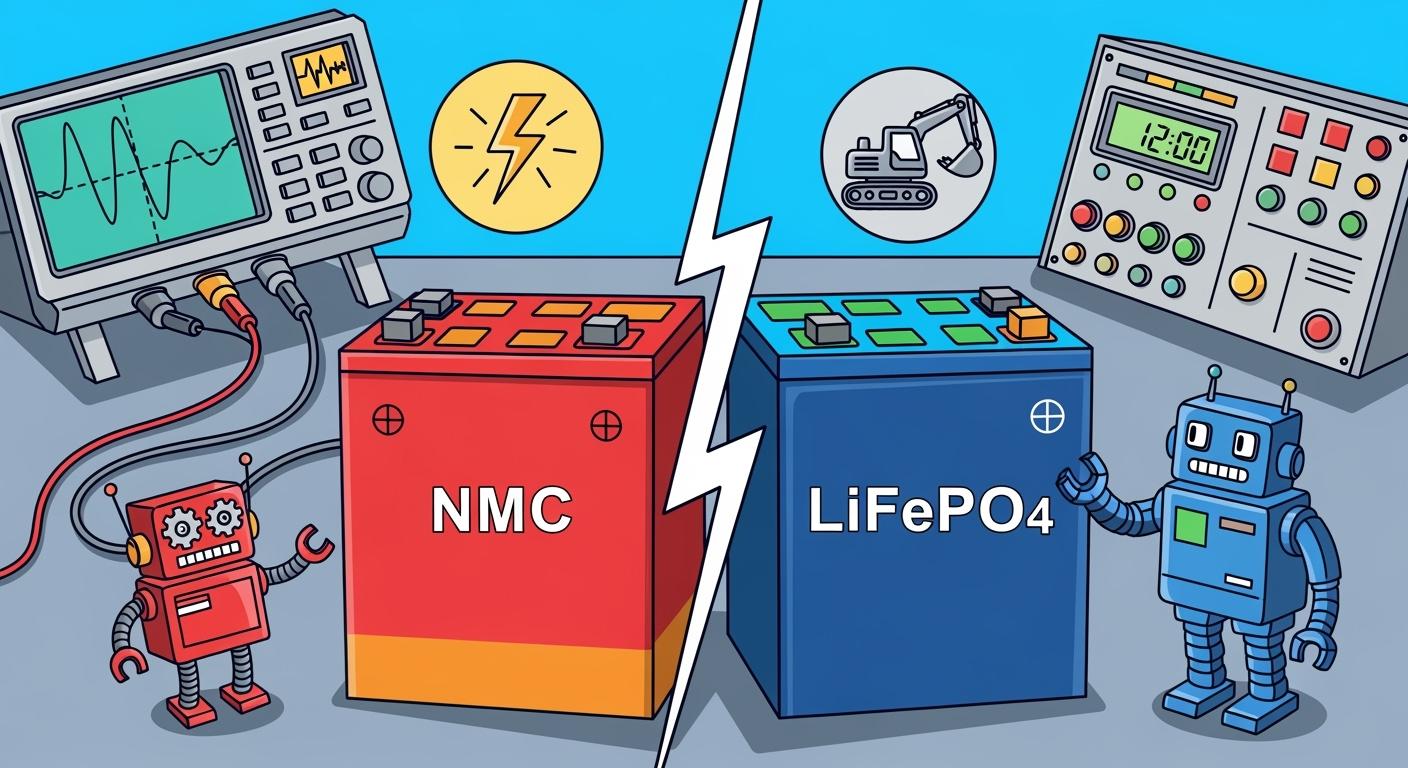
You need the safest and most reliable power source for your high-demand industrial test equipment. LiFePO4 Lithium battery stands out as the best choice. You benefit from its superior safety, long cycle life, and cost-effectiveness. Choosing the Right Battery can prevent downtime and protect sensitive equipment. Factors like safety, cycle life, energy density, cost, reliability, and environmental impact play a major role in your decision.
Key Takeaways
Choose LiFePO4 Lithium batteries for high-demand industrial test equipment. They offer superior safety and reliability.
LiFePO4 batteries last longer, with 2,000 to 5,000 cycles, reducing the need for frequent replacements.
Consider the environment when selecting batteries. LiFePO4 has lower environmental and ethical risks compared to NMC batteries.
For consistent performance in harsh conditions, LiFePO4 batteries maintain stability in extreme temperatures.
Always match battery chemistry to your equipment’s needs for optimal performance and cost-effectiveness.
Part1: Recommendation & Key Reasons
1.1 Recommendation
You need a battery chemistry that delivers safety, reliability, and long-term value for your high-demand industrial test equipment. LiFePO4 Lithium battery stands out as the best choice. You get unmatched safety, a long cycle life, and cost-effectiveness. When you focus on Choosing the Right Battery, you protect your equipment and ensure smooth operations in demanding environments.
Tip: LiFePO4 Lithium battery is the preferred option for industrial test equipment in sectors like medical, robotics, security systems, and infrastructure. You can trust it to handle high loads and frequent cycling.
1.2 Key Reasons
You want to know why LiFePO4 Lithium battery is the top recommendation. Here is a clear comparison of the main factors that matter for industrial use:
Factor | LiFePO4 Lithium battery | NMC Lithium battery |
|---|---|---|
Safety | Excellent. High thermal stability. Low risk of fire or explosion. | Good, but higher risk of thermal runaway. |
Cycle Life | 2,000–5,000+ cycles (deep cycling). | 1,000–2,000 cycles (deep cycling). |
Cost-Effectiveness | Lower total cost over lifespan. Fewer replacements needed. | Higher replacement frequency increases long-term cost. |
Reliability | Consistent performance in harsh conditions. | Good, but more sensitive to temperature and overcharging. |
Industrial Suitability | Ideal for continuous, high-demand use. | Suitable, but less robust for extreme cycling. |
You see that LiFePO4 Lithium battery offers the best balance for industrial test equipment. You get a battery that lasts longer, keeps your team safe, and reduces downtime. Choosing the Right Battery with these qualities means you spend less time on maintenance and more time on productive work.
Note: NMC Lithium battery works well in some applications, especially where higher energy density is needed, such as in portable medical devices or robotics. However, for most high-demand industrial test equipment, LiFePO4 Lithium battery provides superior value.
You make a smart investment when you select LiFePO4 Lithium battery for your industrial test equipment. You ensure safety, reliability, and long-term savings. Choosing the Right Battery is not just about initial cost—it is about performance and peace of mind for your operations.
Part2: Safety Comparison

2.1 Safety Features
When you select a lithium battery pack for industrial test equipment, safety features become your top priority. LiFePO4 Lithium battery and NMC Lithium battery offer different levels of intrinsic safety. You see these differences clearly in their design and chemical structure:
LiFePO4 Lithium battery resists thermal runaway until temperatures reach 270°C.
NMC Lithium battery can enter thermal runaway at around 200°C.
LiFePO4 Lithium battery maintains high-temperature resilience, operating reliably up to 60°C.
The rigid olivine structure of LiFePO4 Lithium battery reduces internal stress and volume expansion, which enhances safety and longevity.
These features make LiFePO4 Lithium battery a safer choice for environments where you cannot risk equipment failure or fire.
2.2 Thermal Stability
Thermal stability plays a critical role in industrial applications. You need a battery that can handle high loads and fluctuating temperatures. LiFePO4 Lithium battery stands out with its ability to resist overheating and maintain structural integrity. NMC Lithium battery, while effective in many uses, shows a higher risk of thermal runaway and faster degradation in high heat.
Feature | LiFePO4 Lithium battery | NMC Lithium battery |
|---|---|---|
Thermal Runaway Threshold | 270°C | 200°C |
Reliable Operation Temperature | Up to 60°C | Lower |
Volume Expansion | Minimal | Moderate |
You gain peace of mind with LiFePO4 Lithium battery, especially in sectors like medical, robotics, and infrastructure, where stable performance is essential.
2.3 Industrial Safety
Industrial test equipment often operates in hazardous or unpredictable environments. You need a battery that can withstand shocks, vibrations, and temperature swings. LiFePO4 Lithium battery offers superior resistance to thermal events and mechanical stress. This makes it ideal for high-demand applications in security systems and industrial automation.
Choosing the Right Battery for your industrial test equipment means prioritizing safety, reliability, and long-term performance. LiFePO4 Lithium battery delivers on all these fronts, reducing risks and ensuring continuous operation.
Part3: Cycle Life & Longevity
3.1 Charge Cycles
You want your industrial test equipment to run reliably for years. The number of charge cycles a battery can handle matters. LiFePO4 Lithium battery offers a cycle life of 2,000 to 5,000+ cycles, even with deep discharges. NMC Lithium battery usually lasts for 1,000 to 2,000 cycles under similar conditions. This difference means you replace LiFePO4 Lithium battery less often, which saves you time and money.
Battery Chemistry | Typical Cycle Life (Full Cycles) | Platform Voltage (V) |
|---|---|---|
LiFePO4 Lithium battery | 2,000–5,000+ | 3.2 |
NMC Lithium battery | 1,000–2,000 | 3.7 |
LCO Lithium battery | 500–1,000 | 3.6 |
LMO Lithium battery | 700–1,500 | 3.7 |
Tip: For medical, robotics, and infrastructure applications, longer cycle life means fewer interruptions and lower maintenance costs.
3.2 Deep Cycling
Industrial test equipment often requires batteries that can handle deep cycling. You may need to discharge batteries almost completely before recharging. LiFePO4 Lithium battery performs well under these conditions. It maintains capacity and stability, even after thousands of deep cycles. NMC Lithium battery loses capacity faster when you use deep cycling regularly.
LiFePO4 Lithium battery: Maintains over 80% capacity after 2,000 deep cycles.
NMC Lithium battery: Drops below 80% capacity after 1,000–1,500 deep cycles.
You get more reliable performance and longer service life with LiFePO4 Lithium battery in high-demand environments.
3.3 Maintenance
You want to minimize downtime and reduce maintenance costs. LiFePO4 Lithium battery requires little maintenance. It resists degradation from frequent charging and discharging. NMC Lithium battery needs more frequent monitoring and replacement, especially in harsh conditions.
Feature | LiFePO4 Lithium battery | NMC Lithium battery |
|---|---|---|
Maintenance Needs | Low | Moderate |
Replacement Frequency | Low | High |
Industrial Suitability | Excellent | Good |
Choosing the Right Battery for your industrial test equipment means you spend less time on maintenance and more time on productive work. LiFePO4 Lithium battery gives you the longest lifespan and the lowest replacement frequency.
Part4: Energy Density & Performance
4.1 Energy Density
You need to understand how energy density affects your industrial test equipment. Energy density measures how much energy a battery stores per kilogram. Higher energy density means you can power equipment longer without increasing battery size. NMC Lithium battery offers an energy density between 150 and 250 Wh/kg. LiFePO4 Lithium battery provides 90 to 120 Wh/kg. This difference matters when you design compact systems or need extended runtime.
Battery Chemistry | Energy Density (Wh/kg) | Platform Voltage (V) | Typical Cycle Life (Full Cycles) |
|---|---|---|---|
LiFePO4 Lithium battery | 90–120 | 3.2 | 2,000–5,000+ |
NMC Lithium battery | 150–250 | 3.7 | 1,000–2,000 |
LCO Lithium battery | 150–200 | 3.6 | 500–1,000 |
LMO Lithium battery | 100–150 | 3.7 | 700–1,500 |
Note: NMC Lithium battery suits applications where space and weight are critical, such as portable medical devices and robotics. LiFePO4 Lithium battery works best for stationary or infrastructure equipment that needs long cycle life.
4.2 Power Output
You want reliable power delivery for high-demand industrial tasks. LiFePO4 Lithium battery gives you steady discharge performance. This makes it ideal for equipment that needs consistent moderate power, such as security systems and industrial automation. NMC Lithium battery delivers higher power output in short bursts. You find this useful for machinery and robotics that require rapid energy spikes.
Battery Type | Power Output Characteristics |
|---|---|
LiFePO4 Lithium battery | Steady discharge, ideal for consistent moderate power output |
NMC Lithium battery | High output in short bursts, suitable for demanding machinery |
Tip: For continuous operation, LiFePO4 Lithium battery keeps your equipment running smoothly. For peak loads, NMC Lithium battery handles short, intense demands.
4.3 Suitability for Equipment
You must match battery chemistry to your equipment’s needs. LiFePO4 Lithium battery fits industrial test equipment that cycles frequently and operates in harsh conditions. You benefit from its long lifespan and stable performance. NMC Lithium battery works well in devices that need compact size and high energy density, such as portable medical instruments and advanced robotics.
LiFePO4 Lithium battery: Best for infrastructure, security systems, and industrial automation.
NMC Lithium battery: Preferred for portable medical devices, robotics, and machinery with high power spikes.
Choosing the Right Battery ensures your equipment performs reliably and safely in demanding environments.
Part5: Cost Analysis
5.1 Upfront Cost
When you compare LiFePO4 Lithium battery and NMC Lithium battery, you notice a difference in upfront cost. NMC Lithium battery usually costs less per kilowatt-hour at the time of purchase. This lower price can attract you if your project has a tight budget. LiFePO4 Lithium battery, however, often comes with a higher initial price. You pay more for the extra safety and longer cycle life.
Battery Chemistry | Typical Upfront Cost ($/kWh) | Energy Density (Wh/kg) | Platform Voltage (V) |
|---|---|---|---|
LiFePO4 Lithium battery | $350–$600 | 90–120 | 3.2 |
NMC Lithium battery | $250–$400 | 150–250 | 3.7 |
Note: You may find NMC Lithium battery more common in robotics and portable medical devices because of its lower upfront cost and higher energy density.
5.2 Long-Term Value
You should not focus only on the initial price. LiFePO4 Lithium battery gives you more value over time. It lasts for 2,000–5,000+ cycles, which means you replace it less often. NMC Lithium battery usually needs replacement after 1,000–2,000 cycles. Fewer replacements mean less downtime and lower maintenance costs for your industrial test equipment.
LiFePO4 Lithium battery: Lower total cost of ownership, especially in infrastructure and security systems.
NMC Lithium battery: Higher replacement frequency increases long-term expenses.
Tip: Calculate the total cost over the expected lifespan of your equipment. You will often see that LiFePO4 Lithium battery saves you money in the long run.
5.3 Industrial Scale Cost
When you scale up for large projects, cost differences become more important. LiFePO4 Lithium battery offers better stability and reliability for continuous, high-demand use. You benefit from fewer replacements and less maintenance, which reduces operational costs in sectors like infrastructure and industrial automation.
Application Scenario | Best Value Chemistry | Key Cost Advantage |
|---|---|---|
Medical Devices | NMC Lithium battery | Lower upfront cost, compact size |
Robotics | NMC Lithium battery | High energy density, cost-effective short-term |
Security Systems | LiFePO4 Lithium battery | Fewer replacements, lower maintenance |
Infrastructure/Industrial | LiFePO4 Lithium battery | Long lifespan, reduced operational cost |
You should always match your battery choice to your operational needs. For high-demand, long-term industrial use, LiFePO4 Lithium battery often delivers the best value.
Part6: Reliability & Consistency
6.1 Extreme Conditions
You need lithium battery packs that perform reliably in harsh industrial environments. LiFePO4 Lithium battery and NMC Lithium battery respond differently to extreme temperatures, vibration, and humidity. LiFePO4 Lithium battery maintains stable performance in high heat and cold, making it ideal for infrastructure and security systems. NMC Lithium battery works well in moderate climates but can degrade faster in extreme conditions.
Battery Chemistry | High Temp Stability | Low Temp Stability | Vibration Resistance | Best Use Case |
|---|---|---|---|---|
LiFePO4 Lithium battery | Excellent (up to 60°C) | Good (down to -20°C) | High | Infrastructure, Security |
NMC Lithium battery | Moderate (up to 45°C) | Moderate (down to -10°C) | Moderate | Robotics, Medical Devices |
Tip: For outdoor or industrial sites with temperature swings, you gain more reliability with LiFePO4 Lithium battery.
6.2 Failure Modes
You want to avoid unexpected shutdowns or safety incidents. LiFePO4 Lithium battery and NMC Lithium battery have different failure modes. LiFePO4 Lithium battery resists thermal runaway and rarely fails catastrophically. NMC Lithium battery can experience thermal runaway if overcharged or exposed to high temperatures.
LiFePO4 Lithium battery: Gradual capacity loss, low risk of fire.
NMC Lithium battery: Faster capacity fade, higher risk of overheating.
Battery Chemistry | Common Failure Mode | Safety Risk Level |
|---|---|---|
LiFePO4 Lithium battery | Gradual degradation | Low |
NMC Lithium battery | Thermal runaway possible | Moderate |
You reduce downtime and safety risks by choosing LiFePO4 Lithium battery for critical industrial test equipment.
6.3 Consistency
You need consistent power delivery for your industrial test equipment. LiFePO4 Lithium battery provides stable voltage and performance over thousands of cycles. NMC Lithium battery can show more variation in output as it ages, especially in demanding applications like robotics or medical devices.
Battery Chemistry | Voltage Stability | Performance Over Time | Maintenance Needs |
|---|---|---|---|
LiFePO4 Lithium battery | High | Consistent | Low |
NMC Lithium battery | Moderate | Variable | Moderate |
Consistent performance means fewer interruptions and more predictable results for your industrial operations.
Part7: Environmental Impact
7.1 Material Sourcing
You need to consider where the raw materials for lithium battery packs come from. LiFePO4 Lithium battery uses lithium, iron, and phosphate. These materials have a lower environmental impact than the lead found in lead-acid batteries. Extraction of lithium for LiFePO4 Lithium battery can use environmentally friendly methods. NMC Lithium battery, on the other hand, relies on cobalt. Cobalt mining often causes habitat destruction and raises serious human rights concerns. You can learn more about responsible sourcing and sustainability practices on our sustainability page. For details on conflict minerals, see our conflict minerals statement.
Battery Chemistry | Key Materials | Environmental Risk | Ethical Concerns |
|---|---|---|---|
LiFePO4 Lithium battery | Lithium, Iron, Phosphate | Low | Minimal |
NMC Lithium battery | Lithium, Nickel, Manganese, Cobalt | Moderate to High | Cobalt mining issues |
7.2 Recycling
You want to know how lithium battery packs perform at the end of their life. Recycling plays a key role in reducing environmental impact. Here are some important points:
Recycling processes for both NMC and LiFePO4 Lithium battery produce metal sulfates, which are valuable in the battery recycling market.
Water use during recycling is much lower than in traditional mining. You see reductions of up to 87.7% for scrap and 72.2% for used battery streams.
The environmental impact of producing lithium products from recycled materials is similar to that of conventional methods.
Battery Chemistry | Recycling Process | Water Use Reduction | Market Value of Recycled Materials |
|---|---|---|---|
LiFePO4 Lithium battery | Metal sulfate recovery | High | Significant |
Metal sulfate recovery | High | Significant |
Efficient recycling supports your sustainability goals and helps you meet industry standards.
7.3 Compliance
You must comply with strict environmental and safety regulations in industrial sectors. Both LiFePO4 Lithium battery and NMC Lithium battery meet global standards for hazardous materials and recycling. You should verify that your lithium battery packs come from suppliers who follow best practices for sourcing and recycling. This ensures you meet requirements for medical, robotics, security systems, and infrastructure applications.
Compliance Area | LiFePO4 Lithium battery | NMC Lithium battery |
|---|---|---|
RoHS/REACH | Yes | Yes |
Conflict Minerals | Minimal risk | Higher risk |
Industrial Certification | Widely available | Widely available |
Always choose lithium battery packs from trusted suppliers who prioritize compliance and sustainability.
Part8: Choosing the Right Battery for Industrial Applications
8.1 Application Scenarios
You face many choices when selecting lithium battery packs for industrial test equipment. Each sector has unique demands. Medical devices need stable voltage and high reliability. Robotics require compact batteries with powerful output. Security systems depend on long lifespan and thermal safety. Infrastructure projects, such as transportation, need batteries that withstand harsh environments. Consumer electronics focus on energy-to-weight ratio. Industrial sectors often prioritize deep discharge and ruggedness.
Here is a table showing common application scenarios and the recommended battery chemistry:
Application | Recommended Battery Type | Why |
|---|---|---|
Medical Devices | LiFePO4 Lithium battery | Stable voltage, high reliability |
Robotics | NMC Lithium battery | Compact size, powerful output |
Security Systems | LiFePO4 Lithium battery | Long lifespan, thermal safety |
Infrastructure (Transportation) | LiFePO4 Lithium battery | Rugged, wide temperature tolerance |
Consumer Electronics | NMC Lithium battery | High energy-to-weight ratio |
Industrial (Solar, Off-grid, UPS) | LiFePO4 Lithium battery | Deep discharge, long lifespan, stable performance |
8.2 Matching Chemistry to Needs
You must match battery chemistry to your operational needs. LiFePO4 Lithium battery works best for equipment that cycles frequently and operates in harsh conditions. You benefit from its long cycle life and safety features. NMC Lithium battery suits applications where compact size and high energy density matter most. You see this in robotics and consumer electronics. LCO and LMO Lithium batteries appear less often in industrial test equipment because they offer lower cycle life and stability.
Tip: Always consider the environment and duty cycle of your equipment before making a selection.
8.3 Decision Matrix
You can use a decision matrix to simplify your choice. This table helps you compare key factors for each battery chemistry:
Criteria | LiFePO4 Lithium battery | NMC Lithium battery | LCO Lithium battery | LMO Lithium battery |
|---|---|---|---|---|
Cycle Life (Full Cycles) | 2,000–5,000+ | 1,000–2,000 | 500–1,000 | 700–1,500 |
Energy Density (Wh/kg) | 90–120 | 150–250 | 150–200 | 100–150 |
Platform Voltage (V) | 3.2 | 3.7 | 3.6 | 3.7 |
Safety | Excellent | Good | Moderate | Moderate |
Maintenance Needs | Low | Moderate | High | Moderate |
Best Use Case | Industrial, Security | Robotics, Consumer | Small electronics | Power tools |
Choosing the Right Battery for your industrial application means balancing safety, cycle life, and performance. You ensure reliable operation and long-term value by matching chemistry to your specific needs.
You gain the most value and safety for your industrial test equipment by selecting LiFePO4 Lithium battery. This chemistry offers long cycle life, strong thermal stability, and low maintenance. When Choosing the Right Battery, focus on these critical steps:
Review your voltage and current needs.
Check energy density and power requirements.
Confirm regulatory compliance.
Measure available space for installation.
You should always match battery chemistry to your unique application and consult with trusted battery solution providers.
FAQ
What is the main difference between LiFePO4 Lithium battery and NMC Lithium battery for industrial test equipment?
Feature | LiFePO4 Lithium battery | NMC Lithium battery |
|---|---|---|
Safety | Excellent | Good |
Cycle Life | 2,000–5,000+ cycles | 1,000–2,000 cycles |
Energy Density | 90–120 Wh/kg | 150–250 Wh/kg |
Platform Voltage | 3.2 V | 3.7 V |
You get longer life and better safety with LiFePO4 Lithium battery. NMC Lithium battery offers higher energy density.
Why should you use a Battery Management System (BMS) with lithium battery packs?
You need a BMS to monitor voltage, temperature, and current. This system prevents overcharging and overheating. You protect your industrial test equipment and extend battery life. Learn more about BMS here.
Which battery chemistry is best for frequent deep cycling in industrial environments?
Chemistry | Deep Cycling Performance | Typical Application |
|---|---|---|
LiFePO4 Lithium battery | Excellent | Infrastructure, Security |
NMC Lithium battery | Good | Robotics, Medical Devices |
You should choose LiFePO4 Lithium battery for frequent deep cycling and long service life.
How do LiFePO4 Lithium battery and NMC Lithium battery perform in extreme temperatures?
Chemistry | High Temp Stability | Low Temp Stability | Best Use Case |
|---|---|---|---|
LiFePO4 Lithium battery | Up to 60°C | Down to -20°C | Infrastructure, Security |
NMC Lithium battery | Up to 45°C | Down to -10°C | Robotics, Medical Devices |
You get more reliable performance in harsh conditions with LiFePO4 Lithium battery.
Are there environmental or ethical concerns with lithium battery packs?
Chemistry | Key Material Concerns | Environmental Risk | Ethical Issues |
|---|---|---|---|
LiFePO4 Lithium battery | Iron, Phosphate | Low | Minimal |
NMC Lithium battery | Cobalt | Moderate-High | Cobalt mining |
You reduce environmental and ethical risks by choosing LiFePO4 Lithium battery for your industrial projects.


