

You now have the power to transform battery health management in your business with digital twins. This technology gives you a clear view of your lithium battery packs, helping you achieve longer service life, better performance, and lower costs.
The Elysia Cloud Platform uses digital twins to improve battery life and safety for OEMs, fleet owners, and financiers by turning data into actionable insights.
Predictive maintenance, made possible by digital twins, has cut battery maintenance costs by over 50% and provides accurate life prediction and reliability evaluation.
Key Takeaways
Digital twins provide real-time insights into battery health, helping you optimize performance and extend battery life.
Implementing digital twins can lead to cost savings of up to 80% in development and maintenance, making operations more efficient.
Predictive maintenance powered by digital twins reduces downtime and prevents unexpected failures, enhancing safety and reliability.
Using digital twins supports sustainability by optimizing battery usage and extending the lifecycle, which lowers environmental impact.
Adopting a strong data collection strategy is crucial for maximizing the benefits of digital twins in battery management.
Part 1: Digital Twins Impact
1.1 Key Benefits
You can unlock a range of benefits by adopting digital twins for your lithium battery packs. These virtual models give you a real-time view of battery health and performance. The table below highlights the most significant advantages:
Benefit | Description |
|---|---|
Enhanced performance | Ensures batteries operate at peak performance, increasing reliability and efficiency. |
Cost savings | Can yield cost savings of up to 80% in product development and reduce testing costs by 15%. |
Advanced battery monitoring | Continuously monitors battery performance, reducing downtime and maintenance costs. |
Efficient production | Enables precise production processes, reducing manufacturing costs and minimizing waste. |
Increased battery lifespan | Extends battery life cycle, reducing overall ownership costs and environmental impact. |
Digital twins provide real-time monitoring by integrating sensor data, so you always know the state of your batteries. You can use predictive maintenance features to calculate key metrics like state of health (SoH) and state of power (SoP). These insights help you forecast degradation trends and plan maintenance before problems occur. You also improve safety by simulating stress conditions and detecting early signs of thermal runaway. With better lifecycle management, you connect data from design to recycling, making your operations more sustainable.
Tip: A strong data collection strategy ensures your digital twins deliver accurate, actionable insights for every stage of the battery lifecycle.
1.2 Industry Challenges Addressed
Digital twins help you tackle some of the toughest challenges in battery health management across different industries. The table below shows how various sectors benefit:
Industry Sector | Challenges Addressed |
|---|---|
Automotive | Optimization of battery performance, lifespan extension, safety enhancement |
Renewable Energy | Accurate predictions of battery degradation, optimization of charging/discharging cycles |
Consumer Electronics | Longer-lasting and faster-charging devices, optimization of battery performance |
Industrial Applications | Reliable and efficient energy storage solutions, reducing downtime, improving efficiency |
In a real-world example, a 21.6 MWh battery energy storage system in the Netherlands used a physics-based digital twin model. You can track key metrics down to the cell level, such as state of charge. The system identified a 4% difference in state of health between its estimation and the onboard battery management system, revealing hidden issues that traditional monitoring might miss. This approach supports better lifecycle management and helps you avoid costly surprises.
Part 2: Battery Digital Twin Basics
2.1 Definition
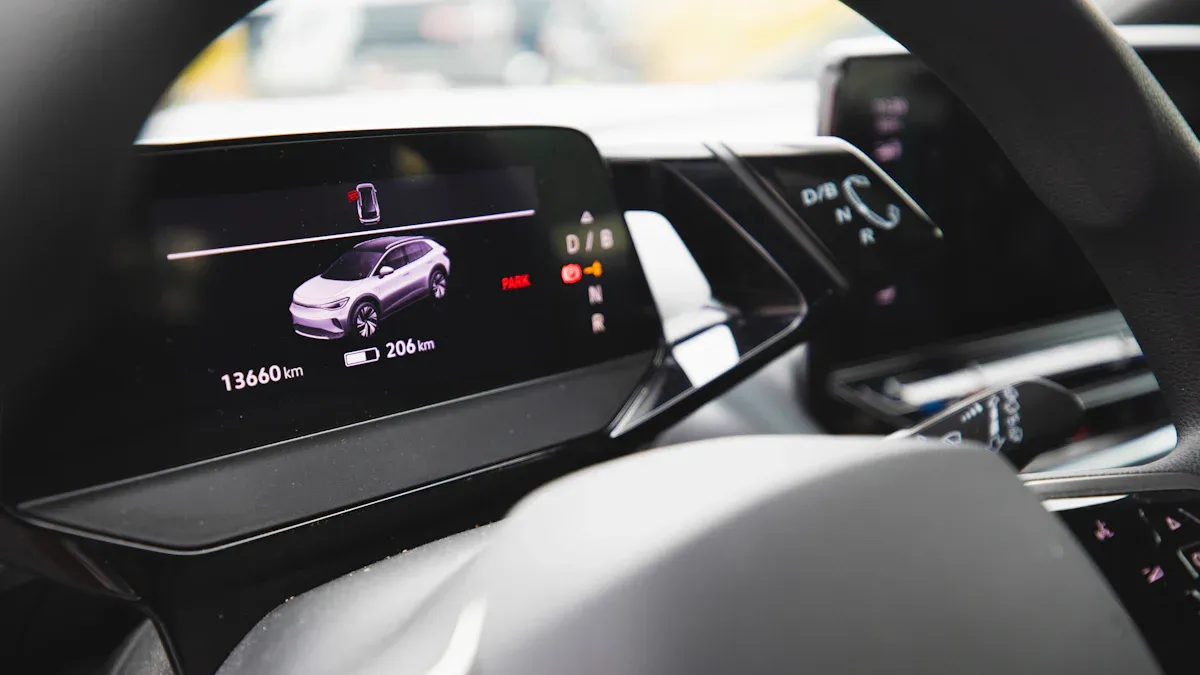
A battery digital twin gives you a virtual model of your lithium battery pack. This model uses real-world data and advanced simulations to mirror the physical and chemical behaviors of your batteries. You can see how your battery operates under different conditions and predict how it will age over time. The model adapts as new data comes in, so you always have an up-to-date view of your battery’s health.
Here is how technical literature defines a battery digital twin:
Feature | Description |
|---|---|
Represents the physical behaviors of the battery system | |
Real-world data | Uses sensor data from the actual battery pack |
Self-adjustment | Adapts the model based on measured data in a closed-loop process |
With this approach, you gain a deeper understanding of your battery’s internal state. You can track voltage, energy density, and cycle life with greater accuracy. This helps you make smarter decisions about maintenance and replacement.
Note: A battery digital twin does not just show you what is happening now. It predicts what will happen next, giving you a powerful tool for proactive management.
2.2 Digital vs. Traditional Monitoring
You may wonder how digital twins compare to traditional battery monitoring. The table below highlights the key differences:
Feature/Aspect | Traditional Battery Monitoring | Digital Twin-Based Monitoring |
|---|---|---|
Predictive Capabilities | Limited, rule-based | Advanced, integrates real-time data |
Data Utilization | Relies on easily measurable signals | Utilizes multi-physics simulations |
Insight into Battery Health | Minimal, reactive | Comprehensive, proactive management |
Internal State Visibility | Limited visibility into latent states | Detailed insights into internal states |
Response to Operational Risks | Reactive, threshold-triggered actions | Proactive, adaptive management |
Digital twin-based monitoring gives you several advantages:
The system uses advanced analytics for better prediction accuracy.
It adjusts its estimations dynamically, reducing errors.
You benefit from methods like energy measurement correction and coulombic efficiency estimation.
Studies show a significant drop in estimation errors, which means you get more reliable results.
With digital twins, you move from reactive to proactive battery management. This shift leads to longer battery life, fewer unexpected failures, and better performance for your lithium battery packs.
Part 3: Core Functions
3.1 Real-Time Monitoring
You can achieve precise control over your lithium battery packs with real-time monitoring powered by digital twins. This technology creates a virtual representation of your battery’s structure, state, and behavior. You receive continuous updates on voltage, shell temperature, and energy density. The battery digital twin uses real-time data analysis to compare sensor readings with model predictions. This process helps you identify deviations and respond quickly.
The effectiveness of real-time monitoring stands out in recent studies. The table below shows how digital twins deliver accurate diagnostics for lithium battery packs:
Metric | Value |
|---|---|
Maximum Mean Absolute Error (Terminal Voltage) | 25 mV |
Maximum Mean Absolute Error (Shell Temperature) | 0.15 °C |
These low error rates mean you can trust the data to guide operational decisions. You gain visibility into battery performance and can spot abnormal patterns before they become problems. Advanced battery monitoring also supports your data collection strategy, ensuring you gather high-quality information for lifecycle management.
Tip: Use real-time monitoring to track battery health at the cell level. This approach helps you prevent costly failures and optimize your maintenance schedule.
3.2 Predictive Maintenance
You can reduce downtime and extend battery life with predictive maintenance. Digital twins analyze historical and real-time data to forecast when your lithium battery packs need service. The system detects gradual declines in performance and predicts failures before they occur. You receive alerts for potential issues, such as internal short circuits or abnormal temperature rises.
Digital twins enable you to:
Create virtual models that diagnose faults and predict battery performance.
Track battery decline and take action before problems escalate.
Generate fault data for early warning algorithms, especially for internal short circuits.
Simulate failure scenarios and calibrate detection algorithms for reliable fault diagnosis.
You benefit from predictive maintenance by planning interventions based on actual battery conditions. This strategy helps you avoid unexpected breakdowns and reduces maintenance costs. You also improve safety by identifying risks early. For more information about battery management systems (BMS), visit BMS and PCM.
Note: Predictive maintenance relies on accurate data and robust models. Make sure your data collection strategy covers all critical battery parameters.
3.3 Performance Optimization
You can maximize battery performance and efficiency with digital twins. The virtual model updates its parameters as new data arrives, reflecting the true state of your lithium battery packs. You use this information to adjust charging and discharging cycles, balance cell voltages, and manage energy density. The system helps you optimize battery usage for different applications, from electric vehicles to industrial energy storage.
Digital twins support performance optimization by:
Providing detailed insights into battery structure and behavior.
Enabling you to simulate stress conditions and test operational strategies.
Helping you mitigate degradation by updating model parameters in real time.
Supporting lifecycle management by connecting data from design to recycling.
The table below compares traditional and digital twin-based performance optimization:
Aspect | Traditional Approach | Digital Twin Approach |
|---|---|---|
Data Utilization | Limited, static | Dynamic, real-time |
Optimization Accuracy | Moderate | High |
Degradation Mitigation | Reactive | Proactive |
Lifecycle Management | Fragmented | Integrated |
You gain a competitive edge by using digital twins to optimize battery performance. This approach leads to longer service life, lower costs, and improved reliability.
Callout: Performance optimization with digital twins helps you meet regulatory standards and sustainability goals.
Part 4: Applications & Value
4.1 Safety Enhancement
You can improve safety in your lithium battery packs by using digital twins. This technology acts as a virtual counterpart to your physical battery system. You receive real-time data and advanced algorithm predictions for battery behavior. Digital twins provide advanced monitoring, diagnostics, and prognostics. You can detect abnormal temperature rises, voltage fluctuations, and early signs of thermal runaway before they become critical.
You gain continuous insight into battery performance.
You identify faults and prevent hazardous incidents.
You support regulatory compliance with detailed diagnostics.
You see these benefits in electric vehicle fleets, where digital twins help you avoid battery failures and ensure passenger safety. In energy storage systems, you can monitor each cell and respond quickly to any risk.
4.2 Cost Reduction
You can achieve significant cost savings by implementing digital twins in your battery management strategy. The technology streamlines development and maintenance processes. You reduce manual testing and optimize resource allocation. The table below shows the impact:
Metric | Value |
|---|---|
Cost Reduction | Up to 80% |
Development Time Reduction | From 36–60 months to 9–15 months |
You shorten development cycles for new battery digital twin models. You lower maintenance costs for industrial battery systems and energy storage installations. You also minimize downtime and extend battery lifespan, which leads to lower total ownership costs.
Tip: You can reinvest savings from digital twins into research and development or expanding your battery operations.
4.3 Sustainability
You support sustainability goals by adopting digital twins for lifecycle management. You track battery health from design to recycling. You optimize charging and discharging cycles, which reduces energy waste in energy storage and electric vehicle applications. You extend battery lifespan, which lowers the environmental impact of lithium battery packs.
You can learn more about sustainable battery practices in our approach to sustainability. If you want to understand how conflict minerals affect battery supply chains, visit our conflict minerals statement.
Sustainability Benefit | Description |
|---|---|
Reduced Waste | Fewer batteries discarded due to early failure |
Lower Carbon Footprint | Optimized energy storage and battery performance |
Responsible Sourcing | Support for ethical supply chain management |
You meet regulatory standards and improve your company’s reputation by using digital twins for battery lifecycle management.
Part 5: Industry Use Cases

5.1 Electric Vehicles
You can see the impact of digital twins in the electric vehicle industry. These virtual models help you monitor lithium battery packs in real time, optimize charging cycles, and extend battery life. You use digital twins to track battery health and predict when maintenance is needed. The table below shows how different applications improve battery performance and safety:
Example | Description |
|---|---|
Battery Virtual Twin | Simulates battery operation for real-time monitoring and charging optimization. |
Continuous SoH Monitoring | Tracks battery health, supporting better planning and forecasting. |
Battery Sharing | Monitors shared batteries, ensuring health during swaps. |
Thermal Management | Uses predictive control to enhance performance and lifespan. |
Battery Passport |
You benefit from accurate state of health (SoH) tracking and predictive maintenance. You reduce downtime and improve reliability for your electric vehicle fleet.
Tip: Real-time monitoring helps you detect abnormal temperature or voltage changes before they affect safety.
5.2 Energy Storage
You can improve energy storage operations with digital twins. These systems use physics-based modeling to track battery health and performance. You synchronize digital and physical twins for accurate state estimation. You adjust charging and discharging strategies to optimize battery usage. Here are some ways digital twins enhance energy storage:
You use advanced modeling to reduce errors in SoH tracking.
You monitor temperature and operational parameters for early anomaly detection.
You optimize performance by modeling degradation impacts and adjusting operations.
You gain better control over energy density, voltage, and cycle life. You support sustainability by reducing waste and improving efficiency.
5.3 Industrial Systems
You can apply digital twins to industrial battery systems for manufacturing, robotics, and infrastructure. You monitor large-scale lithium battery packs in real time. You use predictive maintenance to prevent unexpected failures. You optimize battery performance for critical operations, such as security systems and automated machinery. You track key metrics like voltage and energy density to ensure reliability.
You improve operational efficiency and reduce costs. You meet regulatory standards by maintaining detailed records of battery health and lifecycle. You support continuous improvement in industrial processes.
Note: Digital twins help you manage complex battery systems with confidence, supporting growth and innovation in your business.
Part 6: Challenges
6.1 Data Integration
You face major challenges when you try to connect different data sources in battery management. Digital twins rely on real-time data from sensors, battery management systems, and cloud platforms. You need to combine this information to create a unified view of your lithium battery packs. If you use multiple digital twins, you can see all operations in one place. Interoperable digital twins help you link different systems and improve decision-making. You must also protect sensitive data with strong cybersecurity measures.
Tip: You should choose platforms that support open standards and easy integration with your existing battery management systems.
6.2 Cybersecurity
You must protect your battery digital twin systems from cyber threats. Attackers can target CAN bus interfaces, wireless links, and IoT connections. These attacks can cause functional problems, financial loss, and safety risks. You need to use strong countermeasures to keep your data safe.
Potential Attack Paths | Impacts on CBMS | Countermeasures |
|---|---|---|
CAN bus, wireless communication, IoT links | Functional impacts, financial loss, safety, privacy issues | Blockchain, encryption, resilient software, hardware security modules, authentication, cross-validation, physical protection, data transparency |
You can use encryption and blockchain to secure your data. Hardware security modules and authentication add extra layers of protection. You should also design your software to resist attacks and validate data from different sources.
Note: Regular security audits and updates help you stay ahead of new threats.
6.3 Scalability
You need scalable solutions to manage large fleets of lithium battery packs. Digital twins can represent each battery and process real-time data for better monitoring. You can use cloud battery management systems to increase computational power and storage. These systems support large-scale deployment and help you estimate state-of-charge and state-of-health for every battery.
Aspect | Description |
|---|---|
Scalability | Cloud systems boost computational power and storage, making large-scale deployment possible. |
Methodologies | Advanced estimation techniques for state-of-charge and state-of-health are validated. |
Real-world Application | Prototypes prove stability in both stationary and mobile battery systems. |
You gain insights that improve performance, reliability, and safety.
You can apply these solutions to electric vehicles, energy storage, and industrial systems.
Callout: Scalable digital twin platforms help you grow your battery operations without losing control or visibility.
Part 7: Future Trends
7.1 AI & Machine Learning
You will see artificial intelligence and machine learning shape the future of digital twins in battery health management. These technologies help you process large amounts of battery data quickly. You can use AI models to simulate real-time battery behavior, monitor performance, and predict degradation. Deep learning tools handle complex data, making diagnostics more accurate than traditional methods. Virtual diagnostics with AI improve battery safety, efficiency, and lifespan.
Evidence Description | Key Points |
|---|---|
AI Models for Battery Digital Twins | Digital twins simulate real-time battery behavior, enabling performance monitoring and degradation prediction. |
Artificial intelligence-driven real-world battery diagnostics | Deep learning effectively manages complex data for battery diagnostics, overcoming limitations of traditional methods. |
Revolutionizing Battery Diagnostics with AI | Digital twins allow for virtual diagnostics, enhancing battery safety, efficiency, and lifespan through simulation. |
Tip: You can use AI-powered digital twins to spot early signs of battery failure and plan maintenance before problems occur.
7.2 IoT Integration
You can expect the Internet of Things (IoT) to play a bigger role in battery health monitoring. IoT sensors collect real-time data from lithium battery packs. This data feeds directly into your digital twin models. You get continuous updates on voltage, energy density, and cycle life. Machine learning algorithms analyze these patterns to forecast battery health and predict failures. The market for IoT-enabled digital twins is growing, especially as electric vehicles become more popular.
Aspect | Description |
|---|---|
Real-time Data Integration | Digital twins utilize IoT sensors to gather continuous data for health monitoring, enabling timely assessments of battery health. |
Predictive Maintenance | Machine learning algorithms analyze data patterns to forecast battery health and potential failures, enhancing maintenance strategies. |
Market Growth | The technology is in an early growth stage, with significant market potential as electric vehicle adoption increases. |
Note: IoT integration helps you make faster, data-driven decisions for your battery operations.
7.3 Industry Standards
You will need to follow new industry standards as digital twins become more common in battery management. Standardized data formats and protocols help you connect different systems. These standards make it easier to share information between manufacturers, fleet operators, and service providers. You can ensure compliance with safety and sustainability regulations. Industry groups and regulatory bodies continue to develop guidelines for digital twin technology in lithium battery applications.
You benefit from improved interoperability and data quality.
You support regulatory compliance and best practices.
You prepare your business for future growth and innovation.
Callout: Staying updated on industry standards ensures your digital twin solutions remain effective and competitive.
Digital twins have transformed how you manage lithium battery packs, delivering longer service life, predictive maintenance, and increased battery lifespan. You can see measurable benefits in the table below:
Benefit | Description |
|---|---|
Operational Savings | A battery producer in Germany saved an estimated $2 million annually by optimizing testing protocols. |
Reduced Downtime | Organizations experienced up to a 15% reduction in downtime through improved battery health checks. |
Faster Testing Cycles | Digital twin technology enabled faster testing cycles, enhancing overall efficiency. |
Improved Compliance Readiness | Enhanced compliance readiness through better lifecycle management and predictive maintenance. |
Stronger ROI | Digital twin technology led to stronger return on investment by optimizing battery lifecycle intelligence. |
To get started with digital twin integration, you should:
Define your objectives for digital twin implementation.
Assess your current infrastructure and skills.
Assemble a team of IT professionals and engineers.
Integrate and manage data from all sources.
Create a digital thread for seamless information flow.
Build your digital twin using specialized software.
Validate and test the model for accuracy.
Deploy the solution into your operations.
Maintain and improve the system over time.
Measure success using clear KPIs.
Industry experts recommend you optimize production, improve safety with virtual testing, use real-time insights for quality control, and reduce costs by minimizing waste. Adopting digital twins positions your business for future-ready battery operations.
FAQ
What is a digital twin in lithium battery management?
A digital twin is a virtual model of your lithium battery pack. It uses real-time data and simulations to mirror the battery’s structure, state, and behavior. You can monitor, diagnose, and predict battery performance with this technology.
How does a digital twin improve battery lifespan?
You use digital twins to track battery health and predict degradation. This lets you optimize charging cycles and schedule maintenance before failures occur. As a result, you extend the cycle life and reliability of your lithium battery packs.
Can digital twins help reduce operational costs?
Yes. Digital twins help you identify issues early and optimize maintenance schedules. You reduce downtime and avoid unnecessary replacements. Many businesses report up to 80% cost savings in battery development and maintenance.
How do digital twins support safety in battery systems?
You gain real-time alerts for abnormal temperature, voltage, or energy density. Digital twins detect early signs of faults, such as thermal runaway, so you can act quickly. This proactive approach improves safety for electric vehicles and industrial battery systems.
What industries benefit most from battery digital twins?
You see the greatest benefits in electric vehicles, energy storage, and industrial automation. These sectors rely on reliable, long-life lithium battery packs. Digital twins help you maximize performance, safety, and cost efficiency in these applications.


