

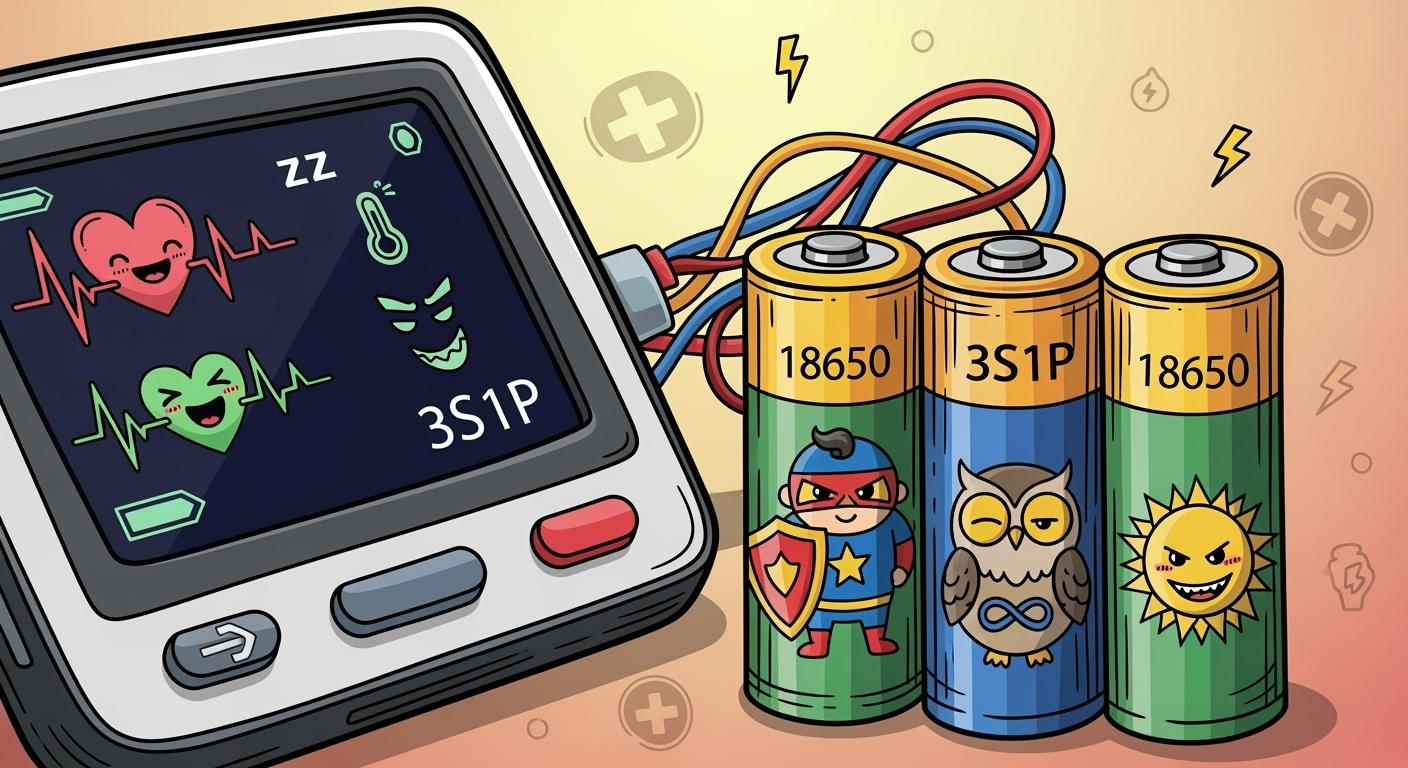
You know that battery anxiety can disrupt patient monitoring and create stress in clinical settings. When battery anxiety strikes, your team risks interruptions in care. Long-lasting lithium-ion batteries reduce battery anxiety by delivering dependable power. You rely on long-lasting lithium-ion batteries for safety. Proper maintenance of long-lasting lithium-ion batteries further minimizes battery anxiety.
Key Takeaways
Long-lasting lithium-ion batteries, like the 18650 3S1P pack, provide high energy density and long cycle life, ensuring reliable performance in medical monitors.
Implementing advanced Battery Management Systems (BMS) enhances battery safety and efficiency, reducing risks of overheating and extending battery lifespan.
Regular maintenance and temperature control are crucial for maximizing battery life and preventing failures, ensuring continuous care in critical medical environments.
Part1: Long-Lasting Lithium-Ion Batteries for Medical Monitors
1.1 High Energy Density and Cycle Life
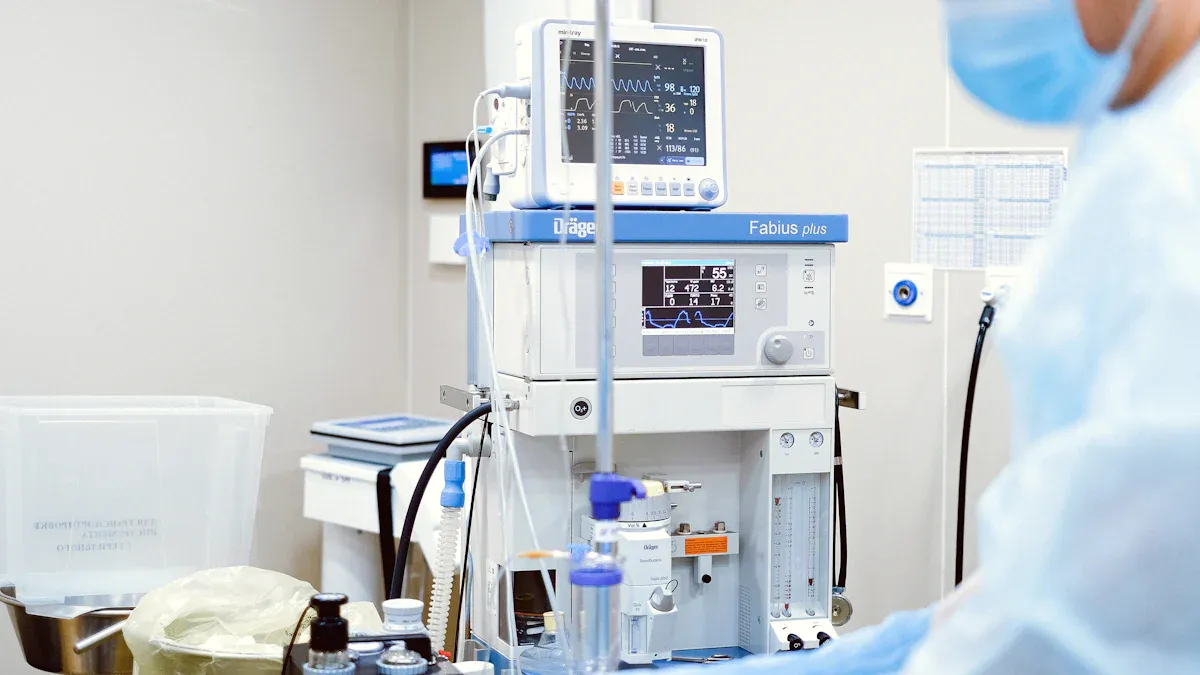
You need portable patient monitors that deliver consistent performance in demanding healthcare environments. Lithium-ion batteries stand out in medical devices because they offer high energy density and a long lifespan. When you compare lithium-ion batteries to other chemistries, you see a clear advantage in energy storage and efficiency. The table below highlights the differences in energy density among common battery chemistries used in portable patient monitors:
Battery Chemistry | Energy Density (Wh/kg) |
|---|---|
Lithium-Ion (Li-ion) | 150-250 |
Lithium-Polymer (LiPo) | 100-200 |
LiFePO4 | 90-120 |
You benefit from this high energy density because it allows you to design compact, lightweight portable patient monitors without sacrificing battery life. This feature is critical in medical devices where space and weight constraints matter. Lithium-ion batteries also support over 2000 charge-discharge cycles while retaining at least 80% of their original capacity. This long battery life ensures your portable patient monitors remain reliable over years of continuous use.
Lithium-ion batteries in portable patient monitors can achieve over 2000 charge-discharge cycles while retaining at least 80% of their original capacity.
You experience fewer battery replacements, which reduces maintenance costs and downtime.
High cycle life supports uninterrupted operation in critical care settings.
You can further enhance battery efficiency by integrating advanced Battery Management Systems. BMS technology monitors and balances cells, prevents overcharging, and manages faults, which extends the long lifespan of lithium-ion batteries in medical devices.
1.2 Reliability in Critical Situations
In critical care, you cannot afford power interruptions. Portable patient monitors equipped with lithium-ion batteries provide reliable, continuous power during surgeries, emergency transport, and intensive care. You rely on these batteries for their stable voltage output and high energy density, which allow continuous operation without performance fluctuations.
Improved energy density and longer lifespan support extended monitoring sessions.
Quick charging capabilities ensure your portable patient monitors are always ready for deployment.
Smart technology integration enables real-time monitoring of battery health and status.
You gain peace of mind knowing that lithium-ion batteries provide reliable backup power during outages and maintain continuous operation during equipment failures. This reliability protects patients from risks associated with unexpected shutdowns and ensures uninterrupted monitoring of vital parameters in critical care.
Certification | Description |
|---|---|
IEC 60601 | Medical Electrical Equipment Safety Standards Series |
UN 38.3 | Required for legal shipping and safety of lithium batteries. |
UL 1642 | Focuses on lithium battery performance, fire resistance, and electrical safety in the US. |
IEC 62133 | Addresses risks like short circuits and thermal runaway for portable sealed cells. |
CE | Indicates conformity with health, safety, and environmental protection standards in the EU. |
RoHS | Restricts hazardous substances in electrical and electronic equipment. |
You must ensure that lithium-ion batteries in your portable patient monitors comply with these international safety standards. Compliance guarantees that your medical devices meet regulatory requirements and deliver safe, reliable performance in every application.
Manufacturers address the risk of thermal runaway by using advanced BMS, solid-state lithium-ion cells, and heat-resistant electrolytes. These features protect your portable patient monitors from overheating and ensure safe operation in all environments. If you need custom solutions for your medical devices or other sectors such as robotics, security, infrastructure, consumer electronics, or industrial, you can click for custom battery consultation.
Tip: Always select lithium-ion batteries with certified safety features and advanced BMS to maximize battery efficiency and reliability in portable patient monitors.
Part2: 18650 3S1P Battery Pack Advantages

2.1 Technical Features and Performance
You rely on lithium-ion batteries for medical monitors because they deliver consistent performance and robust battery safety. The 18650 3S1P battery pack stands out due to its medical-grade safety, meeting ISO13485 and IEC60601-1 standards. You benefit from extended runtime, supporting 6–12 hours of continuous monitoring, which is essential in clinical environments. Multiple safety protections, including overcharge, over-discharge, overcurrent, short-circuit, and temperature protection, ensure battery safety and minimize risks such as thermal runaway. Smart power management provides accurate remaining-power indication and intelligent alarms, supporting battery health monitoring and prediction of battery aging.
Nominal voltage: 11.1V
Max constant charging current: 875mA
Max continuous discharging current: 1750mA
Cycle life: 500+ cycles at 25°C
Self-discharge rate: ≤3%/Month at 25°C
Operating temperature: -40~85°C
Certifications: IEC, CE, MSDS
You see fast charging technology, reaching full capacity in 2–3 hours, which is critical for emergency and ICU settings. Optimized circuitry reduces electromagnetic interference, supporting low noise and EMC compatibility. The 3S1P configuration offers a compact size and matches the capacity of a single cell, making it ideal for portable devices. The table below compares 3S1P and 4S1P configurations:
Feature | 3S1P Configuration | 4S1P Configuration |
|---|---|---|
Voltage | 11.1V | 14.8V |
Capacity | Matches single cell | Higher capacity |
Size | More compact | Larger |
Ideal for | Portable devices | Power-hungry devices |
Safety features | Yes | Yes |
2.2 Real-World Use in Medical Devices
You see lithium-ion batteries powering patient monitors in hospitals, ambulances, and clinics. The 18650 3S1P battery pack supports continuous operation, reducing downtime and maintenance costs. You benefit from reliable battery safety and battery health monitoring, which helps you predict battery aging and capacity degradation. Medical monitors equipped with lithium-ion batteries maintain state of health, ensuring accurate readings and uninterrupted care. You can request custom solutions for medical, robotics, security system, infrastructure, consumer electronics, and industrial sectors. For tailored battery packs, click for custom consultation.
Note: Always select lithium-ion batteries with advanced battery safety features and battery health monitoring to maximize reliability and minimize risks such as thermal runaway in medical monitors.
Part3: Maintenance and Safety of Lithium-Ion Batteries
3.1 Temperature Effects on Battery Life
You manage lithium-ion battery energy storage systems in mobile x-ray units and mobile imaging technology. Temperature control plays a critical role in battery safety and longevity. Extreme cold can cause lithium plating, which leads to dendrite formation and short circuits. High temperatures accelerate chemical reactions, increasing the risk of thermal runaway and rapid aging. You must keep battery temperatures within the optimal range to maximize cycle life and safety.
Best practices for temperature management include:
Maintain battery temperature between 15°C and 35°C for optimal performance.
Store batteries in well-ventilated areas, away from direct sunlight and heat sources.
Use temperature-controlled storage units to stabilize the environment.
Implement advanced battery management systems to monitor and regulate temperature between 20°C and 45°C.
These strategies help you prevent catastrophic failures and ensure reliable operation of mobile x-ray units and other medical devices.
3.2 Predictive Maintenance and Degradation
You rely on predictive maintenance to monitor lithium-ion battery health in mobile imaging technology. Real-time data collection and analytics forecast potential failures, reducing downtime and extending battery lifespan. You benefit from sensors that track voltage, current, temperature, and state of charge. This approach optimizes energy efficiency in mobile x-ray technology and prevents unexpected shutdowns.
Sensor Type | Application in Battery Health Monitoring | Benefit to Operations |
|---|---|---|
Stress Sensors | Detect pressure changes inside battery packs | Identify swelling or short circuits |
Temperature Sensors | Monitor heat generation to prevent overheating | Avoid thermal runaway |
Gas Sensors | Identify gas release indicating degradation | Early warning signs of battery failure |
You improve device safety and lower maintenance costs by using predictive analytics. Structured management programs, inventory control, and preventive maintenance protocols further enhance reliability in battery energy storage systems. Staff education and incident response frameworks support safe deployment in healthcare settings.
Tip: Use predictive analytics and advanced battery management systems to boost user confidence and minimize unexpected battery failures in mobile x-ray units and mobile imaging technology.
Part4: Future Trends in Lithium-Ion Batteries for Medical Devices
4.1 Innovations in Battery Chemistry
You see rapid advancements in lithium-ion battery chemistry for medical applications. Manufacturers now use NMC or cobalt-rich blends to boost energy density in portable diagnostic equipment. These blends deliver higher capacity but require careful thermal management to ensure safety. LiFePO₄, also known as LFP, offers excellent cycle life and thermal stability, making it ideal for frequent use in medical monitors. You may also encounter specialized chemistries that improve safety and enable thinner battery designs for compact medical devices.
Chemistry Type | Strengths | Tradeoffs |
|---|---|---|
NMC or cobalt-rich blends | Higher energy density for portable diagnostic equipment | Shorter cycle life, needs thermal management |
LFP (LiFePO₄) | Excellent cycle life, thermal stability | Lower nominal voltage, careful pack design |
Specialized/emerging chemistries | Improved safety, thinner designs | N/A |
You benefit from new chemistries like CFx, which provide superior energy density and use non-toxic materials. Li/MnO₂ and Li/(CF)n chemistries offer moderate energy density with strong safety features. These innovations help you meet strict regulatory standards, such as IEC 62133 and UN38.3, which focus on safety and transport requirements for lithium-ion batteries in medical monitors.
4.2 Sustainability and End-of-Life Management
You face growing pressure to adopt sustainable practices in lithium-ion battery manufacturing for medical devices. A comprehensive life cycle analysis shows that reducing emissions throughout the battery’s life cycle is crucial. Manufacturers now optimize process parameters and use renewable energy sources to minimize the environmental footprint. By adopting these strategies, you can help reduce emissions by up to 30%. Reducing material waste and using recycled components further lowers the impact.
For a deeper look at sustainability in lithium-ion battery manufacturing, visit Our Approach to Sustainability. If you need information on conflict minerals, see the Conflict Minerals Statement.
You must follow best practices for end-of-life management:
Disinfect rechargeable batteries safely before disposal.
Avoid soap and water to prevent short circuits.
Use disinfectant wipes or alcohol-based solutions for cleaning.
Wear gloves when handling batteries.
Do not mix different battery chemistries in recycling bins.
The lithium-ion battery market for medical devices reached USD 1.2 billion in 2024. You can expect this market to grow at a CAGR of 8.5% from 2026 to 2033, reaching USD 2.50 billion by 2033.
You reduce battery anxiety in medical monitors by choosing long-lasting lithium-ion solutions like the 18650 3S1P pack. The table below highlights key features that support reliability and safety:
Feature | Description |
|---|---|
High energy density | Longer usage time between charges |
Long cycle life | 500+ cycles, 80% capacity retention |
Minimal self-discharge | Less than 10% monthly, enhancing reliability |
Predictive analytics and proactive maintenance further strengthen device uptime and patient safety. You ensure continuous care by adopting advanced lithium-ion technology. Expect ongoing innovation to drive even greater performance in medical applications.
FAQ
What makes the 18650 3S1P lithium battery pack suitable for medical applications?
You gain stable voltage, long cycle life, and advanced safety features. These qualities ensure reliable performance for patient monitors and other critical medical applications.
How does Large Power support custom lithium battery solutions for B2B clients?
You can request tailored battery packs for your specific needs. Large Power offers design, certification, and manufacturing support.
How do 18650 3S1P packs compare to other lithium chemistries in medical monitors?
Feature | 18650 3S1P | LiFePO4 | LiPo |
|---|---|---|---|
Cycle Life | 500+ | 2000+ | 300–500 |
Energy Density | High | Medium | High |
Size Flexibility | Standard | Standard | Flexible |
Note: Choose the chemistry that best matches your device’s runtime and safety requirements.


