

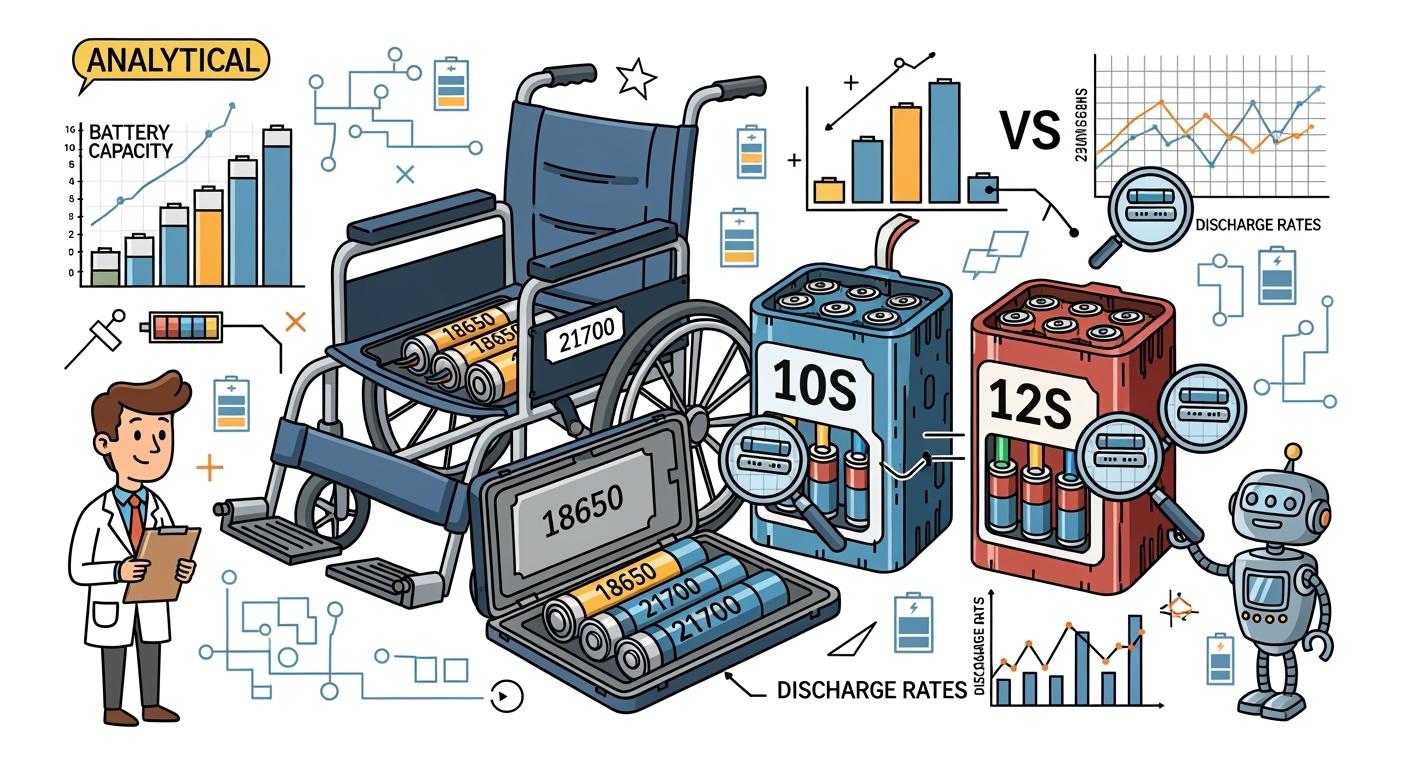
You need to evaluate wheelchair battery range to ensure electric mobility and reliability in every situation. Selecting the right lithium battery, whether 18650 or 21700, directly impacts power, energy, and quality. Compare energy density and power output for your vehicle in the table below, and consult your lithium battery supplier for quality and reliable power.
Battery Type | Energy Density | Application Benefits |
|---|---|---|
21700 | Higher | Longer battery life, higher power output for motorized wheelchairs |
18650 | Lower | Shorter battery life, less power output for motorized wheelchairs |
Key Takeaways
Choose 21700 cells for longer battery life and higher power output. They provide better performance for motorized wheelchairs compared to 18650 cells.
Calculate battery range by considering total capacity, voltage, and power consumption. This helps ensure your wheelchair meets your mobility needs effectively.
Follow best practices for battery maintenance, such as avoiding deep discharges and charging regularly. These habits extend battery life and improve performance.
Part1: Cell Comparison And Pack Options
1.1 18650 Vs 21700: Capacity And Density
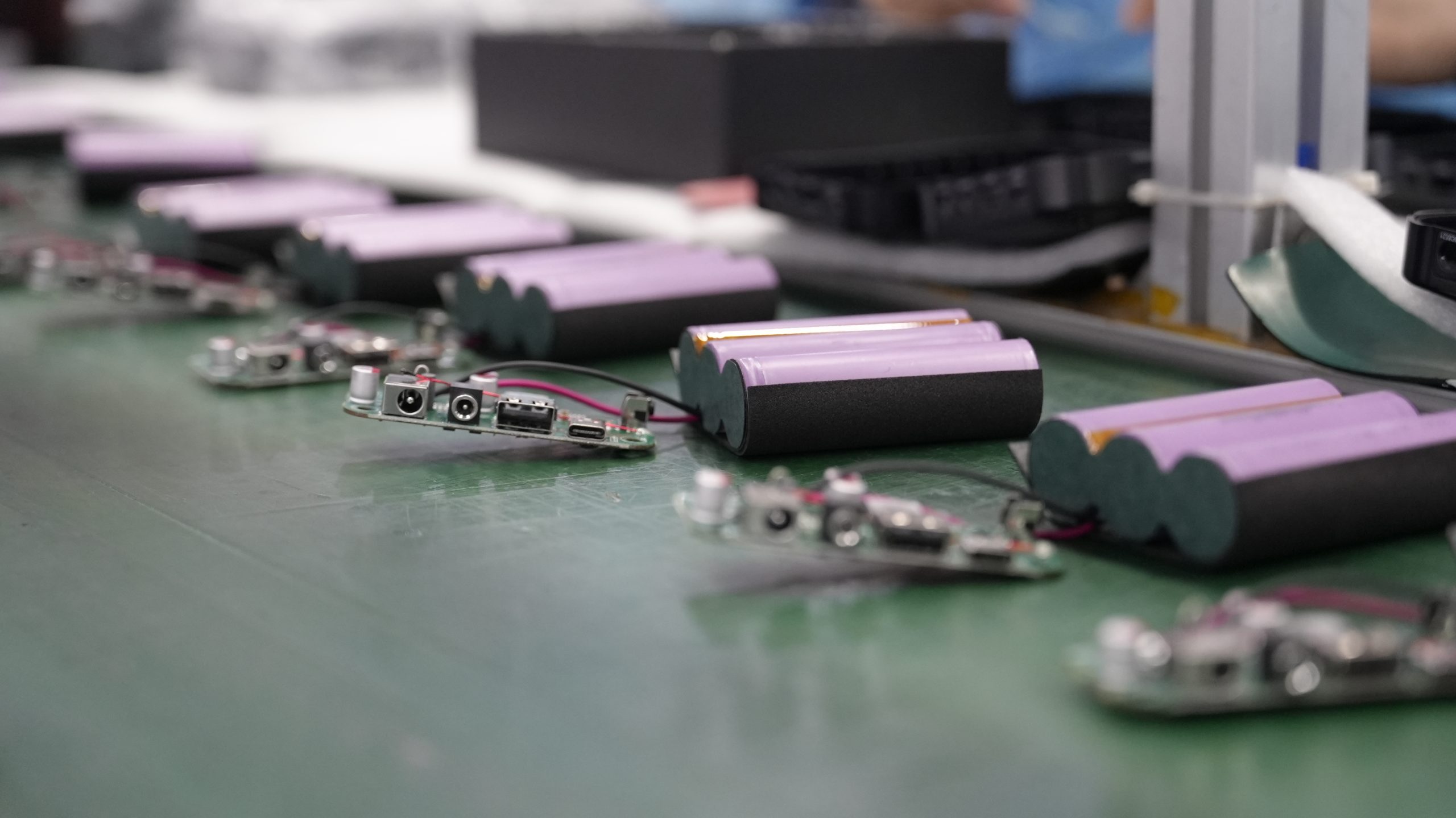
When you evaluate batteries for wheelchair applications, you need to compare the capacity and energy density of 18650 and 21700 lithium-ion cells (lithium-ion). The table below shows typical capacity values:
Battery Type | Capacity (mAh) |
|---|---|
18650 | 1800 – 3500 |
21700 | 3000 – 5100 |
Higher capacity means more energy storage, which leads to longer runtime and better performance. You also need to consider energy density, which affects the weight and size of the battery pack. The following table compares energy density for popular cell models:
Cell Type | Wh/kg | Wh/L |
|---|---|---|
Samsung 35E 18650 | 251.9 | 711.7 |
Samsung 50T 21700 | 249.73 | 707.8 |
Samsung 35E 18650 | 231 | 652.7 |
Samsung 50T 21700 | 241.2 | 683.7 |
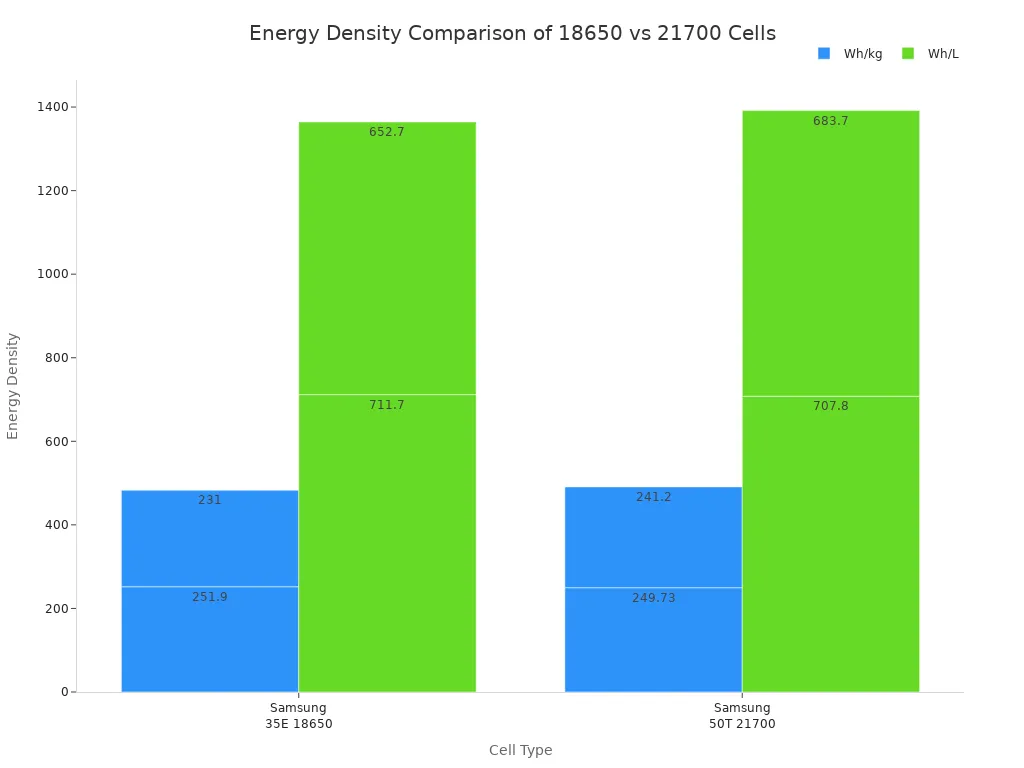
You should select batteries with high energy density and capacity for optimal power and long cycle life. This ensures quality and efficiency in deep cycle battery packs.
1.2 Discharge Rate And Size Impact
Discharge rate determines how much power the battery can deliver at once. For wheelchair use, you need batteries with a high discharge rate to support motor demands. The table below summarizes standard discharge rates:
Cell Type | Discharge Rate | Applications |
|---|---|---|
18650 | 30A | Electric Wheelchairs, Electric Bicycles/Scooters, Solar Energy Storage Systems |
21700 | 35A | Electric Wheelchairs, Electric Vehicles, Energy Storage Markets |
Larger cells like 21700 offer higher capacity and discharge rates, which improve deep cycle battery performance and cycle life. You get more power and energy for demanding applications.
1.3 10S Vs 12S: Voltage And Performance
Battery pack configuration affects voltage output and overall performance. The table below compares 10S and 12S options:
Configuration | Number of Cells | Nominal Voltage (V) |
|---|---|---|
10S | 10 | 37.0 |
12S | 12 | 44.4 |
Difference | N/A | 7.4 |
Higher voltage from a 12S pack delivers more power and efficiency for your wheelchair. You achieve better deep cycle vs regular battery performance and longer cycle life. Consult your lithium battery supplier to match battery configuration to user needs and space constraints. Quality batteries with long cycle life and high energy density ensure reliable power for every application.
Part2: Evaluate Wheelchair Battery Range

2.1 Range Calculation Steps
When you evaluate wheelchair battery range, you need a systematic approach to ensure accurate results. Start by gathering the specifications for your lithium-ion battery pack, whether you use 18650 or 21700 cells. The following table outlines the main components and calculation steps:
Component | Description |
|---|---|
Number of Cells | Total number of battery cells in the pack |
Individual Capacity (Ah) | Capacity of each cell in amp-hours |
Nominal Voltage (V) | Voltage rating of each cell (typically 3.6V or 3.7V for lithium-ion) |
Total Capacity (Wh) | Number of Cells × Individual Capacity (Ah) × Nominal Voltage (V) |
To estimate the range, you must calculate the total energy and match it to the wheelchair’s power consumption. Use the following formulas:
Formula Description | Formula | Example Calculation |
|---|---|---|
Total Capacity (Ah) | Capacity of One Cell (Ah) × Number of Parallel Cells | 3Ah × 4 = 12Ah |
Total Voltage (V) | Nominal Voltage × Number of Series Cells | 3.7V × 10 = 37V |
Total Energy Capacity (Wh) | Total Capacity (Ah) × Total Voltage (V) | 12Ah × 37V = 444Wh |
Runtime (hours) | Total Energy Capacity (Wh) / Power Consumption (W) | 444Wh / 100W = 4.44 hours |
You can then estimate the theoretical range by multiplying runtime by average speed. This method allows you to evaluate wheelchair battery performance for different pack configurations and cell types. Always consult your lithium battery supplier for the most accurate data and to ensure quality and reliability.
2.2 Real-World Factors
Theoretical calculations provide a baseline, but real-world conditions often reduce actual range. You must consider several factors that influence deep cycle battery performance and cycle life:
User weight directly affects battery life. Lighter users place less strain on the battery, increasing range. Heavier users reduce the distance traveled on a single charge.
Terrain and environmental conditions play a major role. Challenging terrains, such as inclines and uneven surfaces, consume more energy and reduce range. Flat surfaces allow for greater range and energy efficiency.
Variations in speed impact battery life. Higher speeds require more power and drain the battery faster.
Battery age and cycle count matter. Older batteries provide less distance per charge. A battery older than 18 months may need replacement to maintain reliable power and long cycle life.
Terrain Type | Impact on Battery Range |
|---|---|
Inclines/Uneven | Consume more energy, reducing range significantly |
Flat Surfaces | Utilize less energy, allowing for greater range |
Driving over smooth, flat surfaces uses less energy, while frequent inclines can reduce range by over 50%. You should always evaluate wheelchair battery range under the actual conditions of use to ensure performance and reliability.
2.3 Example Comparisons
To help you evaluate wheelchair battery options, compare the performance of 10S and 12S packs using both 18650 and 21700 cells. The following table summarizes example calculations for each configuration:
Pack Type | Cell Type | Series (S) | Parallel (P) | Cell Capacity (Ah) | Total Capacity (Ah) | Voltage (V) | Energy (Wh) | Est. Runtime (100W load, hours) |
|---|---|---|---|---|---|---|---|---|
Standard | 18650 | 10 | 4 | 3.0 | 12 | 37.0 | 444 | 4.44 |
High Voltage | 18650 | 12 | 4 | 3.0 | 12 | 44.4 | 532.8 | 5.33 |
Standard | 21700 | 10 | 4 | 4.0 | 16 | 37.0 | 592 | 5.92 |
High Voltage | 21700 | 12 | 4 | 4.0 | 16 | 44.4 | 710.4 | 7.10 |
You can see that 21700 cells provide higher capacity and energy, resulting in longer runtime and improved deep cycle battery performance. A 12S configuration increases voltage, further boosting power and efficiency. These factors contribute to better deep cycle vs regular battery results, especially in demanding applications.
2.4 Maximizing Battery Life
To extend battery lifespan and maintain quality performance, you should follow best practices for charging, storage, and daily use. Here are practical tips to help you get the most from your lithium battery pack:
Follow the manufacturer’s recommendations for charging and storage.
Avoid completely draining the battery. Charge after each day of use and disconnect the charger once full.
Keep the battery in moderate temperature conditions to preserve cycle life and energy efficiency.
Regularly check battery terminals for corrosion and ensure firm connections.
Replace the battery when you notice signs of deterioration or reduced performance.
Avoid using fast chargers, as excessive heat can damage lithium batteries and reduce cycle life.
Maintain the motor and keep the wheelchair load light to reduce power consumption and extend deep cycle battery life.
Use smooth driving methods and maintain proper tire pressure to conserve energy and improve efficiency.
Charging Practice | Impact on Battery Life |
|---|---|
Avoid overcharging | Prevents overheating and potential damage to the battery |
Avoid deep discharges | Helps in prolonging battery life |
Regular calibration | Ensures accurate display of remaining power |
Tip: Charge your wheelchair after each use and avoid letting the battery drop below 20%. Regular, partial charging is better than waiting for a complete discharge. These habits help you maximize battery lifespan and ensure reliable power for your electric mobility needs.
By following these guidelines, you can achieve long cycle life, high energy efficiency, and consistent performance from your lithium battery pack. Always consult your lithium battery supplier for custom solutions and to ensure you select the best deep cycle battery for your application. This approach guarantees quality, reliability, and longevity for every wheelchair user.
You must evaluate wheelchair batteries by comparing 18650 and 21700 cells in 10S or 12S packs. Higher lithium energy density and capacity improve power, portability, and cost-effectiveness. The table below highlights key selection factors for battery packs:
Factor | 18650 Cells | 21700 Cells |
|---|---|---|
Size | 18x65mm | 21x70mm |
Capacity | 3000-3500mAh | 5000mAh |
Power | Lower | Higher |
You should match battery configuration to user needs, space, and performance. Consider both theoretical calculations and real-world factors like user weight, terrain, and battery life. Lithium batteries deliver longer life, higher energy, and reliable power for every deep cycle battery application.
FAQ
What factors should you consider when selecting a lithium battery pack for wheelchairs?
You should evaluate energy density, cycle life, discharge rate, and pack configuration. Consult Large Power’s custom battery solution for tailored recommendations.
How does a 10S pack compare to a 12S pack in terms of battery performance?
Pack Type | Voltage (V) | Cycle Life | |
|---|---|---|---|
10S | 37.0 | Standard | Standard |
12S | 44.4 | Higher | Longer |
A 12S battery pack delivers higher voltage and improved efficiency.
Can you extend battery lifespan with proper maintenance?
Yes. You should avoid deep discharges, store the battery at moderate temperatures, and follow manufacturer guidelines. Regular maintenance ensures optimal battery performance and reliability.


