

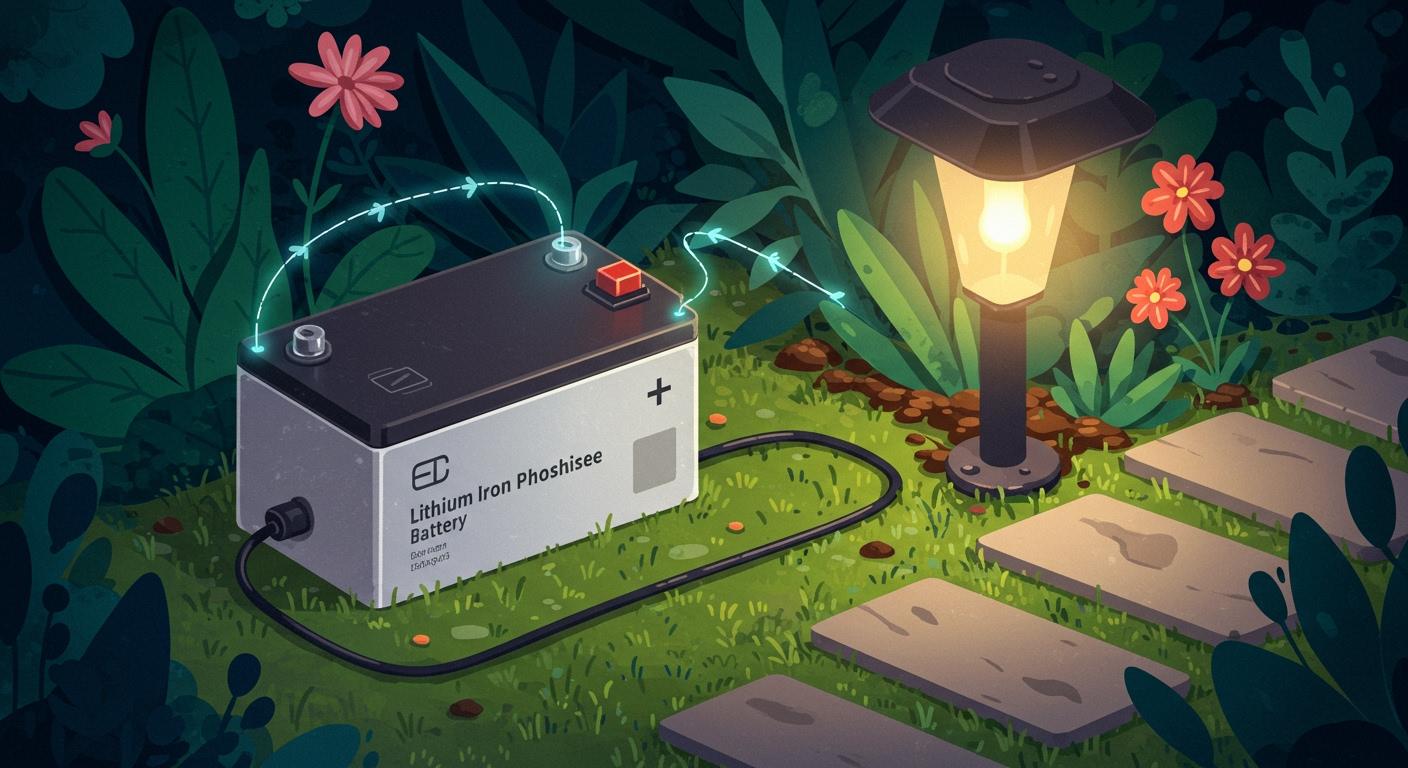
You drive the green revolution in outdoor lighting by choosing lithium iron phosphate battery packs. These batteries deliver unmatched lighting longevity, safety, and energy efficiency. The table below compares their benefits to older technologies, showing why you accelerate the green energy transition and maximize energy savings for sustainable outdoor lighting power.
Benefit | Lithium Iron Phosphate (LiFePO4) Batteries | Older Battery Technologies |
|---|---|---|
Longevity | Last over 3,000 cycles, up to 10,000 under ideal conditions | Shorter life spans |
Safety | Highly stable, resistant to thermal runaway | Less stable, higher risk |
Efficiency | Energy storage capacity of up to 170 mAh/g | Varies, generally lower |
Sustainability | Reusable and recyclable, lower environmental impact | Higher environmental cost |
Embrace advanced lighting solutions and lead the green revolution in outdoor lighting.
Key Takeaways
Choose lithium iron phosphate (LiFePO4) batteries for outdoor lighting to enjoy longer lifespans and reduced maintenance costs.
LiFePO4 batteries are safer and more efficient than older battery technologies, making them ideal for sustainable garden lighting.
Adopting solar lighting systems with LiFePO4 batteries helps minimize environmental impact and supports the green revolution.
Part1: Green Revolution in Garden Lighting

1.1 Traditional Lighting Issues
You face several challenges when relying on traditional outdoor lighting systems. These older lighting solutions often consume excessive energy, which increases operational costs and environmental impact. Traditional lighting can also create light pollution, disrupting natural nighttime environments and affecting local wildlife. Maintenance demands add to the burden, as you must regularly replace bulbs and perform electrical work to keep systems running.
Traditional landscape lighting consumes large amounts of energy.
Light pollution from outdated lighting disrupts wildlife and natural cycles.
Frequent maintenance, including bulb replacements, increases labor and costs.
Halogen bulbs waste electricity by generating heat rather than light.
Low-voltage LED systems offer some improvement, but they still depend on grid electricity and do not fully address sustainability concerns. As you look for ways to reduce your ecological footprint, you see the need for more advanced solutions.
1.2 Battery Technology Limitations
Older battery technologies limit the effectiveness of outdoor lighting. Nickel-metal hydride (NiMH) and lead-acid batteries have short lifespans and require frequent replacement. These batteries perform poorly under varying outdoor conditions, leading to inconsistent lighting and higher maintenance costs. You also encounter environmental concerns, as these batteries are less recyclable and contribute to hazardous waste.
Battery Type | Lifespan (Years) | Charge Cycles | Performance Characteristics |
|---|---|---|---|
Lithium Iron Phosphate (LiFePO4) | 5 – 10 | 2,500 – 9,000 | Enhanced safety, long cycle life, stable performance |
Nickel-Metal Hydride (NiMH) | 1 – 3 | 500 – 1,500 | Shorter lifespan, less stable under varying conditions |
Lead-Acid | 1 – 3 | 500 – 1,000 | Heavy, less efficient, shorter lifespan |
You drive the shift toward solar outdoor lighting by adopting advanced lithium iron phosphate batteries. These batteries deliver reliable, long-lasting lighting while supporting your sustainability goals.
Part2: Solar Lighting Advances
2.1 Solar Yard Lights Overview
You see a rapid transformation in outdoor lighting as solar exterior lights become the preferred solution for both commercial and residential landscapes. Solar yard lights harness sunlight during the day, converting it into energy that powers lighting at night. This process eliminates the need for grid electricity and reduces operational costs. Over the past decade, solar exterior lights have evolved to meet diverse needs, offering improved efficiency and design flexibility.
Type of Solar Yard Light | Description | Evolution Over Time |
|---|---|---|
Solar Path Lights | Line walkways, providing safety and guidance. | Gained popularity for eco-friendliness and efficiency. |
Solar Flood Lights | Illuminate large areas for security. | Increased use in residential and commercial security applications. |
Solar Garden Lights | Decorative, combining illumination with aesthetics. | Expanded design options for enhanced visual appeal. |
Solar Wall Lights | Mounted on walls or fences for patios and workspaces. | Greater versatility and style diversity. |
Solar Street Lights | Used in urban and industrial settings for public area lighting. | Improved efficiency and significant cost reductions. |
You also find post lights, step lights, and spotlights among the most common solar exterior lights. These led solar lighting fixtures now offer reliable performance, even in challenging environments.
Market trends show that increased awareness of clean energy, significant price reductions, and government incentives drive the adoption of solar exterior lights. The residential and commercial sectors both diversify energy consumption, boosting demand for solar lighting systems.
2.2 Role of Battery Packs
Battery packs serve as the backbone of solar lighting systems. You rely on them to store energy collected by solar panels, ensuring consistent lighting performance throughout the night. The type and capacity of battery packs directly impact the duration and reliability of solar exterior lights. Lithium Iron Phosphate (LiFePO4) batteries, in particular, deliver high energy density and long service life, making them the preferred choice for led solar lighting fixtures in demanding outdoor lighting projects.
Battery packs store solar energy for nighttime operation.
The right battery chemistry and capacity extend lighting duration, even during cloudy periods.
LiFePO4 batteries offer superior longevity and stability for solar lighting systems.
Higher capacity batteries support longer operation and reduce maintenance cycles.
You must consider several factors when selecting battery packs for solar exterior lights:
Price versus long-term value
Lifespan and temperature performance
Voltage, capacity, and compatibility with solar lighting systems
Weatherproofing and brand reputation
Proper design and regular maintenance of battery packs enhance the reliability of solar lighting systems. By choosing advanced lithium battery packs, you ensure your outdoor lighting projects achieve maximum energy efficiency and sustainability. For more on sustainable practices, visit our approach to sustainability.
Part3: Sustainability and Performance
3.1 Longevity and Reliability
You demand lighting systems that deliver reliable power and high energy efficiency for every outdoor lighting project. Lithium iron phosphate batteries set a new standard for longevity and performance in solar applications. These batteries provide consistent lighting output and maintain high energy density throughout their lifespan. You benefit from fewer replacements and reduced maintenance, which supports sustainability and lowers operational costs.
The table below compares the average lifespan and charge cycles of common batteries used in solar outdoor lighting:
Battery Type | Lifespan | Charge Cycles |
|---|---|---|
LiFePO₄ | Up to 10 years | 1500-2000 |
Lithium-ion | 2-3 years | 300-500 |
Lithium iron phosphate batteries outperform traditional chemistries, offering reliable power and high efficiency for solar lighting. You achieve significant environmental benefits by reducing waste and maximizing the value of each battery pack. This reliability ensures your outdoor lighting remains operational, even in demanding conditions.
3.2 Environmental Impact
You recognize the importance of minimizing environmental impact while delivering high-efficiency lighting solutions. Lithium iron phosphate batteries support sustainability by offering high energy density and zero-carbon emissions during operation. However, you must consider the full lifecycle of these batteries:
The lifecycle includes manufacturing, usage, and disposal, each with its own environmental impact.
Production and disposal require raw material extraction and energy, resulting in emissions and resource use.
Storing and delivering 1 kW-hour of electricity from these batteries can produce about 90.8 kg CO2 equivalent emissions and consume 1,210 MJ of fossil resources.
Key impact categories include climate change, acidification, and resource depletion.
Recycling and cleaner energy sources help reduce emissions and environmental impact.
Compared to lead-acid batteries, lithium iron phosphate batteries are more environmentally friendly due to the absence of toxic heavy metals. NiMH batteries are also environmentally friendly and 100% recyclable. Lead-acid batteries pose risks of contamination and higher emissions if not disposed of properly. You advance sustainability by choosing batteries that offer high energy efficiency, reliable power, and zero-carbon emissions for solar outdoor lighting.
Part4: Lithium Iron Phosphate Batteries in Solar Lighting
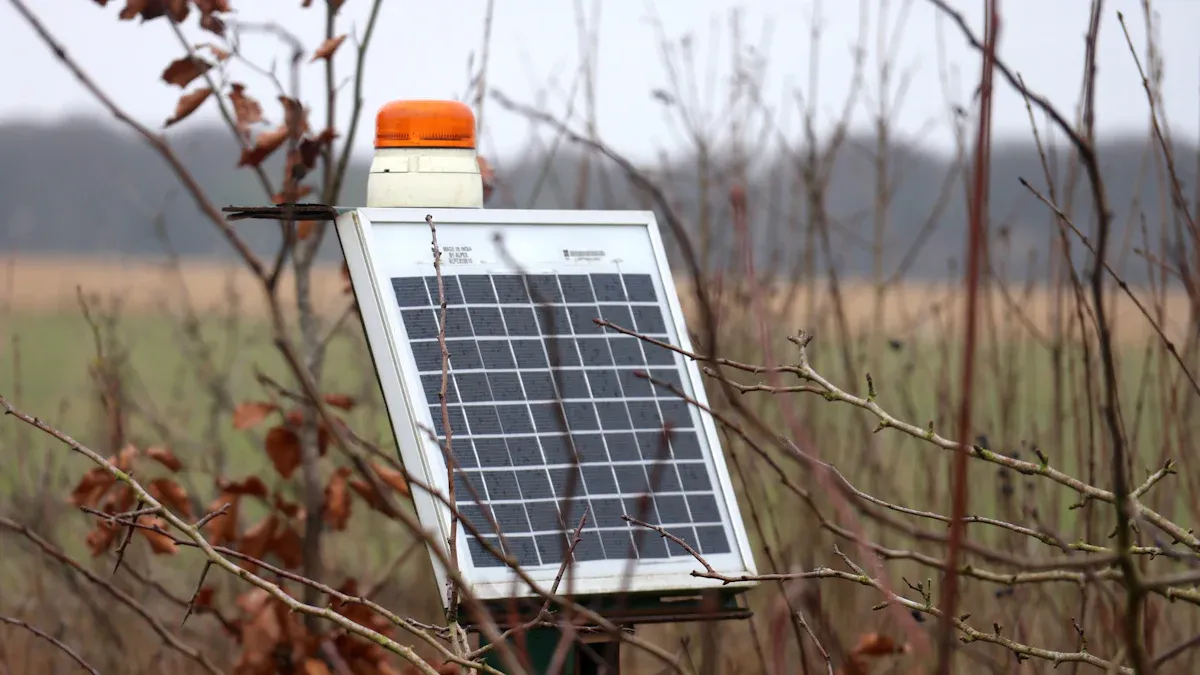
4.1 Key Features
You drive innovation in outdoor lighting by selecting lithium iron phosphate (LiFePO4) battery packs for your solar projects. These batteries deliver a unique combination of safety, longevity, and efficiency, making them the preferred choice for advanced battery technology in demanding environments. When you integrate LiFePO4 batteries into your solar lighting systems, you benefit from a robust battery-solar synergy that supports reliable power delivery and sustainable operation.
Here is a summary of the technical features that set LiFePO4 batteries apart in solar integration:
Feature | Description |
|---|---|
Safety | LiFePO4 batteries are stable and less prone to thermal runaway, making them safer for outdoor use. |
Longevity | They offer a cycle life of 4,000–6,000 cycles, reducing the need for frequent replacements. |
Efficiency | High charge and discharge efficiency is crucial for solar applications requiring rapid energy output. |
Environmental Impact | Less harmful materials compared to other lithium batteries, promoting sustainability. |
You gain several operational advantages with these battery packs:
LiFePO4 batteries typically last 2,000–5,000 cycles, far exceeding the lifespan of traditional lead-acid batteries.
Their high energy density allows for compact energy storage, which is ideal for solar lighting installations with limited space.
Long cycle life ensures consistent performance over the lifespan of your solar systems, reducing replacement costs and downtime.
High energy density supports applications in infrastructure, security, and industrial sectors, where space and reliability are critical.
You can achieve 3–5 nights of lighting operation on a single charge, even during periods of low sunlight, thanks to the efficient battery-solar synergy.
Tip: By choosing LiFePO4 battery packs, you ensure your solar outdoor lighting systems deliver maximum power and reliability, even in challenging environments.
4.2 Safety and Efficiency
You prioritize safety and efficiency when deploying solar outdoor lighting across commercial landscapes. LiFePO4 battery packs incorporate multiple safety mechanisms that protect your lighting systems and reduce operational risks. These features make them ideal for integration with energy-efficient solar panels and smart lighting controls.
The following table outlines the key safety mechanisms found in LiFePO4 battery packs:
Safety Mechanism | Description |
|---|---|
Built-in Battery Management System (BMS) | Prevents overcharging, over-discharging, over-current, and short-circuiting. |
High-temperature cutoff | Prevents charging above 122°F (50°C), enhancing safety in various conditions. |
Regular maintenance and inspection | Ensures potential problems are detected and addressed timely, reducing safety hazards. |
Use of certified products | Selecting high-quality, certified batteries reduces the risk of accidents during use. |
You experience minimal maintenance requirements with LiFePO4 battery packs. Routine checks and basic cleaning of solar panels keep your lighting systems running efficiently. This low-maintenance approach translates into reduced operational costs and fewer disruptions. The impressive cycle life of LiFePO4 batteries—often exceeding 2,000 to 5,000 cycles—means you can operate your solar lighting for years without frequent replacements.
LiFePO4 batteries also excel in extreme weather conditions. You maintain reliable power for your outdoor lighting, even when temperatures drop to -4°F or rise to 158°F. Unlike lead-acid batteries, which suffer significant capacity loss in heat, LiFePO4 batteries retain their performance and lifespan. This resilience ensures your lighting remains operational in diverse climates, supporting infrastructure and security applications where uninterrupted power is essential.
Smart lighting features further enhance your solar integration. LiFePO4 battery packs provide the high energy density and long cycle life needed to support remote control, automation, and occupancy sensing. You can deploy advanced lighting systems that adapt to changing conditions and user needs, maximizing energy efficiency and operational flexibility.
Note: The combination of LiFePO4 battery packs and energy-efficient solar panels creates a powerful, sustainable solution for modern outdoor lighting. You achieve reliable, long-lasting performance while minimizing environmental impact and maintenance costs.
You lead the green revolution in solar garden lighting by choosing lithium iron phosphate batteries. These batteries deliver unmatched sustainability, reliability, and cost-effectiveness for your projects.
Advantage | Description |
|---|---|
Safety | LiFePO4 batteries remain thermally stable, reducing risk in harsh outdoor settings. |
Longer Lifecycle | You benefit from extended use, lowering replacement frequency and supporting sustainability. |
Cost-Effectiveness | Lower manufacturing costs and longer life reduce total ownership costs over time. |
Lithium iron phosphate batteries help you achieve zero pollution goals and support smart energy management.
They align with global sustainability standards and enable integration of eco-friendly technologies like LED fixtures.
You can explore custom battery solutions for your next project by visiting our custom battery consultation page.
FAQ
What advantages do LiFePO4 battery packs offer for large-scale outdoor lighting projects?
You gain longer cycle life, higher safety, and stable performance. LiFePO4 batteries from Large Power reduce maintenance and support sustainable, cost-effective lighting for infrastructure and industrial applications.
How do LiFePO4 batteries compare to other lithium chemistries for solar lighting?
Chemistry | Platform Voltage (V) | Energy Density (Wh/kg) | Cycle Life (cycles) |
|---|---|---|---|
LiFePO4 | 3.2 | 90–160 | 2,000–6,000 |
NMC | 3.7 | 150–220 | 1,000–2,000 |
LCO | 3.7 | 150–200 | 500–1,000 |
LMO | 3.7 | 100–150 | 300–700 |
LTO | 2.4 | 70–110 | 7,000–20,000 |
You benefit from LiFePO4’s safety, long cycle life, and stable voltage, making it ideal for solar lighting.
Yes. Large Power provides custom lithium battery solutions for medical, robotics, security, and infrastructure projects. You receive tailored packs to meet your technical and regulatory needs.


