

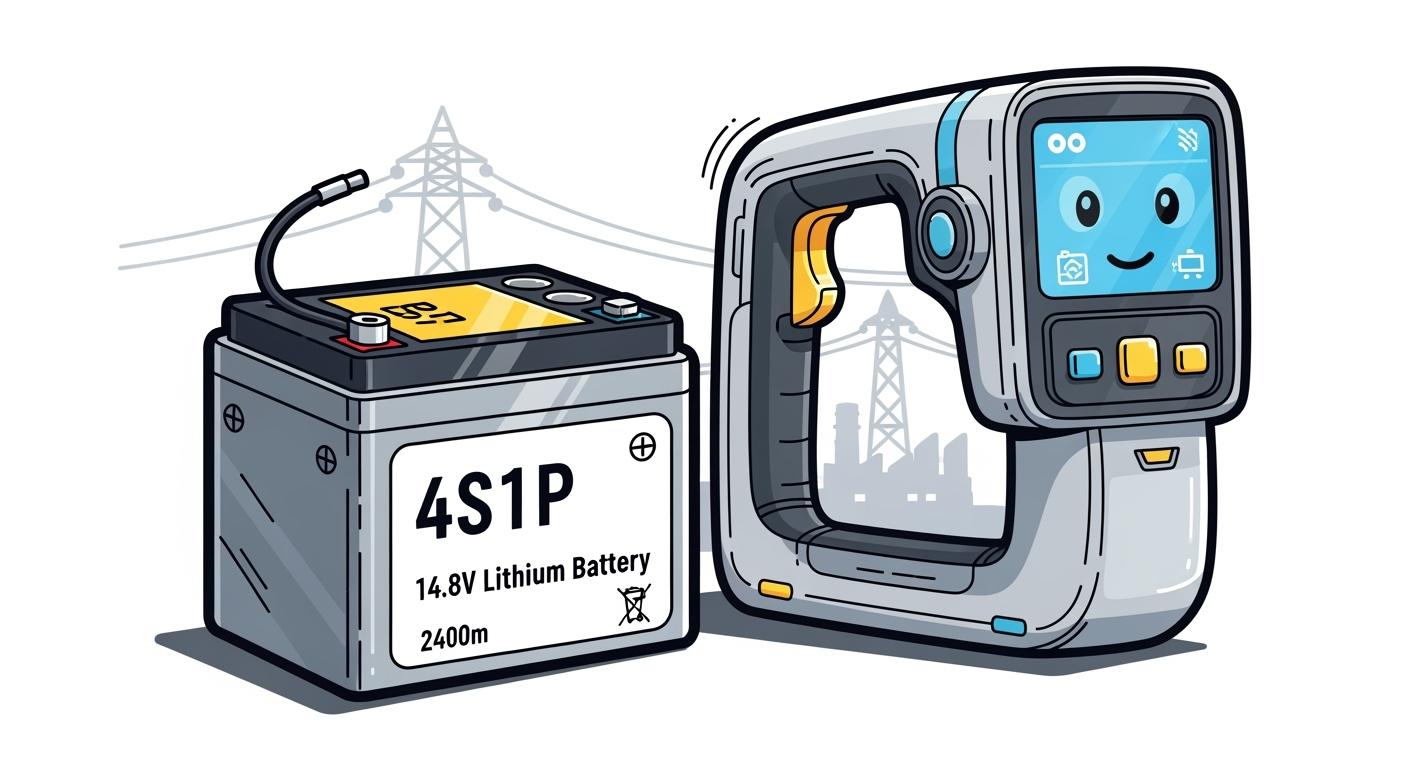
A high-performance lithium battery powers your power inspection robot with advanced energy density and lightweight construction. You gain safer operation and longer runtime. Customization lets you match each high-performance lithium battery to your robot’s needs. You experience lower maintenance and faster charging, as shown below:
Metric | Lithium Batteries | Traditional Batteries |
|---|---|---|
Maintenance Needs Reduction | Up to 75% | N/A |
Charging Time | Quicker | N/A |
Operational Efficiency Impact | Improved performance | N/A |
Choosing a high-performance lithium battery means you focus on reliability and safety while optimizing productivity. You benefit from essential features and quality assurance in every high-performance lithium battery.
Key Takeaways
High-performance lithium batteries offer up to 75% reduction in maintenance needs, making them more efficient than traditional batteries.
Customization of battery packs allows you to match specific needs of your inspection robot, enhancing operational efficiency.
Balancing energy density and weight is crucial; lighter batteries improve mobility while maintaining sufficient power for longer runtimes.
Advanced safety features, like built-in battery management systems, protect against overcharging and extend battery life.
Compliance with international standards ensures your battery packs are safe, reliable, and ready for various applications.
Part1: High-Performance Lithium Battery Design Essentials

1.1 Key Metrics for Performance
You need to understand the most important metrics when selecting a lithium battery for your power inspection robot. These metrics help you measure how well the battery will perform in real-world conditions. The right battery configuration ensures your robot operates efficiently and safely.
Metric | Value |
|---|---|
Nominal Voltage | 14.8V |
Typical Capacity | 2.2Ah / 3.5Ah |
Cycle Life | 500+ cycles |
Charge Voltage | 16.8V |
Discharge Cutoff | 10.0V |
Operating Temperature | –20°C to +60°C |
High Energy Density | More power in less space |
Lightweight Design | Easier integration into portable systems |
Built-in BMS Protection | Prevents overcharging, overdischarging, and short circuits |
You should focus on high energy density, lightweight design, and robust safety features. These factors allow your robot to run longer and handle demanding inspection tasks. Built-in battery management systems (BMS) protect your investment by preventing overcharge, over-discharge, and short circuits. This protection increases the reliability and lifespan of your battery pack design.
1.2 Application-Specific Design Use Cases
You can find lithium battery packs in many industries. Each sector has unique requirements for battery design, configuration, and performance. Customization lets you match the battery to your robot’s needs, improving operational efficiency and safety.
Sector | Typical Application | Chemistry (Platform Voltage) | Energy Density (Wh/L) | Cycle Life | Key Requirement |
|---|---|---|---|---|---|
Medical | Portable diagnostic devices | LiFePO4 (3.2V) | 300–350 | 2000+ | High safety, long cycle life |
Robotics | Handheld inspection robots, drones | NMC (3.7V) | 500–620 | 500–800 | High energy density, light weight |
Security Systems | Mobile surveillance units | LCO (3.6V) | 400–500 | 400–600 | Fast response, moderate safety |
Infrastructure | Transportation sensors, smart meters | LMO (3.7V) | 350–450 | 300–700 | Stable voltage, moderate density |
Consumer Electronics | Wearables, cameras | NMC (3.7V) | 500–620 | 500–800 | Compact size, high energy density |
Industrial | Portable tools, data loggers | LiFePO4 (3.2V) | 300–350 | 2000+ | Durability, safety |
You can see that each application benefits from a specific battery configuration. For example, medical robots require high safety and long cycle life, while handheld inspection robots need high energy density and low weight. Custom battery pack design gives you form factor flexibility, power and voltage customization, and modularity. You can also add smart BMS features for real-time monitoring and predictive maintenance. This approach boosts efficiency and reduces downtime in your robotics operations.
Tip: Custom battery packs can help you meet regulatory standards like UL, IEC, and UN38.3, making it easier to deploy your robots in regulated industries.
1.3 Balancing Energy Density and Weight
You must balance high energy density and weight when designing a battery for your inspection robot. High energy density means you get more power in a smaller space, which is critical for portable robotics. However, increasing density can sometimes make the battery heavier or affect immediate power delivery.
Increasing energy density allows you to use lighter batteries, so your robot can do more work without frequent recharging.
If you focus only on reducing weight, you may lose overall capacity, which shortens runtime.
Engineers now explore multifunctional battery designs. These batteries not only store energy but also serve as part of the robot’s structure. This concept helps you build efficient, lightweight robots for advanced inspection tasks.
You need to consider the trade-offs in battery design. Prioritizing energy density may increase weight, while focusing on weight can reduce capacity. The right balance depends on your robot’s mission and operational environment. For example, a robot used for long-range infrastructure inspection may need higher energy density, while a tool for rapid, short tasks may benefit from a lighter battery.
Note: Built-in safety features such as overcharge protection, over-discharge protection, short circuit detection, and cell balancing are essential for reliable battery operation in all use cases.
By understanding these design principles, you can select or customize a battery configuration that maximizes performance, safety, and efficiency for your specific inspection robot.
Part2: Technical Trade-Offs in Battery Design
2.1 Lithium Chemistry Comparison
When you select a battery for your inspection robot, you must compare different lithium chemistries. Each chemistry offers unique benefits for power, safety, and quality. The table below shows how common lithium battery types perform in terms of energy density and long cycle life:
Chemistry (Platform Voltage) | Energy Density (Wh/kg) | Cycle Life (cycles) |
|---|---|---|
NMC (3.7V) | 180–260 | 800–1500 |
LiFePO4 (3.2V) | 140–180 | 2000–6000 |
LMO (3.7V) | 100–140 | 500–1000 |
LCO (3.6V) | 150–200 | 500–800 |
LTO (2.4V) | 70–90 | 10,000+ |
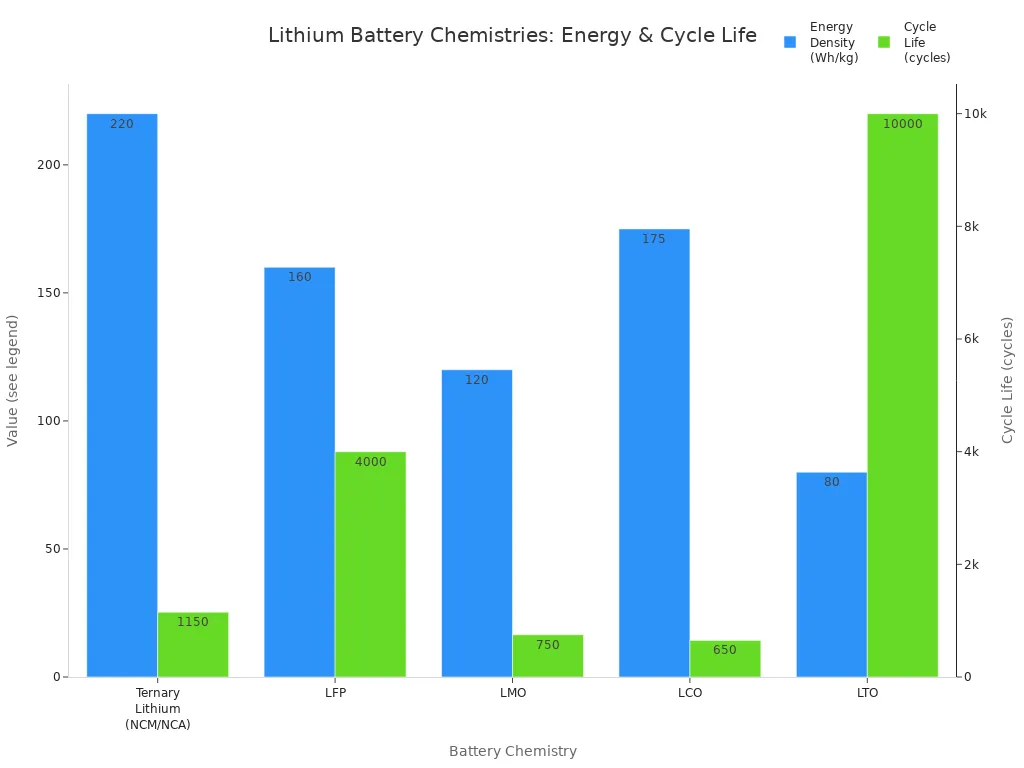
You see that NMC batteries deliver high energy density and strong peak power output, which suits portable devices. LiFePO4 batteries provide excellent safety and the longest cycle life, making them ideal for applications where quality and reliability matter most. LMO and LCO batteries offer moderate energy and cycle life, while LTO batteries stand out for unmatched durability but lower energy density.
2.2 Power Output vs. Cycle Life
You often face a trade-off between peak power output and long cycle life. High-quality battery packs use advanced design strategies to balance these needs:
You can expect your battery to last over 500 cycles while keeping more than 80% of its original capacity.
Using high-quality cells ensures stable power and consistent quality.
An integrated Battery Management System (BMS) gives you protection from over-charge, over-discharge, and short circuits, which helps extend service life and maintain quality.
You should choose a battery that matches your robot’s power needs and expected usage cycles. This approach helps you achieve both strong performance and long-term quality.
2.3 Safety and Maintenance Reduction
You need to prioritize safety and maintenance reduction in your battery design. Advanced integrated safety mechanisms, such as solid-state technology, improve reliability for your devices:
Solid-state batteries increase safety and quality by reducing risks like leakage and overheating.
These batteries deliver higher energy density, so your devices can run longer between charges, which boosts efficiency.
A thicker ceramic separator layer gives greater mechanical resistance to high temperatures, ensuring your devices operate safely under stress.
Solid-state technology supports smaller, more flexible devices, which is important for advanced robotics.
By focusing on quality, protection, and safety, you reduce maintenance needs and improve the long-term reliability of your handheld inspection robots.
Part3: Essential Features for Reliable Performance
3.1 Thermal Management Systems
You need effective thermal management systems to maintain reliable battery operation in handheld power inspection robots. Managing temperature directly impacts battery performance, lifespan, and safety. Lithium-ion batteries perform best within a specific temperature range. Charging below 0°C can cause permanent damage, so a robust battery management system (BMS) controls heating to keep the battery within safe limits.
Common thermal management solutions include:
Real-time diagnostics that detect faults before they escalate.
Automated safety cutoffs to prevent overheating and overcharging.
Adaptive power management that optimizes battery performance and longevity.
You can use both heating and cooling methods in your design:
Heating uses energy from an external AC source or a separate battery to raise the battery pack temperature.
Cooling can be passive, using ambient airflow, or active, with fans and thermal hydraulic systems.
For high-power applications, liquid cooling maintains temperature uniformity and prevents localized overheating. Thermal insulation materials, such as heat plates and phase change materials, help control heat buildup and keep temperatures stable.
Tip: A well-designed thermal management system extends battery life and ensures safe operation in demanding environments.
3.2 Battery Monitoring and Protection
You must include advanced monitoring and protection features in your battery design. These features ensure safe, efficient operation and reduce the risk of failure. A high-quality design uses a BMS to monitor and balance each cell, providing overcharge, over-discharge, short circuit, and temperature protection.
Feature | Description |
|---|---|
Continuous Cell Balancing | Keeps all cells at the same voltage, improving efficiency and lifespan. |
Self-Diagnostics | Regularly checks for malfunctions and reports issues. |
Temperature Monitoring | Tracks battery temperature and activates cooling if needed. |
Dynamic Current Limits | Adjusts current flow to prevent damage from overcharging or excessive discharge. |
A BMS also calculates the state of charge (SOC) and supports communication protocols for data transfer. These features help you optimize battery power supply and maintain consistent performance.
3.3 Compliance and Quality Assurance
You must meet international standards and certifications to ensure your battery packs are safe and reliable. Compliance with these standards is essential for market access and customer trust.
Certification | Description | Key Tests |
|---|---|---|
UL 2580 | For rechargeable battery packs in mobile equipment. | Electrical, mechanical, thermal, environmental tests. |
IEC 62619 | For industrial batteries, ensuring safety and performance. | Electrical safety, mechanical endurance, thermal stress, functional safety. |
IEC 62133 | For rechargeable batteries in portable devices. | Overcharging, forced discharge, vibration resistance. |
UN 38.3 | For safe transportation of lithium batteries. | Altitude simulation, thermal, vibration, shock, short circuit, overcharge, forced discharge tests. |
Many distributors require UL 2580 and IEC 62619 for acceptance. These certifications show your battery can withstand abuse and maintain safety. UN 38.3 is crucial for safe transport, confirming your battery can handle various shipping conditions.
To ensure reliability, you should:
Qualify suppliers to meet strict quality standards.
Follow ISO 9001 and ISO 13485 quality management systems.
Test and validate battery packs for electrical safety and environmental durability.
Maintain ongoing quality assurance after your product reaches the market.
A focus on compliance and quality assurance in your design process builds trust and ensures long-term success for your battery-powered robots.
Part4: Manufacturing for Quality and Longevity
4.1 Sourcing and Assembly Best Practices
You need to build quality into every stage of your battery pack manufacturing process. Start by selecting lithium cells from trusted manufacturers like Samsung, LG, or E-One Moli Energy. These suppliers meet strict safety standards and deliver consistent performance. Although premium cells may cost more, you gain longer service life and better safety for your handheld robots.
During assembly, focus on critical structural elements. Use advanced inspection techniques to check welds and connections. Many top manufacturers allow you to inspect their facilities and use ERP systems to monitor production quality. This transparency helps you track every step and ensures you receive reliable battery packs.
Tip: Consider working with suppliers who support sustainability practices. Learn more about responsible sourcing in our approach to sustainability.
4.2 Testing for Reliability
You must test every battery pack to ensure it meets your reliability standards. Capacity fade and internal resistance are common issues that can affect performance. Statistical analysis of commercial pouch cells shows that failure rates become clear only after sorting cells into high- and low-quality groups. The industry reports a lithium-ion battery failure rate of about 1 in 10 million cells. As you scale production, even this low rate can lead to thousands of failures worldwide.
Test for capacity retention and internal resistance.
Use maximum likelihood analysis to predict failure rates.
Identify and separate weaker cells early in the process.
Regular testing helps you catch problems before they reach your customers.
4.3 Long-Term Performance Strategies
You can extend the life of your lithium battery packs by following proven strategies. The table below summarizes key approaches:
Strategy | Description |
|---|---|
Advanced Thermal Management | Monitors temperature and uses cooling to keep batteries in safe conditions. |
Battery Management Systems | Controls charging and discharging to prevent damage. |
Innovative Cell Designs | Reduces heat buildup and lowers risk of thermal events. |
You should also clean your devices, check for cracks or corrosion, and store robots in cool, dry places. Use silica gel packs to control humidity. For best results, follow standards like IEC 62133, UN38.3, and UL2054. These standards cover safety, transport, and reliability, helping you deliver battery packs that last.
You can design high-performance lithium battery packs for handheld inspection robots by following these key principles:
Principle | Description |
|---|---|
High Energy Density | Enhances runtime, allowing robots to perform tasks without frequent recharging. |
Fast Charging | Reduces downtime, enabling quick return to work, thus enhancing operational efficiency. |
Adaptability | Suitable for diverse robotic applications, providing flexibility to meet various operational demands. |
Durability in Challenging Environments | Designed with robust protection features to ensure reliable performance in harsh conditions. |
You must balance energy density, safety, and reliability. High energy density supports long operation. Safety features prevent overheating and failures. Reliability ensures consistent performance.
To optimize your battery design:
Define your robot’s electrical and mechanical needs.
Align with safety standards and plan for thermal management.
Choose partners with proven expertise in lithium battery technology.
FAQ
What makes lithium batteries ideal for inspection robots?
You get high energy density and lightweight design with lithium batteries. These batteries support long runtimes and fast charging. Your robot can operate longer and more efficiently in performance-critical electronic systems.
How do I choose the right lithium chemistry for my robot?
You should compare chemistries like LiFePO4 (3.2V, 300–350 Wh/L, 2000+ cycles), NMC (3.7V, 500–620 Wh/L, 500–800 cycles), and LCO (3.6V, 400–500 Wh/L, 400–600 cycles). Select based on your robot’s safety, energy, and cycle life needs.
What safety features should a lithium battery pack include?
You need overcharge, over-discharge, and short circuit protection. A battery management system monitors temperature and balances cells. These features keep your robot safe and extend battery life.
How can I maximize the lifespan of my robot’s lithium battery?
You should avoid deep discharges and extreme temperatures. Store your robot in a cool, dry place. Regularly check the battery and follow manufacturer guidelines for charging and maintenance.
Are lithium batteries suitable for mobile industrial robots?
Yes. Lithium batteries deliver high performance and reliability for mobile industrial robots. You benefit from long cycle life, stable voltage, and reduced maintenance, making them a smart choice for demanding environments.


