

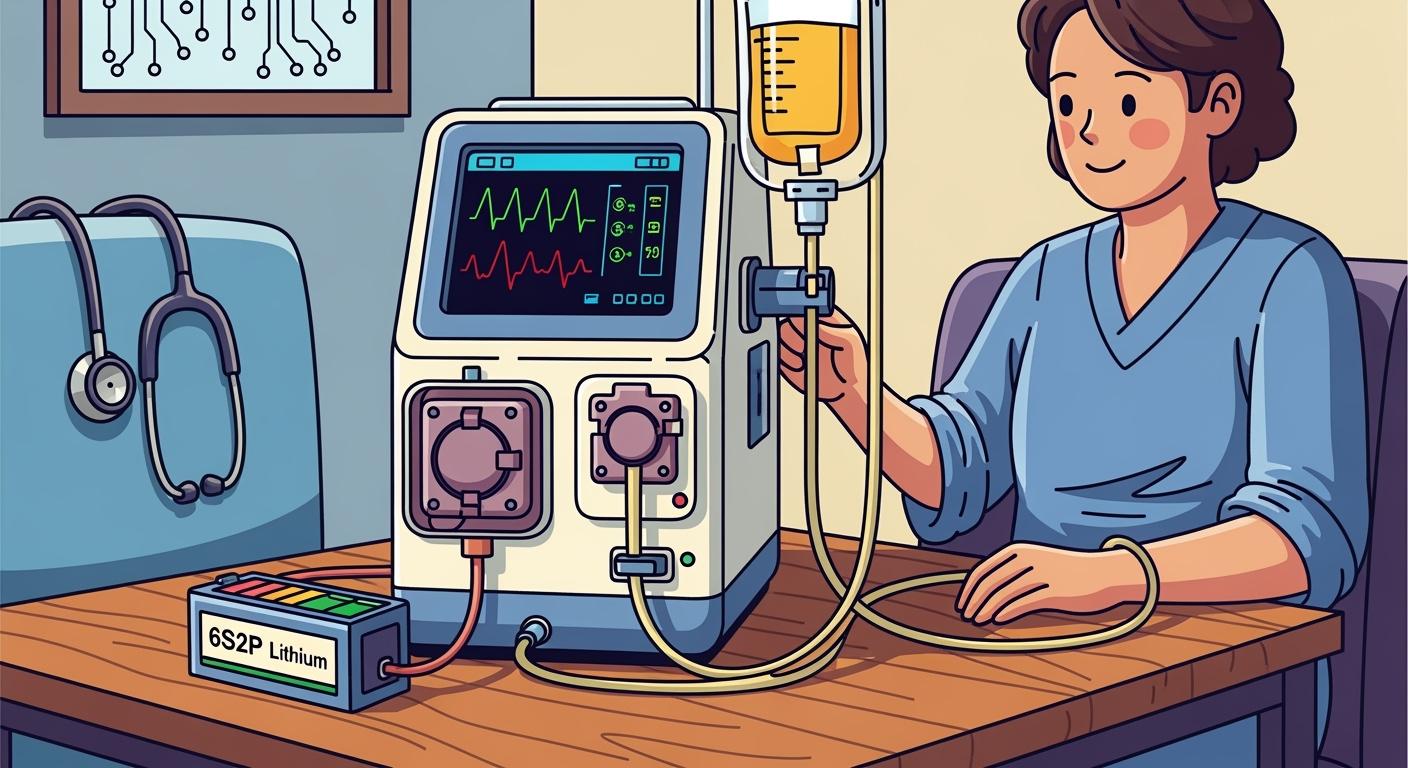
You rely on portable dialysis machines to deliver consistent treatment during travel or emergencies. The 6S2P lithium battery pack offers a balanced combination of power and safety for critical healthcare devices. Lithium Battery Applications drive innovation by supporting mobility and reliability in wearable artificial kidney technology.
Key Takeaways
6S2P lithium batteries provide reliable power for portable dialysis machines, ensuring consistent treatment during travel or emergencies.
These batteries enhance patient mobility by offering extended runtimes, allowing for longer treatment sessions without frequent recharging.
Safety features like advanced battery management systems protect against overcharging and overheating, ensuring patient safety and device reliability.
Part1: 6S2P Li-ion Batteries in Healthcare Devices
1.1 6S2P Configuration Explained
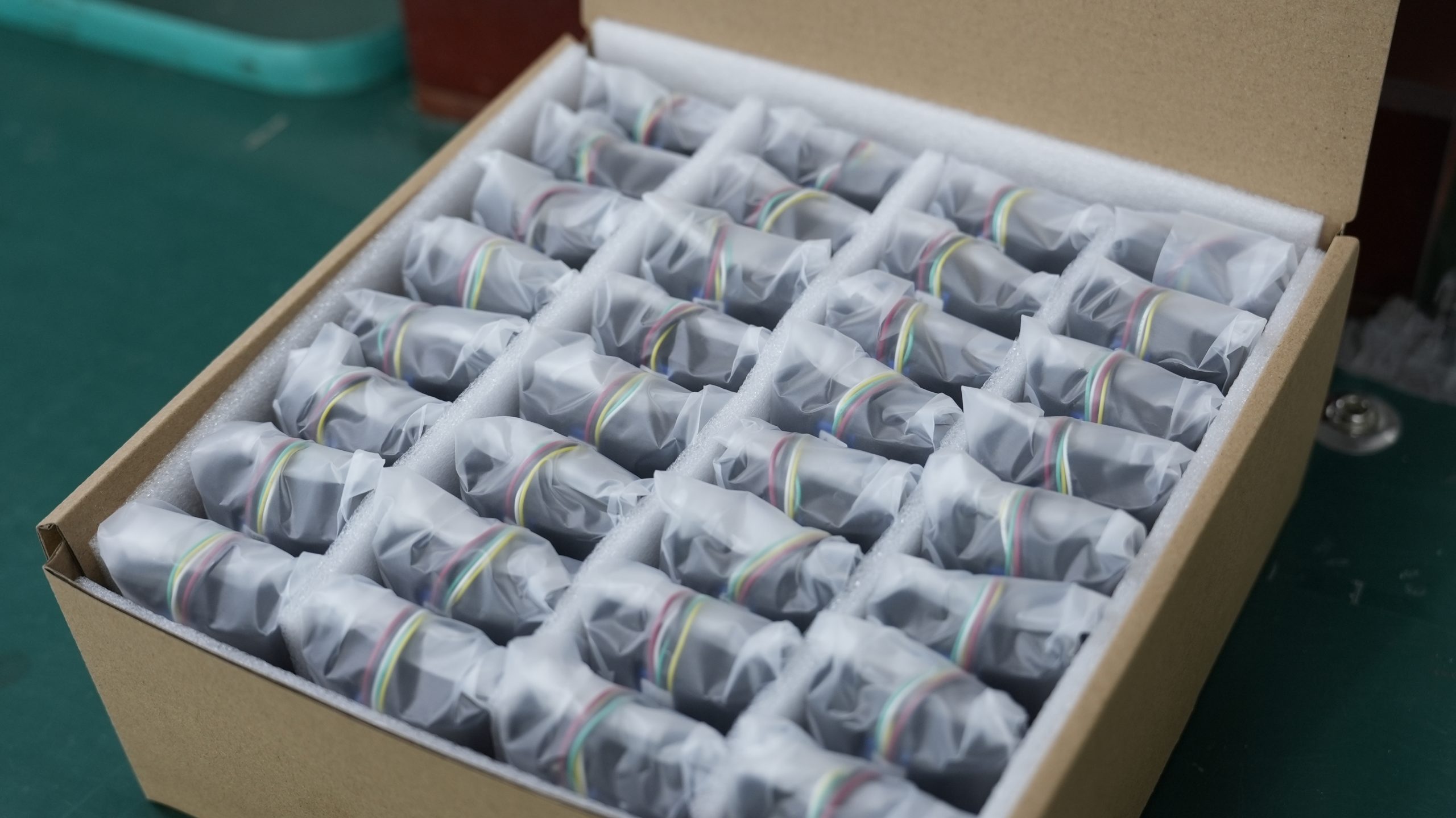
You need reliable power for every medical application, especially in critical environments. The 6S2P li-ion battery pack stands out as a preferred choice for healthcare devices. This configuration connects six cells in series and two in parallel, delivering a voltage range of 21V to 25.2V. You benefit from a dual parallel design that enhances current handling and extends the lifespan of your batteries. This structure reduces heat buildup and stress, which is vital for maintaining consistent performance in demanding medical settings.
6S2P configurations provide elevated voltage, essential for devices that require stable and reliable power.
The parallel arrangement increases capacity and supports longer runtimes.
You gain a powerful balance of voltage, capacity, and reliability, making these batteries ideal for high-performance healthcare equipment.
Benefit | Explanation |
|---|---|
Consistent Voltage Output | Ensures stable operation of healthcare devices, reducing the risk of malfunction. |
Prevention of Sudden Shutdowns | Enhances reliability, crucial for devices that support patient life. |
Anomaly Monitoring | Detects potential issues that could endanger patient safety, allowing for timely interventions. |
Robust Protection Mechanisms | Includes redundant temperature sensing and fail-safe protocols, essential for medical compliance. |
1.2 Lithium Battery Applications in Portable Dialysis
You see lithium battery applications transforming portable dialysis machines. Li-ion batteries offer superior energy density compared to other chemistries, which means you get more power in a lighter, more compact package. Here’s how li-ion batteries compare to other options:
Battery Type | Energy Density Comparison | Additional Characteristics |
|---|---|---|
Lithium-Ion | Superior | High cycle life, rapid charging, widely available |
Solid-State | Higher (future potential) | Improved safety, faster charging, still in early commercialization |
Nickel-Metal Hydride | Lower | Niche applications, legacy fleets |
Redox Flow | Lower | Generally less efficient than lithium-ion and solid-state |
You rely on li-ion batteries for their long cycle life. A typical 6S2P pack can handle 500 deep cycles and withstand up to 1000 cycles at 70% depth of discharge. This durability ensures your dialysis equipment remains operational for extended periods, reducing maintenance and replacement costs. Manufacturers test these batteries for capacity, discharge rate, and safety certifications like UN38.3 and IEC62133. Integrated protection circuits guard against overcharge, discharge, and short-circuit events, which is critical for patient safety.
Lithium battery applications in portable dialysis continue to expand as you demand more reliable, lightweight, and efficient solutions. Li-ion batteries deliver the performance and safety you expect in modern healthcare environments. You can trust these batteries to power your devices, support patient mobility, and drive innovation in lithium battery applications for years to come.
Part2: Benefits and Challenges for Wearable Artificial Kidney

2.1 Extended Runtime and Mobility
You demand high performance from wearable artificial kidney devices. The 6S2P li-ion batteries deliver extended runtime, which allows patients to move freely and maintain daily routines. You benefit from lightweight battery packs that reduce the burden on patients and caregivers. These batteries provide reliable performance, supporting continuous operation in healthcare applications. You see how li-ion batteries enable longer treatment sessions without frequent recharging. This improvement increases patient independence and enhances healthcare outcomes.
You rely on li-ion batteries for their high performance and energy density. The 6S2P configuration maximizes capacity, ensuring that wearable artificial kidney devices operate efficiently. You experience fewer interruptions, which is critical in medical settings. Healthcare professionals trust these batteries to deliver consistent power, supporting advanced medical devices and improving patient care.
Tip: You can request a custom battery solution for your healthcare applications to optimize runtime and mobility.
2.2 Safety and Maintenance
You prioritize safety in healthcare environments. The 6S2P li-ion batteries incorporate multiple protection features to safeguard patients and equipment. You benefit from advanced battery management systems (BMS) that monitor voltage, temperature, and current. These systems prevent overcharge, over-discharge, and overheating, ensuring reliable performance in medical devices.
Safety Feature | Description |
|---|---|
Overcharge Protection | Prevents cell damage by stopping charging once voltage reaches safe limits. |
Over-Discharge Protection | Shuts down discharge below minimum voltage to avoid irreversible cell degradation. |
Overcurrent Protection | Limits current draw during high-load scenarios to prevent overheating. |
Short-Circuit Protection | Immediately cuts power in case of accidental shorting. |
Thermal Protection | Monitors temperature and reduces output if overheating is detected. |
You follow best practices to extend the lifespan of li-ion batteries in healthcare applications:
Regularly check the Battery Management System for warnings such as over-voltage, under-voltage, over-temperature, or cell imbalance.
Examine the battery pack monthly for signs of physical damage, corrosion on terminals, or frayed wiring.
Keep the battery and enclosure clean and free of dust, dirt, and moisture.
Avoid full discharges (below 20%) and prolonged full charges (100%).
Store and operate the battery in a cool, dry place (15–25°C / 59–77°F is ideal).
Perform a full charge-discharge cycle every 3–6 months to assess capacity retention.
Ensure the BMS runs the latest version for improved protection algorithms.
You must comply with international standards for medical batteries. Regulatory compliance ensures safe deployment and transportation of li-ion batteries in healthcare applications.
Standard | Description |
|---|---|
IEC 62133 | Specifies safety requirements for lithium-ion cells and battery packs, covering tests for overcharge, short circuit, and thermal stability. |
UN 38.3 | Mandatory for transportation of lithium batteries, includes stress tests to ensure safety during shipping. |
ISO 26262 | Defines functional safety requirements for electronic systems, ensuring risk assessment and fault tolerance. |
SAE J2464 / JL 5 | Outlines safety and abuse testing procedures for electric vehicle battery systems, ensuring robust performance. |
You recognize the importance of local regulations, safety standards, and transportation guidelines. These requirements protect patients and support the global deployment of wearable artificial kidney devices in healthcare.
2.3 Future Trends in Lithium Battery Applications
You see rapid advancements in lithium battery technology shaping the future of healthcare applications. The wearable artificial kidney segment is expected to grow significantly. The market is projected to have a compound annual growth rate (CAGR) of approximately 10% over the next decade. This growth is driven by technology improvements and the increasing prevalence of renal diseases.
You observe promising research directions for improving safety and performance in medical batteries:
Development of supercapacitors and flow batteries as safer alternatives.
Exploration of solid-state batteries that may offer enhanced safety profiles.
Hybrid systems that combine different storage technologies to improve reliability.
Advanced materials tailored for different battery chemistries to enhance safety.
Implementation of in situ or in operando monitoring methods to track internal health conditions of lithium-ion batteries.
Improvement of thermal stability in separators using newly developed polymers with high melting points.
Exploration of solid electrolytes to minimize risks of internal shorting and fires.
Integration of flame retardants in combustible materials to enhance safety.
Advanced thermal management systems to prevent overheating and thermal runaway.
Fire suppression systems and flame retardant materials to contain potential fires.
Sophisticated battery management systems for real-time monitoring and diagnostics.
Robust structural designs and protective enclosures to prevent mechanical damage.
You expect future wearable artificial kidney devices to feature higher capacity, improved safety, and more reliable performance. Healthcare applications will benefit from these innovations, offering patients greater mobility and flexibility. You can anticipate new lithium battery chemistries and advanced management systems that support high performance in medical devices.
Note: You play a key role in adopting new battery technologies and ensuring compliance with international standards in healthcare. Your commitment to safety and performance drives innovation in wearable artificial kidney devices.
You see 6S2P li-ion battery packs advancing portable dialysis and wearable artificial kidney technology. Lithium battery innovation drives improved mobility and reliability for dialysis patients. Ultra-thin, flexible batteries and faster charging solutions enhance patient comfort. You can request a custom battery solution to meet your healthcare needs.
Note: Future lithium battery trends promise greater treatment flexibility and sustainability.
FAQ
What advantages do 6S2P lithium battery packs offer for medical devices compared to other chemistries?
Chemistry | Energy Density | Cycle Life | Safety Features |
|---|---|---|---|
Lithium-ion | High | Long | Advanced BMS |
Nickel-Metal Hydride | Medium | Moderate | Basic |
Lead-acid | Low | Short | Limited |
You gain higher energy density, longer cycle life, and advanced safety features with lithium-ion packs.
How does Large Power support custom battery solutions for renal replacement therapies?
You can request a tailored battery pack for your application. Large Power provides custom battery solutions that meet strict medical standards and operational requirements.
What maintenance practices extend the lifespan of lithium battery packs in healthcare?
You should monitor the battery management system, schedule regular inspections, and store batteries in optimal conditions. These steps help ensure reliable performance in healthcare environments.


