

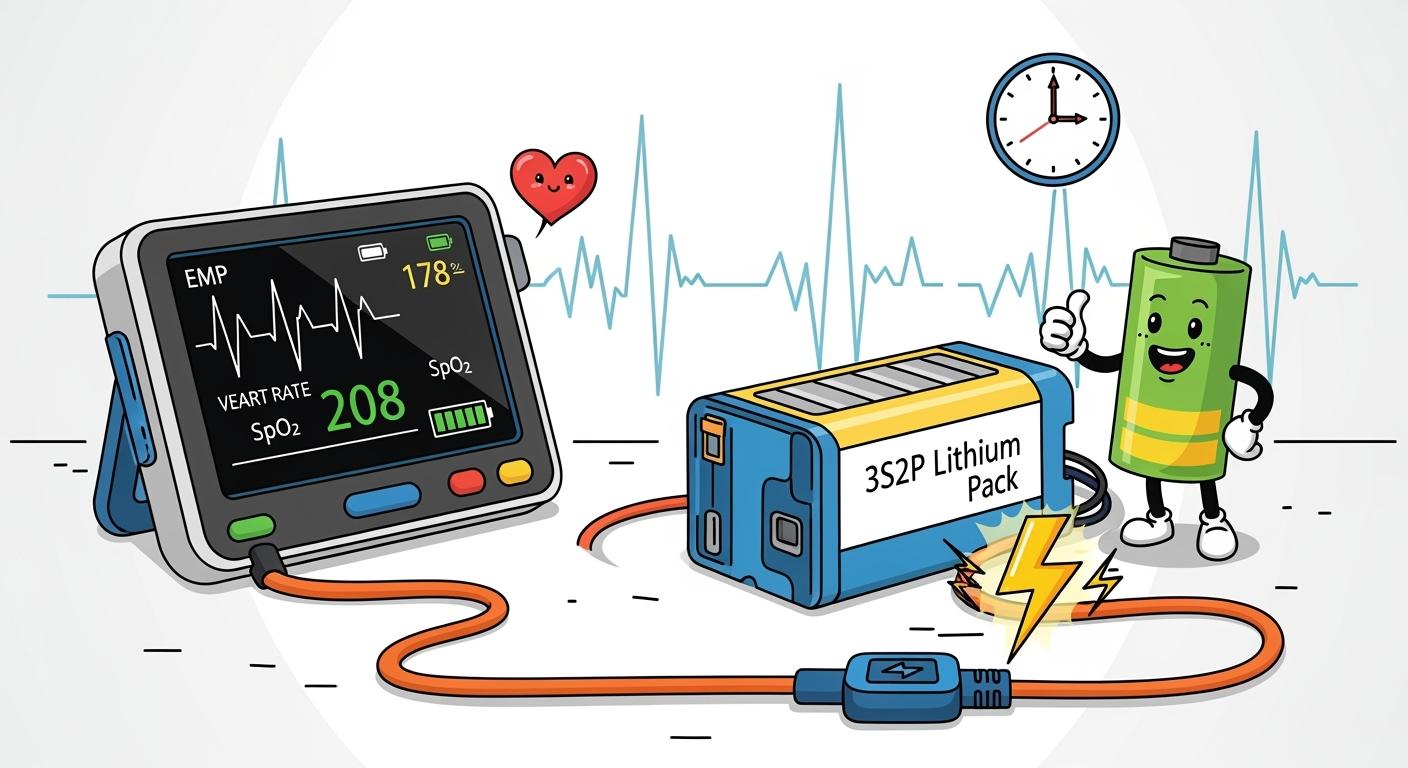
You face critical decisions when selecting a Lithium Battery Solution for portable patient monitors. Uptime and quick recharge drive clinical efficiency.
Continuous monitoring protects patient safety, while fast charging ensures your devices stay ready for action.
Key Takeaways
The 3S2P lithium battery solution offers a balance of continuous monitoring and fast charging, ensuring reliable power for portable patient monitors.
Choose continuous monitoring for critical care environments to maintain uninterrupted operation and patient safety.
Opt for fast charging in high-turnover settings to minimize downtime and keep devices ready for immediate use.
Part 1: 3S2P Lithium Battery Solution Overview

1.1 Configuration and Features
You need a Lithium Battery Solution that delivers both reliability and performance for portable patient monitors. The 3S2P configuration stands out due to its balance of voltage, capacity, and energy density. This setup typically uses NMC (Nickel Manganese Cobalt Oxide) cells, which offer high energy density and long cycle life—key factors in medical environments.
Here is a summary of common technical specifications for 3S2P lithium battery packs:
Specification | Value |
|---|---|
Nominal Voltage | 11.1V |
Capacity | 4400mAh – 7000mAh |
Configuration | 3S2P |
Charge Voltage | 12.6V |
Discharge Voltage | 9.0V |
Energy | Up to 77.7Wh |
You benefit from a lightweight design, which makes device transport easier for clinical staff. High energy density ensures longer operation between charges, reducing interruptions during patient monitoring. For organizations prioritizing environmental responsibility, you can explore sustainability practices and review the conflict minerals statement for compliance assurance.
1.2 Suitability for Portable Patient Monitors
You require a Lithium Battery Solution that integrates seamlessly with leading medical devices. The 3S2P pack is compatible with models such as the GE CARESCAPE B450, ensuring broad applicability across healthcare settings.
Tip: Compatibility with established monitors streamlines procurement and maintenance, supporting operational efficiency.
You also gain cost-effectiveness over time, as the robust cycle life of NMC chemistry reduces replacement frequency. Healthcare facilities often face challenges like fire risks, regulatory compliance, and the need for structured safety protocols. By choosing a standardized battery solution, you address these concerns while maintaining high uptime and patient safety.
Part 2: Continuous Monitoring
2.1 Power Needs for Monitoring
You rely on portable patient monitors to deliver uninterrupted care in demanding environments. These devices require a stable and efficient power source to support continuous operation. The 3S2P Lithium Battery Solution, built with NMC (Nickel Manganese Cobalt Oxide) cells, provides a platform voltage of 11.1V and high energy density. This configuration ensures that your monitors can operate for extended periods without frequent recharging.
Most portable patient monitors achieve 6–12 hours of continuous monitoring on a single charge, depending on device settings and usage patterns.
High energy density reduces the need for bulky battery packs, making devices easier to handle in clinical workflows.
When you select a battery solution with these characteristics, you minimize downtime and maintain consistent patient data collection. For more information on tailored solutions for medical applications, you can review the medical battery solution resource.
2.2 How 3S2P Supports Uptime
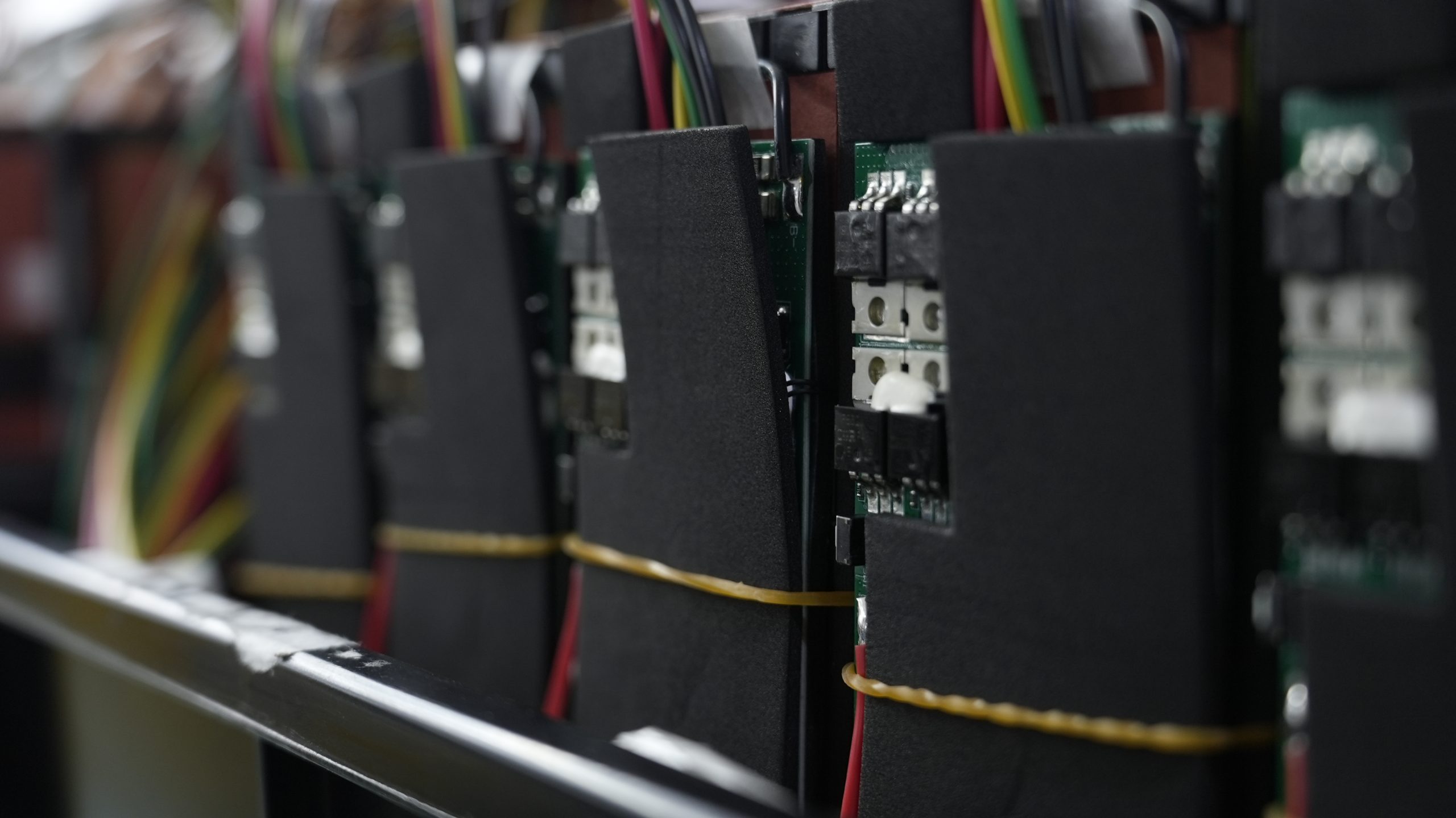
You benefit from advanced battery management systems (BMS) integrated into the 3S2P configuration. These systems enhance safety and reliability, which are critical in healthcare environments.
BMS features include cell balancing, over-discharge protection, over-current protection, over-charge protection, and temperature protection.
Impedance tracking and automatic calibration extend battery life and reduce maintenance needs.
You do not need manual recalibration, which streamlines device management for your technical staff.
With these protections, you ensure safe, efficient operation and maximize the operational uptime of your portable monitors. The robust cycle life of NMC chemistry further reduces replacement frequency, supporting long-term cost savings and reliability in your facility.
Part 3: Fast Charging
3.1 Importance in Clinical Use
You operate in environments where every minute counts. Portable patient monitors must remain available, especially during emergencies or patient transfers. Fast charging plays a critical role in maintaining device readiness. When you use a Lithium Battery Solution with rapid recharge capability, you reduce device downtime and support continuous patient care. In hospitals, clinics, and ambulatory settings, staff rely on quick turnaround to keep monitors in service. This efficiency improves workflow and helps you meet the demands of high-acuity care.
Note: Fast charging reduces the risk of device shortages during peak hours, supporting uninterrupted monitoring and better patient outcomes.
3.2 Recharge Time and Limitations
You need to understand how recharge time affects your operations. The 3S2P lithium battery, built with NMC cells, offers a standard charging time of approximately 5 hours. With rapid charging, you can reduce this to about 2.5 hours. This performance compares favorably to other battery chemistries used in medical and industrial devices.
Battery Type | Standard Charging Time | Rapid Charging Time |
|---|---|---|
3S2P Lithium | Approx. 5 hours | Approx. 2.5 hours |
A recharge window of 2–3 hours allows you to rotate monitors efficiently and maintain high device availability. However, frequent fast charging may increase heat generation and impact long-term cycle life. You should follow manufacturer guidelines for charging protocols to balance speed and battery longevity. In critical applications, such as medical, robotics, and security systems, you benefit from a Lithium Battery Solution that combines fast charging with robust safety features.
Part 4: Monitoring vs. Fast Charging
4.1 Performance Trade-Offs
You must weigh the benefits of continuous monitoring against the need for fast charging when selecting a battery pack for portable patient monitors. Each approach impacts workflow, device availability, and long-term reliability. The table below summarizes the key differences between continuous monitoring and fast charging for NMC-based 3S2P battery packs:
Feature | Continuous Monitoring | Fast Charging |
|---|---|---|
Typical Runtime | 6–12 hours per charge | 6–12 hours per charge |
Recharge Time | Standard: 5 hours | Rapid: 2–3 hours |
Impact on Workflow | Reduces device swaps, maximizes uptime | Minimizes downtime, quick turnaround |
Cycle Life | Longer (less frequent charging) | Shorter (more frequent fast charging) |
Heat Generation | Lower | Higher |
Application Fit | Critical care, long shifts | Emergency, high device turnover |
Note: Fast charging increases heat and may reduce cycle life, while continuous monitoring supports longer battery longevity.
You should evaluate your clinical workflow to determine which feature aligns best with your needs. For example, in medical environments, continuous monitoring ensures that medical carts do not run out of power during critical procedures. In contrast, fast charging helps when you need to rotate devices quickly, such as during emergencies or patient transfers.
4.2 Safety and Reliability
You cannot compromise on safety and reliability in healthcare. Battery packs for medical devices must meet strict international standards and certifications. The following table outlines the essential certifications for 3S2P lithium battery packs used in medical applications:
Certification Type | Certifications |
|---|---|
Safety Certificate | CE, CB, IEC62133, UL, PSE |
Environmental Certificate | ROHS, REACH |
Quality Management Certificate | ISO9001, ISO14001, BSCI |
Shipping Certificate | UN38.3, MSDS, Air/Sea Transport Identification & Classification Report |
You should always verify that your battery supplier provides these certifications. Certified battery packs reduce the risk of failure, fire, or hazardous incidents. Advanced battery management systems (BMS) further enhance safety by providing cell balancing, over-discharge protection, and temperature monitoring.
Tip: Choose battery packs certified by IEC, CE, and MSDS for compliance and peace of mind.
4.3 Practical Recommendations
You need to match your battery solution to your clinical workflow. Consider these best practices:
Assess your typical runtime requirements and usage patterns.
Prioritize continuous monitoring if your workflow demands uninterrupted operation, such as in intensive care or during long procedures.
Opt for fast charging if you operate in high-turnover environments where device availability is critical.
Avoid frequent fast charging unless necessary, as it can shorten battery cycle life and increase heat.
Always select battery packs with comprehensive safety certifications and robust BMS features.
Clinical workflow requirements should drive your decision. Busy clinicians often prefer the nearest available device rather than waiting for a recharge. Evaluating runtime and usage patterns ensures you select the right power option for your needs.
You gain reliable, efficient power for portable patient monitors with the 3S2P lithium battery solution. This pack balances continuous monitoring and fast charging, meeting clinical demands. Review the table below for key selection factors:
Key Factor | Description |
|---|---|
Reliability and Performance | Consistent energy output for medical accuracy |
Fast Charging Capabilities | Reduces downtime in emergencies |
Compliance | Meets medical safety standards |
For tailored integration, define your electrical needs, assess safety requirements, and consult with experts. For a customized consultation, visit custom battery solution.
FAQ
What advantages does the 3S2P NMC lithium battery pack offer for medical and industrial devices?
You gain high energy density, reliable 11.1V platform voltage, and robust cycle life. These features support continuous operation in medical, robotics, and security camera applications.
Can Large Power customize lithium battery solutions for unique device requirements?
Yes. You can request a tailored solution for your application. Visit customized battery consultation to discuss your technical needs with Large Power experts.
How does fast charging impact the cycle life of NMC lithium battery packs?
Frequent fast charging increases heat and may reduce cycle life. You should follow manufacturer guidelines to balance recharge speed and battery longevity.


