

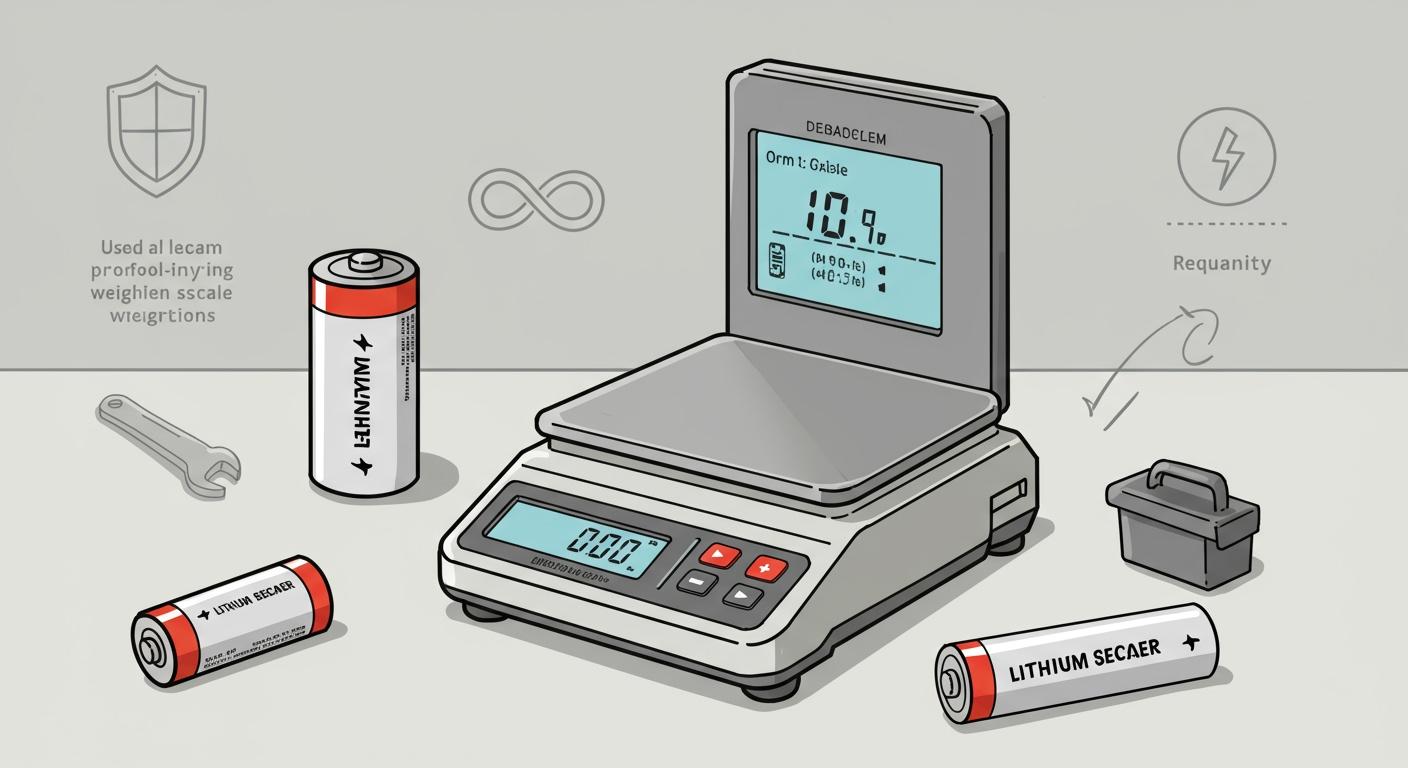
You depend on professional weighing equipment to deliver precise results and keep your operations running smoothly. The choice of batteries directly impacts accuracy and uptime. Long-life lithium batteries give you a clear advantage because they support continuous use and maintain top performance. When you use lithium batteries, you benefit from stable power and minimal maintenance. These batteries outperform older chemistries, especially in industries like medical, robotics, and security systems.
Market trends show a strong shift toward lithium batteries:
The lithium-ion battery market in material handling will grow significantly over the next five years.
Annual growth rates are estimated at 12.5% from 2026 to 2033.
Market value could rise from $3.5 billion in 2024 to $10.2 billion by 2033.
Long-life lithium batteries help you achieve operational efficiency, reliability, and accuracy. You secure consistent performance and reduce interruptions when you choose lithium batteries for your weighing equipment.
Key Takeaways
Long-life lithium batteries provide stable power, ensuring accurate measurements in professional weighing equipment.
These batteries require minimal maintenance, saving time and reducing operational costs for businesses.
Lithium batteries charge quickly, allowing for less downtime and increased productivity in critical applications.
Their lightweight design enhances portability, making it easier to use weighing equipment in various environments.
Investing in lithium batteries leads to long-term savings, as they last longer and reduce the frequency of replacements.
Part 1: Demands of Professional Weighing Equipment
1.1 Accuracy and Reliability
You rely on professional weighing equipment to deliver precise results in every operation. In industrial, medical, and robotics sectors, accuracy is not just a goal—it is a requirement. Even small errors in weighing can lead to costly mistakes or failed experiments. For example, laboratory balances need controlled environments because temperature changes, humidity, and air currents can affect accuracy. Industrial scales must handle large items and raw materials, so regular calibration is essential.
Minor errors can invalidate experiments or disrupt production.
Accuracy is crucial for reproducibility and compliance.
Aspect | Industrial Scales | Laboratory Balances |
|---|---|---|
Primary Focus | Operational efficiency and compliance | High precision for scientific research |
Accuracy Requirement | Essential for maintaining quality and optimizing costs | Critical for the validity of experiments |
Calibration Importance | Regular calibration is necessary to ensure accuracy | Calibration is vital to ensure accurate results |
Environmental Sensitivity | Affected by temperature, humidity, and vibrations | Sensitive to fluctuations in temperature and air currents |
Purpose | Weighing large items and raw materials | Measuring small masses with high accuracy |
1.2 Power Supply Needs
High-drain devices like professional weighing equipment demand stable and reliable power. You need batteries that can deliver consistent voltage and current. For high-precision weighing machines, the minimum power supply must provide 11.4 VDC to 18 VDC and 50 mA. Many high-drain devices operate on time-switched power supplies to minimize energy use.
Batteries must support continuous operation, especially in environments where downtime is not an option. In medical and security systems, batteries must power high-drain devices for long periods without interruption. Lithium battery packs excel in these scenarios, offering the reliability you need for weighing applications.
1.3 Portability Factors
Portability is a key factor for weighing equipment used in fieldwork, infrastructure, and consumer electronics. You often need to move high-drain devices between locations or use them in remote areas. Batteries must be lightweight and compact to support this mobility.
Environmental challenges can impact weighing performance.
Cold temperatures may distort metal parts, affecting calibration.
Moisture and ice can cause short circuits or corrosion in batteries.
Strong winds and vibrations may destabilize weighing platforms.
You must also consider operational challenges such as risk assessment, equipment maintenance, and proper training.
Challenge | Description |
|---|---|
Risk Assessment | Evaluate hazards and prioritize based on risk level. Involve safety personnel for expertise in hazard identification. |
Equipment Maintenance | Follow manufacturer recommended inspection and preventive maintenance schedules to ensure proper functioning. |
Environmental Factors | Position scales in well-ventilated areas and away from traffic to prevent exposure to hazardous materials. |
Training and Supervision | Train personnel on scale operation and emergency response; prohibit unattended weighing of hazardous materials. |
Batteries for high-drain devices must meet these demands to ensure your weighing equipment remains accurate, reliable, and portable in any environment.
Part 2: Advantages of Long-Life Lithium Batteries
2.1 Energy Density
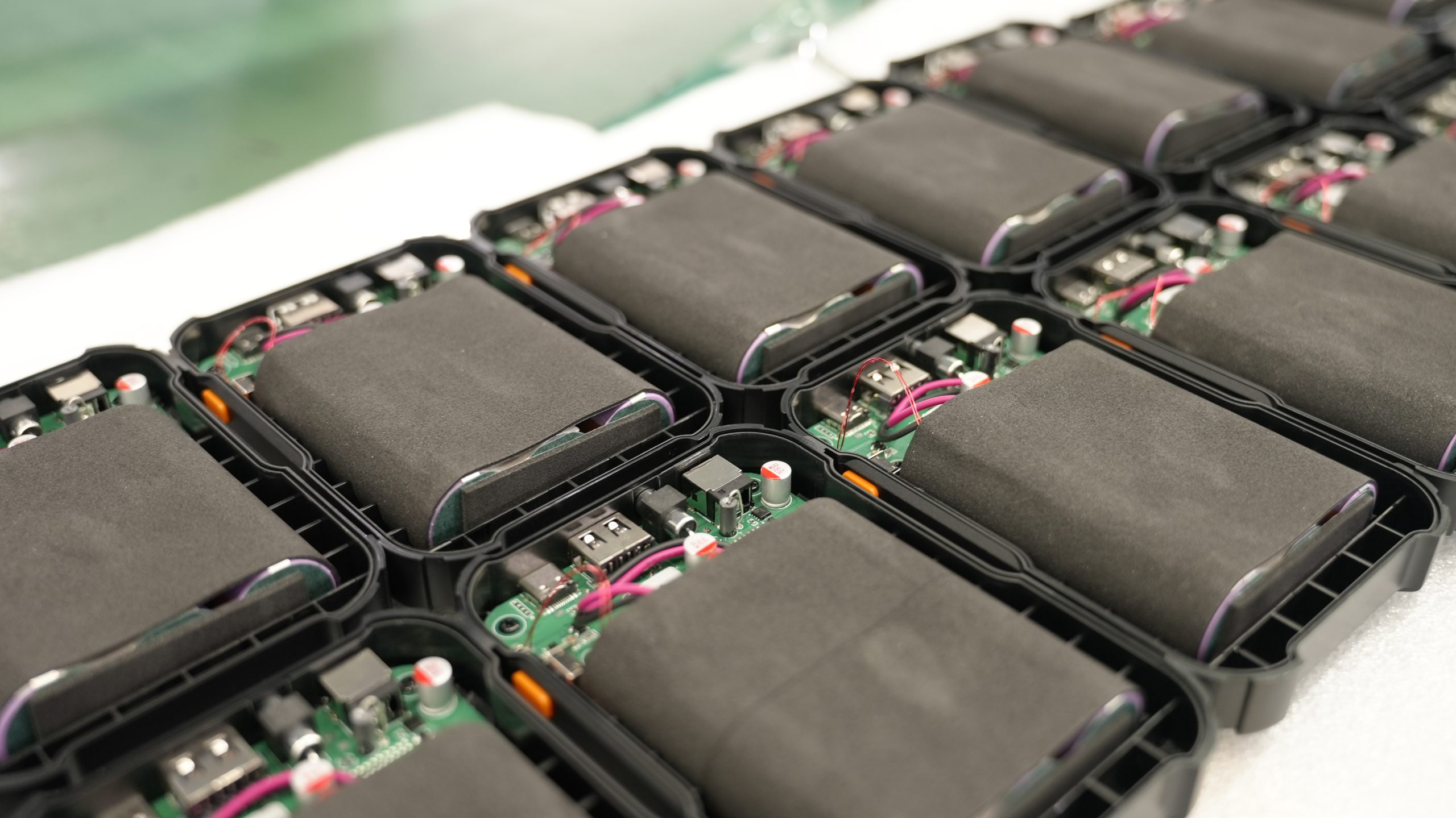
You need batteries that deliver maximum power in a compact form. Lithium batteries provide high energy density, which means you get more energy stored per unit of weight. This feature is critical for professional weighing equipment in medical, robotics, and industrial sectors. High energy density allows you to use smaller battery packs without sacrificing performance. You can see the difference in energy density between lithium batteries and other chemistries in the table below:
Battery Chemistry | Energy Density (Wh/kg) | Common Use Cases |
|---|---|---|
Lithium Cobalt Oxide (LCO) | 150–200 | Smartphones, laptops |
Lithium Nickel Manganese Cobalt (NMC) | 150–220 | EVs, power banks |
Lead-Acid | 30–50 | General applications |
Lithium batteries outperform lead-acid batteries in every category. You benefit from high energy density, which supports longer runtimes and reduces the need for frequent battery changes. In medical and security systems, high energy density ensures uninterrupted operation. You can rely on lithium batteries to power weighing equipment in infrastructure and consumer electronics, where compact size and high output matter most.
Tip: High energy density in lithium batteries helps you reduce equipment size and weight, making your weighing machines easier to transport and install.
2.2 Cycle Life
You want batteries that last through thousands of charge and discharge cycles. Lithium batteries offer a long lifespan, which means you spend less time and money on replacements. Long-life lithium batteries, such as lithium-titanium-oxide (LTO), can achieve over 25,000 cycles before losing significant capacity. Standard lithium-ion batteries typically lose performance after several hundred to a thousand cycles. LTO batteries may maintain 80% or more of their discharge capacity even after 25,000 cycles.
You get reliable performance for years with lithium batteries.
You avoid frequent downtime and replacement costs.
You maintain consistent accuracy in weighing equipment across medical, robotics, and industrial applications.
Long operational life is a key advantage for B2B users who need dependable battery packs for critical weighing tasks.
2.3 Fast Charging
You need batteries that recharge quickly to minimize downtime. Lithium batteries support fast charging, which means you can restore power to your weighing equipment in less time. This feature is essential in industries like security systems and infrastructure, where every minute of uptime counts. Fast charging helps you keep your operations running smoothly and efficiently.
You reduce waiting time for battery recharging.
You maximize productivity in environments that demand continuous operation.
You improve turnaround for portable weighing equipment in consumer electronics and medical sectors.
2.4 Lightweight Design
You benefit from batteries that weigh less and deliver more power. Lithium batteries weigh 60-75% less than comparable lead-acid batteries. This significant weight reduction makes your weighing equipment easier to move and handle. You improve transportation efficiency and reduce strain on staff in industrial and robotics settings.
You enhance portability for fieldwork and remote weighing tasks.
You simplify installation and maintenance in infrastructure projects.
You support ergonomic design in consumer electronics and medical devices.
Note: Lithium batteries are virtually maintenance-free. You do not need to water or equalize them, unlike lead-acid batteries. Lead-acid batteries require regular attention and protective equipment due to acid content. Lithium batteries eliminate these hazards and reduce maintenance costs.
If you value sustainability, lithium batteries also offer environmental benefits. You can learn more about sustainable battery solutions in our approach to sustainability.
Part 3: Impact on Weighing Machine Battery Performance

3.1 Consistent Accuracy
You need weighing equipment that delivers reliable results every time. Lithium batteries help you maintain consistent accuracy in your operations. Stable voltage output from lithium batteries prevents fluctuations that can affect weighing measurements. You avoid errors that could disrupt production or research. In medical and laboratory settings, you rely on weighing machine battery packs to support precise measurements for patient care and scientific experiments. Industrial users benefit from lithium batteries because they keep scales calibrated and accurate, even during long shifts.
Tip: Consistent voltage from lithium batteries protects sensitive weighing sensors from power dips and spikes.
You see how lithium weighing machine batteries improve accuracy and efficiency in robotics and security systems. These sectors require exact measurements for automation and monitoring. Lithium batteries provide the steady power needed for these tasks.
3.2 Reduced Downtime
You want your weighing equipment to run without interruption. Lithium batteries offer longer run times and faster charging than older battery types. You spend less time waiting for batteries to recharge and more time using your equipment. In logistics and warehousing, lithium batteries keep your weighing machines operational for 7 to 8 hours, compared to only 4 to 5 hours with lead-acid batteries. You experience fewer delays and keep your workflow moving.
Lithium batteries enable faster charging times and longer operational hours.
You reduce downtime in industrial weighing applications.
Rapid charging capabilities of lithium batteries support continuous operations in logistics and warehousing.
You see how lithium weighing machine batteries improve accuracy and efficiency by minimizing interruptions. Security systems and infrastructure projects also benefit from reduced downtime, which helps you meet tight deadlines and maintain safety standards.
3.3 Efficiency Gains
You need weighing machine battery solutions that boost productivity. Lithium batteries deliver higher energy density and longer cycle life, which means you replace batteries less often. You save time and resources on maintenance. Lightweight lithium batteries make your weighing equipment easier to move and install. You improve efficiency in fieldwork, infrastructure, and consumer electronics by using batteries that last longer and weigh less.
Benefit | Lithium Batteries | Lead-Acid Batteries |
|---|---|---|
Run Time | 7–8 hours | 4–5 hours |
Charging Speed | Fast | Slow |
Maintenance | Minimal | Frequent |
Portability | Lightweight | Heavy |
Cycle Life | Thousands of cycles | Hundreds of cycles |
You achieve better performance and longevity with lithium batteries. Medical and robotics sectors rely on weighing machine battery packs that support continuous use and minimal downtime. You increase operational efficiency and reduce costs by choosing lithium batteries for your weighing equipment.
Note: Battery management systems (BMS) help you monitor and protect lithium batteries for optimal performance.
You see how lithium weighing machine batteries improve accuracy and efficiency across all professional applications. You gain a competitive edge by investing in advanced battery technology for your weighing equipment.
Part 4: Choosing and Maintaining Lithium Weighing Machine Batteries
4.1 Selection Criteria
When you select lithium weighing machine batteries, you need to match the battery to your equipment’s requirements. Start by checking the voltage and capacity. Make sure the battery supports the daily energy needs of your weighing machines. You must also consider the C-rate, which tells you if the battery can handle peak loads during heavy use in industrial or medical settings.
Match the power profile (voltage and capacity) to your weighing equipment.
Check the C-rate for both continuous and peak discharge.
Choose batteries that operate reliably in your environment, including extreme temperatures or high-vibration areas.
Use a battery management system (BMS) to protect your lithium weighing machine batteries and extend their lifespan. Learn more about BMS solutions.
Ensure the battery fits your equipment’s size and weight limits.
Review cycle life and depth of discharge to predict how long do lithium weighing machine batteries last.
Confirm certifications and compliance for safety and quality.
Environmental factors play a big role. High or low temperatures can change how lithium batteries perform. Vibrations in robotics or infrastructure projects may cause internal damage. You need to choose lithium weighing machine batteries that survive these challenges.
4.2 Maintenance Tips
Proper care and maintenance of lithium weighing machine batteries help you get the best performance. Store batteries at a 40% to 50% charge for long life. Charge them every two to three months to keep them healthy. Avoid overcharging and deep cycling. Monitor battery metrics to catch problems early. Use a BMS to regulate charging and prevent damage. Manage temperature exposure and store batteries in a cool, dry place. These steps answer the question of how long do lithium weighing machine batteries last and ensure your investment pays off.
Tip: Favor battery lifetime over maximum capacity. Proper care and maintenance of lithium weighing machine batteries reduce replacement costs and downtime.
4.3 Cost-Effectiveness
Lithium weighing machine batteries cost more upfront than other types of batteries used in weighing machines, but you save money over time. Lithium batteries in commercial weighing machines last up to four times longer than lead-acid batteries. You avoid daily maintenance and reduce operational costs. Fast charging and high efficiency mean less downtime for your weighing equipment.
Feature | Lithium-Ion Batteries | Lead-Acid Batteries |
|---|---|---|
Maintenance | No daily upkeep | Routine required |
Charging Speed | Fast | Slow |
Lifespan | Up to 1,500 cycles+ | About 1,000 cycles |
Operational Cost | Lower | Higher |
Safety | No hazardous tasks | Riskier |
You get the best lithium battery for portable weighing machines by focusing on total cost of ownership. Lithium weighing machine batteries deliver long-term value for medical, industrial, and security systems. If you want to know how to choose the right lithium battery, always consider both performance and cost.
You gain clear advantages when you choose long-life lithium batteries for professional weighing equipment. These batteries deliver reliability, accuracy, and operational efficiency across medical, robotics, security systems, infrastructure, consumer electronics, and industrial sectors. Many B2B users switch to lithium batteries because:
No maintenance required—batteries eliminate water maintenance and hazardous tasks.
Lithium-ion batteries charge quickly, often in just one hour.
Cost savings and ROI—batteries last longer and reduce expenses.
Batteries require less dedicated space, freeing up valuable areas.
Batteries provide longer run times and faster charging, streamlining operations.
To maximize value, evaluate your equipment’s needs, select batteries with the right specifications, and implement a battery management system. You ensure your weighing equipment performs at its best by making lithium batteries your standard.
FAQ
What makes lithium battery packs better for professional weighing equipment?
Lithium battery packs deliver higher energy density and longer cycle life. You get stable power for accurate measurements. These batteries reduce downtime in industrial, medical, and robotics applications.
How often should you replace lithium batteries in weighing machines?
You can expect lithium battery packs to last several years. Most packs support thousands of cycles. You should monitor performance and replace batteries when capacity drops below 80%.
Can lithium batteries handle extreme environments?
You can use lithium battery packs in cold, hot, or high-vibration areas. These batteries work well in infrastructure, security systems, and fieldwork. Always check manufacturer specifications for temperature and shock ratings.
Do lithium battery packs require special maintenance?
You do not need daily maintenance for lithium battery packs. Store batteries in a cool, dry place. Use a battery management system to monitor health and prevent overcharging.
Are lithium battery packs safe for medical and robotics sectors?
You get safe operation with lithium battery packs when you follow proper handling and storage guidelines. Battery management systems add extra protection. These packs meet strict safety standards for medical and robotics use.


