


You face two major challenges with material handling robots in lithium battery pack handling: instantaneous peak current and continuous vibration. These problems decrease reliability, threaten safety, and reduce precision. The most frequent faults include bearing failure, unbalance, and misalignment. The table below highlights common fault types and their descriptions.
Fault Type | Description |
|---|---|
Compound Faults | Most common in manipulator robots, caused by the coupling of multiple subsystems and noise. |
Individual Faults | Correlated with compound faults, making diagnosis challenging. |
Key Takeaways
Address peak current challenges by using advanced motor control techniques. This improves efficiency and prevents overheating during object manipulation.
Implement real-time monitoring with smart sensors to detect issues early. This proactive approach minimizes unexpected failures and enhances robot reliability.
Utilize vibration suppression technologies to improve precision in object manipulation. This protects sensitive materials and extends the lifespan of your robotic systems.
Part 1: Peak Current in Material Handling Robots
1.1 Impact on Manipulation
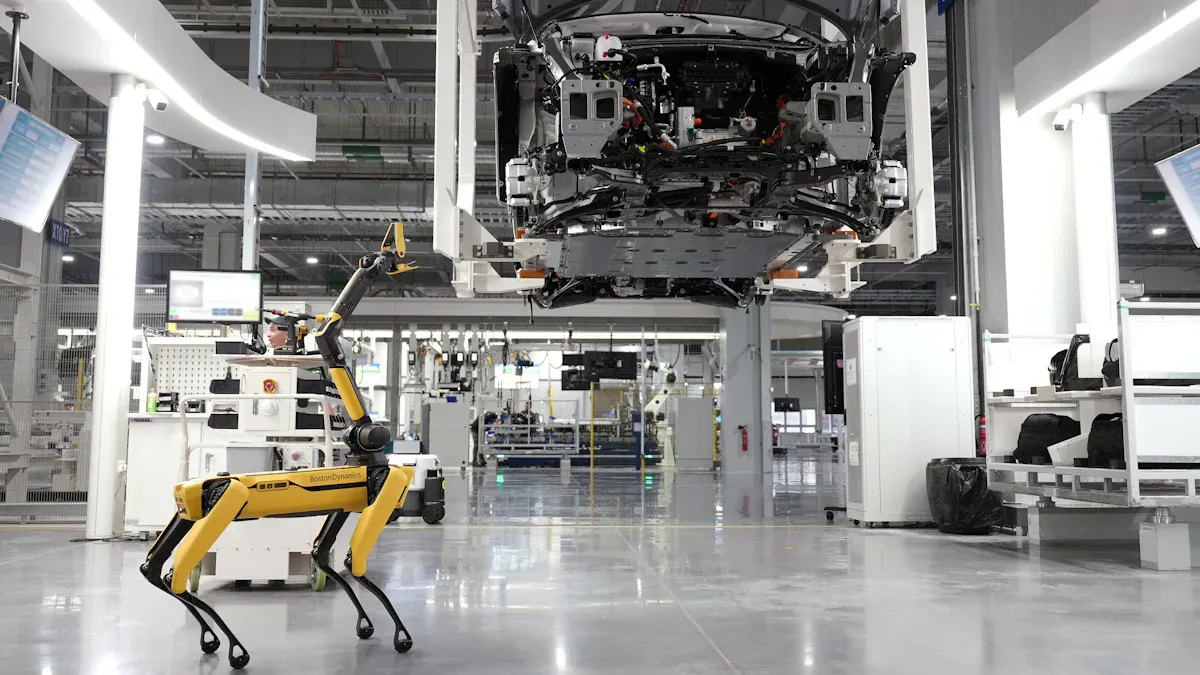
You encounter instantaneous peak current as a critical challenge during material handling tasks, especially when transferring lithium battery packs in industrial environments. When your robot initiates object manipulation, the motors demand a sudden surge of current to overcome inertia and start motion. This surge can lead to overheating, reduced efficiency, and even system failure if not managed properly. In high-demand scenarios, such as handling lithium-ion, LiFePO4, lithium-polymer/LiPo, or solid-state battery packs, the dynamic nature of manipulation amplifies the risk of peak current incidents.
Environmental factors further complicate manipulation. High temperatures can cause motors to overheat, reducing torque output and efficiency. Humidity and dust can damage electronic components, leading to malfunctions and decreased control over payloads. Chemical exposure in industrial settings may corrode robot parts, reducing strength and load capacity. These conditions increase wear on joints and mechanical components, affecting the robot’s ability to perform precise object manipulation. When your system operates under high loads or near its resonant frequency, vibration issues intensify, threatening motion stability and control.
Real-time monitoring becomes essential. Smart sensors collect data on peak current and vibration, enabling data-driven fault diagnosis. Vibration sensors track motors and robotic hands, detecting misalignment and increased wear. Energy sensors monitor electrical loads, identifying inefficiencies and spikes during manipulation. Predictive maintenance systems use AI algorithms to analyze vibration and current data, forecasting when servicing is needed and preventing failures before they disrupt operations.
1.2 Control and Power Solutions
You can mitigate peak current challenges by adopting advanced motor control techniques. Synchronous Fast Decay allows effective current management in high-speed, high-current situations by turning off both current-conducting switches in the H-bridge simultaneously. Mixed Decay combines fast and slow decay, adapting to varying motor speeds and current levels. Current Decay Control helps achieve a sine-shaped current waveform, minimizing ripple and reducing emissions and acoustic noise across the motor’s speed range. These control strategies enhance dynamic manipulation and improve system reliability.
Power management systems play a vital role in reducing peak current incidents. Supercapacitors efficiently absorb and release energy, smoothing power demands during object manipulation. Kinetic Energy Recovery Systems (KERS) capture kinetic energy during motion and reuse it instantly, supporting continuous operation. The table below compares these solutions:
Power Management System | Effectiveness in Reducing Peak Current | Description |
|---|---|---|
Supercapacitors | High | Efficiently absorbs and releases energy to smooth power demands. |
KERS | High | Captures kinetic energy during operations for immediate reuse. |
Battery protection systems are essential for safe manipulation of lithium battery packs. Overcharge protection prevents overheating and explosions by stopping charging when the battery is full. Thermal cutoffs disconnect power if the battery temperature exceeds safe limits, protecting both the robot and the battery. Short circuit protection breaks the circuit upon detecting a fault, reducing fire hazards. You should monitor battery temperature and charging rates to ensure safe operation. Opportunity charging allows you to quickly top off batteries in 10-20 minutes, while advanced battery chemistries support faster charging and continuous manipulation.
Latest trends in power electronics, such as SiC and GaN technologies, offer higher efficiency, better thermal management, and improved motor control. SiC enables smaller, lighter systems with superior heat dissipation, while GaN provides high switching speeds and reliability. These innovations drive the adoption of energy-efficient solutions in material handling robots, especially in sectors like medical (internal link), robotics (internal link), security (internal link), infrastructure (internal link), consumer electronics (internal link), and industrial (internal link) applications. According to Nature, integrating these technologies enhances system performance and sustainability.
You must integrate motor control, power management, and battery protection systems to achieve safe and efficient manipulation. Accurate monitoring of motor currents prevents overcurrent conditions, protecting motors and ensuring system longevity. Battery management systems (BMS) monitor thermal conditions, using temperature sensors to trigger alarms or shut down the system when necessary. This integration supports real-time decision-making, reduces downtime, and improves overall safety.
Tip: Implementing predictive maintenance with AI algorithms and smart sensors enables early detection of vibration and peak current issues, minimizing unexpected failures and optimizing manipulation performance.
Material handling robots benefit from robust control, dynamic power management, and advanced battery protection. By leveraging real-time monitoring, predictive maintenance, and cutting-edge power electronics, you can address the challenges of instantaneous peak current and continuous vibration. This approach ensures precise object manipulation, extends system lifespan, and supports safe operation in demanding industrial environments.
Part 2: Vibration in Robotic Manipulation

2.1 Effects on Precision and Longevity
You encounter continuous vibration as a major obstacle in material handling robots, especially when handling lithium battery packs in industrial environments. Vibration disrupts object manipulation by causing position-tracking errors and overshoot during motion. These errors reduce the accuracy of in-hand manipulation, making it difficult for robotic hands to achieve precise placement and alignment. Industrial robots often experience intense coupling and nonlinearity, which amplifies vibration and leads to significant motion control challenges. Traditional control methods struggle to address these nonlinear disturbances, resulting in residual vibrations that compromise the quality of manipulation in high-precision tasks such as welding and laser cutting.
Vibration also threatens the operational lifespan of your robot and the integrity of lithium battery packs. Mechanical stresses from vibration can weaken structural components, leading to failures in joints, bearings, and the vibration force module. Vibration testing helps you identify weaknesses in battery pack construction, preventing leaks and electrical malfunctions. This process ensures that battery packs can withstand dynamic stresses during object manipulation, which is crucial for maintaining reliability in medical, robotics, security, infrastructure, consumer electronics, and industrial applications. The table below summarizes the impact of vibration on battery pack handling:
Key Aspect | Description |
|---|---|
Structural Integrity | Vibration testing identifies weaknesses that could cause failures. |
Prevention of Failures | Testing prevents leaks and electrical malfunctions, ensuring safety. |
Operational Reliability | Ensures battery packs withstand mechanical stresses during manipulation. |
You must address vibration to protect sensitive materials and extend the lifespan of your system. Vibration analysis and dynamic analysis allow you to monitor real-time motion and detect early signs of wear. By implementing vibration-based manipulation strategies, you can minimize the impact of vibration on object manipulation and improve the overall performance of your robot.
2.2 Suppression Technologies
You can deploy advanced vibration suppression technologies to enhance the precision and reliability of material handling robots. Dual encoders measure speed fluctuations on both the motor and reducer sides, providing real-time feedback for improved control. This technology reduces vibration during in-hand manipulation and supports dynamic motion adjustments. Magnetorheological dampers offer rapid field-dependent rheological transitions, making them suitable for semi-active vibration control. These dampers provide field-tunable stiffness and quick response times, although their integration in robotics remains underexplored.
Technology | Effectiveness in Vibration Suppression |
|---|---|
Dual Encoders | Reduces vibration by measuring speed fluctuations on both motor and reducer sides, improving control. |
Magnetorheological Dampers | Offers rapid field-dependent transitions and semi-active damping, but integration in robotics is still developing. |
Technology | Application and Challenges |
|---|---|
Magnetorheological Dampers | Field-tunable stiffness and rapid response make them suitable for semi-active vibration control, but integration in robotics is underexplored. |
Robust mechanical design plays a vital role in vibration suppression. You need precise vibration isolation to handle sensitive materials like lithium battery packs. Systems such as scanning probe microscopy (SPM) and nearfield scanning optical microscopy (NSOM) require absolutely stable surfaces to avoid noise that can compromise measurement accuracy. Traditional vibration isolation methods, such as air tables, often fail to meet the high-resolution demands of modern applications. You should invest in advanced mechanical design to effectively suppress vibration and protect battery packs during manipulation.
Modern material handling robots use model predictive control (MPC) and advanced vibration-based control algorithms to achieve superior vibration suppression. These systems feature faster processors, higher resolution encoders, and dynamic tuning capabilities. The table below compares traditional and advanced robotic systems in terms of vibration suppression performance:
Feature | Traditional Systems | Advanced Systems |
|---|---|---|
Control Strategy | Basic control methods | Model Predictive Control (MPC) |
Vibration Suppression | Limited capabilities | Advanced vibration suppression technology |
Processor Speed | Slower processors | Faster processors enabling better tuning |
Encoder Resolution | Lower resolution encoders | Higher resolution encoders for precision |
Frequency Handling | Less effective at low frequencies | Effective suppression of low-frequency vibrations |
Application Complexity | Simpler applications | Complex servo systems with interlinked axes |
You benefit from integrating real-time vibration analysis, dynamic model tuning, and advanced vibration actuator modules. These strategies allow you to optimize motion control, minimize vibration, and extend the operational lifespan of your robot. By leveraging vibration-based control algorithms, you can achieve precise object manipulation and maintain the integrity of lithium battery packs in demanding industrial environments.
Tip: Regularly update your vibration force module and control algorithm to ensure optimal performance in dynamic manipulation scenarios. Real-time monitoring and predictive maintenance help you detect vibration issues early and prevent costly failures.
Material handling robots require a holistic approach to vibration suppression. You must combine advanced control technologies, robust mechanical design, and real-time monitoring to achieve reliable in-hand manipulation and protect sensitive battery packs. This strategy supports safe, efficient, and precise object manipulation across medical, robotics, security, infrastructure, consumer electronics, and industrial sectors.
You improve robot reliability and safety by addressing peak current and vibration challenges in lithium battery pack handling. Integrated electrical and mechanical solutions, such as high-power actuators and vibration suppression, boost actuation speed and efficiency. Advanced IoT sensors and AI analytics enable proactive maintenance, reducing downtime and costs.
Standard Number | Domain |
|---|---|
Functional safety of electrical/electronic/programmable electronic safety-related systems. | |
Manipulating industrial robots – Performance criteria and related test methods | |
Robots and robotic devices – Safety requirements for industrial robots | |
Robots and robotic devices – Collaborative robots | |
Robotics — Safety design for industrial robot systems |
Evaluate your current systems and upgrade to advanced solutions for improved safety and efficiency in lithium-ion, LiFePO4, lithium-polymer/LiPo, and Solid-State Battery operations. For a custom battery solution, click here.
FAQ
What is dynamic modeling, and why does it matter for lithium battery pack handling robots?
Dynamic modeling lets you predict robot motion and forces. You improve safety and precision in lithium-ion, LiFePO4, lithium-polymer/LiPo, and Solid-State Battery pack handling.
How does flexibility in robot design affect battery pack manipulation in industrial settings?
Flexibility in robot design enhances the way battery packs are handled across industrial environments. With adaptable joints, grippers, and motion control, flexible robots can adjust to varying battery sizes and configurations, ensuring consistent performance. They also reduce vibration and mechanical stress during manipulation, which minimizes the risk of cell damage and improves long-term reliability.
In practice, this translates into safer and more precise battery pack handling for diverse sectors—such as medical devices, robotics, security systems, infrastructure power solutions, and consumer electronics—where reliability and efficiency are critical.
What are the main differences between modeling and dynamic modeling of flexible link robots?
Aspect | Modeling | Dynamic Modeling of Flexible Link |
|---|---|---|
Focus | Structure | Motion and forces |
Application | Design phase | Real-time control |
Benefit | Basic layout | Enhanced manipulation precision |
For custom battery solutions, contact Large Power.


