

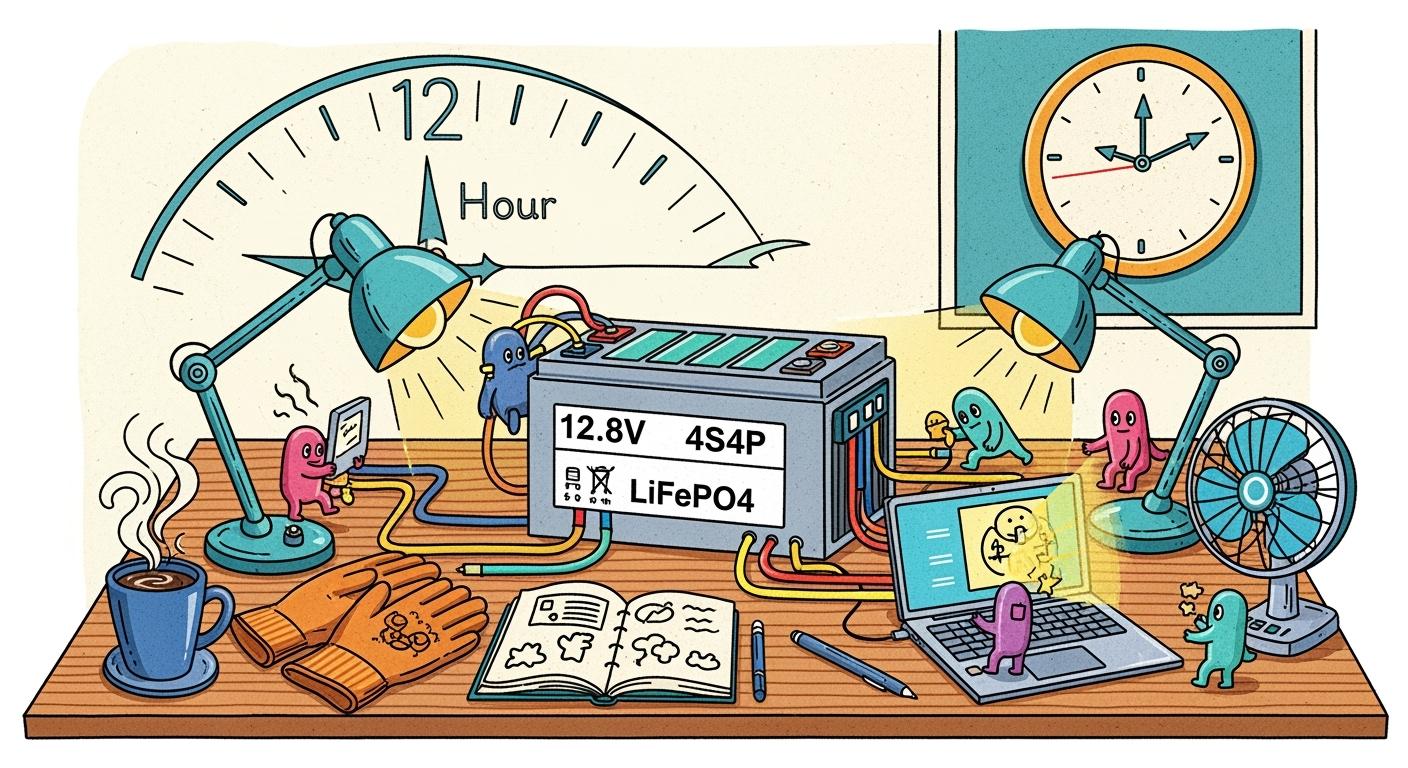
A 12.8V 4S4P lifepo4 battery can reliably power your essential equipment for a full 12-hour shift when you select the right pack for your device. You need to match the battery specifications to your equipment’s power and energy needs to keep operations running smoothly. Accurate runtime calculation helps you avoid downtime and maximize efficiency. Lifepo4 batteries offer strong reliability and safety for demanding environments. Many professionals also benefit from significant cost savings over time:
Cost Saving Factor | Description |
|---|---|
Reduced Maintenance Costs | Minimal upkeep frees up technician hours for other tasks. |
Lower Energy Consumption | Efficient charging leads to lower monthly power bills. |
Longer Battery Lifespan | Fewer replacements needed, reducing overall costs. |
Improved Operational Efficiency | Faster charging and opportunity charging reduce downtime and boost productivity. |
Key Takeaways
Choose a 12.8V 4S4P LiFePO4 battery to ensure reliable power for your equipment during a full 12-hour shift.
Calculate your device’s power needs accurately to select a battery with sufficient capacity, avoiding unexpected downtime.
Utilize a Battery Management System (BMS) to monitor battery health, ensuring safe operation and extending battery life.
Follow recommended safety practices, such as charging in controlled temperatures and inspecting equipment regularly, to prevent damage.
Leverage the long cycle life and safety features of LiFePO4 batteries to reduce maintenance costs and improve operational efficiency.
Part1: LiFePO4 Battery Specs for 12-Hour Shift
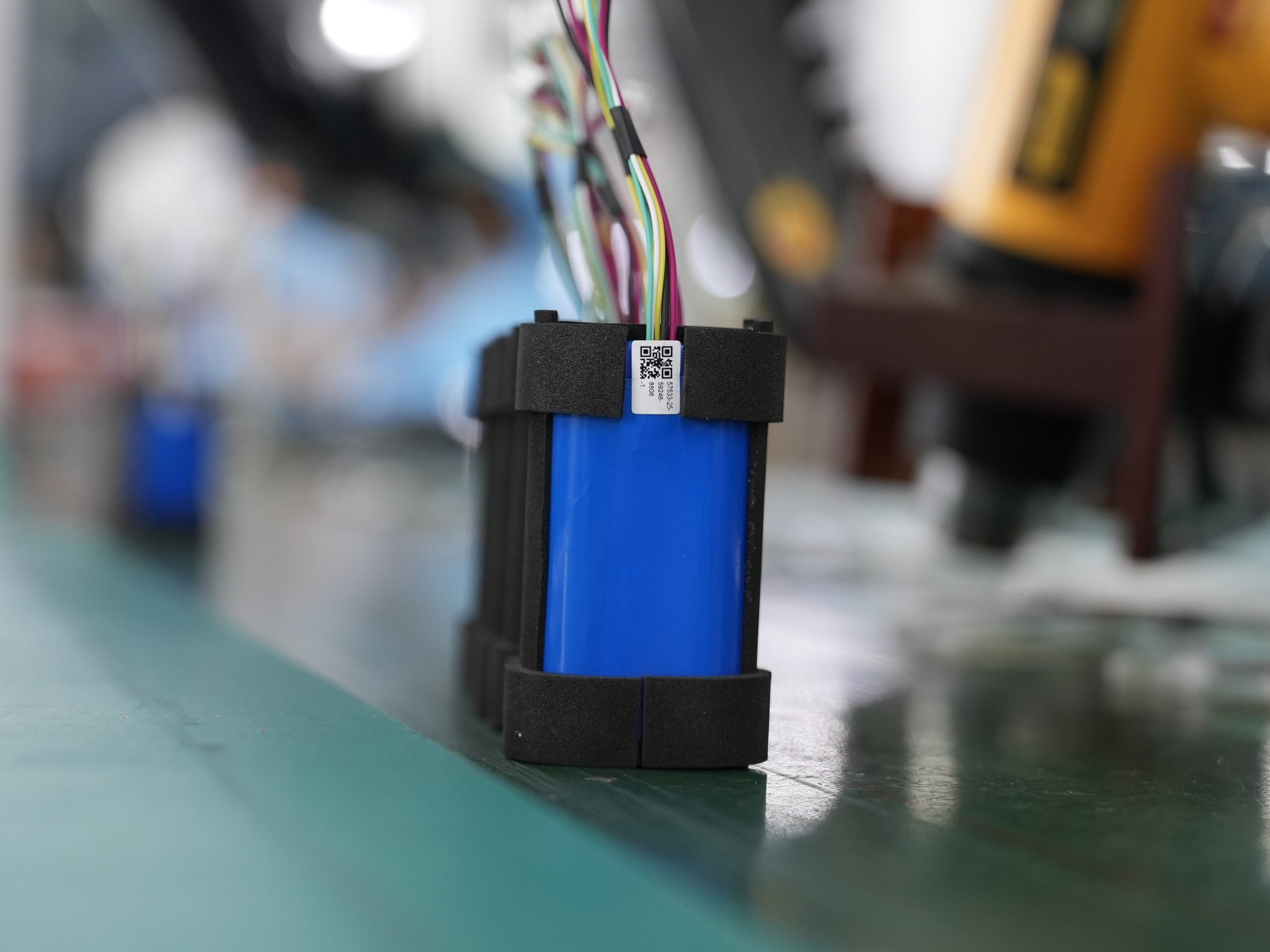
1.1 Voltage and Capacity Overview
You need to understand the voltage and capacity of your lifepo4 battery to ensure reliable power for a 12-hour shift. The 12.8V rating comes from four cells connected in series. This voltage matches the requirements of most industrial devices and supports stable operation. The 4S4P configuration means you have four sets of four cells in parallel, which increases the total battery capacity and allows for high current output.
A 12.8V 4S4P lifepo4 battery delivers a high capacity, making it suitable for long-duration use. You get 8038.4Wh of energy from this lithium battery pack, which supports continuous operation for extended periods. This high capacity ensures your equipment runs efficiently without frequent interruptions for charging. You can rely on consistent voltage output, which helps maintain device performance and efficiency throughout the shift.
Tip: Always check the amp hour rating and total energy of your diy battery pack before deployment. This step helps you match the battery to your device’s needs and avoid unexpected downtime.
1.2 4S4P Configuration Explained
The 4S4P configuration is a common choice for diy lithium battery projects and commercial applications. In this setup, you connect four cells in series to reach the desired voltage, then connect four of these series strings in parallel to boost the total capacity and amp output. This design gives you a balance of voltage and current, which is essential for high-capacity and high-performance applications.
You benefit from increased battery capacity, which supports longer runtimes.
The parallel arrangement allows for higher discharge rates, so your equipment can draw more power when needed.
The series connection ensures you get the correct voltage for most industrial and outdoor devices.
This configuration also improves the efficiency of your diy projects, as it distributes the load across multiple cells. You reduce stress on individual cells, which extends the overall lifespan of your lifepo4 battery.
1.3 Benefits of LiFePO4 Chemistry
LiFePO4 chemistry stands out among lithium battery options for its safety, stability, and long cycle life. You can trust this chemistry for demanding environments where reliability is critical. The lifepo4 battery resists thermal runaway and offers strong performance even under heavy use.
Here’s how LiFePO4 compares to other common lithium chemistries:
Chemistry | Nominal Voltage | Cycle Life (cycles) | Energy Density (Wh/kg) | Safety Level | Sustainability | Conflict Minerals |
|---|---|---|---|---|---|---|
LCO | 3.7V | 500–1,000 | 150–200 | Moderate | Moderate | Cobalt |
NMC | 3.7V | 1,000–2,000 | 150–220 | Moderate | Moderate | Cobalt, Nickel |
LiFePO4 | 3.2V | 2,000–5,000 | 90–140 | High | High | No Cobalt |
LMO | 3.7V | 500–1,500 | 100–150 | Moderate | Moderate | Manganese |
Solid-State | 3.7V | 2,000–10,000 | 250–500 | High | High | Varies |
Lithium Metal | 3.6V | 500–1,000 | 300–500 | Low | Low | Lithium |
You see that lifepo4 batteries offer a longer cycle life and higher safety compared to LCO, NMC, and LMO. They also avoid the use of conflict minerals like cobalt, which supports responsible sourcing and sustainability. For more details on sustainability, you can review our approach.
Environmental factors also affect battery performance. You should operate your lifepo4 battery within the recommended temperature ranges for best results:
Battery Use | Temperature Range |
|---|---|
Charging | 32°F (0°C) to 122°F (55°C) |
Discharging | 14°F (-10°C) to 122°F (50°C) |
Storage | -4°F (-20°C) to 128°F (70°C) |
Staying within these limits helps you maintain high efficiency and extend the life of your lithium battery. You can count on lifepo4 chemistry for stable performance, even in challenging conditions.
You get reliable charge and discharge cycles.
The chemistry supports high capacity and efficiency for long shifts.
You reduce maintenance and replacement costs over time.
When you choose a lifepo4 battery for your diy or industrial application, you invest in safety, performance, and sustainability.
Part2: Calculating Power and Runtime
2.1 Determining Battery Capacity
You need to start with a clear understanding of battery capacity before you estimate runtime for your 12-hour shift. Battery capacity tells you how much energy your lithium battery pack can store and deliver. Manufacturers usually rate battery capacity in amp hours (Ah) or watt hours (Wh). For a 12.8V 4S4P LiFePO4 battery, you often see ratings like 300 amp hour or higher, which means the pack can supply 300 amps for one hour or 25 amps for twelve hours.
To calculate battery capacity in watt hours, use this formula:
Watt hours (Wh) = Voltage (V) × Amp hours (Ah)
For example, a 12.8V lithium battery with 300 amp hour capacity provides:
12.8V × 300Ah = 3840Wh
This calculation helps you match the battery to your device’s power requirements. You should always check the amp hour rating and total energy before deployment. This step ensures your equipment receives enough power output for the entire shift.
Tip: Choose a battery with a capacity that exceeds your estimated needs. This approach gives you a buffer for unexpected power spikes or longer discharge periods.
2.2 Runtime Calculation Steps
You can estimate how long your lithium battery will run your equipment by following a few simple steps. Accurate runtime calculation helps you avoid downtime and ensures reliable operation during a 12-hour shift.
Step-by-step runtime calculation:
Identify device power requirements:
Find the wattage or amp draw of your equipment. Manufacturers often list this information on the device label or in the technical manual.Calculate total energy needed:
Multiply the device’s power requirements by the number of hours you plan to operate. For example, if your device uses 100 watts and you need it for 12 hours:100W × 12h = 1200WhCompare with battery capacity:
Make sure your lithium battery pack’s total watt hour rating meets or exceeds the energy needed. If your battery provides 3840Wh, you have enough capacity for the example above.Account for discharge rate:
Check if your device’s amp draw matches the battery’s maximum discharge rating. A 4S4P LiFePO4 pack can handle higher discharge rates due to its parallel configuration.Factor in efficiency losses:
Real-world conditions may reduce available energy. You should plan for 85-90% usable capacity to account for losses from wiring, inverter, or temperature effects.
Note: Always use a battery management system (BMS) to monitor charge, discharge, and state of charge (SOC). A BMS protects your battery and ensures safe operation during extended use.
2.3 Sample Device Power Needs
You can apply these calculation steps to a range of industrial devices. Here are some common examples for a 12-hour shift:
Device Type | Typical Power Requirements | Total Energy Needed (12h) | Suitable Battery Capacity |
|---|---|---|---|
Portable Lighting | 50W | 600Wh | 100Ah+ |
Communication Radios | 20W | 240Wh | 20Ah+ |
Surveillance Cameras | 15W | 180Wh | 15Ah+ |
Small Tools | 100W | 1200Wh | 100Ah+ |
Medical Equipment | 150W | 1800Wh | 150Ah+ |
You see that a 300 amp hour lithium battery pack easily supports multiple devices for a full shift. You can run several pieces of equipment in parallel if you manage the total amp draw and discharge rate.
Callout: Always monitor your battery’s SOC and use a BMS for safe operation. The BMS keeps voltage, current, and temperature within safe limits. It balances charge across cells and prevents overcharging or deep discharge.
How BMS and SOC Monitoring Enhance Safety
Aspect | Contribution to Safe Operation |
|---|---|
Functional Safety | Ensures that voltage, current, and temperature remain within safe limits during charging and discharging operations. |
Battery Pack Protection | Manages electrical and thermal protection to prevent damage from aggressive usage and cycling. |
Capacity Management | Balances charge across cells to optimize battery capacity and prevent degradation over time. |
SOC Monitoring | Prevents overcharging and ensures the battery operates within safe limits, akin to a fuel gauge. |
Prevents thermal runaway conditions by monitoring and controlling cell parameters.
Balances charge across cells to ensure even usage and longevity.
Provides diagnostics and data collection for ongoing safety assessments.
You should always use a BMS with your lithium battery pack. This system protects your investment and ensures reliable power for every 12-hour shift.
Part3: Supported Devices and Applications
3.1 Common Equipment for 12-Hour Shifts
You often need reliable power for a 12-hour shift in sectors like medical, robotics, security, transportation, and industry. A lifepo4 battery supports devices that require high capacity and stable performance. You can use a lithium battery pack for equipment such as:
Medical monitors and portable diagnostic tools
Robotic arms and automated guided vehicles (AGVs)
Security cameras and access control systems
Traffic signals and railway sensors
Industrial control panels and portable testing devices
These applications demand high-capacity battery systems to ensure uninterrupted operation. You benefit from the long cycle life and safety features of a lifepo4 battery, especially when you follow key precautions for a safe diy battery pack.
3.2 Power Requirements and Compatibility
You must match the power requirements of your equipment to the battery capacity and discharge rate. For example, a 300 amp hour lifepo4 battery can deliver enough energy for devices with high-capacity operation. You should always check the amp draw and charge needs of your devices before deployment.
Sector | Typical Device | Power Requirements | Battery Capacity Needed | Charge/Discharge Profile |
|---|---|---|---|---|
Medical | Patient Monitor | 80W | 100Ah+ | Continuous, stable |
Robotics | AGV | 200W | 200Ah+ | High discharge bursts |
Security | Surveillance Camera | 20W | 20Ah+ | Low, steady |
Infrastructure | Traffic Signal | 60W | 50Ah+ | Intermittent |
Industrial | Control Panel | 120W | 100Ah+ | Moderate, stable |
You need to consider both charge and discharge cycles. A bms helps you manage these cycles and maintain safety. You can expand a diy lifepo4 battery pack to meet higher energy needs, but always follow a step-by-step diy process for best results.
3.3 Industrial and Outdoor Use Cases
You find lifepo4 battery systems in many applications demanding high-capacity battery systems. In industrial settings, you use them for backup power, mobile workstations, and remote monitoring. Outdoor uses include powering communication towers, emergency lighting, and transportation infrastructure.
Tip: Always monitor charge levels and use a bms to protect your lithium battery. This practice improves efficiency and extends battery life.
You gain high-capacity operation, stable power output, and strong performance in harsh environments. The chemistry of lifepo4 batteries ensures safety and efficiency, making them ideal for critical B2B applications.
Part4: Maximizing Battery Performance
4.1 Load Management Tips
You can optimize lifepo4 battery performance by managing your load effectively. Start by identifying the total energy demand for your shift. Group devices with similar power needs and schedule their operation to avoid peak loads. Use a diy approach to monitor each device’s amp draw. This method helps you balance high capacity requirements and maintain efficiency.
Prioritize critical equipment during peak hours.
Stagger non-essential device usage to reduce strain on your lithium battery pack.
Use a bms to track real-time power output and prevent overloads.
Tip: Regularly review your load profile to adjust for changes in energy consumption.
4.2 Safe Operation Practices
You must follow strict safety protocols when operating lifepo4 batteries in professional environments. The table below outlines recommended practices:
Safety Practice | Description |
|---|---|
Charge in Controlled Temperatures | Avoid extreme temperatures to prevent battery damage and ensure complete charging. |
Ensure Proper Ventilation | Maintain ventilation to prevent heat accumulation during charging. |
Follow Manufacturer Guidelines | Adhere to specific charging instructions provided by the manufacturer. |
Inspect Battery and Charger Regularly | Conduct regular inspections to identify potential issues early. |
Avoid Using Non-Compatible Chargers | Use only compatible chargers to prevent battery degradation. |
Do Not Leave the Battery Unattended | Never leave the battery charging unattended to avoid overcharging risks. |
Recognize Warning Signs of Battery Damage | Regularly check for signs of damage such as swelling or unusual noises during charging. |
You should always use a bms for your diy lifepo4 battery system. The bms monitors charge, discharge, and temperature, which enhances safety and efficiency.
4.3 Maintenance for LiFePO4 Batteries
Routine maintenance extends the life and performance of your lifepo4 battery. Inspect terminals and connections for corrosion. Clean contacts to ensure reliable energy transfer. Test your lithium battery regularly with a bms to verify capacity and charge status. Store your diy battery pack in a cool, dry place. Avoid deep discharge cycles to preserve high capacity and efficiency.
Note: Schedule periodic checks for your lithium battery and charger. Replace damaged components promptly to maintain safety and power reliability.
You can achieve consistent performance and long-term energy savings by following these maintenance steps.
Part5: Real-World 12-Hour Shift Scenarios

5.1 Field Operations with LiFePO4
You often face unpredictable conditions during field operations. A lifepo4 battery gives you reliable power for your equipment. Many professionals use diy battery packs to support mobile workstations, remote sensors, and communication devices. You can deploy a lifepo4 system in construction sites, emergency response units, and outdoor research stations. You benefit from stable voltage and long cycle life, which keeps your devices running for the entire shift.
Tip: You should test your diy battery pack before field deployment. This step helps you confirm runtime and avoid unexpected interruptions.
5.2 Backup Power for Critical Devices
You need backup solutions for critical devices in industrial environments. A lifepo4 battery provides consistent power for medical monitors, control panels, and security systems. You can build a diy backup system that activates during outages or peak demand. Many organizations rely on lithium battery packs for redundancy in hospitals, data centers, and transportation hubs. You reduce downtime and protect sensitive equipment by using lifepo4 chemistry.
Application Area | Device Type | Typical Backup Duration | Recommended Battery Solution |
|---|---|---|---|
Healthcare | Medical Monitor | 12 hours | LiFePO4 diy pack |
Industrial Automation | PLC Controller | 12 hours | LiFePO4 diy pack |
Security | Surveillance Camera | 12 hours | LiFePO4 diy pack |
5.3 Lessons from Extended Use
You learn valuable lessons from extended lifepo4 battery use. You notice that diy packs maintain capacity over hundreds of cycles. You see fewer failures compared to NMC or LCO chemistries. You should monitor temperature and charge levels with a BMS to maximize performance. You can extend battery life by avoiding deep discharges and following recommended maintenance routines.
You gain confidence in lifepo4 for long shifts.
You improve operational efficiency with diy solutions.
You reduce costs by choosing the right lithium battery chemistry.
Block Quote: “You can trust lifepo4 battery packs for demanding 12-hour shifts. Consistent performance and safety make them the preferred choice for professionals.”
You can rely on a lifepo4 battery to power your equipment through a demanding 12-hour shift. Accurate calculation and careful device matching help you maximize battery performance and avoid downtime. You should always select a battery with enough capacity for your operational needs.
Consistent power and strong safety features make the lifepo4 battery a smart choice for professional environments.
Actionable recommendations:
Monitor battery status with a BMS during every 12-hour shift.
Schedule regular maintenance to extend lifepo4 battery life.
FAQ
What makes LiFePO4 batteries suitable for 12-hour industrial shifts?
LiFePO4 batteries offer high cycle life, stable voltage, and strong safety features. You can rely on them for long-duration use in demanding environments. Their chemistry resists overheating and supports consistent power output for critical equipment.
How do you calculate the required battery capacity for your devices?
First, check your device’s wattage. Multiply the wattage by the number of hours needed. Divide the result by the battery voltage to get amp hours. Always add a safety margin for unexpected power spikes.
Can you use LiFePO4 batteries outdoors or in harsh environments?
Yes. LiFePO4 batteries perform well in a wide temperature range. You can use them in outdoor and industrial settings. Always follow manufacturer guidelines for temperature and storage to maintain safety and performance.
What role does a Battery Management System (BMS) play?
A BMS monitors voltage, current, and temperature. You use it to prevent overcharging, deep discharge, and overheating. The BMS helps extend battery life and ensures safe operation during every shift.
How does LiFePO4 compare to other lithium chemistries for B2B use?
Chemistry | Cycle Life | Safety | Energy Density (Wh/kg) | Conflict Minerals |
|---|---|---|---|---|
LiFePO4 | 2,000–5,000 | High | 90–140 | No |
NMC | 1,000–2,000 | Moderate | 150–220 | Yes |
LCO | 500–1,000 | Moderate | 150–200 | Yes |
LMO | 500–1,500 | Moderate | 100–150 | Yes |
Note: LiFePO4 offers longer cycle life and higher safety. You avoid conflict minerals when you choose this chemistry.


