

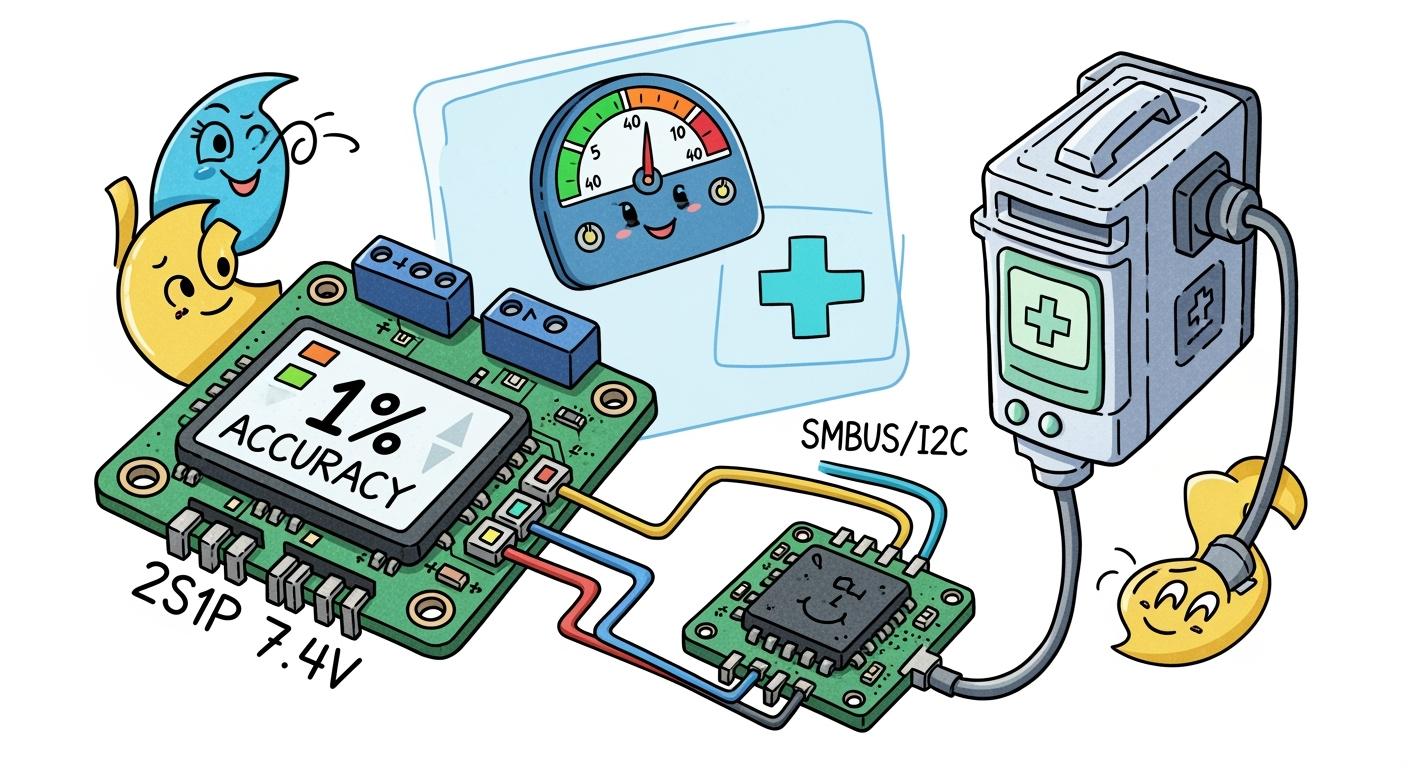
You demand Precision Power for Infusion Pumps to guarantee patient safety and reliable device operation. A 2S1P 7.4V battery management system (BMS), paired with high-quality lithium-ion cells such as NMC, delivers unmatched battery monitoring. Accurate gas gauge readings through SMBus/I2C help you maintain strict infusion rates and avoid unexpected shutdowns. Advanced BMS technology lets you control platform voltage and cycle life, making your medical devices both efficient and trustworthy.
Key Takeaways
Choose a 2S1P 7.4V BMS for infusion pumps to ensure patient safety and reliable operation.
Achieve 1% gas gauge accuracy to prevent unexpected shutdowns and maintain precise medication delivery.
Utilize SMBus/I2C for real-time battery monitoring, simplifying design and enhancing communication.
Select certified lithium-ion battery packs to meet strict medical standards and improve device reliability.
Implement integrated protection features to enhance safety and extend battery lifespan in medical devices.
Part 1: 2S1P 7.4V BMS and Precision Power
1.1 Key Features for Infusion Pumps
You rely on Precision Power for Infusion Pumps to deliver consistent performance in clinical settings. The 2S1P 7.4V BMS uses advanced cell monitoring and protection features to keep your infusion pumps running safely. You benefit from built-in safeguards against overcurrent, short circuits, and overheating. These features ensure your devices operate reliably, even during critical patient care.
Here is a summary of the main technical specifications that make the 2S1P 7.4V BMS ideal for medical applications:
Specification | Details |
|---|---|
Battery Type | 2S1P 7.4V 5000mAh 21700 |
Cell Manufacturer | Samsung or BAK |
Density and Safety | Higher density and more safety |
Initial Internal Impedance | ≤ 100mΩ |
Warranty | 24-month warranty |
You gain additional benefits from features designed for infusion pumps:
Feature | Benefit for Infusion Pumps |
|---|---|
Safety | Protection against overcurrent, short circuits, and overheating |
Compact Design | Portability for mobile healthcare |
Long Cycle Life | Uninterrupted operation during patient transport |
Medical-Grade Certification | Compliance with IEC 60601 for clinical safety |
Tip: You can learn more about BMS integration and protection features at BMS and PCM Solutions.
1.2 Lithium-Ion Pack Safety and Performance
You need lithium-ion battery packs that meet strict safety standards for medical devices. The 2S1P 7.4V BMS supports high-quality 18650 and 21700 cells. These packs offer high energy density, stable platform voltage, and long cycle life. You can trust them for continuous operation in infusion pumps, robotics, security systems, and industrial equipment.
Here is a comparison of lithium battery chemistries used in medical and industrial sectors:
Chemistry | Platform Voltage | Energy Density (Wh/kg) | Cycle Life (cycles) | Application Scenarios |
|---|---|---|---|---|
LCO | 3.7V | 150-200 | 500-1000 | Consumer electronics |
NMC | 3.7V | 180-220 | 1000-2000 | Medical, robotics, infrastructure |
LiFePO4 | 3.2V | 90-140 | 2000-4000 | Medical, industrial, security |
LMO | 3.7V | 100-150 | 300-700 | Power tools, industrial |
Solid-State | 3.7V | 250-350 | 2000+ | Emerging medical, aerospace |
Lithium Metal | 3.7V | 350+ | 1000+ | Advanced medical, research |
You must ensure your battery packs comply with medical safety standards:
Standard | Description |
|---|---|
ISO 13485 | Rigorous processes for medical safety and reliability |
IEC 60601 | Safety and performance for electrical medical equipment |
FDA & U.S. Regulatory Framework | Design controls, risk management, quality system regulations |
UL 2054 | Safety for battery packs recognized by FDA |
UL 1642 | Safety for lithium battery cells recognized by FDA |
ISO 10993 | Biocompatibility for patient-contact materials |
You achieve Precision Power for Infusion Pumps by selecting certified lithium-ion packs and integrating a robust BMS. This approach supports device uptime and patient safety across healthcare and industrial environments.
Part 2: Gas Gauge Accuracy in Infusion Pumps
2.1 Why 1% Accuracy Matters
You need precise battery monitoring to keep infusion pumps safe and reliable. Achieving 1% gas gauge accuracy means you can trust the battery status at all times. This level of precision helps you avoid unexpected shutdowns and ensures that your device delivers medication at the correct rate. In medical settings, even a small error in battery measurement can lead to interruptions in patient care. You also see benefits in robotics, security systems, and industrial equipment, where accurate battery data supports continuous operation.
Note: Accurate gas gauge readings help you plan maintenance and replacement schedules. You reduce downtime and improve patient safety by knowing exactly when a battery needs service.
Precision Power for Infusion Pumps depends on advanced battery management systems. You rely on lithium-ion packs with chemistries like LiFePO4 and NMC for stable platform voltage, high energy density, and long cycle life. These features support the strict demands of healthcare, infrastructure, and consumer electronics.
2.2 Impact on Device Reliability
You improve device reliability by using battery management systems with high gas gauge accuracy. Reliable battery monitoring lets you prevent overcharging and deep discharge, which can damage cells and shorten lifespan. You also benefit from integrated protection features that increase confidence in system safety and reduce costs.
Here is how improved gas gauge accuracy affects reliability:
Benefit | Description |
|---|---|
Protection | Integrated protection increases confidence in battery management system safety while reducing costs. |
QMax Feature | Allows battery management systems to last as long as safely possible, whether in use or stored. |
Maximized Lifespan | Cell balancing prevents individual cells from becoming over- or under-charged, enhancing overall reliability. |
You see these advantages in medical devices, robotics, security systems, and industrial applications. Accurate battery monitoring supports uninterrupted operation and helps you meet strict regulatory standards. You achieve Precision Power for Infusion Pumps by choosing battery packs and management systems that deliver consistent performance across all sectors.
Part 3: Achieving 1% Accuracy with SMBus/I2C
3.1 SMBus/I2C for Precision Power
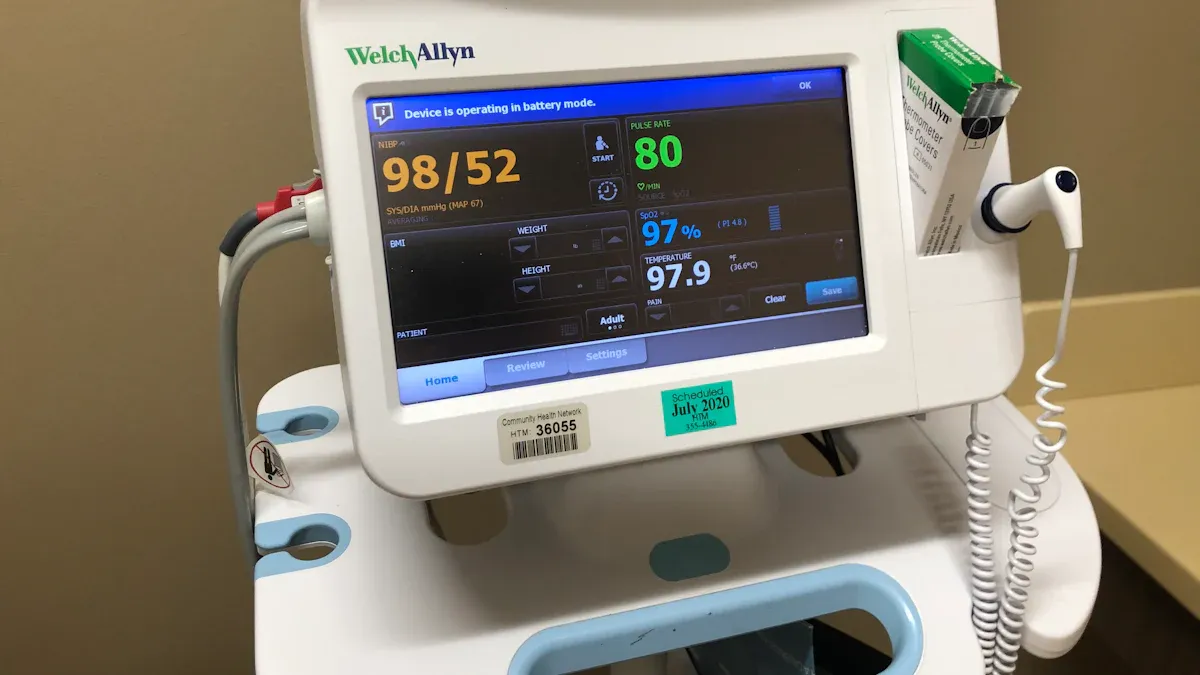
You need a communication protocol that delivers real-time, accurate battery data for your infusion pumps. SMBus/I2C provides a two-wire interface that simplifies wiring and reduces the number of pins required. This protocol transmits essential information such as fault status, temperature, current, voltage, and state of charge (SOC) directly from the battery management system (BMS) to your device. You can monitor battery health and performance without delay, which is critical for medical applications.
SMBus builds on the I2C physical layer but modifies certain features to meet battery management needs. You benefit from device addressing, optional interrupt capability, and tailored functions for battery monitoring. This ensures that your infusion pumps receive precise data, allowing you to respond quickly to any changes in battery status.
Tip: Real-time data exchange helps you avoid unexpected shutdowns and maintain strict infusion rates, supporting Precision Power for Infusion Pumps.
Here is a comparison of SMBus/I2C with other communication protocols:
Feature | SMBus/I2C Advantages | Other Protocols Disadvantages |
|---|---|---|
Communication Type | Two-wire interface for low-speed communication | More complex wiring |
Pin Count | Reduces the number of pins required for communication | Higher pin requirements |
Functionality | Tailored for battery management with specific features like device addressing | General-purpose features |
Real-time Data Transmission | Supports real-time data for fault status, temperature, and state of charge (SOC) | Limited real-time capabilities |
Interrupt Capability | Optional interrupt wire for slave devices to initiate communication | No such feature |
You can see that SMBus/I2C offers clear advantages for battery management in medical devices. You get efficient communication, simplified design, and reliable data transmission, all of which are essential for maintaining device safety and uptime.
Utilizes a two-wire interface for efficient communication.
Reduces the number of pins needed, simplifying design.
Supports specific functionalities for battery management, enhancing system performance.
Allows for real-time data transmission, crucial for monitoring battery health and status.
3.2 Calibration and Algorithms
You achieve 1% gas gauge accuracy by combining advanced calibration methods, effective algorithms, and robust hardware integration. Calibration ensures that your BMS measures voltage, current, and temperature with minimal error. You use algorithms like OptimGauge and Q-Mag™ to calculate the state of charge (SOC) with high precision. These algorithms continuously measure battery parameters and dynamically adjust SOC readings, which is vital for medical devices.
Algorithm | Description | Benefits for Medical Devices |
|---|---|---|
OptimGauge | Continuously measures current and voltage, dynamically adjusts SOC. | Provides accurate SOC readings, crucial for battery management. |
Q-Mag™ | Uses magnetic properties to assess SOC, changes linearly with charge level. | Enables precise energy reserve display, beneficial for diagnostics. |
You also need strong hardware integration between SMBus/I2C and BMS components. The BMS regulates charge cycles, ensuring stable and efficient power supply to your infusion pump. It maintains thermal stability, which is critical for device safety. Real-time cell balancing optimizes battery performance and supports Precision Power for Infusion Pumps.
The BMS regulates charge cycles, ensuring stable and efficient power supply.
It maintains thermal stability, which is crucial for performance and safety.
Real-time cell balancing optimizes battery performance for medical reliability.
Note: You should always validate calibration and algorithm performance using authoritative sources such as Nature or scientific publications to ensure compliance with medical standards.
You can rely on these technologies to deliver accurate battery monitoring and support uninterrupted operation in your infusion pumps. This approach helps you meet strict regulatory requirements and ensures patient safety.
Part 4: Practical Benefits and Integration
4.1 Enhanced Safety and Uptime
You improve patient safety and device uptime when you use a 2S1P 7.4V BMS with SMBus/I2C in your infusion pumps. You get real-time battery status, which helps you avoid unexpected shutdowns during critical care. You also benefit from integrated protection features that prevent overcurrent, overheating, and short circuits. These safeguards help you maintain continuous operation and meet strict medical standards. Hospitals and service companies have seen longer battery lifespans and fewer replacements after switching to high-cycle-life lithium-ion packs.
Case Study Description | Outcome |
|---|---|
A regional hospital upgraded to high-cycle-life lithium-ion batteries for infusion pumps. | Extended operational lifespan by over three years, reducing replacement costs significantly. |
A third-party service company partnered with a certified supplier for bulk battery replacements. | Reduced turnaround times and secured long-term service contracts. |
An OEM collaborated with a supplier to design a custom battery pack for a portable infusion pump. | Achieved regulatory compliance and seamless integration into the device. |
4.2 Maintenance and Lifecycle
You streamline maintenance and extend device lifecycle when you choose certified lithium-ion battery packs such as LiFePO4 and NMC. You can plan service schedules more accurately because you receive precise gas gauge readings. You reduce downtime and lower costs by using batteries with long cycle life and stable platform voltage. You also support sustainability by sourcing batteries from suppliers who follow responsible practices. Learn more about sustainable sourcing in our approach to sustainability and review our conflict minerals statement for industry standards.
4.3 Integration Tips for Designers
You achieve the best results when you follow proven integration practices. Select battery packs with medical-grade certifications such as IEC 60601 and ISO 13485. Use SMBus/I2C for efficient communication and real-time monitoring. Design your system to allow easy access for battery replacement and maintenance. You should validate calibration and algorithm performance using authoritative sources. You also need to ensure compatibility between your BMS and device firmware. Consider cell balancing and thermal management to maximize reliability.
Tip: Collaborate with certified suppliers to customize battery packs for your application. This approach helps you meet regulatory requirements and optimize device performance.
You gain a clear advantage by choosing a 2S1P 7.4V BMS with SMBus/I2C for your infusion pumps. Advanced BMS solutions deliver real-time monitoring and predictive alerts, protecting against overcharging and deep discharge. This approach ensures consistent power and reduces battery failures in medical settings. You also see long-term cost benefits:
Feature | Benefit |
|---|---|
Dosing Accuracy | Maximizes cost-effectiveness by reducing medication errors. |
Flow Rate Deviation | Keeps deviation within ±5%, supporting precise delivery. |
Medication Volume Remaining | Limits waste to 1–5%, improving efficiency. |
Advanced BMS enhances reliability and safety for medical batteries.
SMBus/I2C enables real-time battery health management.
You meet the demands of digital healthcare with robust, adaptable power solutions.
You secure patient safety, device uptime, and operational efficiency by adopting these advanced lithium battery technologies.
FAQ
What makes 2S1P 7.4V BMS ideal for infusion pumps?
You get precise battery management with 2S1P 7.4V BMS. It supports high-density lithium-ion chemistries like NMC and LiFePO4. You benefit from built-in safety features, real-time monitoring, and long cycle life, which help you maintain device reliability.
How does SMBus/I2C improve battery monitoring?
You use SMBus/I2C to access real-time battery data. This protocol lets you track voltage, temperature, and state of charge. You can respond quickly to faults and optimize maintenance schedules, which increases device uptime.
Why is 1% gas gauge accuracy important for medical devices?
You rely on 1% gas gauge accuracy to prevent unexpected shutdowns. This precision helps you deliver medication at the correct rate. You also reduce maintenance costs and improve patient safety by knowing exactly when batteries need replacement.
Which lithium-ion chemistries work best for infusion pumps?
You achieve optimal performance with NMC and LiFePO4 chemistries. NMC offers high energy density and stable voltage. LiFePO4 provides long cycle life and enhanced safety. You select the chemistry based on your device’s requirements.
What certifications should you look for in medical battery packs?
You ensure safety and compliance by choosing packs certified to IEC 60601, ISO 13485, UL 2054, and UL 1642 standards. These certifications guarantee that your battery packs meet strict medical and regulatory requirements.


