

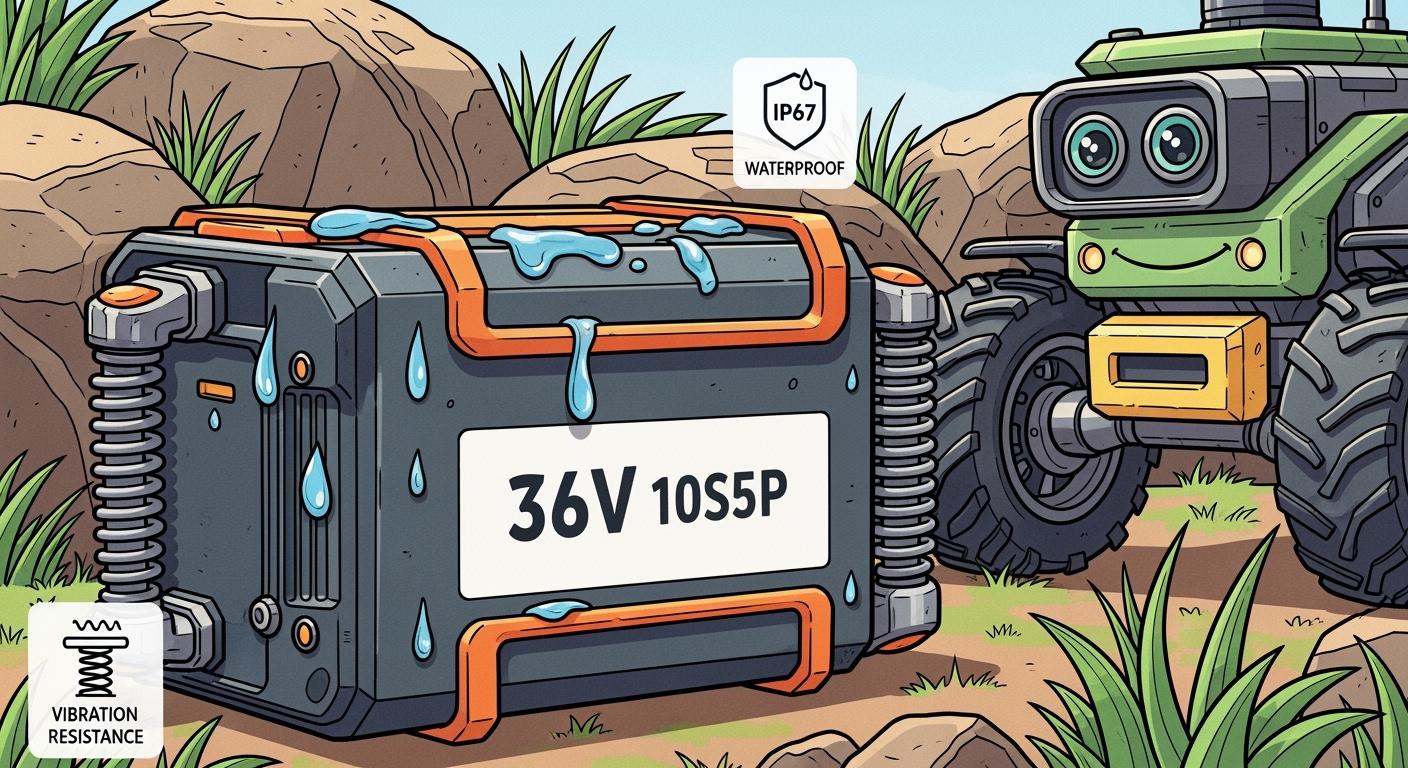
You face demanding conditions when you deploy outdoor patrol robots. Rain, dust, and constant motion challenge the reliability of every component, especially the battery pack. Ruggedized Power becomes essential for these robots, as only a battery with IP67 waterproofing and strong anti-vibration features can ensure continuous operation. You need a solution that keeps your 10S5P 36V lithium battery pack performing in harsh environments, whether you use LiFePO4 or NMC chemistries.
Key Takeaways
Choose lithium battery packs with IP67 waterproofing to protect against dust and water. This ensures reliable operation in harsh outdoor conditions.
Incorporate anti-vibration features like shock-absorbing mounts to prevent damage from rough terrains. This extends the battery’s lifespan and maintains performance.
Select a 10S5P 36V configuration for optimal voltage and capacity. This setup supports the high energy demands of outdoor patrol robots.
Integrate a Battery Management System (BMS) to monitor battery health and safety. This system helps prevent overcharging and extends battery life.
Conduct regular maintenance checks on seals and connectors to ensure waterproofing and reliability. This practice keeps your battery pack performing well in demanding environments.
Part1: Ruggedized Power Needs
1.1 Outdoor Patrol Robot Challenges
You rely on outdoor patrol robots to perform in unpredictable environments. These robots must operate continuously across diverse terrains, from city streets to industrial sites. You expect them to handle extreme weather, dust, and moisture. Security cameras, industrial applications, and robotics all demand reliable power. Ruggedized Power ensures that lithium battery packs, such as LiFePO4 and NMC, deliver consistent energy and long cycle life. You need batteries that support wireless charging and resist mechanical stress. The table below shows how water, dust, and vibration affect battery performance:
Feature | Description |
|---|---|
IP68 Protection | Ensures resistance against water and dust, crucial for outdoor environments. |
Vibration Resistance | Reinforced housings and shock-absorbing mounts prevent damage from mechanical stress. |
Wireless Charging | Eliminates risks associated with mechanical connectors, allowing safe operation in wet or contaminated areas. |
You see these challenges in security patrols, infrastructure inspections, and industrial automation. Each scenario pushes battery packs to their limits.
1.2 Environmental Risks
You face several risks when you deploy lithium battery packs outdoors. Extreme temperatures can damage batteries if they operate or store outside of 32 °F to 104 °F (0 °C to 40 °C). Moisture threatens battery integrity, especially in wet or humid environments. Flammable gases present safety hazards in industrial and infrastructure settings. The table below summarizes these risks:
Environmental Risk | Description |
|---|---|
Extreme Temperatures | Operation or storage outside of 32 °F to 104 °F (0 °C to 40 °C) may damage the product. |
Moisture | Operating in a dry environment is crucial to prevent damage to the battery. |
Flammable Gases | Operating in the presence of flammable gases poses a safety hazard. |
You must consider these risks when designing battery packs for patrol robots. Ruggedized Power solutions help you meet operational demands, such as:
Continuous operation across diverse environments
Ability to navigate varying terrains
Reliable performance under extreme weather conditions
Operation across temperature, humidity, dust, and terrain extremes
Navigational handoff between indoor positioning and outdoor GPS
Battery demands that vary based on task location and travel distances
Tip: Always select lithium battery packs with proven resistance to water, dust, vibration, and temperature extremes. This approach increases reliability and safety for your outdoor patrol robots.
Part2: Design Requirements
2.1 IP67 Waterproofing
You need to protect your lithium battery packs from water and dust in outdoor patrol robots. The IP67 standard gives you this protection. According to IEC 60529, an IP67 enclosure is fully dustproof and can withstand immersion in water up to 1 meter for 30 minutes. This level of protection is essential for robots that face rain, puddles, or dusty construction sites.
Feature | IP67 Standard |
|---|---|
Dust Protection | Fully dustproof (Level 6) |
Water Protection | 1 meter for 30 minutes |
Standard | IEC 60529 |
The IP67 rating ensures your battery pack remains reliable even in harsh outdoor environments. You avoid failures caused by water ingress or dust buildup. This durability is crucial for applications in security, infrastructure, and industrial sectors. For more on responsible design, see our sustainability approach and conflict minerals statement.
Note: IP67 waterproofing increases the lifespan and reliability of lithium battery packs in outdoor robots.
2.2 Anti-Vibration Features
Outdoor patrol robots often travel over rough terrain. Vibration can damage battery cells, connectors, and internal electronics. You need anti-vibration features to prevent these issues. Using shock-absorbing mounts, reinforced housings, and secure cell arrangements helps protect the battery pack. These features reduce the risk of internal shorts and extend the service life of your battery.
Shock-absorbing materials cushion the battery against impacts.
Reinforced enclosures prevent cracks and leaks.
Secure cell holders keep cells in place during movement.
By adding anti-vibration features, you ensure Ruggedized Power for your robots, even in challenging environments.
2.3 10S5P 36V Configuration
You choose the 10S5P 36V configuration for its balance of voltage, capacity, and reliability. “10S” means ten cells in series, giving you a nominal voltage of 36V. “5P” means five cells in parallel, increasing the total capacity and current output. This structure supports the high energy demands of patrol robots.
Configuration | Nominal Voltage | Parallel Cells | Application Benefit |
|---|---|---|---|
10S5P | 36V | 5 | High capacity and runtime |
This configuration works well with both LiFePO4 and NMC chemistries. It provides enough power for long patrols and supports features like wireless charging. You get a reliable, scalable solution for security, medical, and industrial robots.
Part3: Ruggedized Power Pack Design
3.1 Cell Selection
You must select the right lithium cells to build a reliable battery pack for outdoor patrol robots. LiFePO4 cells offer long cycle life and superior thermal stability. These cells operate safely at higher temperatures and have no known safety issues, making them ideal for Ruggedized Power solutions. NMC cells provide higher energy density and a lightweight design, which suits medical robots and small autonomous mobile robots (AMRs). Sodium-ion and solid-state batteries serve specialized needs, such as cold-chain logistics or aerospace-grade robots.
Chemistry | Advantages | Limitations | Suitable Applications |
|---|---|---|---|
LiFePO4 | Long cycle life, thermal stability | Lower energy density | Warehouses, factory, logistics AMRs |
NMC | High energy density, lightweight | Higher cost, less safety | Medical robots, small AMRs |
Sodium-Ion | Good low-temp performance, cost | Bulky volume | Cold-chain, cost-sensitive AMRs |
Solid-State | Upgraded safety, wide temp range | Limited availability | Medical, aerospace-grade AMRs |
You should analyze manufacturer data and performance curves before choosing a cell. Test cells under your specific operating conditions to confirm suitability. Always use effective battery management circuitry when combining cells in series or parallel. This approach reduces risks and improves safety for outdoor patrol robots in security, infrastructure, and industrial sectors.
Tip: LiFePO4 cells are the safest choice for rugged outdoor applications. NMC cells work best when you need higher energy density.
3.2 Pack Layout
You need a pack layout that supports heat dissipation and vibration resistance. Place the battery in a cool, well-ventilated area to prevent overheating. Space cells apart to avoid crowding, which can cause overheating or fire hazards. Use insulating materials between cells to prevent short circuits.
Factor | Influence on Heat Dissipation and Vibration Resistance |
|---|---|
Mechanical Robustness | Balances structural integrity with electrical efficiency |
Shock Resistance | Enhances durability in rugged environments |
Heat Dissipation | Critical for preventing thermal runaway |
Material Selection | High-strength materials improve strength and vibration resistance |
You can use high-strength nylon with fiberglass reinforcement to boost structural strength. Lightweight materials like aluminum alloy or carbon fiber help reduce weight while maintaining rigidity.
Follow these steps for optimal pack layout:
Fit the battery pack precisely into the robot’s available space.
Use high-strength structural designs to resist impacts.
Apply topology optimization to improve rigidity.
This design supports Ruggedized Power and ensures your battery pack performs reliably in outdoor patrol robots.
3.3 Waterproof Enclosure
You must protect your battery pack from water and dust. Use materials like silicones, which offer high thermal stability, flexibility, and fire resistance. Polycarbonate and fiberglass reinforced polyester provide impact resistance and chemical durability. Aluminum enclosures add lightweight strength and EMI shielding.
Effective sealing techniques include cured-in-place gaskets (CIPG), which allow easy maintenance while preventing water ingress. Robust sealing systems with high-quality gaskets create watertight seals. UV stabilization keeps plastic enclosures strong under sunlight, preventing brittleness.
Note: The tongue and groove structure in enclosure design improves gasket compression and ensures a tight seal. Potting and encapsulation methods provide permanent moisture protection by encasing internal components.
Material | Key Features |
|---|---|
Silicone | Thermal stability, flexibility, fire resistance |
Polycarbonate (PC) | Impact resistance, UV protection |
Fiberglass Reinforced Polyester | High strength, chemical resistance |
Aluminum | Lightweight, corrosion resistance, EMI shielding |
Choose enclosure materials and sealing techniques based on your robot’s operating environment. This strategy keeps your battery pack safe during prolonged outdoor exposure.
3.4 Vibration Protection
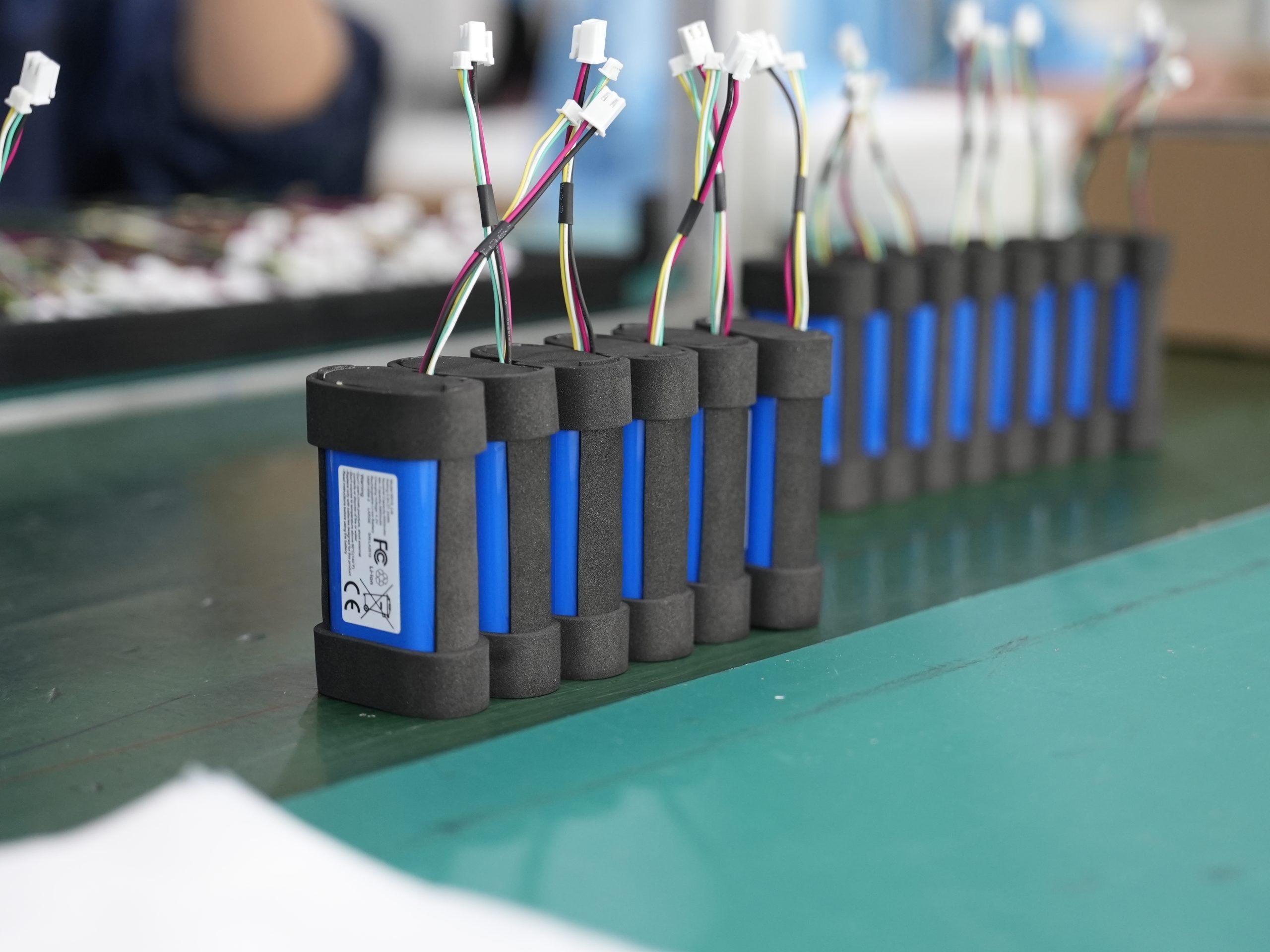
You must shield your battery pack from vibration and shock. Use foam materials like silicone, polyurethane (PU), and EVA for cushioning and insulation.
Foam Material | Common Use in Battery Pack | Key Features |
|---|---|---|
Silicone Foam | Gaskets, cell cushions, cooling pads | Flame resistance, waterproof, retains shape, rebound |
Polyurethane | Cell buffer, vibration pad | Shock absorption, durable, flame-retardant grades |
EVA Foam | Support pads, frame fill | Lightweight, cost-effective, good cushioning |
High impact-resistant rubber materials also help dampen vibration. Integrate mechanical metamaterials such as auxetic, lattice, and X-shaped structures into the casing. Lattice structures can reduce longitudinal shock by nearly 60%. Auxetic structures lower vertical and longitudinal vibrations by up to 19%. Combine auxetic designs with quasi-zero-stiffness (QZS) isolators for optimal vibration mitigation.
Tip: Use a combination of foam materials and advanced casing structures to maximize vibration protection for your battery pack.
3.5 BMS Integration
You need a Battery Management System (BMS) to monitor and protect your battery pack. The BMS tracks voltage, current, and temperature to ensure safe operation. It provides overcharge, over-discharge, and short circuit protection. The BMS estimates the state of charge (SoC) and state of health (SoH), helping you manage battery lifespan. Cell balancing keeps all cells at uniform charge levels, preventing premature aging.
Feature | Description |
|---|---|
Overcharge Protection | Prevents battery damage from excessive charging. |
Over-discharge Protection | Safeguards against deep discharge conditions. |
Short Circuit Protection | Protects the battery from short circuit events. |
Advanced Connectivity | Supports CANBUS, RS485, UART for integration. |
You can learn more about BMS solutions for lithium battery packs at BMS and PCM.
A well-integrated BMS enhances the safety and reliability of your 10S5P 36V battery pack. This system is essential for Ruggedized Power in outdoor patrol robots used in medical, security, and industrial applications.
Part4: Testing and Maintenance

4.1 Waterproof Testing
You need to verify that your battery pack meets IP67 waterproof standards before deploying it in outdoor patrol robots. IP rating tests evaluate the enclosure’s ability to block dust and water, protecting internal circuitry from hazards. For IP67, you immerse the battery pack in water up to 1 meter deep for 30 minutes. After the test, you inspect for leaks, corrosion, or electrical faults. This process ensures your lithium battery pack remains reliable in environments like docks, industrial wash-down areas, or rainy construction sites. You should document each test and repeat it after any enclosure modification.
Tip: Always confirm that seals and gaskets remain intact after waterproof testing. Regular inspection helps maintain Ruggedized Power in harsh conditions.
4.2 Vibration Testing
You must assess your battery pack’s durability against vibration and shock. Vibration testing protocols include:
Random: Simulates unpredictable vibrational frequencies found in real-world environments.
Sine: Applies a single frequency for a set time to check performance under constant vibration.
Mechanical Shock: Mimics sudden impacts to evaluate functionality after drops or collisions.
These tests help you identify weaknesses in cell design and enclosure structure. Studies show that inner cell design and state of health affect vibration durability. For example, cells with loose mandrels or poor current collector tabs suffer more mechanical damage. You can use simulation tools to predict how your battery pack will respond to vibration over its lifecycle. This approach supports applications in robotics, medical devices, and industrial automation.
4.3 Service and Longevity
You extend battery life by following a regular maintenance schedule. Inspect seals, connectors, and foam pads for wear or damage. Monitor the Battery Management System (BMS) for abnormal voltage, temperature, or current readings. Replace damaged cells with those matching the original chemistry, such as LiFePO4 or NMC, to maintain platform voltage and energy density. Clean the enclosure to prevent dust buildup, which can compromise waterproofing. Store battery packs within recommended temperature ranges to avoid cycle life reduction.
Maintenance Task | Frequency | Benefit |
|---|---|---|
Seal Inspection | Monthly | Prevents water ingress |
BMS Monitoring | Weekly | Detects faults early |
Cell Replacement | As needed | Maintains pack performance |
Cleaning | Monthly | Preserves waterproof rating |
Temperature Control | Continuous | Extends cycle life |
Note: Consistent maintenance ensures your Ruggedized Power solution delivers reliable performance in outdoor patrol robots across security, medical, and industrial sectors.
You achieve reliable outdoor patrol robot operation by following key steps in battery pack design. Select robust lithium chemistries like LiFePO4 and NMC. Build with IP67 waterproof enclosures and anti-vibration features. Integrate a BMS for safety and monitoring. Test thoroughly for water and vibration resistance.
Ruggedized housings and weather-resistant components help robots perform in rain, snow, and extreme temperatures.
All-terrain mobility and sensor arrays support safe navigation across mud, rocks, and sand.
Consistent application of these best practices ensures long-term safety and performance for your patrol robots.
FAQ
What makes IP67 waterproofing critical for outdoor lithium battery packs?
You need IP67 waterproofing to keep your battery pack safe from dust and water. This standard protects your lithium pack during rain, cleaning, or in dusty environments. It helps you avoid failures in security cameras, medical, and industrial applications.
How do anti-vibration features improve battery pack reliability?
You add anti-vibration materials and structures to reduce shock and movement damage. These features protect LiFePO4, NMC, and other lithium chemistries from internal shorts and cell wear.
Why choose a 10S5P 36V configuration for patrol robots?
You select a 10S5P 36V pack for its balance of voltage, current, and runtime. This setup supports high energy demands for robots. It works well with LiFePO4 and NMC cells, giving you reliable power for long shifts.
What role does a BMS play in ruggedized lithium battery packs?
You rely on a Battery Management System (BMS) to monitor voltage, current, and temperature. The BMS protects your pack from overcharge, deep discharge, and short circuits. It helps you maintain safety and extend cycle life in demanding environments.
How often should you inspect and maintain outdoor lithium battery packs?
You should inspect seals, connectors, and the BMS at least monthly. Regular checks help you catch wear or faults early. This routine keeps your battery pack reliable for security, medical, and industrial robots working outdoors.


