

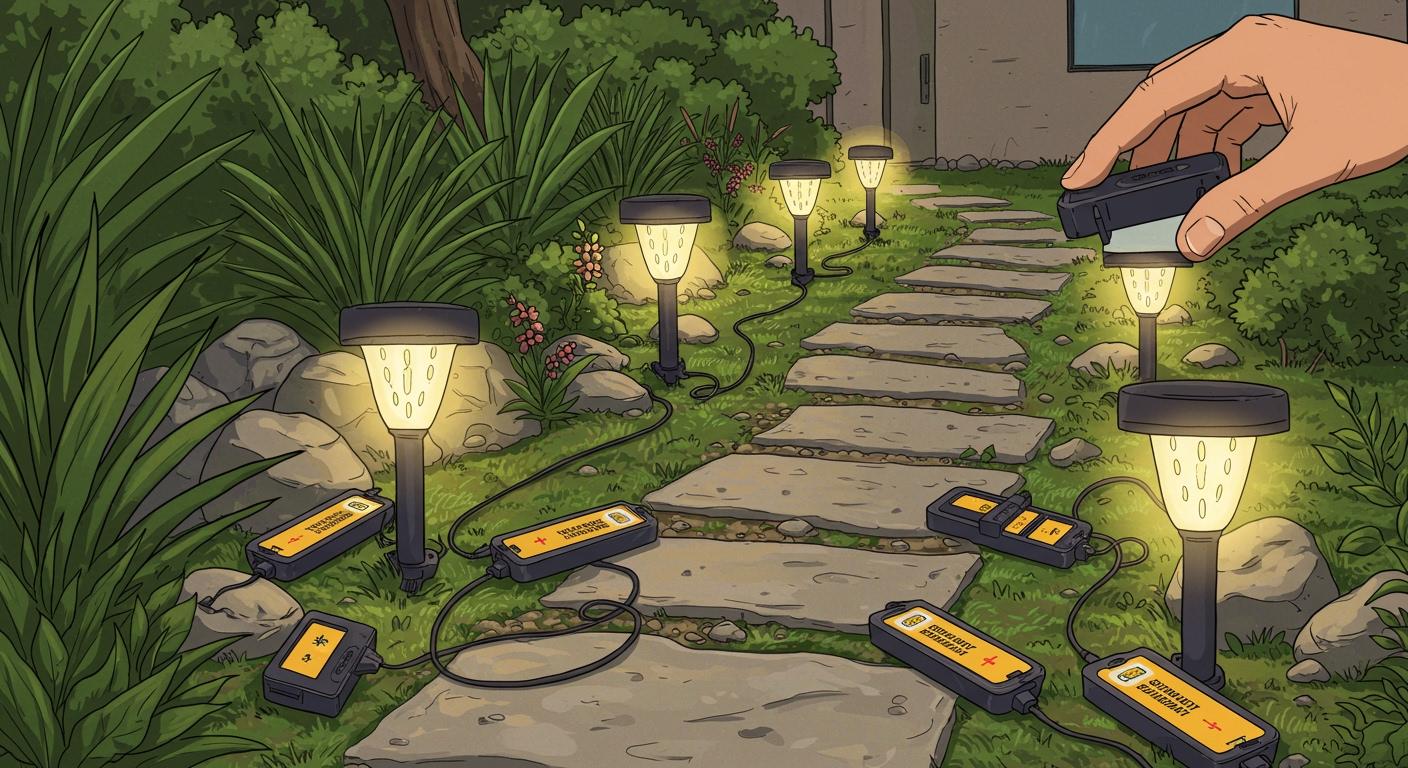
You can transform your commercial outdoor spaces with modular and portable landscape lighting powered by advanced lithium battery packs. These systems deliver flexibility, energy efficiency, and smart controls.
Installation stays simple, requiring no complex wiring or trenching.
Maintenance only involves occasional cleaning and battery checks, cutting costs.
Advancement Type | Description |
|---|---|
Improved Energy Density | Modern lithium batteries store more energy in a smaller, lighter package. |
Enhanced Lifespan and Durability | Lifespans now exceed five years, reducing replacement needs. |
Superior Charge-Discharge Efficiency | Efficient energy conversion supports reliable solar charging. |
Temperature Resilience | Reliable operation in varied environments, from security to infrastructure. |
Faster Charging Times | Quick recharging ensures lighting stays operational. |
Environmental and Safety Improvements | Safer, eco-friendly chemistries like lithium iron phosphate. |
Portable Landscape Lighting solves the traditional challenges of outdoor lighting, making it ideal for businesses seeking reliable, modern solutions.
Key Takeaways
Modular landscape lighting offers flexibility, allowing businesses to customize layouts for events and adapt to changing needs without costly renovations.
Lithium batteries provide long lifespans of 5-10 years and faster charging, reducing maintenance costs and ensuring reliable performance.
Smart features like motion sensors and app controls enhance safety and energy efficiency, allowing for remote management of lighting systems.
Part1: Portable Landscape Lighting Benefits

1.1 Modularity and Flexibility
You gain unmatched adaptability when you choose modular lighting systems for your commercial outdoor spaces. Modular units allow you to customize layouts for events, hospitality venues, or infrastructure projects. You can easily reconfigure lighting as your business needs evolve, without costly renovations or downtime.
Modular lighting systems adapt to future changes in business layouts. You can adjust components quickly, supporting energy efficiency and upgrades as your requirements shift.
Feature | Description |
|---|---|
Design Flexibility | Modular systems can be customized to fit various design aesthetics, making them suitable for different environments. |
Energy Efficiency | LED technology used in modular fixtures significantly reduces energy consumption. |
Programmability | These systems can be programmed to adjust lighting based on usage, enhancing functionality. |
For event-based or temporary installations, portable landscape lighting offers rapid setup and teardown. You can mix and match modular units to create unique event spaces, mobile showrooms, or VIP lounges. This flexibility supports uniform lighting, improved broadcast quality, and advanced features like color wash and custom light shows.
Feature | Description |
|---|---|
Flexibility | Modular units can be mixed and matched to create customized event spaces. |
Adaptability | Can be used for various applications like mobile showrooms, VIP lounges, etc. |
Unique Design | Offers the ability to create multi-level spaces, enhancing the event experience. |
You benefit from compliance with safety standards, reducing liability and ensuring your lighting meets regulations. Quick installation is essential for event planners and facility managers with tight schedules. Adaptability means you can use lighting in diverse environments, enhancing operational flexibility.
Compliance with safety standards reduces liability.
Quick installation supports tight schedules.
Adaptability enhances operational flexibility.
1.2 Lithium Battery Advantages
You achieve superior performance and reliability with lithium battery-powered lighting systems. These systems use advanced chemistries such as LiFePO4, NMC, LCO and LMO, which deliver longer lifespans and higher energy density compared to traditional lead-acid batteries.
Feature | Lithium Batteries | Lead-Acid Batteries |
|---|---|---|
Power Delivery | Constant throughout discharge | Decreases as it discharges |
Charging Speed | Four times faster than lead-acid | Slow, often requiring extra batteries |
Maintenance Requirements | Virtually maintenance-free | Requires regular maintenance |
Float Charge Requirement | Not needed | Necessary for standby applications |
You can rely on LiFePO4 batteries for 5–10 years of service, with 2,500 to 9,000 charge cycles. Under optimal conditions, you may achieve up to 10,000 cycles and beyond. This longevity reduces replacement costs and supports sustainable operations.
A typical LiFePO4 battery lasts between 5–10 years when properly maintained.
This lifespan corresponds to approximately 2,500 to 9,000 charge cycles.
Under optimal conditions, the lifespan can extend to 10,000 cycles and beyond.
Hybrid charging options, such as solar and USB-C, ensure consistent lighting performance in all weather conditions. You can select solar lights with removable panels for direct sunlight or larger panels for low-light environments. Hybrid systems with USB ports or AC adapters allow manual charging during prolonged shade, maintaining uninterrupted operation.
Hybrid charging options, such as solar and USB-C, maintain consistent lighting performance, especially in low-light conditions. You can keep your lighting functional even when solar energy is insufficient.
Premium and luxury portable lighting options enhance the aesthetics and branding of your commercial spaces. Advanced battery technology provides over 12 hours of continuous operation. Water-resistant construction ensures versatility for indoor and outdoor use. Dimmable LED controls with memory functions and customizable finishes support your brand identity.
Feature | Description |
|---|---|
Advanced Battery Technology | Provides 12+ hour continuous operation |
Water-Resistant Construction | Suitable for indoor/outdoor versatility |
Dimmable LED Controls | Sophisticated controls with memory function |
Premium Finish Options | Customizable black and silver finishes for branding |
Hospitality-Grade Durability | Exceeds residential standards for high-traffic areas |
1.3 Smart and Hybrid Features
You can leverage smart features to optimize energy management and enhance safety. Automation, app-based controls, and motion sensors allow you to schedule lighting scenes, adjust brightness, and change colors remotely. You can monitor and control lighting via smartphone or voice assistant, improving convenience and operational efficiency.
Automation
App-based controls
Motion sensors
Energy-efficient LED fixtures
Scheduling lighting scenes
Adjusting brightness
Changing colors
Remote monitoring via smartphone or voice assistant
Motion sensors detect occupancy and movement, automatically turning lights on or off. You improve safety in stairwells, parking lots, back offices, warehouses, office buildings, restrooms, conference rooms, corridors, and staircases. These features eliminate unnecessary energy consumption and provide enhanced safety for staff and visitors.
Detects occupancy and movement
Automatically turns lights on/off
Enhances safety in various commercial environments
Eliminates unnecessary energy consumption
Smart controls reduce energy costs and improve occupancy comfort by adjusting lighting based on usage. Platforms like NX Lighting Controls support wired, wireless, and hybrid networked controls, giving you comprehensive control over both interior and exterior lighting.
You can reduce energy costs and improve comfort by using smart controls that adjust lighting based on occupancy and usage patterns.
Hybrid solar lights with USB ports or AC adapters allow manual charging during extended periods of shade. Advanced components and energy-saving settings enhance performance in low-light conditions. For areas with perpetual shade, hybrid systems or alternative lighting solutions may be preferable.
Hybrid solar lights with USB ports or AC adapters allow manual charging during prolonged shade.
Advanced components and energy-saving settings enhance performance in low-light conditions.
For areas with perpetual shade, hybrid systems or alternative lighting solutions may be preferable.
Portable Landscape Lighting powered by lithium batteries delivers the flexibility, efficiency, and smart features you need for modern commercial outdoor environments. You can create scalable, safe, and visually appealing spaces that support your business goals.
Part2: System Selection and Setup

2.1 Assessing Site Needs
Selecting the right landscape lighting system for your business starts with a thorough assessment of your site’s unique requirements. You should consider several critical factors to ensure optimal performance and return on investment:
Define the purpose and goals of your lighting project. Are you aiming to enhance security, highlight architectural features, or create ambiance for hospitality spaces?
Set clear budget constraints to guide your selection of fixtures and technologies.
Identify the types of lighting fixtures that best suit your application, such as spotlights, path lights, or floodlights.
Map out lighting zones to control different areas independently.
Determine the required light intensity and color temperature for each zone.
Evaluate installation options, including mounting methods and power sources.
Prioritize energy efficiency to reduce operational costs and environmental impact.
Plan for ongoing maintenance requirements to ensure long-term reliability.
Tip: A detailed site assessment helps you avoid over-lighting or under-lighting, ensuring both safety and aesthetics for your commercial property.
2.2 Comparing Battery and Charging Options
Choosing the right battery chemistry and charging method is essential for maximizing the performance and lifespan of your Portable Landscape Lighting system. Lithium battery packs dominate the market due to their superior energy density, long cycle life, and robust safety features. You will often choose between lithium iron phosphate (LiFePO4), nickel manganese cobalt oxide (NMC), and lithium cobalt oxide (LCO) chemistries. Learn more about lithium-ion batteries.
Battery Type | Upfront Cost | Cycle Life (cycles) | Energy Density (Wh/kg) |
|---|---|---|---|
LiFePO4 | High | 1,500-2,000 | 90-120 |
NMC (Li-ion) | Moderate | 300-1,000 | 150-220 |
LCO (Li-ion) | Low | 300-500 | 150-200 |
LiFePO4 batteries require a higher initial investment due to specialized materials and manufacturing processes. However, they deliver a longer cycle life, which reduces replacement frequency and maintenance costs over time.
NMC and LCO lithium-ion batteries offer lower upfront costs, making them attractive for projects with tight budgets. You may face higher long-term costs due to more frequent replacements.
LiFePO4 batteries provide stable platform voltage and enhanced safety, making them ideal for critical infrastructure, security, and industrial applications. Explore more about LiFePO4 batteries.
When evaluating charging options, you can select from solar, USB-C, or hybrid systems. Solar integration increases efficiency and autonomy, especially in outdoor environments with ample sunlight.
Metric | Description |
|---|---|
Efficiency | High-efficiency solar panels convert more sunlight into usable energy, reducing charging time. |
Runtime | A full charge provides extended lighting hours, supporting overnight operation. |
Autonomy | Quality systems can operate for several days without sunlight, ensuring reliability in all weather. |
Solar-powered lighting systems work best in areas with direct sunlight. They offer cost-effective solutions for illuminating gardens, pathways, and event spaces at night.
Hybrid systems with USB-C or AC charging provide backup power during prolonged cloudy periods or in shaded locations.
Note: For commercial projects in shaded or unpredictable environments, hybrid charging ensures uninterrupted lighting and operational flexibility.
2.3 Installation and Maintenance
Proper installation and maintenance of your modular and portable lighting system ensure safety, longevity, and peak performance. Follow these steps for a successful setup:
Plan Your Lighting Layout: Sketch your site and mark fixture locations based on your lighting goals.
Select Equipment: Choose fixtures, battery packs, and charging solutions that meet your technical and aesthetic requirements.
Install Power Sources: Place transformers or solar panels in secure, accessible locations near power outlets or optimal sunlight.
Lay Out Cables: Route low-voltage cables along planned paths, using shallow trenches for burial if needed.
Connect Fixtures: Attach each fixture securely to the power source, ensuring all connections are tight and weatherproof.
Adjust and Secure Fixtures: Position fixtures for optimal coverage and secure them to prevent movement or theft.
Enhance with Smart Features: Integrate dimmers, motion sensors, or smart controls for advanced functionality.
Test and Fine-Tune: Test the system at dusk, making final adjustments to angles and brightness.
Schedule Regular Maintenance: Inspect and clean fixtures, terminals, and lenses every six months.
For ongoing maintenance, you should:
Clean terminals with a soft brush to maintain electrical performance.
Check all connections regularly to prevent loose contacts or corrosion.
Clean LED lenses to ensure maximum brightness and clarity.
Inspect wiring for damage or wear, especially after severe weather.
Trim plants and landscaping to prevent obstruction or damage to fixtures.
Use the correct charger for lithium battery packs and follow manufacturer guidelines to avoid battery degradation.
Regular maintenance extends the lifespan of your lighting system and protects your investment in lithium battery technology.
By following these best practices, you ensure your Portable Landscape Lighting system delivers reliable, efficient, and visually appealing results for your commercial property.
You gain efficiency, adaptability, and visual appeal with modular lithium battery-powered Portable Landscape Lighting. Businesses see up to 80% energy savings and reduced maintenance, as shown below:
Benefit | Description | Impact on Costs |
|---|---|---|
Energy Savings | Up to 80% lower lighting costs | Significant long-term savings |
Longevity | Lasts up to 25 years | Fewer replacements |
Maintenance | Minimal upkeep | Lower operational costs |
Upgrade your outdoor spaces for long-term value. Request a custom battery consultation to explore tailored lithium battery solutions.
FAQ
What makes Large Power lithium battery packs ideal for commercial landscape lighting?
Large Power lithium battery packs deliver high energy density, long cycle life, and robust safety.
How do you choose between LiFePO4, NMC, and LCO chemistries for your project?
Chemistry | Cycle Life (cycles) | Energy Density (Wh/kg) | Best Use Case |
|---|---|---|---|
LiFePO4 | 1,500–2,000 | 90–120 | |
NMC | 300–1,000 | 150–220 | |
LCO | 300–500 | 150–200 | Medical, portable devices |
Where can you request a custom lithium battery solution for your business?
You can request a custom battery consultation with Large Power to design lithium battery packs tailored for your commercial lighting needs.


