

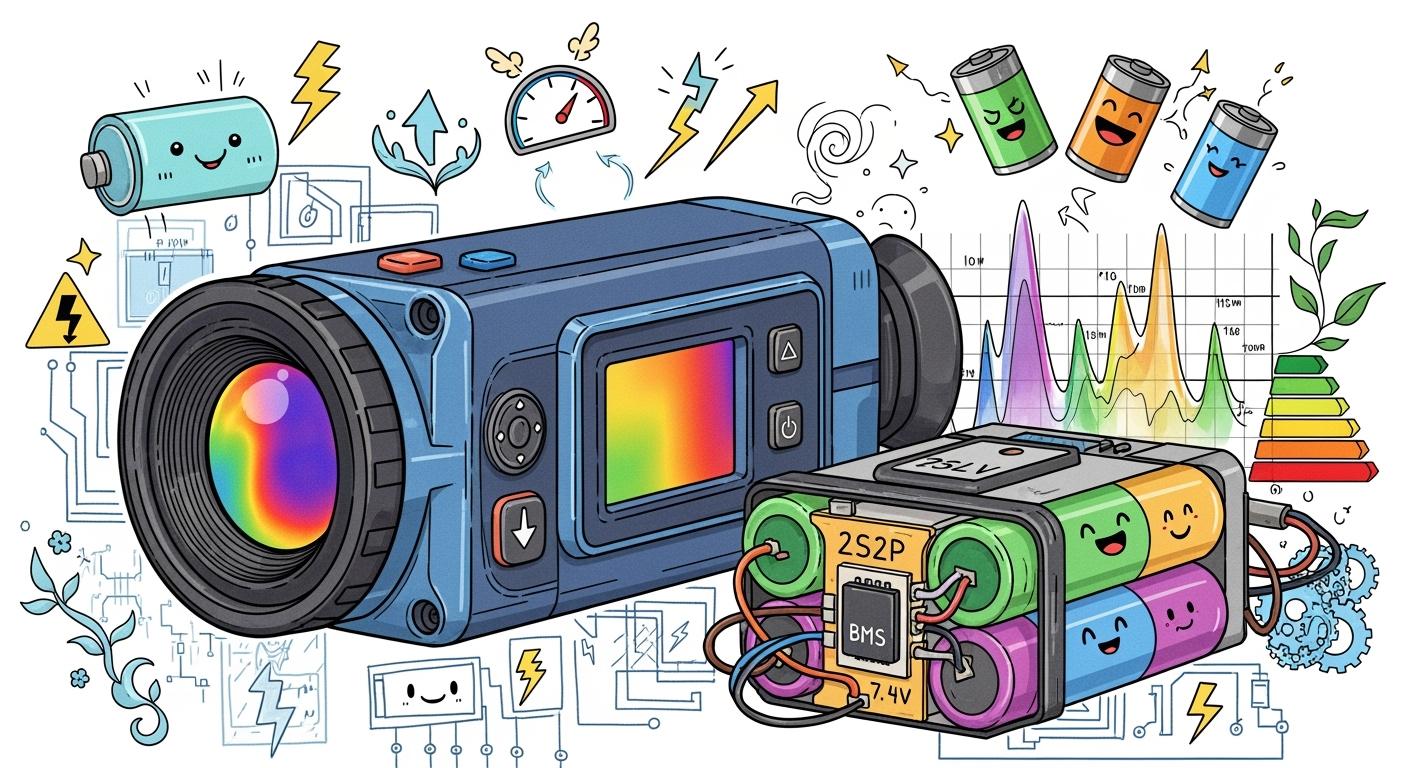
You can improve performance in thermal imaging cameras by Optimizing Runtime with custom 2S2P 7.4V 18650 lithium battery packs. You should choose a configuration that matches your camera’s power needs and select high-quality cells to ensure stable output. You need a reliable battery management system (BMS) to protect the pack and maintain efficiency. Consider thermal stability and watch for heat buildup during operation.
Tip: Focus on increasing battery capacity and lowering device power draw for longer operation.
Prioritize correct charging methods and regular maintenance.
Monitor safety features to prevent failures in critical medical, robotics, or industrial applications.
Key Takeaways
Choose high-quality 18650 cells to ensure stable power and longer runtime in thermal imaging cameras.
Implement a reliable Battery Management System (BMS) to protect against overcharging and overheating.
Monitor battery temperature regularly to prevent thermal runaway and extend battery life.
Follow proper charging practices, such as charging to 80-90% and avoiding full discharges, to maximize battery lifespan.
Conduct routine maintenance checks to identify issues early and ensure reliable operation in critical applications.
Part1: 2S2P 7.4V 18650 Pack Basics

1.1 2S2P Configuration Explained
You often see the 2S2P configuration in professional battery packs for thermal imaging cameras. This setup uses two cells in series (2S) to reach a nominal voltage of 7.4V. You then connect two sets of these series pairs in parallel (2P), which doubles the capacity while keeping the voltage stable. This design gives you a balance between voltage and runtime, which is critical for devices that need steady power over long periods.
Here is a table that compares common lithium battery pack configurations:
Nominal Voltage | Series Config (S) | Parallel Config (P) | Achievable Capacity Range |
|---|---|---|---|
7.4V | 2S | 1P to 4P+ | 2Ah – 14Ah+ |
11.1V | 3S | 1P to 4P+ | 2Ah – 14Ah+ |
14.8V | 4S | 1P to 4P+ | 2Ah – 14Ah+ |
You can select the right configuration based on your device’s voltage requirements and desired runtime. The 2S2P pack fits many industrial and medical devices, including robotics and security systems, because it offers a safe voltage level and flexible capacity options.
You should also consider the chemistry of the cells. Here is a comparison of popular lithium chemistries:
Chemistry | Platform Voltage | Energy Density (Wh/kg) | Typical Cycle Life | Common Applications |
|---|---|---|---|---|
LiFePO4 | 3.2V | 90-120 | 2000+ | Medical, Infrastructure, Robotics |
NMC | 3.7V | 150-220 | 1000-2000 | Industrial, Security, Consumer |
LCO | 3.7V | 150-200 | 500-1000 | Consumer Electronics |
LMO | 3.7V | 100-150 | 500-1000 | Power Tools, Industrial |
Note: You should match the chemistry to your application’s needs. For example, LiFePO4 offers longer cycle life and better thermal stability, which is important for medical and infrastructure sectors.
1.2 Why 2S2P Suits Thermal Imaging
You need reliable power for thermal imaging cameras in professional settings. The 2S2P 7.4V 18650 pack provides a stable voltage that matches most camera requirements. You get extended runtime because the parallel connection increases capacity. This setup also supports moderate discharge rates, which helps prevent overheating and extends battery life.
You can use 2S2P packs in medical imaging, industrial inspections, and security monitoring. These sectors demand consistent performance and safety. The 2S2P configuration helps you achieve Optimizing Runtime by balancing capacity, voltage, and thermal management. You reduce downtime and improve operational efficiency.
Tip: Choose high-quality cells and monitor pack temperature to maximize runtime and safety in demanding environments.
Part2: Key Factors in Optimizing Runtime
2.1 Battery Capacity and Cell Quality
You need to select high-quality, authentic 18650 cells to achieve longer runtime and maintain safety in thermal imaging cameras. Reliable cells deliver consistent power and reduce the risk of failures in demanding environments such as medical imaging, robotics, and industrial inspections. You can compare lithium battery chemistries and features to make informed decisions.
Feature | LiFePO4 Batteries | Traditional Lithium-Ion Batteries |
|---|---|---|
Temperature Resistance | No gas emission up to 284°F | Lower resistance |
Explosion Risk | No explosion risk | Higher explosion risk |
Warranty | 6-year warranty | Typically shorter warranty |
Autonomy | More autonomous with optimized recharge | Less autonomy |
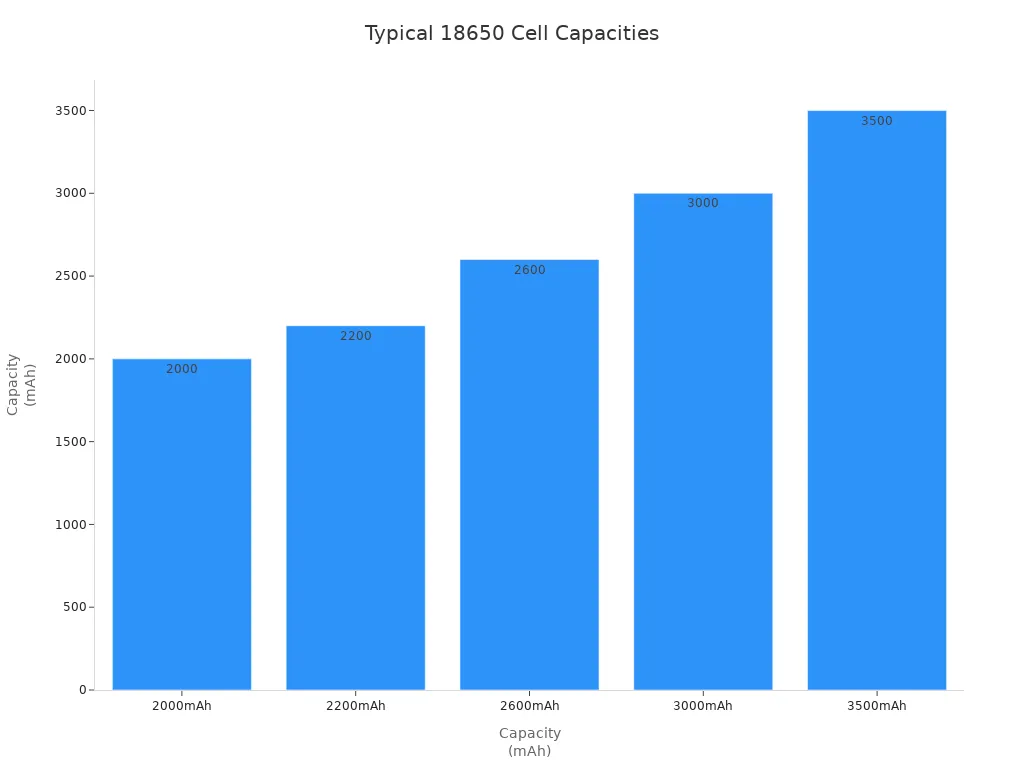
You should consider the typical capacity ranges for 18650 cells when building custom 2S2P battery packs. Higher capacity cells extend operational time and support Optimizing Runtime for your devices.
Capacity Range |
|---|
2000mAh |
2200mAh |
2600mAh |
3000mAh |
Up to 3500mAh |
Tip: Always verify cell authenticity and match capacity to your camera’s power requirements. This step helps you avoid unexpected shutdowns and supports continuous operation in critical sectors.
2.2 Power Consumption and Load
You must understand your camera’s power draw to optimize battery performance. Devices in medical, security, and industrial applications often run for extended periods and require stable voltage. You can measure the average and peak power consumption to estimate how long your battery pack will last.
Lower power consumption increases runtime and reduces heat generation.
High discharge rates can stress the battery and shorten its lifespan.
You should balance the load to prevent voltage drops and maintain image quality.
You can use the following table to check rated and minimum capacity for reliable operation:
Rated Capacity | Minimum Capacity |
|---|---|
Typical: 5230mAh | 5200mAh |
Note: You should monitor load profiles during operation. Sudden spikes in power demand can cause rapid voltage drops and trigger safety mechanisms in the battery management system.
2.3 Discharge Rate and Thermal Stability
You need to manage discharge rates and maintain thermal stability to protect battery health and maximize runtime. High discharge rates increase temperature and may lead to thermal runaway, which can cause fires or battery failures. You should use regular thermal inspections with infrared cameras to monitor temperature fluctuations.
Thermal stability is crucial for maintaining battery health and preventing thermal runaway, which can lead to fires and battery failures.
Regular thermal inspections using infrared cameras help monitor temperature fluctuations, ensuring batteries operate within safe limits.
Effective thermal management can significantly enhance the runtime and safety of battery systems in thermal imaging applications.
You should implement cooling strategies and select cells with proven thermal resistance, such as LiFePO4, for applications in robotics, infrastructure, and medical devices. Optimizing Runtime depends on keeping batteries within safe temperature ranges and preventing overheating.
Alert: Never ignore signs of excessive heat or swelling in your battery pack. Immediate action prevents damage and ensures safe operation in professional environments.
Part3: Battery Pack Design and BMS
3.1 Selecting and Pairing Cells
You need to select and pair cells carefully to build a reliable battery pack for thermal imaging cameras. Choose Grade A cells from trusted manufacturers such as Samsung, LG Chem, Panasonic, or Murata. These brands offer consistent quality and safety for demanding applications in medical imaging, robotics, and industrial inspections.
Use spot welding instead of soldering to connect cells. Spot welding creates strong joints without overheating the cells.
Test each cell for voltage balance and load capacity before assembly. This step helps you avoid mismatched cells that can reduce performance.
Wear protective gear and work in a well-ventilated area to ensure safety during assembly.
Metric | Importance |
|---|---|
Internal Resistance | Affects efficiency and heat generation during operation. |
Self-Discharge Rates | Influences the shelf life and usability of the battery pack. |
Temperature Operating Range | Determines the environmental suitability and safety of the battery pack under different conditions. |
Cycle Life | Indicates longevity and reliability, with benchmarks like 80% capacity retention after 500 cycles. |
Voltage Output | Consistency under peak discharge is crucial for performance in applications. |
3.2 Wiring, Balancing, and BMS Role
You must design wiring and balancing systems to reduce internal resistance and energy loss. Use short, thick wires to lower resistance and improve efficiency. Active balancing transfers energy between cells, which saves power and reduces heat. This method extends the lifespan of your battery pack.
Cell voltage equalization prevents overcharging and overheating.
State of charge management keeps cells at similar levels, boosting performance.
Address impedance variation to minimize energy loss.
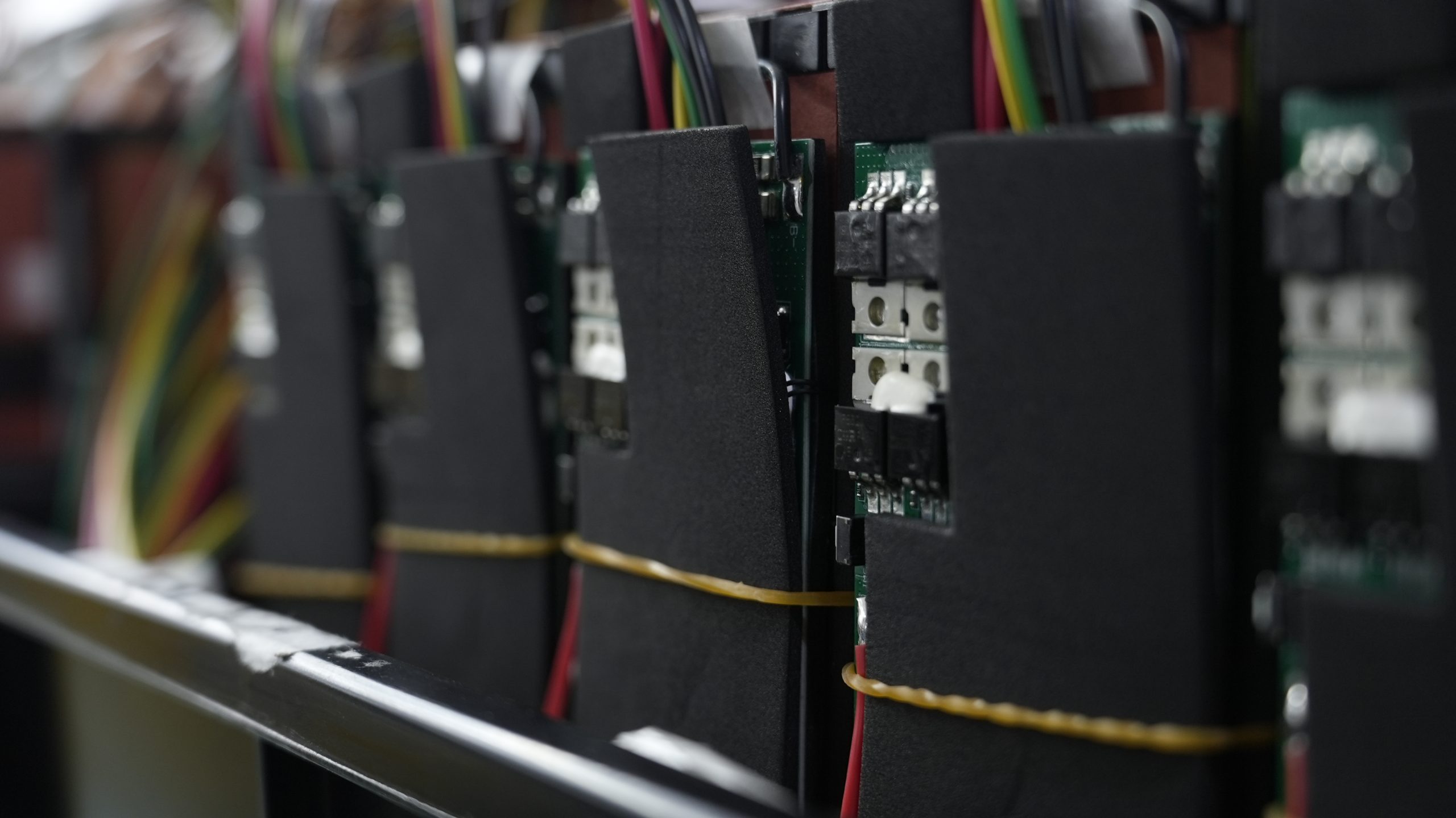
A properly rated 2S Battery Management System (BMS) is essential for safety and efficiency. The BMS monitors cell voltage, temperature, and current. It balances cells, estimates state of charge and health, and manages temperature. The BMS also provides safety protection and communicates with external systems for diagnostics.
Certification | Description |
|---|---|
UN38.3 | Safety standard for transport of lithium batteries |
IEC62133 | International standard for safety requirements for portable sealed secondary cells and batteries |
CE | Certification mark for health, safety, and environmental protection standards in the EEA |
3.3 Minimizing Energy Losses
You can minimize energy losses by managing wiring, voltage, and cell performance. Measure critical overshoots in the power line and adjust wire length and thickness. Consider adding capacitors or inductors to stabilize current flow. Experiment with converters to improve efficiency.
Reduce resistance in power lines.
Monitor cell performance to keep them within safe limits.
Manage voltage to prevent excessive drops.
Optimizing Runtime for thermal imaging cameras depends on careful cell selection, advanced BMS integration, and efficient wiring. These steps help you achieve reliable performance in medical, security, and industrial sectors.
Part4: Maintenance, Charging, and Safety
4.1 Charging Practices and Rates
You must follow proper charging practices to extend the lifespan of your 2S2P 7.4V 18650 battery packs. Charging rates have a direct impact on heat generation and runtime. Fast charging, such as at 2C, can increase heat and reduce cycle life. For thermal imaging cameras in medical, robotics, or industrial sectors, you should use moderate charging rates and high-quality chargers with automatic shutdown features. This approach helps prevent overcharging and supports safe operation.
Here are recommended charging practices for lithium battery packs:
Practice | Description |
|---|---|
Charge Level | Charge up to 80-90% and avoid complete discharges for healthier battery life. |
Discharge Management | Keep charge between 80% and 20% to maximize cycle life. |
Control Charging | Use a charger with automatic shutdown to prevent overcharging. |
Temperature Control | Store at room temperature and avoid extremes. |
Usage Monitoring | Charge when battery reaches 20-30% to avoid deep discharges. |
Overcharging | Avoid charging above 4.2V; undercharging can increase cycle life. |
Charging within these guidelines helps you achieve Optimizing Runtime and reduces the risk of thermal events.
4.2 Storage and Maintenance Tips
You need to store lithium battery packs correctly to maintain performance and safety. Improper storage can lead to serious hazards, especially in high-energy applications like thermal imaging cameras.
Improper storage of lithium-ion battery packs can lead to significant safety hazards, including thermal runaway, which can result in fires and explosions. Factors such as high temperatures, physical damage, and overcharging can exacerbate these risks, particularly in high-energy applications like thermal imaging cameras.
Follow these best practices for storage and maintenance:
Store batteries at 40-60% charge in a cool, dry place.
Avoid exposure to direct sunlight, moisture, or physical stress.
Inspect packs regularly for swelling, leaks, or damage.
Schedule routine maintenance checks, especially for devices in critical sectors such as medical imaging, infrastructure, and security systems.
4.3 Safety and Monitoring
You must monitor battery health to ensure reliable operation and diagnose runtime issues. Modern battery management systems (BMS) provide real-time monitoring of state of health (SoH), state of charge (SoC), temperature, current, and voltage. Regular health checks and predictive analytics help you detect degradation early and plan maintenance.
Here are effective methods for monitoring battery health:
Testing Method | Description |
|---|---|
In-Circuit Testing | Checks solder connections on PCBs. |
Fly Probe Testing | Measures resistance, capacitance, and other properties. |
X-ray Inspection | Views internal traces and solder connections. |
Peel Testing | Measures laminate strength. |
Solder Float Testing | Assesses thermal stress tolerance of PCB holes. |
PCB Contamination Testing | Identifies ionic contaminants that could cause issues. |
Use battery analyzers to check spare capacity after each shift.
Ensure batteries retain 10-20% spare capacity at the end of the day.
Calibrate monitoring equipment regularly for accurate runtime data.
Integrate predictive analytics for remote monitoring and cycle life prediction.
You must also comply with regulatory standards for safety and environmental responsibility. Custom battery packs should meet all industry requirements and carry proper safety labels.
Tip: For more on sustainability and responsible sourcing, see our approach to sustainability and our conflict minerals statement.
You can achieve reliable, long-lasting performance in thermal imaging cameras by focusing on a few key steps:
Select high-quality cells and integrate a robust BMS for safety.
Use effective thermal management to prevent overheating.
Follow proper charging and maintenance routines.
Regular inspections help you spot issues early, reduce downtime, and extend equipment lifespan. Avoid common pitfalls by monitoring battery temperature, updating firmware, and scheduling maintenance. Optimizing Runtime depends on these best practices for professional applications in medical, robotics, and industrial sectors.
FAQ
What is the main advantage of using a custom 2S2P 7.4V 18650 battery pack in thermal imaging cameras?
You gain stable voltage and extended runtime. This configuration supports moderate discharge rates, which helps you maintain safe operation in medical imaging, robotics, and industrial inspections.
How do you select the best lithium battery chemistry for your application?
You should match chemistry to your needs. For example, LiFePO₄ offers long cycle life and thermal stability for medical and infrastructure. NMC provides high energy density for industrial and security systems.
Why is a Battery Management System (BMS) essential for professional battery packs?
A BMS protects your battery pack from overcharging, overheating, and cell imbalance. You improve safety and reliability in robotics, security, and medical devices.
What charging practices help maximize battery lifespan and runtime?
You should use moderate charging rates and avoid full discharges. Charge up to 80-90%. Use chargers with automatic shutdown. This approach reduces heat and extends cycle life.
How can you monitor battery health in demanding environments?
You can use battery analyzers and BMS data. Regular checks for temperature, voltage, and capacity help you prevent failures in infrastructure, industrial, and medical sectors.


