

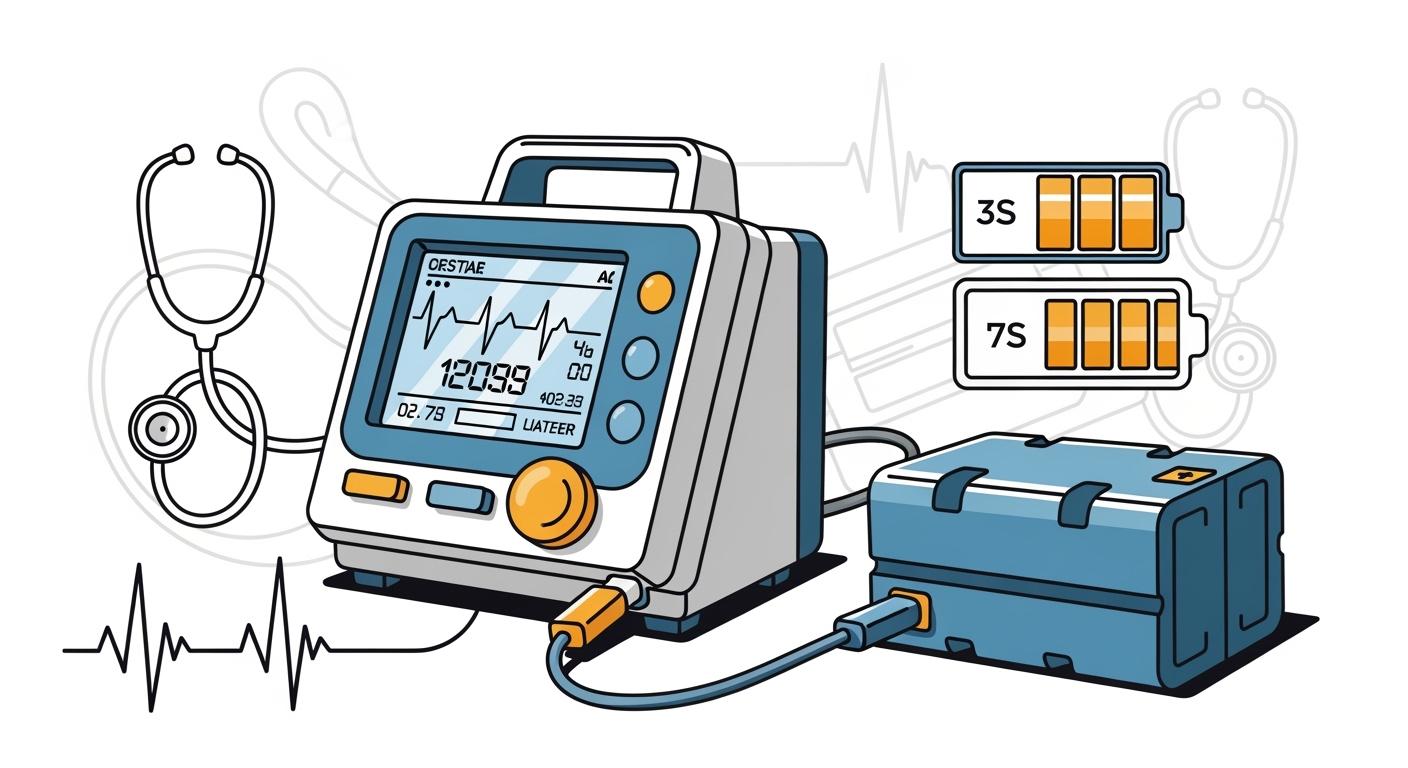
You need a reliable backup battery for ventilators because patient safety depends on constant power. Safety, compatibility, and seamless operation matter most in medical settings. Lithium-ion batteries lead the ventilator market due to their high energy density, lightweight nature, and long lifespan. Lithium polymer batteries, though flexible and light, appear less often in modern designs.
Li-ion batteries dominate ventilator backup systems.
Li-Po batteries remain uncommon in current ventilator models.
Understanding 3S and 7S battery systems will help you make informed, safety-driven choices for your facility.
Key Takeaways
Choose lithium-ion batteries for ventilators due to their high energy density and long lifespan. They ensure reliable power during critical situations.
Assess the power needs of your ventilator to select the right battery capacity. This prevents unexpected shutdowns and supports patient safety.
Prioritize safety certifications like IEC 62133 and UL 1642 when selecting backup batteries. These certifications ensure compliance and reliability in medical settings.
Consider environmental factors that affect battery performance. Maintain stable conditions to extend battery life and reduce failure risks.
Consult with trusted suppliers for tailored battery recommendations. They can provide essential support and documentation to ensure compatibility and safety.
Part1: Reliable Backup Battery Essentials
1.1 Key Reliability Factors
You need to understand the most critical factors that determine whether a backup battery will perform reliably in a ventilator. Industry standards highlight several essentials:
Battery lifecycle management helps you track when to replace older chemistries like VRLA or upgrade to lithium-based packs such as LiFePO4, NMC, LCO, or LMO. Lithium batteries offer higher energy density, longer cycle life, and stable voltage profiles, making them ideal for medical and industrial applications.
Load analysis and runtime requirements let you determine the power demands of your ventilator and set the minimum autonomy duration. You must match the battery capacity to the device’s needs to avoid unexpected shutdowns.
Environmental and thermal considerations play a major role. High temperatures, humidity, and dust can damage internal battery components, shorten battery life, and increase the risk of failure. You should maintain stable environmental conditions to maximize performance and reliability.
Regulatory compliance ensures your backup battery meets standards like NFPA, UL, and local healthcare regulations. These certifications guarantee safety and reliability in clinical environments.
System redundancy, such as N+1 configurations, provides uninterrupted service even if one battery module fails. Redundant systems are common in hospitals, robotics, and security infrastructure.
Monitoring and alerts enable real-time diagnostics. You can detect issues early and schedule predictive maintenance, reducing the risk of sudden power loss.
Tip: Always choose lithium battery packs with robust monitoring systems and certified safety features. This approach reduces downtime and supports critical operations in medical, industrial, and infrastructure settings.

Environmental conditions directly impact the reliability of your backup battery. High temperatures, humidity, and dust can degrade lithium battery packs, leading to shorter operational life and higher failure rates. You should install batteries in controlled environments to ensure consistent performance.
1.2 Importance for Medical Devices
A reliable backup battery is essential for ventilators and other medical devices. You must prioritize reliability because even a brief interruption can threaten patient safety. In clinical settings, continuous operation is non-negotiable.
Reliable backup battery systems guarantee uninterrupted function during emergencies.
Dependable batteries protect patient care by preventing delays or failures.
In healthcare, every minute counts. Battery reliability can mean the difference between life and death.
Ventilator Model | Battery Operation Duration |
|---|---|
Model A | 4 hours |
Model B | 6 hours |
Model C | 2 hours |
Model D | 5 hours |
Power failure poses a significant risk to patient safety. Intra-hospital transfers increase these risks, especially when ventilators rely on battery power. You must select batteries with proven reliability and adequate runtime to support patient transport and emergency scenarios.
Reliable backup battery solutions also play a vital role in robotics, security systems, infrastructure, and industrial sectors. These applications demand high energy density, robust cycle life, and consistent voltage output. Lithium battery packs, including LiFePO4 and NMC chemistries, deliver these qualities and support critical operations across multiple industries.
Note: You should always verify battery certifications and runtime specifications before deployment. This step ensures compliance and maximizes safety for patients and staff.
Part2: Ventilator Power Needs & Battery Types
2.1 Power and Runtime Assessment
You must assess the power requirements and runtime for each ventilator before selecting a backup battery. This step ensures that your equipment will operate without interruption during power outages. For example, in an intensive care unit, each ventilator may require 800W, and the total load with additional equipment can reach 25.2 kW. Hospitals often mandate a 6-hour backup period to guarantee continuous operation. When you calculate battery capacity, you need to consider factors like depth of discharge, inverter efficiency, and battery aging. These calculations help you determine the total ampere-hour (Ah) requirement, which can be as high as 4,290 Ah for a large facility. Proper sizing prevents premature battery exhaustion and supports patient safety.
Tip: Always match the battery capacity to your ventilator’s runtime needs to maintain compliance with healthcare standards and avoid unexpected shutdowns.
2.2 Lithium-Ion vs. Lithium Polymer
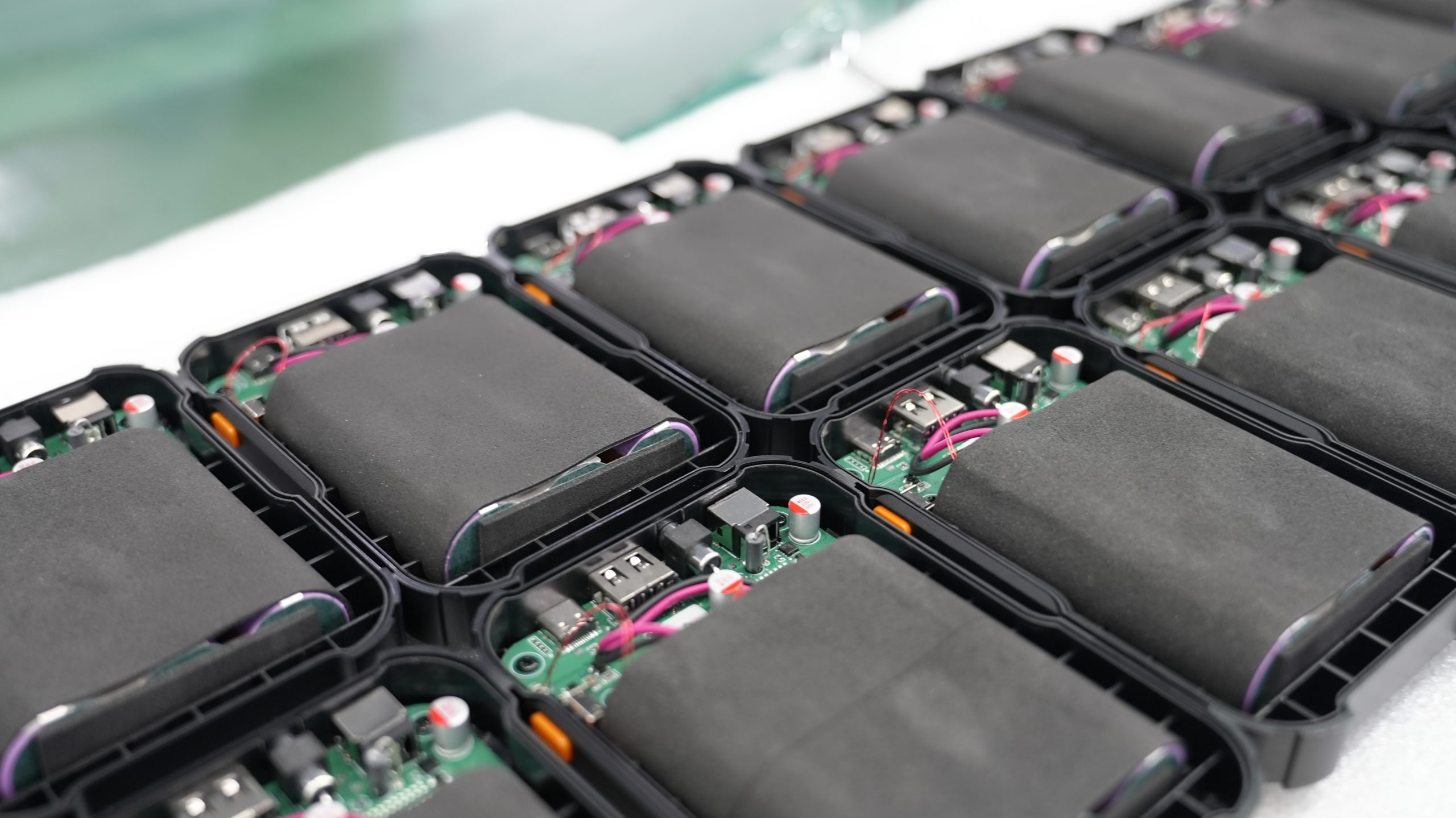
You will find two main lithium battery chemistries in ventilator backup systems: lithium-ion (Li-ion, including NMC, LCO, LMO, LiFePO4) and lithium polymer (Li-Po). Each type offers unique advantages for medical, robotics, security, infrastructure, and industrial applications.
Battery Type | Energy Density (Wh/kg) | Cycle Life (to 80%) | Typical Size | Safety Level | Estimated Cost | Charging Time | Self-Discharge | Weight Efficiency | Summary |
|---|---|---|---|---|---|---|---|---|---|
Li-Po (Polymer) | 200–300 | 500–800 cycles | <5mm (ultra-thin) | ★★★★☆ | $25–35 | ~3 hours | <3%/month | ★★★★★ | Slim, lightweight, ideal for compact gear |
18650 Li-ion (NMC) | 180–250 | 800–1000 cycles | Cylindrical (18mm) | ★★★★☆ | $20–30 | 3–4 hours | <5%/month | ★★★★☆ | Modular, powerful, but bulkier |
Lithium polymer batteries use a solid or gel-like electrolyte, which reduces stress during charging and discharging. This design slows wear and extends lifespan. Lithium-ion batteries use a liquid electrolyte, which can lead to faster power loss over time. In medical devices, lithium polymer batteries often last longer than lithium-ion types. Both chemistries support high energy density and stable voltage, making them suitable for ventilators and other critical equipment.
2.3 Portability and Hot-Swapping
Portability is essential for ventilator backup batteries, especially during patient transport or emergencies. Portable ventilators reduce the risk of adverse events, which can occur in up to 68 percent of transport cases. For ICU patients, portable ventilators are standard protocol, ensuring safety and continuous care.
Hot-swapping capability allows you to replace a depleted battery without shutting down the ventilator. This feature keeps the ventilator running and reduces downtime. Healthcare professionals can quickly swap batteries, maintaining uninterrupted operation and supporting patient safety.
Note: When you select a reliable backup battery, prioritize portability and hot-swapping features to maximize uptime and flexibility in critical care environments.
Part3: 3S vs 7S Lithium Battery Systems

3.1 What is a 3S System
You will often see a 3S lithium battery system in medical devices that require moderate voltage and high reliability. The “3S” stands for three lithium-ion cells connected in series. This configuration delivers a total voltage of 12.6V, which matches the needs of many portable ventilators and smart medical devices.
The voltage of a 3S lithium battery system is 12.6V.
Three 3.7V lithium-ion cells connect in series to achieve this voltage.
The 3S arrangement is common in medical-grade packaging, where strict quality control is essential.
Application | Characteristics |
|---|---|
Smart Medical Devices | High reliability, moderate weight, long lifespan |
Medical-grade packaging | Requires medical approval and strict quality control |
You can rely on a 3S system for devices that need a stable power supply and a long operational life. These systems often use chemistries like LiFePO4, NMC, LCO, or LMO to meet safety and performance standards.
3.2 What is a 7S System
A 7S lithium battery system uses seven lithium-ion cells in series. This setup provides a higher voltage, making it suitable for advanced ventilators and equipment that demand longer runtimes and higher energy density. You will find 7S systems in compact, portable devices where space and weight matter.
High energy density (200–300 Wh/kg) supports longer operation times.
Slim form factor (less than 5mm thick) fits compact medical devices.
Low self-discharge (less than 3% per month) ensures reliability.
Compliance with IEC 60601-1 safety standards is crucial.
Ideal for COPD patients, home oxygen therapy, and emergency backup scenarios.
3.3 Differences and Suitability
You should compare 3S and 7S systems based on voltage, energy density, size, and application. The table below highlights key differences:
Feature | 3S System | 7S System |
|---|---|---|
Voltage | 12.6V | 25.9V |
Number of Cells | 3 | 7 |
Energy Density | 150–200 Wh/kg | 200–300 Wh/kg |
Typical Use | Portable ventilators, smart medical devices | High-performance ventilators, emergency backup |
Form Factor | Moderate | Slim (<5mm) |
Self-Discharge | <5%/month | <3%/month |
Compliance | Medical-grade, UL, IEC | IEC 60601-1, medical-grade |
You should select a 3S system for standard ventilators that need a reliable backup battery with moderate voltage and long cycle life. Choose a 7S system when you need higher voltage, longer runtime, and a compact design for advanced or portable medical equipment.
Tip: Always match the battery system to your device’s voltage and runtime requirements to ensure safe and uninterrupted operation.
Part4: How to Select the Right Backup Battery
4.1 Capacity and Quick Recharge
You need to start by evaluating the battery capacity and recharge speed for your ventilator backup system. Capacity determines how long your ventilator can operate during a power outage. Quick recharge ensures the battery is ready for the next emergency. For most medical facilities, a minimum capacity between 2,000 and 5,000Wh supports 24 to 48 hours of uninterrupted operation. This range covers typical use in hospitals, clinics, and during patient transport.
Capacity Range | Runtime |
|---|---|
2,000-5,000Wh | 24-48 hours |
Select a battery pack that matches your ventilator’s power draw and expected runtime. Consider the depth of discharge and battery aging when calculating total requirements. Choose lithium chemistries like LiFePO4 or NMC for high energy density and long cycle life. These chemistries support medical, robotics, security, infrastructure, and industrial applications. Always verify that the battery can recharge quickly, ideally within a few hours, to minimize downtime between uses.
Tip: Use a battery management system (BMS) to monitor charge levels and optimize recharge cycles. A robust BMS improves safety and extends battery life.
4.2 Safety Certifications (IEC 62133, UL 1642/2054)
Safety certifications are critical when you select a backup battery for ventilators. Certifications like IEC 62133 and UL 1642/2054 ensure the battery meets strict safety and reliability standards. These certifications are essential for medical device procurement and regulatory compliance. IEC 62133 is a global benchmark for lithium-ion battery safety, covering risks like overcharging and thermal runaway. UL 1642 and UL 2054 focus on battery safety and reliability under various conditions. Compliance with these standards increases acceptance in medical procurement and supports safe operation.
You should also look for additional certifications that address system-level safety and installation:
Certification | Description |
|---|---|
UL 9540 | Comprehensive safety standard for energy storage systems, focusing on performance and safety features. |
UL 9540A | Test method for evaluating thermal runaway fire propagation in battery systems. |
NFPA 855 | Guidelines for the installation of stationary energy storage systems to ensure safety. |
IEC 62933 | International standard providing guidance on design, operation, and safety of electrical energy storage systems. |
UL 1973 | Evaluates safety and reliability of stationary batteries under various conditions. |
Note: Always confirm that your lithium battery pack includes a certified BMS. This system protects against overcharging, overheating, and short circuits, which are vital for medical and industrial safety.
4.3 Compatibility and Supplier Consultation
You must check compatibility between the backup battery and your specific ventilator model. Follow these steps to ensure a proper fit and safe operation:
Power off the ventilator before replacing the battery to prevent damage or safety hazards.
Select the correct battery model and verify its quality and compliance with medical device standards.
Open the battery compartment carefully and ensure correct polarity during installation.
After installation, secure the compartment cover and perform a functional self-test to confirm proper operation.
Consult with trusted medical battery suppliers for tailored recommendations. Suppliers can help you match battery specifications to your ventilator’s requirements. They also provide documentation, technical support, and guidance on regulatory compliance. This partnership reduces the risk of compatibility issues and ensures you receive a reliable backup battery solution.
Callout: Always request technical datasheets, certifications, and references from your supplier before making a purchase.
4.4 Practical Checklist
A step-by-step checklist streamlines the selection process and improves reliability for B2B buyers. Use the following table as a quick reference during procurement:
Step | Description |
|---|---|
1 | Initial RFQ & Documentation Review: Request company profile, certifications, product catalogs, and standard terms. |
2 | Technical Sample Evaluation: Order samples for performance, durability, and safety testing under real-world conditions. |
3 | Factory Audit: Assess production lines, QC labs, and warehouse management. |
4 | Reference Check: Ask for client references and review documented case studies for performance metrics. |
5 | Pilot Order: Place a small batch order to validate full supply chain performance before committing to large volumes. |
You can use this checklist to reduce procurement risks and ensure you select a reliable backup battery that meets your facility’s needs. Always prioritize batteries with proven safety records, robust BMS, and strong supplier support.
Tip: Regularly review your backup battery systems and update your checklist as technology and standards evolve.
You play a key role in patient safety when you choose a reliable backup battery for ventilators. You improve equipment performance and safety by following strict standards and working closely with trusted suppliers.
Compliance with regulations and regular upgrades boost ventilator reliability.
Strong supplier relationships give you access to technical support and training.
You should review your backup battery systems often and schedule maintenance. This approach helps you prevent failures and ensures continuous care.
FAQ
What is the main difference between LiFePO4 and NMC batteries for ventilator backup?
LiFePO4 batteries offer longer cycle life (2,000+ cycles) and higher thermal stability. NMC batteries provide higher energy density (180–250 Wh/kg). You should choose based on your ventilator’s runtime and safety needs.
How do I ensure my backup battery system meets medical safety standards?
You must select batteries certified to IEC 62133, UL 1642, or UL 2054. Always request documentation from your supplier. Certified systems reduce risk and support compliance in medical, robotics, and industrial sectors.
Can I use the same lithium battery pack for different ventilator models?
You should not assume compatibility. Always check voltage, connector type, and BMS requirements. Consult your supplier for model-specific recommendations to avoid operational risks.
Why is a Battery Management System (BMS) important for ventilator backup batteries?
A BMS protects against overcharging, overheating, and short circuits. You gain real-time monitoring and improved safety.
What sustainability or conflict mineral concerns should I consider when sourcing lithium batteries?
You should verify your supplier’s sourcing practices. Responsible suppliers provide documentation on conflict minerals and sustainability.


