

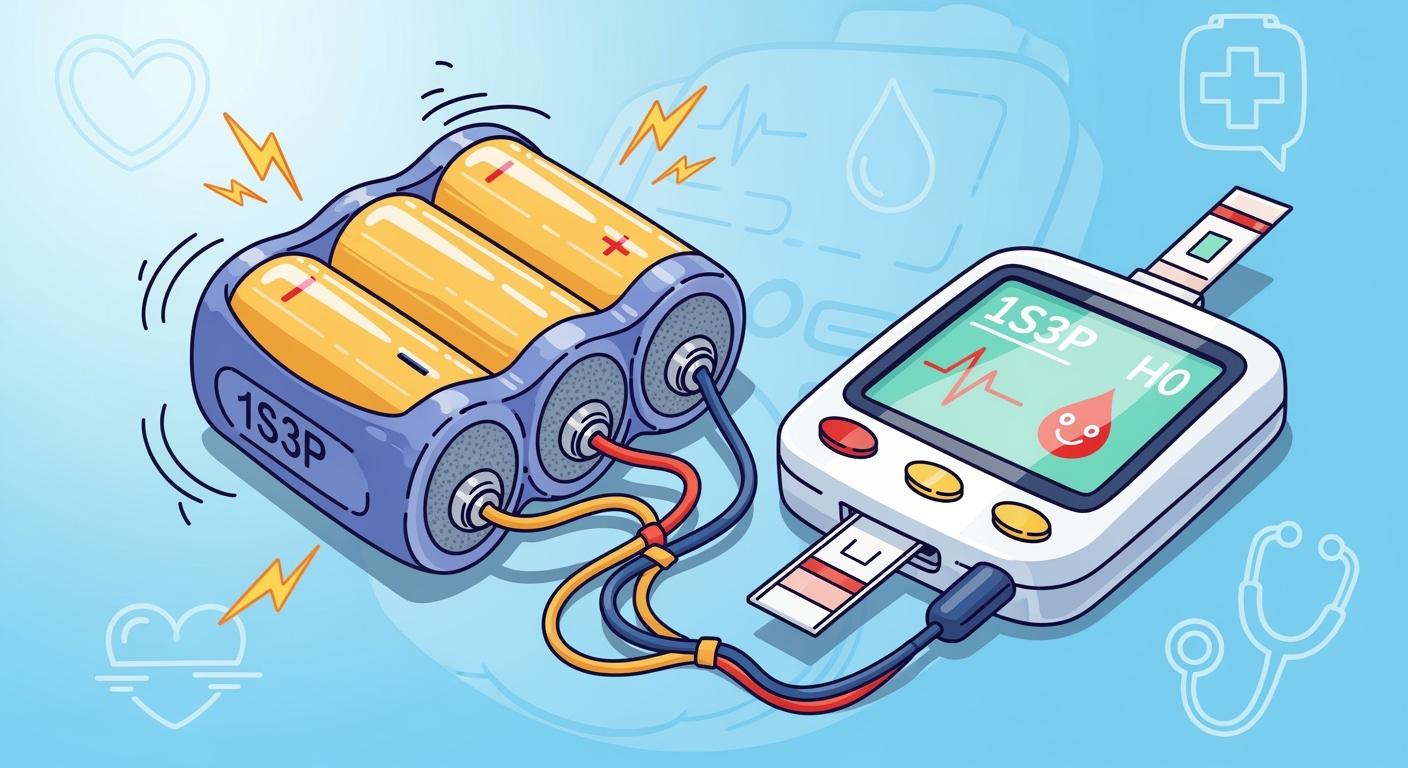
You can significantly extend the cycle life of your lithium battery packs in POCT devices by maintaining a charge between 20% and 80%, using partial charging cycles, and leveraging smart management systems.
Operating within this range may increase cycle life up to fourfold and help you avoid overcharging or deep discharging.
Each 15-degree rise above room temperature doubles battery degradation, so keep lithium batteries in controlled environments.
Key Takeaways
Maintain a charge between 20% and 80% to significantly extend battery cycle life and avoid degradation.
Use advanced battery management systems to monitor battery health and prevent overcharging or deep discharging.
Regularly check battery health and capacity to ensure reliable performance and timely replacements.
Part1: Understanding Lithium Battery Cycle Life

1.1 Cycle Life in 1S3P Battery Packs
You need to understand cycle life to manage lithium battery packs in your POCT devices effectively. Cycle life measures how many full charge and discharge cycles a battery can complete before its capacity drops below 80% of its original value. For a 1S3P lithium-ion battery pack, you typically see a cycle life between 500 and 1,000 cycles. This rating is similar to other lithium-ion configurations, but the 1S3P design offers a balance between energy density and longevity.
Here is a quick comparison:
Battery Configuration | Cycle Life (Full Charge-Discharge Cycles) |
|---|---|
1S3P NMC18650 | 500–1,000 |
Other Lithium-Ion | Similar ratings |
When you select a battery chemistry, consider platform voltage and energy density. For example, LiFePO4 batteries provide longer cycle life but lower energy density than NMC or LCO chemistries.
1.2 Why Cycle Life Matters for POCT Devices
Cycle life directly impacts device reliability and cost-effectiveness. In POCT devices, frequent charging and discharging cycles can quickly reduce battery performance. If you maximize lithium battery cycle life, you reduce downtime and replacement costs. This is critical in medical and infrastructure sectors, where device uptime is essential.
1.3 Main Factors in Battery Degradation
You face several factors that accelerate battery degradation. High charge and discharge rates, elevated temperatures, and deep discharging all shorten lithium battery cycle life.
Consider this summary:
Factor | Impact on Degradation |
|---|---|
Charge/Discharge Rates | High currents negatively affect cycle life. |
Temperature | Elevated temperatures accelerate degradation. |
Depth of Discharge | Partial discharge reduces stress and prolongs battery life. |
Reducing peak charge voltage by even 0.10V per cell can double cycle life. Avoid deep discharging and overcharging to slow battery degradation.
Part2: Best Practices to Prolong Battery Life in POCT Devices
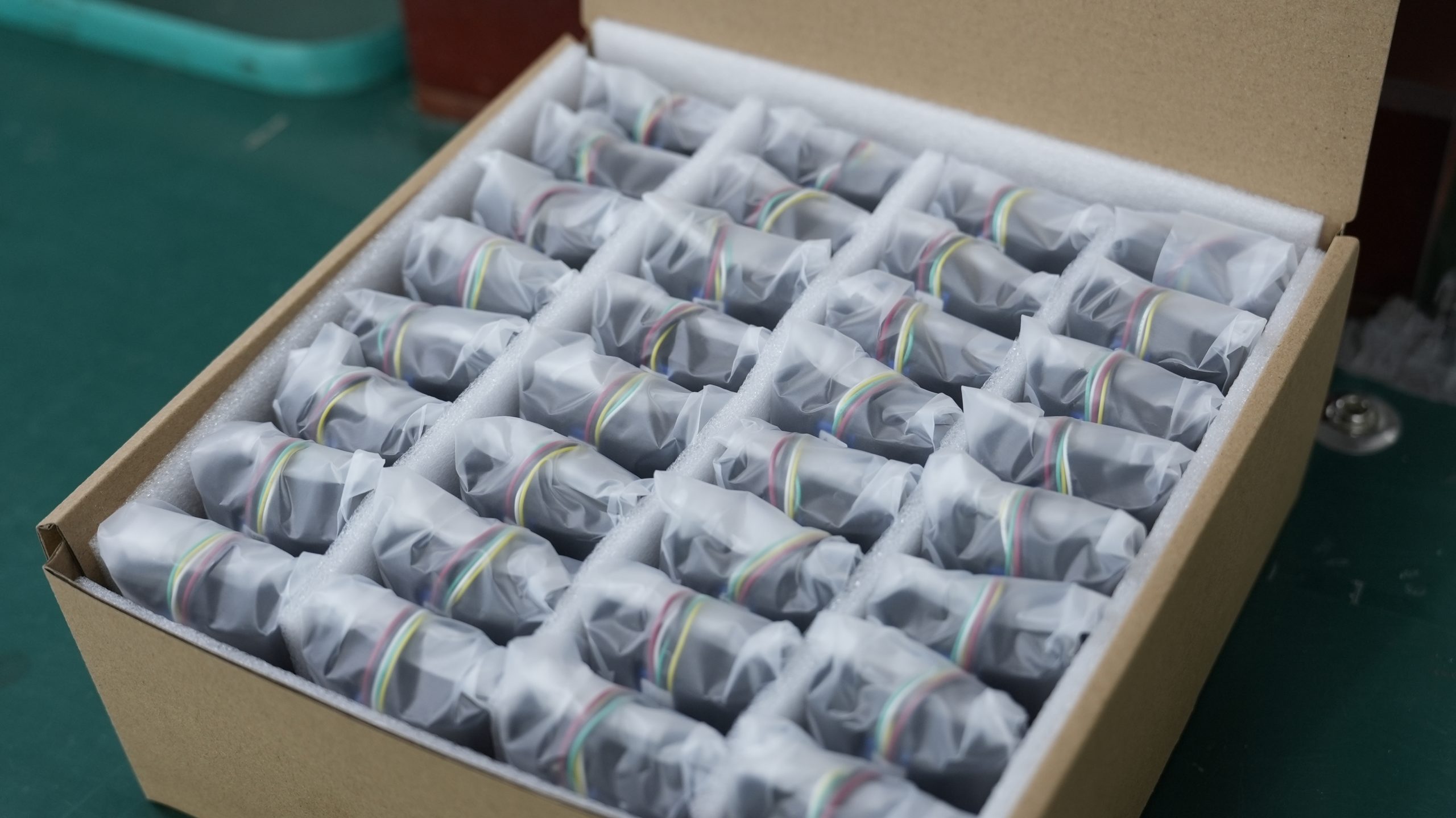
2.1 Optimal Charging for Improving Battery Life
You can prolong battery life in POCT devices by adopting optimal charging strategies. Charging protocols recommended by leading battery manufacturers suggest you should charge 1S3P lithium-ion battery packs to lower voltage levels. For example, charging to 4.10V per cell can deliver 600–1,000 charge cycles, while charging to 4.0V per cell can extend cycle life to 1,200–2,000 cycles. Maintaining a state of charge (SoC) around 80% allows for a reserve before recharging and supports longer battery lifetime. This approach helps you avoid overcharging and avoid deep discharging, both of which accelerate battery degradation.
The following table summarizes how different charge ranges affect battery capacity loss and cycle life:
Charge Range | Capacity Loss | Cycle Life Impact |
|---|---|---|
100% to 50% | High | Shorter service life |
85% to 25% | Moderate | Longer service life |
75% to 65% | Lowest | Optimal performance |
Tip: For POCT devices, aim to keep the charge between 20% and 80%. This range balances battery capacity and cycle life, especially in demanding environments like medical, robotics, and security system applications.
2.2 Environmental Controls to Increase Lithium Ion Battery Life
Environmental factors play a critical role in battery lifetime. You should avoid temperature extremes to increase lithium ion battery life and optimize battery lifetime. Lithium-ion battery performance and safety depend on maintaining optimal temperature ranges. High temperatures accelerate battery degradation, while low temperatures reduce battery capacity and performance.
Lithium-ion battery performance and safety are significantly influenced by temperature, with optimal ranges minimizing degradation and enhancing safety.
Battery degradation rates vary with temperature, indicating that maintaining specific temperature conditions can extend battery life.
The study emphasizes the potential for improved battery performance through active temperature management, which could be crucial in clinical settings.
Note: Store batteries at 50% charge and room temperature when not in use. Avoid temperature extremes during storage and operation. For best results, use climate-controlled storage in infrastructure and industrial environments.
2.3 Role of Battery Management Systems in Prolonging Battery Life
Advanced battery management systems (BMS) are essential for prolonging battery life in POCT devices. A smart BMS provides accurate state of charge estimation, which helps you monitor battery health and prevent overcharging or deep discharging. Temperature monitoring within the BMS prevents thermal runaway and enhances safety. Co-estimation of battery parameters, including battery capacity and temperature, improves the accuracy of SoC estimates and overall battery performance.
Accurate state of charge estimation is crucial for monitoring battery health.
Temperature monitoring helps prevent thermal runaway, enhancing safety.
Co-estimation of battery parameters, including capacity and temperature, improves the accuracy of SoC estimates and overall battery performance.
Callout: Implementing a smart BMS is a proven way to prolong battery life and optimize battery lifetime in medical, consumer electronics, and industrial devices. For more on BMS features, see our Battery Management Systems resource. If you need tailored solutions, visit our Custom Battery Consulting page.
2.4 Monitoring and Maintenance for Longer Cycle Life
You can further prolong battery life by regularly monitoring and maintaining your lithium battery packs. Use built-in diagnostics to monitor battery health, track charge cycles, and assess battery capacity. Schedule routine maintenance checks to identify early signs of degradation. Replace batteries before capacity drops below 80% to ensure reliable device performance.
Sustainability Tip: Choose suppliers who follow responsible sourcing for conflict minerals and prioritize sustainability. For more information, see our Sustainability and Conflict Minerals resources.
Maintenance Task | Frequency | Benefit |
|---|---|---|
Monitor battery health | Weekly | Early detection of issues |
Check charge cycles | Monthly | Track battery lifetime |
Assess battery capacity | Quarterly | Plan for timely replacement |
Inspect for damage | As needed | Prevent safety incidents |
For best practices in battery monitoring, refer to UL Standards and IEEE guidelines.
By following these best practices, you can prolong battery life, increase lithium ion battery life, and ensure optimal battery performance across all your POCT devices. These strategies apply to a wide range of applications, including medical, robotics, security, infrastructure, consumer electronics, and industrial sectors. For a comparison of lithium battery chemistries such as LiFePO4, NMC, LCO, LMO, and LTO, see our Chemistry Comparison guide.
You can extend battery lifetime and cycle life by using optimal charging, maintaining proper environmental controls, and performing regular monitoring.
Keep idle times at low state of charge and avoid high temperatures to improve lifetime.
Frequent, smaller charge cycles support longer battery lifetime and better performance.
Advanced monitoring increases reliability and reduces costs.
Adopt these strategies to maximize performance and battery lifetime in POCT devices. For tailored solutions, visit our Custom Battery Consulting page.
FAQ
What is the best lithium battery chemistry for POCT devices?
You should choose LiFePO4 for long cycle life, NMC for high energy density, and LCO for compact size. See the table below for comparison.
Chemistry | Platform Voltage | Energy Density | Cycle Life |
|---|---|---|---|
LiFePO4 | 3.2V | Moderate | 2,000+ |
NMC | 3.7V | High | 1,000–2,000 |
LCO | 3.7V | Moderate | 500–1,000 |
LMO | 3.7V | Moderate | 1,000+ |
LTO | 2.4V | Low | 5,000+ |
How can you maximize battery cycle life in medical and industrial applications?
You should maintain charge between 20% and 80%. Use partial charging cycles. Monitor temperature. Implement smart BMS. Large Power offers custom battery consulting for tailored solutions.
Why does battery management matter for robotics and security systems?
You gain longer battery life, improved reliability, and safer operation. Smart BMS prevents overcharging and overheating. Large Power supports advanced BMS integration for lithium battery packs.


