

You must prioritize lithium battery selection for portable medical devices to ensure safety and reliability, especially in high-temperature environments. The chemistry you choose, such as Li-ion, LiFePO4, or LiPo, directly influences energy density, cycle life, and temperature sensitivity.
Medical safety standards like ANSI/AAMI ES 60601-1 and IEC 62133 ensure compliance and device safety.
Battery selection impacts device performance, size, and weight, which is crucial for wearable medical devices, diagnostic and monitoring devices, therapeutic devices, and emergency backup power solutions. Custom packs with low self-discharge rate support portability and durability.
Key Takeaways
Prioritize lithium battery selection for medical devices to ensure safety and reliability, especially in high-temperature environments.
Choose LiFePO4 batteries for superior thermal stability and long cycle life, making them ideal for portable medical sterilization devices.
Integrate advanced protection circuits and thermal management systems to enhance safety and compliance with medical standards.
Part1: Lithium Battery Selection for Medical Equipment
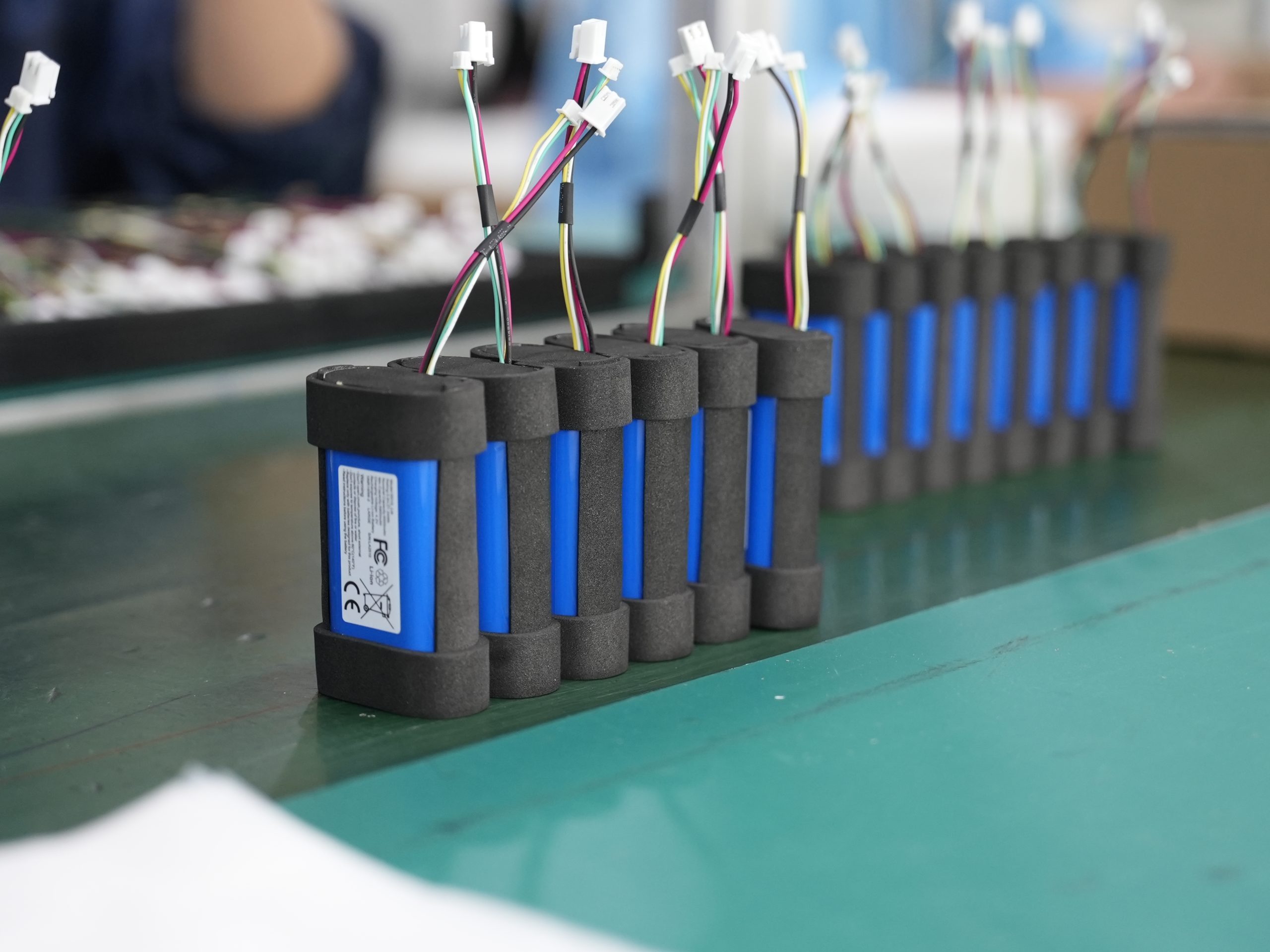
1.1 3S1P Configuration and Battery Selection
You must understand the importance of the 3S1P configuration when considering lithium battery selection for medical equipment batteries. This configuration combines three cells in series and one in parallel, delivering a nominal voltage of 11.1V. You gain a balance between voltage and capacity, which supports the operational life and portability of medical devices. The following table shows typical voltage and capacity ranges for 3S1P lithium battery packs used in medical sterilization devices:
Voltage | Capacity |
|---|---|
11.1V | 3,500mAh |
You should evaluate the selection of battery packs based on device requirements, including runtime, size, and weight. Custom battery solutions allow you to tailor capacity and form factor, ensuring regulatory compliance and optimal performance for medical equipment batteries.
Tip: Always verify that your battery selection aligns with regulatory standards and device specifications to maximize safety and operational life.
1.2 Chemistry Options: Li-ion, LiFePO4, LiPo
You face several chemistry options during lithium battery selection for medical devices. Each chemistry offers unique advantages and limitations for medical equipment batteries. The table below compares Li-ion, LiFePO4, and LiPo chemistries in terms of cycle life and safety features:
Battery Type | Cycle Life (Cycles) | Safety Features |
|---|---|---|
LiFePO4 | 2,000-6,000 | Superior thermal stability, fire resistance |
Lithium-ion | 800-1,000 | Higher risk of thermal runaway |
LiPo | N/A | Lightweight, flexible but less safe than LiFePO4 |
You should prioritize safety and long cycle life when selecting medical equipment batteries. LiFePO4 batteries provide superior thermal stability and fire resistance, making them suitable for high-temperature environments and regulatory compliance. Lithium-ion batteries offer high energy density but require robust battery management systems (BMS) to mitigate safety risks. LiPo batteries deliver flexibility and lightweight design, which benefits implantable medical devices, but they demand careful handling and integration to meet safety standards.
Note: Always confirm that your chemistry selection supports regulatory compliance and device safety requirements.
1.3 Energy Density and Device Performance
You must consider energy density during lithium battery selection for medical devices. High energy density enables longer operational life and enhances device portability. The table below compares the energy density of lithium-ion, lithium-polymer, and lithium iron phosphate batteries:
Battery Type | Energy Density (Wh/kg) | Energy Density (Wh/L) |
|---|---|---|
Lithium-ion | 150 – 250 | 300 – 700 |
Lithium-Polymer | 100 – 200 | 200 – 400 |
Lithium Iron Phosphate | 90 – 120 | 180 – 240 |
You achieve longer runtime and reduced device size with high energy density batteries. This advantage is critical for portable medical equipment batteries, especially in sterilization devices that require consistent power delivery. The following table demonstrates how energy density influences device performance against various microorganisms:
Microorganism | Energy Density (mJ/cm²) | Exposure Time (s) | Log Reduction |
|---|---|---|---|
E. coli | 4.5 | 5 | >3 |
K. pneumoniae | 22.5 | 1 | >3 |
S. enteritidis | 22.5 | 3 | >3 |
L. innocua | 22.5 | 3 | >3 |
S. aureus | 22.5 | 2 | >3 |
You should match battery selection to the energy demands of your medical devices to ensure effective sterilization and regulatory compliance. High energy density supports rapid and reliable sterilization, which is essential for medical equipment batteries in critical healthcare settings.
Callout: You must always verify that your battery selection meets regulatory standards for safety, operational life, and device performance. Consult with battery experts for custom solutions tailored to your medical devices.
Part2: Safety Standards and Design for High-Temperature Use

2.1 Thermal Stability and Protection Circuits
You must address thermal stability as a top priority during lithium battery selection for medical devices used in high-temperature environments. High temperatures accelerate chemical reactions inside lithium cells, which leads to faster aging and reduced lifespan. You will encounter challenges such as increased risk of thermal runaway, capacity degradation, and voltage drops. The following table summarizes common thermal stability issues observed in medical devices:
Study | Findings |
|---|---|
Tanguchi | Higher state of charge worsens thermal stability during high-temperature aging. |
Ren | High-temperature storage increases thermal stability, cycling does not affect it. |
Abda | Onset self-heating temperature increases, but thermal runaway triggering temperature drops. |
Larsson | Thermal stability of lithium cobalt oxide batteries remains unchanged after aging. |
Börner | Thermal stability of ternary lithium-ion batteries decreases after high-temperature aging. |
Zhang | Battery capacity degrades 3x faster at 70°C. |
Xie | Battery capacity decays by 38.9% at 100°C in initial cycles. |
Ouyang & Du | Significant decrease in voltage and capacity, increased impedance at high temperatures. |
Park | High temperatures affect battery power more than capacity. |
Ouyang | Severe degradation due to lithium inventory loss and electrode interface damage. |
You must implement robust protection circuits to ensure safety and regulatory compliance in medical devices. Protection mechanisms such as Battery Management Systems (BMS), overcharge and over-discharge protection, short circuit prevention, and temperature monitoring are essential. The table below outlines recommended protection circuits for medical sterilization devices:
Protection Mechanism | Description |
|---|---|
Battery Management System (BMS) | Defends against overcharging, deep discharge, overcurrent, and short circuits. |
Overcharge Protection | Cuts off charging when cell voltage exceeds 4.2V to prevent overheating. |
Over-discharge Protection | Disconnects loads when voltage drops below 2.5V per cell to avoid damage. |
Short Circuit Prevention | Integrated MOSFETs act as circuit breakers in case of a short circuit. |
Temperature Monitoring | Tracks cell temperature using NTC thermistors, ensuring it stays within -20°C to 60°C. |
PTC Resettable Fuses | Automatically reset after overcurrent conditions. |
Current Interrupt Device (CID) | Disconnects in case of extreme overpressure or overheating. |
Thermal Cutoff Switches | Stops operation at 80°C to prevent fire hazards. |
Tip: You should always select battery packs with advanced protection circuits to minimize safety risks and maximize device reliability in critical care environments.
2.2 Compliance with Medical Safety Standards
You must ensure strict compliance with safety standards when selecting lithium batteries for medical devices. Regulatory compliance is mandatory for market approval and patient safety. The following table lists key safety standards and certifications for lithium battery selection in medical sterilization devices:
Standard | Description |
|---|---|
ANSI/AAMI ES 60601-1 | Comprehensive reference for medical electrical equipment standards, including risk management. |
IEC 60086-4 | Safety of lithium batteries for primary batteries. |
IEC 62133 | Safety for secondary cells and batteries containing alkaline or other non-acid electrolytes. |
UL 1642 | Guidelines for lithium batteries in medical devices, including limits on lithium content. |
UL 2054 | Standards for household and commercial batteries. |
ISO 7176-25 | Requirements for batteries and chargers for powered wheelchairs. |
ISO 15004-1 | General requirements for ophthalmic instruments. |
ISO 20127 | Requirements for powered toothbrushes. |
You must recognize that regulatory requirements differ by region. The table below highlights regional differences in standards and compliance for medical devices:
Region | Key Regulations | Focus Areas |
|---|---|---|
European Union | EN 62133, Battery Directive 2006/66/EC | Safety, Environmental |
North America | UL 1642, UL 2054, UL 2056 | Safety Features, Thermal Runaway |
Japan | PSE certification, J62133 | Thermal Protection |
China | CCC certification, GB 31241 | Thermal Runaway Prevention |
South Korea | KC certification | Advanced Thermal Management |
Note: You must verify lithium battery safety standards and certifications for every market where your medical devices will be distributed. For more information on medical device battery standards, visit FDA Medical Device Standards.
You will find that compliance with medical grade lithium-ion battery standards such as ISO 13485 and IEC 62133 is essential for market adoption. Regulatory agencies like the FDA and EMA enforce strict standards for safety, efficacy, and environmental sustainability. You should consult with experts for custom battery solutions that meet all regulatory compliance requirements.
2.3 Integration Tips for High-Temperature Operation
You must integrate lithium batteries into medical devices with careful attention to safety and performance evaluation in high-temperature environments. You should avoid exposing batteries to sterilization methods such as steam, dry heat, or hot air, which operate above safe temperature thresholds. The table below shows the risks associated with common sterilization methods:
Sterilization Method | Temperature (°C) | Risk to Lithium-Ion Battery |
|---|---|---|
Steam Sterilization | 121 – 132 | Unsafe, can lead to battery failure |
Dry Heat Sterilization | 150 – 170 | Unsafe, can lead to battery failure |
Hot Air Sterilization | 150 – 170 | Unsafe, can lead to battery failure |
Safe Operating Temperature | Above 55 | Degradation of battery functionality |
You should use advanced thermal management techniques to maintain safety and regulatory compliance. Passive cooling methods, such as heat sinks and conductive materials, help dissipate heat naturally. Active cooling systems, including fans and pumps, regulate temperature but require additional energy. Liquid cooling systems offer superior heat dissipation compared to air cooling. Phase-change materials (PCMs) absorb excess heat as battery temperature rises, while dielectric immersion cooling provides uniform temperature distribution.
Callout: You should always select battery packs designed for high-temperature operation and integrate robust thermal management systems to ensure safety, regulatory compliance, and optimal device performance in medical devices.
You must prioritize lithium battery selection that meets all safety standards, regulatory compliance, and integration requirements for medical devices in critical care environments.
You must prioritize lithium battery selection for medical devices by focusing on safety, compliance, and thermal management.
Custom solutions support compliance with ISO 13485 and IEC 62133, ensuring safety and reliability.
You enhance device performance and compliance by integrating advanced monitoring and robust design throughout selection.
FAQ
What makes 3S1P lithium battery packs suitable for medical sterilization devices?
You gain stable 11.1V output, reliable energy density, and long cycle life. These packs meet strict safety standards for medical, robotics, and industrial applications.
How do Li-ion, LiFePO4, and LiPo chemistries compare for B2B use?
Chemistry | Voltage (V) | Energy Density (Wh/kg) | Cycle Life (cycles) |
|---|---|---|---|
Li-ion | 150–250 | 800–1,000 | |
LiFePO4 | 3.2 | 90–120 | 2,000–6,000 |
LiPo | 3.7 | 100–200 | N/A |
Tip: LiFePO4 offers superior safety and longevity for high-temperature environments.
Where can you find custom lithium battery solutions for specialized devices?
You can consult Large Power for custom battery packs tailored to medical, security, and industrial sectors.


