

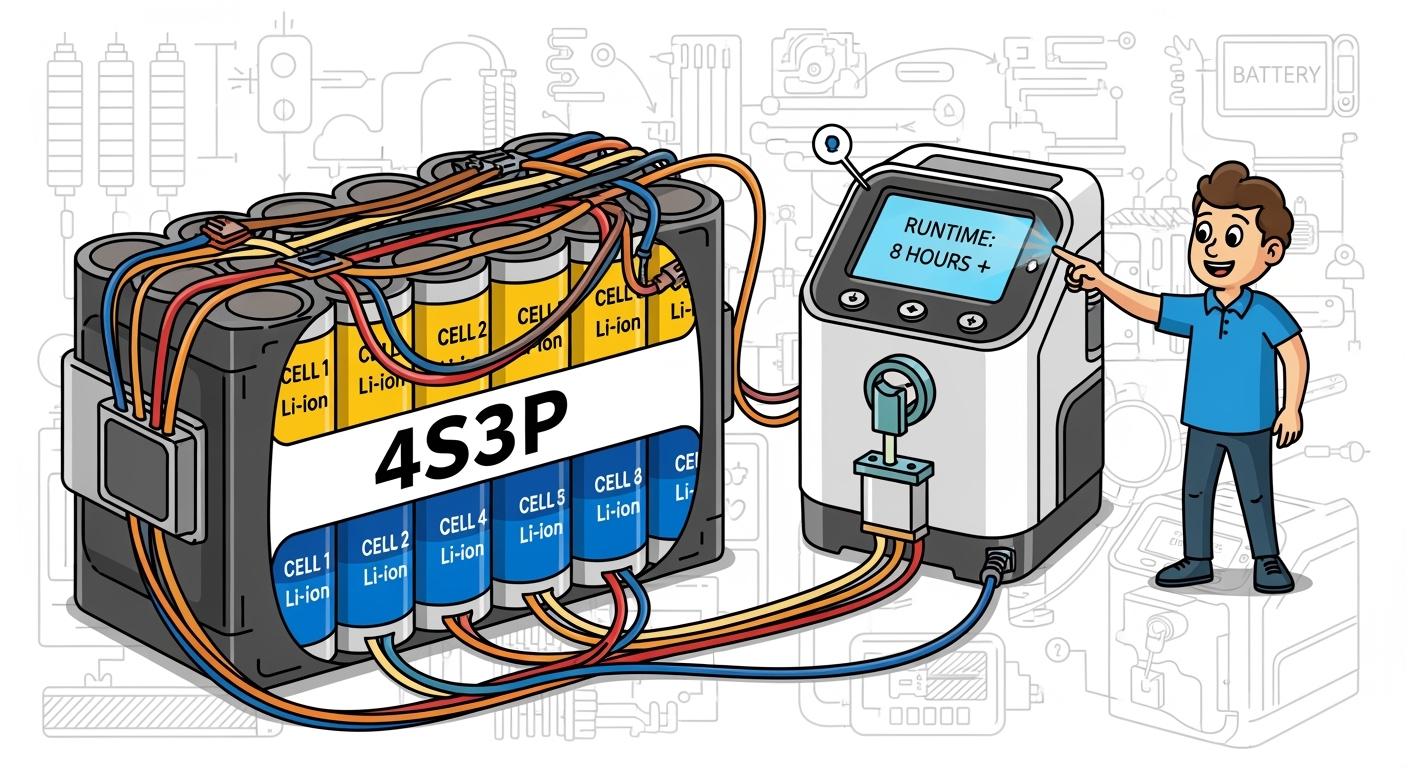
You can extend the runtime of Portable Oxygen Concentrators by using a high-capacity 4S3P lithium battery pack. This pack uses four cells in series and three in parallel, which increases both voltage and capacity to meet medical device needs. Several factors influence how long the device runs. These include oxygen flow settings, environmental conditions, user activity levels, and maintenance practices, as shown in the table below:
Factor | Description |
|---|---|
Oxygen Flow Settings | Higher settings increase oxygen use and reduce runtime. |
Environmental Conditions | Extreme temperatures and altitude affect performance and battery life. |
User Activity Levels | More activity raises oxygen needs and drains the battery faster. |
Maintenance Practices | Regular care ensures efficient operation and longer device life. |
You must focus on safety, compatibility, and routine maintenance to maximize both performance and reliability. An engineering-driven approach ensures you select the right components for your application.
Quick Answer
A high-capacity 4S3P lithium battery pack can extend portable oxygen concentrator runtime by increasing usable capacity while maintaining a stable voltage range for medical electronics. The design should include matched cells, a medical-grade BMS, thermal protection, enclosure safety, and validation for transport and medical use.
Key Takeaways
A high-capacity 4S3P lithium battery pack boosts the runtime of Portable Oxygen Concentrators, providing reliable power for medical needs.
Understanding factors like oxygen flow settings and environmental conditions helps optimize battery performance and extend usage time.
Choosing the right lithium chemistry, such as NMC or LiFePO4, ensures safety and longevity for medical devices.
Regular maintenance and inspections are crucial for keeping the battery pack safe and efficient, preventing potential failures.
Proper installation and connection of the battery pack enhance safety and performance, ensuring the device operates reliably.
Part 1: 4S3P Lithium Battery Pack Basics
1.1 4S3P Configuration Explained
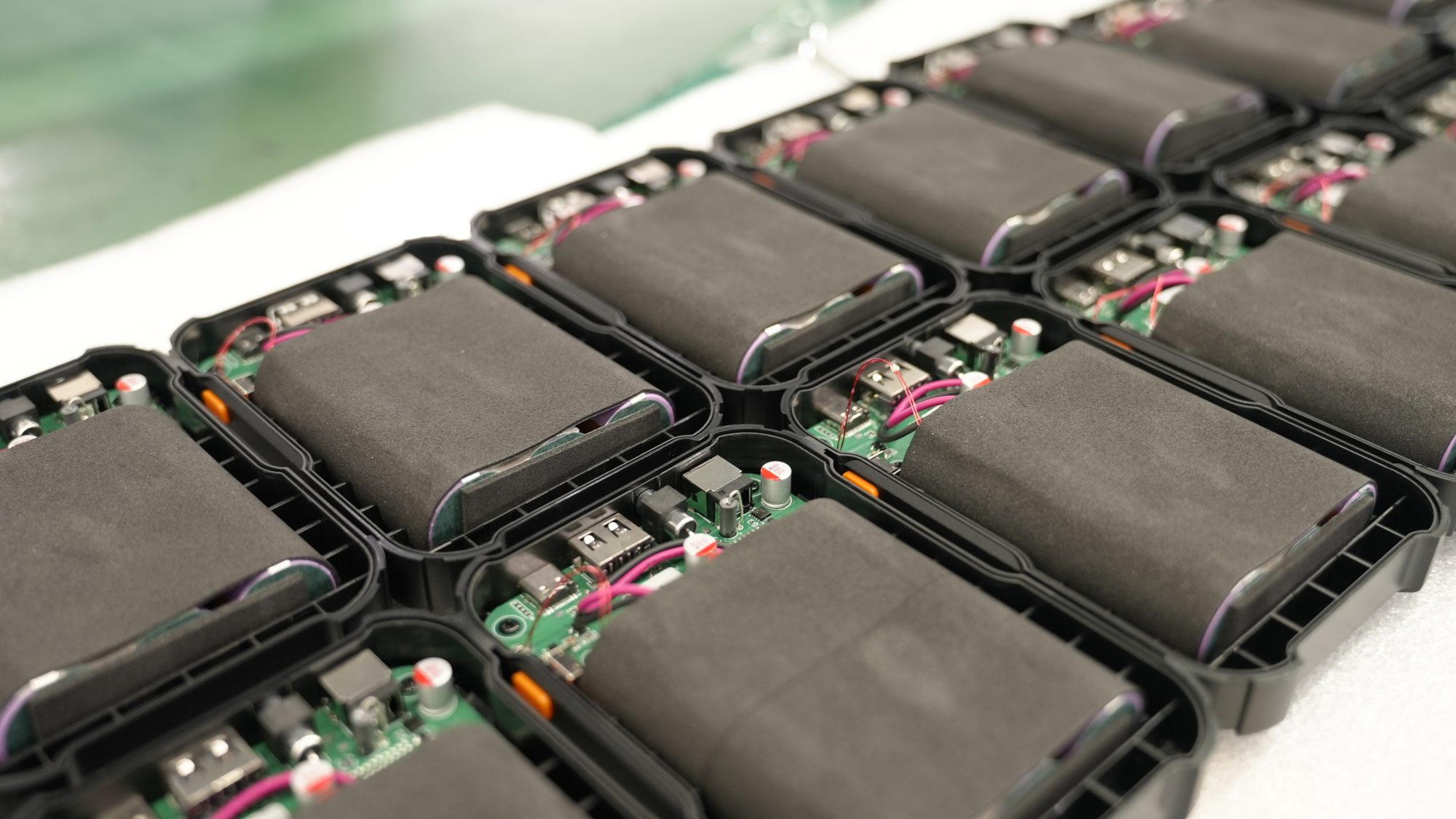
You will often see the term “4S3P” when working with lithium battery packs for medical devices. This configuration means you connect four cells in series (4S) to increase the voltage, and three sets of these series-connected cells in parallel (3P) to boost the capacity. Most lithium battery packs for Portable Oxygen Concentrators use chemistries like NMC (Nickel Manganese Cobalt Oxide), LCO (Lithium Cobalt Oxide), LMO (Lithium Manganese Oxide), or LiFePO4 (Lithium Iron Phosphate). Each chemistry offers different platform voltages, energy densities, and cycle lives.
Here is a comparison of common lithium chemistries:
Chemistry | Platform Voltage | Energy Density (Wh/kg) | Cycle Life (cycles) |
|---|---|---|---|
NMC | 3.7V | 150-220 | 1000-2000 |
LCO | 3.7V | 150-200 | 500-1000 |
LMO | 3.7V | 100-150 | 300-700 |
LiFePO4 | 3.2V | 90-140 | 2000+ |
You should select the chemistry based on your application’s needs. For medical devices, NMC and LiFePO4 are popular due to their balance of safety, energy density, and cycle life.
1.2 Benefits for Portable Oxygen Concentrators
A 4S3P lithium battery pack gives you several advantages when powering Portable Oxygen Concentrators:
You get a higher nominal voltage, usually 14.8V, which matches most device requirements.
You can choose from different capacities, such as 6000mAh or 10500mAh, to extend runtime.
The pack remains lightweight and compact, which is essential for portable medical use.
You benefit from stable voltage output and low self-discharge, so the device stays reliable.
Specification | Value |
|---|---|
Nominal Voltage | 14.8V |
Nominal Capacity | 6000mAh |
Nominal Capacity | 10500mAh |
Tip: You can use the same 4S3P configuration in robotics, security systems, infrastructure backup, and industrial tools where high energy density and reliability matter.
1.3 Key Performance Metrics
When you evaluate lithium battery packs for medical devices, you should focus on these metrics:
Performance Metric | Description |
|---|---|
Safety | Meets IEC62133, ISO13485 standards |
Reliability | Delivers consistent performance over time |
Cycle Life | Supports many charge/discharge cycles before losing capacity |
Energy Density | Stores more energy per unit weight or volume |
Stable Voltage Output | Maintains steady voltage during operation |
Low Self-Discharge | Holds charge when not in use |
Lightweight & Compact | Easy to integrate into portable devices |
You should always prioritize safety and reliability, especially for Portable Oxygen Concentrators. High energy density and long cycle life will help you deliver better value to your clients.
Part 2: Portable Oxygen Concentrators Power Needs
2.1 Voltage and Current Requirements
You must understand the voltage and current requirements of your device before selecting a battery pack. Most Portable Oxygen Concentrators operate at a nominal voltage of 14.8V, which matches the output of a 4S lithium configuration. Current draw depends on the oxygen flow rate and device settings. Flow settings, measured in liters per minute (LPM), vary to meet different oxygen needs. Higher flow rates require the compressor to work harder, which increases power consumption and reduces battery runtime.
Higher flow settings increase oxygen consumption and battery usage, leading to shorter usage times between charges.
Lower flow settings can extend usage duration but must be balanced with the user’s oxygen needs.
You should always check the device’s technical manual for the recommended voltage and maximum current draw. This ensures the battery pack delivers stable performance without risk of overload.
2.2 Device Compatibility Factors
Selecting a battery pack that matches your device’s specifications is essential for both safety and efficiency. You need to consider:
Output voltage compatibility with the concentrator’s input requirements.
Maximum continuous and peak current ratings.
Connector type and physical fit within the device enclosure.
If you mismatch the battery output to the device, you risk reduced performance or even device failure. Always verify that the lithium battery pack, whether using NMC, LiFePO4, LCO, or LMO cells, meets the manufacturer’s requirements. This approach supports reliable operation in medical, robotics, and security system applications.
Tip: Consult with your engineering team or battery supplier to confirm compatibility before integration.
2.3 Safety and Compliance
You must follow strict safety and compliance standards when designing or selecting lithium battery packs for medical devices. The FDA requires adherence to ANSI/AAMI ES 60601-1 for general safety and performance. Compliance with IEC 62133, IEC 60086 Part 4, and UL 1642 is necessary for lithium-ion batteries in medical devices. NFPA 99 and NFPA 70 set requirements for electrical systems and fire risk management in healthcare facilities.
NFPA 99 mandates that electrical systems in patient care areas minimize fire and electrical failure risks.
NFPA 70 sets strict requirements for wiring and outlet usage, directly affecting charging stations for medical devices.
Quality assurance is critical for ensuring the safety and reliability of lithium-ion batteries in medical devices.
A holistic quality approach throughout the battery lifecycle helps prevent risks associated with battery failures. You should also check local fire codes for additional requirements, including inspections and hazardous materials management.
Part 3: Selecting Lithium Cells and Components
3.1 Choosing Quality Cells
You need to select lithium cells with proven performance and reliability. Standardized chemistries like LiFePO4, NMC, LCO, and LMO offer different advantages for medical, robotics, security, and industrial applications. You should always check strict data for platform voltage, energy density, and cycle life. The table below helps you compare these options:
Chemistry | Platform Voltage | Energy Density (Wh/kg) | Cycle Life (cycles) |
|---|---|---|---|
NMC | 3.7V | 150-220 | 1000-2000 |
LCO | 3.7V | 150-200 | 500-1000 |
LMO | 3.7V | 100-150 | 300-700 |
LiFePO4 | 3.2V | 90-140 | 2000+ |
You should choose cells with high cycle life and stable voltage for medical devices. NMC and LiFePO4 cells are popular for their safety and longevity. Always source cells from reputable manufacturers to ensure consistent quality.
3.2 Battery Management System (BMS)
A Battery Management System protects your lithium battery pack and ensures safe operation. You must look for features like temperature monitoring, current and voltage regulation, and thermal management. For medical battery packs, safety is critical. Himax integrates dual-layer protection with a high-precision BMS and fuse system.
You can learn more about BMS features and integration in our Battery Management System Guide.
Key BMS features include:
Temperature monitoring
Current and voltage regulation
Thermal management
Feature | Description |
|---|---|
Overcharge protection | Cuts off charging when cell voltage exceeds 4.2V to prevent overheating. |
Over-discharge protection | Disconnects loads when voltage drops below 2.5V per cell to avoid damage. |
Short circuit prevention | Uses integrated MOSFETs to disconnect instantly in case of a short circuit. |
Temperature monitoring | Tracks cell temperature using NTC thermistors, ensuring it stays within -20°C to 60°C. |
3.3 Connectors and Enclosures
You must select connectors and enclosures that guarantee safety and durability. Recommended connector types include XT60/XT90, EC5/EC8, and Anderson Powerpoles. These connectors support high current and match the voltage platform of your battery system. Pure copper materials improve conductivity.
Current carrying capacity must exceed the maximum current of your battery system.
Voltage rating should match your battery platform.
Highly conductive materials like pure copper are preferred.
Enclosures protect cells from mechanical abuse, impact, dust, and fluids. You need structural support for cell stacking and mounting. Cooling channels allow airflow or liquid coolant circulation. Insulation isolates high voltage components. Environmental sealing prevents moisture ingression.
Common enclosure materials include aluminum for thermal properties and engineered plastic blends for lighter weight and corrosion resistance. You can use these designs in medical, robotics, infrastructure, and industrial battery packs.
Part 4: Designing the Battery Pack
4.1 Capacity and Runtime Calculation
You need to calculate the battery pack’s capacity and expected runtime before you start the design. This step helps you meet the power needs of portable oxygen concentrators and ensures reliable operation in medical and industrial applications.
Start by understanding the basic formula for total capacity in a 4S3P configuration:
Total Capacity (Ah) = Capacity of one cell (Ah) × Number of parallel cells (P)
For example, if you use cells rated at 3500mAh (3.5Ah):
Total Capacity = 3.5Ah × 3 = 10.5Ah (or 10,500mAh)
The total voltage comes from the series connection:
Total Voltage (V) = Voltage of one cell × Number of series cells (S)
For NMC, LCO, or LMO cells: 3.7V × 4 = 14.8V
For LiFePO4 cells: 3.2V × 4 = 12.8V
To estimate runtime, use this formula:
Runtime (hours) = Total Capacity (Ah) × 0.9 / Device Current Draw (A)
The 0.9 factor accounts for real-world efficiency losses.
Suppose your oxygen concentrator draws 2A at 14.8V. The estimated runtime is:
Runtime = 10.5Ah × 0.9 / 2A ≈ 4.7 hours
Tip: Always check the device’s manual for actual current draw at different oxygen flow rates. Higher flow rates reduce runtime.
4.2 Series and Parallel Wiring
You must wire lithium cells correctly to maximize safety and performance. In a 4S3P pack, you connect four cells in series to increase voltage, then connect three of these series strings in parallel to boost capacity.
Best practices for wiring include:
Best Practice | Description |
|---|---|
Selecting matched cells | Ensures uniform performance and safety across the battery pack. |
Using a Battery Management System (BMS) | Monitors and manages the battery’s performance, enhancing safety and longevity. |
Proper assembly techniques | Involves careful craftsmanship to prevent issues during operation and ensure reliability. |
Always select high-quality, matched cells. This step prevents imbalances that can cause overheating or reduced lifespan.
Use a BMS to monitor voltage, current, and temperature. The BMS protects against overcharge, over-discharge, and short circuits.
Apply proper assembly techniques. Use spot welding or high-quality soldering to ensure strong connections.
Cell assembly is crucial for safety. Fewer cells in a pack can increase safety, but you must balance this with the required capacity. High-quality cells are essential for reliable performance.
You should plan the layout to minimize resistance and allow for even heat distribution. Use pure copper busbars or nickel strips for connections. Insulate all wiring to prevent accidental shorts.
4.3 Thermal and Safety Features
Thermal management and safety features are critical in medical battery pack design. You must follow standards like ANSI/AAMI ES 60601-1, IEC 62133, and UL 1642 to ensure safety and compliance.
Key safety features include:
Overcharge protection: The BMS cuts off charging when cell voltage exceeds 4.2V. This feature prevents overheating.
Over-discharge protection: The BMS disconnects the load if voltage drops below 2.5V per cell. This action avoids cell damage.
Short circuit prevention: Integrated MOSFETs disconnect the pack instantly if a short circuit occurs.
Additional thermal and safety components:
PTC resettable fuses: These fuses automatically reset after an overcurrent event.
CID (Current Interrupt Device): This device disconnects the cell under extreme conditions.
Thermal cutoff switches: These switches stop operation if the temperature reaches 80°C.
You should inspect incoming batteries for damage or heat release. Avoid storing fully charged batteries for long periods. Store packs in a cool, ventilated area to allow heat dissipation.
Strong instructions for use (IFU) should outline safe storage, charging, and maintenance. You must prevent the use of unapproved batteries and chargers to reduce risk.
Note: Proper thermal management and safety features protect both the user and the device. These measures are essential for medical, robotics, security, and industrial battery packs.
Part 5: Assembly and Safety
5.1 Step-by-Step Assembly
You can assemble a 4S3P lithium battery pack for Portable Oxygen Concentrators by following a systematic process. This approach ensures safety and reliability for medical and industrial applications. Here is a recommended step-by-step procedure:
Select and Match Your Cells: Choose high-quality cells. Match them by voltage and capacity, keeping the difference within 0.05V.
Plan Your Configuration: Arrange the cells in a 4S3P layout to achieve the required voltage and capacity.
Connect Cells Securely: Use nickel strips and a spot welder for strong connections. Avoid direct soldering to prevent cell damage.
Install the BMS: Attach the Battery Management System according to the wiring diagram. Double-check all polarities.
Insulate, Test, and Encase: Apply insulation materials. Test each cell and perform a controlled discharge. Place the pack in a protective enclosure.
Tip: Always document each assembly step for traceability and future maintenance.
5.2 Safety Protocols
You must follow strict safety protocols during assembly and handling. Wear insulated gloves and safety glasses to protect yourself from electrical hazards. Work in a clean, dry environment to reduce the risk of contamination. Use only approved tools and avoid metal jewelry near battery cells. Check for damaged or swollen cells before assembly. Dispose of defective cells according to local regulations. Never bypass the BMS or use unapproved chargers. These steps help prevent short circuits, overheating, and fire risks in medical and industrial settings.
5.3 Quality Control
Quality control ensures the reliability and safety of every lithium battery pack. You should implement checks at each stage of production. The table below outlines effective quality control measures and their purposes:
Quality Control Measure | Purpose |
|---|---|
Raw Material Inspection | Ensures purity and quality of raw materials |
Electrode Production | Measures thickness, uniformity, and adhesion |
Cell Assembly | Checks alignment, pressure, and sealing integrity |
Electrolyte Filling/Sealing | Verifies accurate filling and sealing of cells |
Formation and Aging | Monitors voltage, capacity, and resistance |
Electrical Testing | Assesses charge storage and cycle life |
Safety Testing | Evaluates response to overheating and short circuits |
Environmental Testing | Tests stability under temperature and humidity |
You should record all test results for traceability. This process supports high standards in medical, robotics, security, and industrial battery applications.
Part 6: Integrating with Portable Oxygen Concentrators
6.1 Physical Installation
You must install the lithium battery pack with care to ensure safety and performance. Start by checking the enclosure dimensions. The pack should fit securely inside the device compartment. Use mounting brackets or foam padding to prevent movement during transport. Secure the pack with vibration-resistant fasteners.
You need to maintain proper ventilation. Place the battery pack in a location with airflow. Avoid blocking vents or cooling channels. Good ventilation prevents overheating and extends battery life. Keep the device away from direct sunlight. Sunlight raises the temperature and can degrade lithium cells, especially NMC and LCO chemistries.
Tip: Store and operate the concentrator in a cool, dry area. High temperatures reduce cycle life and energy density for LiFePO4, NMC, LCO, and LMO cells.
You should follow these best practices for physical installation:
Practice | Benefit |
|---|---|
Secure mounting | Prevents vibration damage |
Ventilation | Reduces overheating risk |
Sunlight avoidance | Maintains battery longevity |
Moisture protection | Prevents corrosion and failure |
You can apply these practices in medical, robotics, security, and industrial devices. Proper installation supports reliable operation and safety.
6.2 Electrical Connection
You must connect the battery pack to the oxygen concentrator using compatible connectors. XT60, EC5, and Anderson Powerpole connectors work well for high-current applications. Match the connector type to the device input. Use pure copper connectors for better conductivity.
Check the polarity before connecting. Incorrect polarity can damage the device and battery pack. Connect the positive and negative terminals as shown in the wiring diagram. Use insulated cables to prevent short circuits.
You should verify the voltage and current ratings. The battery pack must deliver 14.8V for NMC, LCO, and LMO chemistries, or 12.8V for LiFePO4. The current rating must match the device’s maximum draw. If you use a Battery Management System (BMS), connect the BMS output to the device input.
Note: Always power off the device before making electrical connections. This step prevents accidental shorts and protects sensitive electronics.
You can use the following checklist for electrical connection:
Confirm connector compatibility
Check polarity and wiring diagram
Verify voltage and current ratings
Inspect cables for damage
Connect BMS output to device input
These steps ensure safe integration in medical, robotics, security, infrastructure, and industrial applications.
6.3 Troubleshooting
You may encounter issues during integration. Common problems include device not powering on, reduced runtime, overheating, or charging failures. You can solve these issues by following a systematic troubleshooting process.
Issue | Possible Cause | Solution |
|---|---|---|
Device not powering on | Incorrect polarity, loose cable | Check wiring and connectors |
Reduced runtime | High flow rate, cell imbalance | Lower flow rate, balance cells |
Overheating | Poor ventilation, sunlight | Improve airflow, move device |
Charging failure | Faulty charger, BMS error | Replace charger, reset BMS |
You should inspect the battery pack for physical damage. Check for swelling, leaks, or corrosion. Test the voltage of each cell. If you find a cell with low voltage, balance the pack or replace the cell.
Alert: Never use a damaged battery pack. Remove it from service and follow proper disposal procedures.
You can contact your engineering team or battery supplier for advanced troubleshooting. Document all issues and solutions for future reference. These practices help maintain safety and reliability in medical, robotics, security, and industrial sectors.
Tip: Keep the device manual and wiring diagrams accessible. Quick reference speeds up troubleshooting and reduces downtime.
Part 7: Testing and Runtime Optimization
7.1 Initial Charging and Balancing
You must follow best practices for the first charge and balancing of your lithium battery pack. This step ensures long-term reliability and safety, especially for medical and industrial applications. Start by charging lithium iron phosphate (LiFePO4) cells with a constant current (CC) at 0.5C until the voltage reaches 3.65V. Stop charging when the current drops to 0.05C. This process helps you measure the true capacity of each cell.
For top-balancing, you have two options:
Charge each cell individually to 100% state of charge (SOC) before connecting them in series.
Connect all cells in parallel and charge them together to 100% SOC. Make sure the voltages are similar to prevent sparks.
Proper balancing at the start prevents cell imbalances and extends the life of your 4S3P lithium battery pack.
7.2 Measuring Runtime
You need to measure the actual runtime of your portable oxygen concentrator after assembly. Use a fully charged battery pack and set the device to a typical oxygen flow rate. Record the start and end times to calculate total runtime. Repeat this test at different flow rates to understand how settings affect battery life. This data helps you predict performance in real-world scenarios, whether in medical, robotics, or security system applications.
Tip: Always document your results. Consistent testing supports quality control and helps you identify trends or issues early.
7.3 Optimizing Usage Settings
You can extend the runtime of your lithium battery pack by adjusting device settings and following best practices. The table below summarizes key strategies:
Optimization Strategy | Description |
|---|---|
Oxygen Flow Rate | Adjust flow rate settings as needed; lower settings can extend battery life. |
Ambient Conditions | Operate in temperate environments; avoid extreme temperatures to maintain efficiency. |
Device Maintenance | Regular cleaning, filter changes, and checking for leaks are essential. |
Power Consumption Management | Turn off when not in use, use battery power judiciously, explore low-cost power options. |
Usage Best Practices | Monitor runtime display, use lower flow rates, and plan activities around battery capacity. |
Advanced Battery Management | Regular recharging, avoiding full depletion, and using supplemental batteries when needed. |
Software and Hardware Upgrades | Keep software updated and consider upgrading key components every 3-5 years. |
User Education | Understand device operation, settings, and maintenance for efficient use. |
You should train your team on these strategies to maximize efficiency and battery lifespan. These methods apply across medical, industrial, and infrastructure sectors where reliable power is critical.
Part 8: Maintenance and Longevity
8.1 Routine Inspection
You need to inspect lithium battery packs regularly to maintain safety and performance in medical devices. Biomedical engineering teams should check battery performance and safety during routine device inspections. Log all findings and review them as part of your quality assurance program. Hospitals and clinics benefit from 100% Materials Outgoing Control (OQC), which verifies manufacturing and product quality at multiple gates.
Inspection Procedure | Description |
|---|---|
100% Materials Outgoing Control (OQC) | Ensures all battery packs pass quality gates for manufacturing and product quality. |
Inspect incoming batteries for damage or signs of repackaging.
Separate damaged batteries to prevent thermal events.
Record inspection results for traceability.
Routine inspection supports reliability in medical, robotics, security, and industrial sectors.
8.2 Safe Charging and Storage
You must follow safe charging and storage practices to maximize battery lifespan. Always use the charger provided by the manufacturer or an approved replacement. Charge the battery in a well-ventilated area and avoid covering the device or charger. Monitor the charging process to prevent overcharging. Store batteries at a 40-50% charge in a cool, dry place if not used for extended periods. Ideal storage temperature is 15°C (59°F). Avoid extreme heat or cold to prevent battery damage.
Use partial discharge cycles and avoid deep discharge.
Store batteries away from direct sunlight and moisture.
Check storage area for temperature stability.
Safe charging and storage practices help prevent overheating and fire risks.
8.3 Preventing Battery Degradation
You can prevent battery degradation by managing temperature, charging cycles, and storage conditions. Adequate ventilation and avoiding extreme temperatures reduce thermal stress. Use partial discharge cycles instead of deep discharges to extend battery life. Implement a Battery Management System (BMS) to monitor charge levels and prevent overcharging.
Strategy | Description |
|---|---|
Temperature Management | Maintain ventilation and avoid extreme temperatures. |
Optimal Charging Practices | Use partial discharge cycles and avoid deep discharges. |
Battery Management System | Monitor charge levels and prevent overcharging. |
Charge batteries every 3-6 months during long-term storage to keep charge levels between 30-50%.
Use quality chargers with proper voltage regulation.
Regular cleaning, filter replacement, and avoiding deep discharge maximize battery and device lifespan. These practices support reliable operation in medical, infrastructure, and industrial applications.
You gain longer device runtime and reliable performance when you use a high-capacity 4S3P lithium battery pack for Portable Oxygen Concentrators. Proper engineering, safety checks, and routine maintenance help you protect both your investment and your users. For custom battery solutions, you can consult leading providers like Large Power who offer full support and design expertise.
FAQ
What is the main advantage of a 4S3P lithium battery pack for portable oxygen concentrators?
You get higher capacity and stable voltage output. This configuration supports longer runtimes and reliable performance for portable oxygen concentrators and other devices that require consistent power. If you are developing a medical device battery pack, contact Large Power to discuss a custom 4S3P lithium battery solution based on your voltage, capacity, runtime, size, connector, charging method, and certification requirements.
How do I choose between LiFePO4, NMC, LCO, and LMO chemistries?
Use this table to compare key properties:
Chemistry | Platform Voltage | Energy Density (Wh/kg) | Cycle Life (cycles) |
|---|---|---|---|
NMC | 3.7V | 150–220 | 1000–2000 |
LCO | 3.7V | 150–200 | 500–1000 |
LMO | 3.7V | 100–150 | 300–700 |
LiFePO4 | 3.2V | 90–140 | 2000+ |
Choose based on your device’s needs and required cycle life.
Can I use a 4S3P lithium battery pack in other sectors besides medical?
Yes. You can use these packs in robotics, security systems, infrastructure backup, consumer electronics, and industrial tools. The high energy density and reliability make them suitable for many B2B applications.
What safety features should I look for in a lithium battery pack?
You should look for a Battery Management System (BMS), overcharge and over-discharge protection, short circuit prevention, and thermal management. These features help prevent failures and ensure safe operation in demanding environments.
How often should I inspect and maintain my lithium battery pack?
Inspect your battery pack every three to six months. Check for physical damage, swelling, or leaks. Clean connectors and replace filters as needed. Regular maintenance extends battery life and supports reliable device operation.
Need a custom battery design? For oxygen concentrator or medical device backup power, contact Large Power with your runtime, voltage, size, and certification requirements.


