

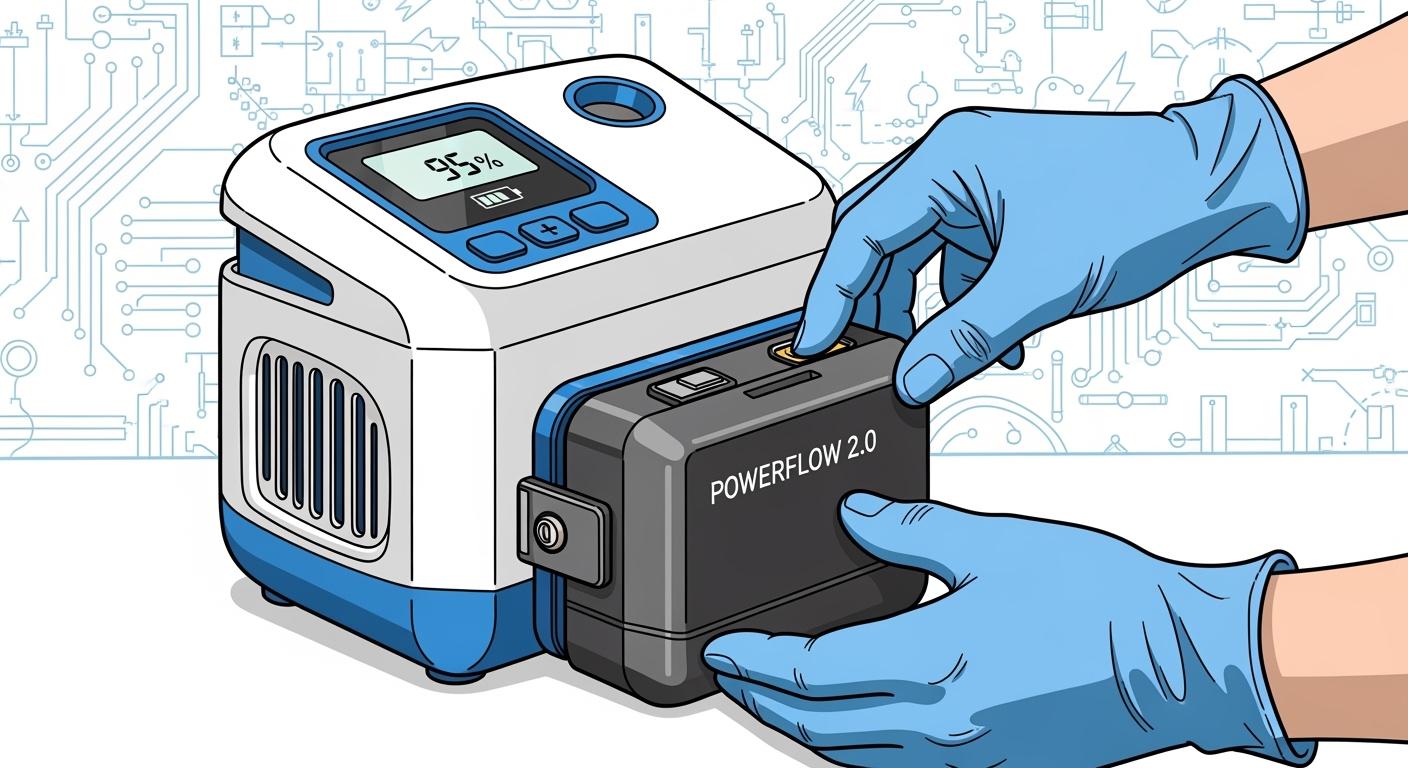
You know that reliable power is essential for portable oxygen concentrators in medical environments. Custom battery packs influence not only the runtime and portability of your devices but also patient safety and independence. Recent studies show that a single battery provides 2–4 hours of runtime, while double and external batteries can extend usage up to 12 hours, with weight ranging from 4 to 10 pounds. Advanced lithium battery technology helps you meet strict medical standards and deliver consistent performance in demanding healthcare settings.
Key Takeaways
Prioritize runtime and portability when designing battery packs. Longer battery life enhances patient mobility and reduces charging interruptions.
Ensure compliance with safety standards like IEC 60601 and IEC 62133. Meeting these regulations is crucial for patient safety and device reliability.
Integrate a robust Battery Management System (BMS) to monitor battery health. This system helps prevent failures and extends the service life of battery packs.
Choose the right lithium battery chemistry based on your device’s needs. LiFePO4 offers long cycle life, while NMC provides high energy density for demanding applications.
Focus on recyclability and eco-friendly materials in battery design. Sustainable practices support environmental protection and regulatory compliance.
Part1: Custom Battery Packs—Core Design Factors
1.1 Runtime and Portability
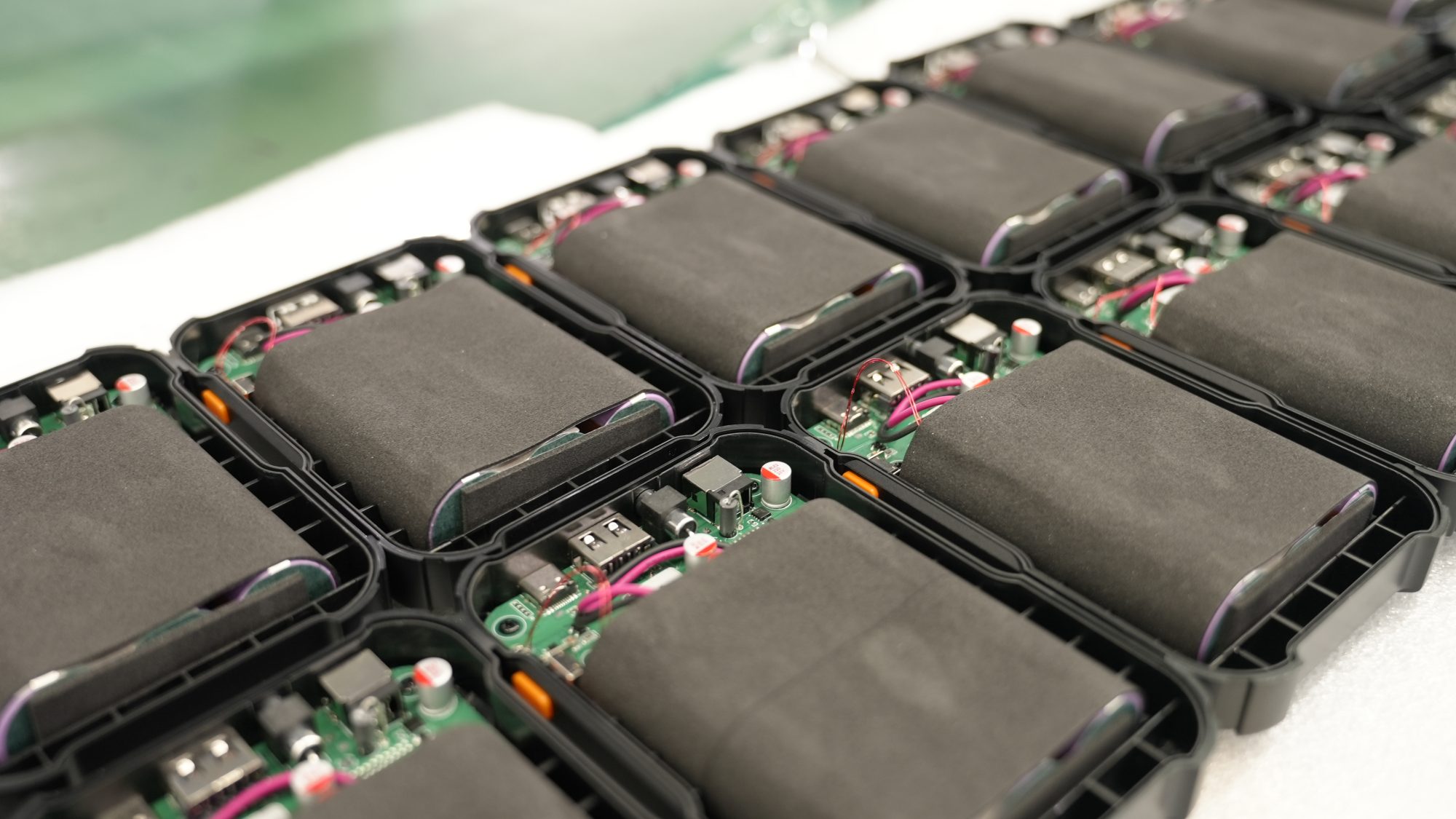
You need to consider runtime and portability as top priorities when designing custom battery packs for oxygen concentrators. The right battery pack determines how long your device can operate without recharging, which directly affects patient mobility and independence. For example, a single battery often provides 2–4 hours of runtime, while double batteries can extend this to 4–8 hours. If you add an external battery, you can reach up to 10–12 hours of continuous use. This flexibility allows you to tailor solutions for both home and clinical settings.
Tip: Longer battery life means fewer interruptions for patients and less need for frequent charging, which is critical in emergency or travel scenarios.
The following table summarizes typical runtimes for different battery configurations:
Battery Type | Typical Runtime |
|---|---|
Single battery | 2–4 hours |
Double batteries | 4–8 hours |
With external battery | up to 10–12 hours |
You also need to balance battery life with device weight. Extended batteries add runtime but can increase the overall weight of the oxygen concentrator. Most portable units weigh between 4 and 10 pounds, so you must select battery solutions that do not compromise portability. Patients rely on lightweight devices for daily activities, so every ounce matters.
A closer look at battery types and their impact on patient independence:
Battery Type | Battery Life (hours) | Notes |
|---|---|---|
Single-cell battery | 6.5 | Sufficient for daily use, but limited for longer outings. |
Additional battery | 13 | Doubles battery life, offering more freedom for outings. |
Double-cell battery | 19 | Enables extended trips without the need for recharging. |
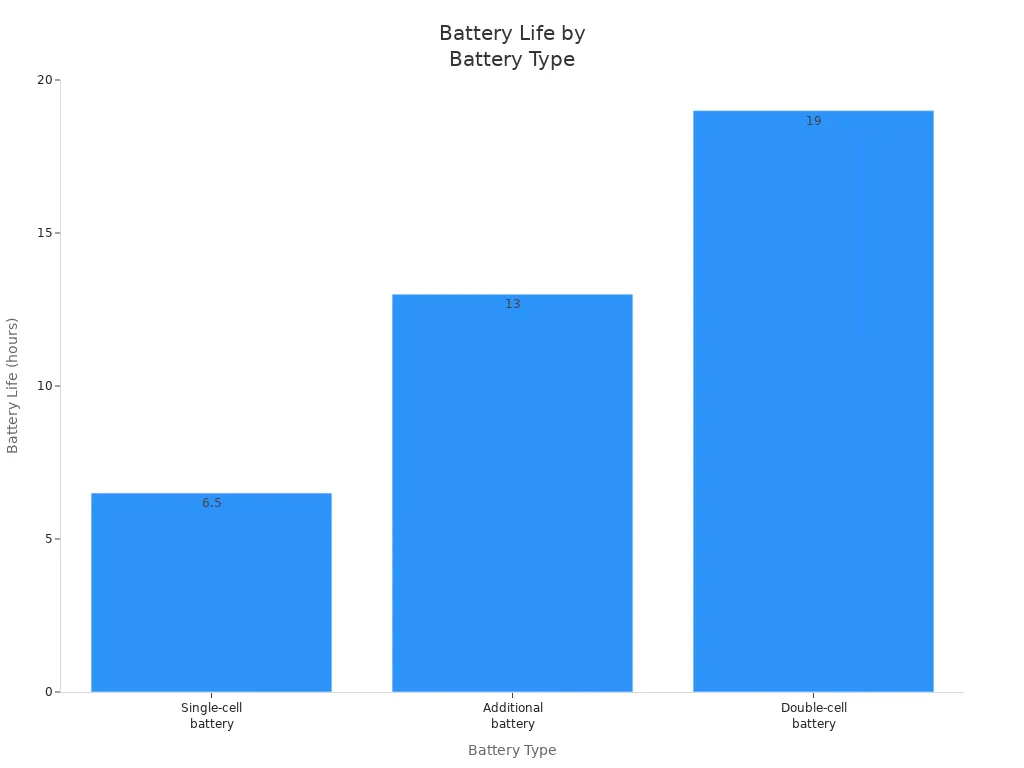
You can see that increasing battery capacity directly improves patient independence. Patients can travel, attend appointments, or participate in daily activities without worrying about losing power.
1.2 Application-Specific Needs
You must align custom battery pack design with the specific requirements of your medical device. Each oxygen concentrator has unique needs based on its intended use, flow rate, and operating environment. For instance, higher oxygen flow rates require batteries with greater capacity (measured in mAh) to maintain longer runtimes. Usage patterns also play a role. Devices used for extended periods or in high-demand settings need batteries that can deliver consistent power over time.
Here is a table that highlights how application-specific needs affect battery selection:
Feature | Details |
|---|---|
Runtime | Single batteries typically deliver 3–7 hours; extended packs double that capacity. |
Weight vs. power | Extended batteries add weight, but the added pound is worth it for increased mobility. |
Oxygen Flow Rate and Usage Patterns | Higher flow rates require batteries with higher capacity (mAh) for longer runtimes. |
You should also consider several critical design factors to ensure your custom battery packs meet the demands of medical environments:
Design Factor | Description |
|---|---|
Anti-Chemical Corrosion Performance | Incorporates waterproofing and materials resistant to medical disinfectants. |
Electromagnetic Compatibility (EMC) | Includes shielding designs to avoid interference with sensitive medical equipment. |
Certification Compliance | Must pass various safety and transportation certifications, meeting industry-specific standards. |
Intelligent BMS | Features real-time monitoring and integrated protection circuits for safety. |
Redundant Design | Incorporates dual protection chips to prevent single component failure. |
Lightweight and Space Adaptation | Utilizes techniques for ultra-thin and flexible battery designs suitable for miniature devices. |
Biocompatibility | Uses medical-grade materials and must pass biocompatibility tests for implantable devices. |
Extreme Temperature Performance | Maintains efficiency in extreme temperatures, suitable for outdoor and sterilization scenarios. |
When you design custom battery packs for oxygen concentrators, you must address these factors to ensure safety, reliability, and compliance. Intelligent battery management systems (BMS), redundant protection, and certification compliance are not optional—they are essential for medical devices. You also need to select the right lithium battery chemistry, such as LiFePO4 Lithium battery or NMC Lithium battery, to match your device’s power and safety requirements.
By focusing on these core design factors, you can deliver battery solutions that support patient independence, meet regulatory standards, and perform reliably in real-world medical scenarios.
Part2: Safety and Protection Essentials

When you design battery systems for medical oxygen concentrators, you must prioritize safety and protection. These features ensure patient well-being and help you meet strict regulatory standards. In this section, you will learn about the essential roles of Battery Management Systems (BMS), fault and overcurrent protection, and advanced thermal and redundancy features in lithium battery packs.
2.1 Battery Management System (BMS)
A robust Battery Management System forms the backbone of safe and reliable lithium battery packs in medical devices. You rely on a BMS to monitor and control every aspect of battery operation. This system protects against failures and extends the service life of your custom battery packs.
Key safety features provided by a BMS include:
Fault diagnosis and detection: The BMS tracks voltage, current, and temperature. It identifies early signs of failure and prevents unsafe operation.
Redundancy strategies: Backup power sources and duplicate control circuits keep your device running if the primary system fails.
Thermal management: The BMS uses temperature sensors and control mechanisms to maintain safe operating conditions and prevent thermal runaway.
International standards guide the implementation of BMS in medical battery packs. You must comply with:
IEC 60601: Safety and performance for medical electrical equipment.
IEC 62133: Requirements for secondary lithium cells in portable applications.
IEC 61960: Performance standards for lithium batteries.
FDA’s Quality System Regulation (QSR): Design controls and risk analysis for medical device batteries.
European Union’s Medical Device Regulation (MDR): CE marking and risk management.
These standards require you to test for thermal stability, short circuit protection, overcharge protection, and mechanical durability. Meeting these requirements ensures your lithium battery packs perform safely in critical healthcare environments.
2.2 Fault and Overcurrent Protection
Fault and overcurrent protection are vital for patient safety and device reliability. You must design your battery packs to detect and respond to abnormal conditions quickly. Overcurrent events can damage cells or cause dangerous overheating. A well-designed protection circuit interrupts the current flow before damage occurs.
Regulatory guidelines address these safety needs. The following table summarizes key standards:
Standard | Description |
|---|---|
IEC 60601 | Imposes stringent requirements for medical electrical equipment, including battery safety and performance. |
IEC 60601-1 | Defines general requirements for basic safety and essential performance, specifically addressing battery-powered devices. |
You must integrate these protections into your lithium battery packs to prevent failures in oxygen concentrators. This approach reduces the risk of device malfunction and supports compliance with international regulations.
2.3 Thermal and Redundancy Features
Thermal management and redundancy features are essential for life-supporting medical devices. You need to keep battery cells within an optimal temperature range of 15-35°C. This range prevents overheating and extends battery life.
You can use several thermal management strategies:
Passive methods: Thermal insulation materials and phase change materials (PCMs) help stabilize temperature.
Active systems: Miniaturized fans and liquid cooling channels provide precise temperature control.
Hybrid approaches: Combine passive and active elements for efficient energy use.
Redundancy features further enhance patient safety. You should include:
Backup power sources: These maintain device operation if the main battery fails.
Duplicate control circuits: If one circuit fails, another takes over to keep the system running.
Failsafe mechanisms: These ensure essential operations continue during battery failure, reducing the risk of critical malfunction.
Tip: Always design for diverse operational scenarios and ensure compliance with standards like IEC 60601-1. This approach helps you deliver reliable lithium battery packs for medical, robotics, security, and industrial applications.
By focusing on these safety and protection essentials, you can build custom battery packs that meet the highest standards for medical oxygen concentrators. This commitment to safety supports patient care and strengthens your reputation as a trusted medical device manufacturer.
Part3: Battery Chemistry and Technology
3.1 Lithium-Ion vs. Lithium-Polymer
You must select the right battery chemistry for your medical devices. Lithium-ion and lithium-polymer batteries both offer advantages, but their safety and performance profiles differ. Lithium-ion batteries deliver high energy density and compact size, making them suitable for devices that require high power. Lithium-polymer batteries provide enhanced safety and customizable shapes, which are ideal for portable medical equipment.
Here is a comparison of these two battery types:
Battery Type | Safety Features | Performance Characteristics |
|---|---|---|
Lithium-ion | Less safe, high energy density | Compact size, suitable for high power needs |
Lithium-polymer | High safety, swells instead of exploding | Customizable dimensions, ideal for portable devices |
You can use lithium-ion batteries in oxygen concentrators, robotics, and security systems where high power and compact size matter. Lithium-polymer batteries fit applications that demand lightweight and flexible designs, such as wearable medical devices and consumer electronics.
Tip: Always match battery chemistry to your device’s safety requirements and operational demands.
3.2 Energy Density and Cycle Life
You need to evaluate energy density and cycle life when designing Custom Battery Packs. Energy density determines how much power you can store in a given space. Cycle life measures how many times you can recharge the battery before performance drops.
The following table compares common lithium battery chemistries:
Chemistry | Platform Voltage | Energy Density (Wh/kg) | Cycle Life (cycles) | Typical Applications |
|---|---|---|---|---|
LiFePO4 Lithium battery | 3.2V | 90–120 | 2000+ | Medical, infrastructure, industrial |
NMC Lithium battery | 3.7V | 150–220 | 1000–2000 | Medical, robotics, security systems |
LCO Lithium battery | 3.7V | 150–200 | 500–1000 | Consumer electronics |
LMO Lithium battery | 3.7V | 100–150 | 1000–2000 | Industrial, medical |
You can see that LiFePO4 Lithium battery offers long cycle life and stable performance, which is critical for medical and industrial devices. NMC Lithium battery provides high energy density and moderate cycle life, making it suitable for medical, robotics, and security systems. LCO Lithium battery is common in consumer electronics due to its high energy density but shorter cycle life. LMO Lithium battery balances energy density and cycle life for industrial and medical applications.
You should always select battery chemistry based on your device’s power needs, expected service life, and safety requirements.
Part4: Environmental and EMC Considerations
4.1 Temperature and Humidity Tolerance
You must ensure your lithium battery packs perform reliably in a wide range of temperatures and humidity levels. Medical environments can vary from climate-controlled hospitals to patient homes with less stable conditions. LiFePO4 Lithium battery and NMC Lithium battery chemistries offer strong performance between 0°C and 45°C. You should test your batteries for both high and low temperatures to prevent capacity loss or safety risks. High humidity can cause corrosion or short circuits. You can use sealed enclosures and conformal coatings to protect sensitive components.
Tip: Always validate battery performance in both hot and cold storage scenarios. This step helps you avoid unexpected failures in the field.
4.2 Vibration and Shock Resistance
You need to design battery packs that withstand vibration and shock during transport and daily use. Portable oxygen concentrators often move with patients or travel between facilities. Vibration can loosen connections or damage cells. Shock from accidental drops can cause internal short circuits. You can use shock-absorbing materials and reinforced casings to protect the battery structure. Testing to IEC 60068 standards ensures your batteries meet industry requirements for durability.
Common vibration and shock mitigation strategies:
Use foam padding or rubber mounts inside the battery housing.
Select robust connectors that resist loosening.
Perform drop and vibration tests during product validation.
4.3 Electromagnetic Compatibility (EMC)
You must address electromagnetic compatibility to prevent interference with other medical equipment. Hospitals use many electronic devices in close proximity. Poor EMC design can cause malfunctions or false readings. Shielding and proper grounding reduce electromagnetic emissions from your battery packs. You should follow IEC 60601-1-2 standards for medical EMC compliance. Testing in real-world environments helps you identify and resolve potential issues.
Note: EMC compliance is not optional for Custom Battery Packs in medical applications. It protects both your device and the broader healthcare environment.
By focusing on these environmental and EMC considerations, you can deliver lithium battery packs that perform safely and reliably in demanding medical settings.
Part5: Compliance and Regulatory Standards
5.1 Medical Device Certifications
You must secure the right certifications before you can market or ship lithium battery packs for oxygen concentrators. These certifications prove that your battery packs meet international safety and performance standards. The following table outlines the key certifications and testing requirements:
Certification/Testing Requirement | Description |
|---|---|
UN 38.3 Testing | Protocols for safe shipping and handling of lithium batteries, including altitude simulation, thermal testing, and more. |
Medical Device Certification | Required for battery packs to ensure compliance with safety standards before international shipping. |
You should always confirm that your battery packs pass UN 38.3 testing. This step ensures safe transport and handling. Medical device certification also verifies that your products meet the strict requirements for use in healthcare environments.
5.2 Transport and Shipping Regulations
You need to follow strict transport and shipping regulations when distributing lithium battery packs for medical devices. These rules protect your products during transit and help you avoid costly delays or recalls. The table below summarizes the main regulations:
Regulation | Description |
|---|---|
UN 38.3 Testing | Establishes protocols for safe shipping and handling of lithium batteries, including various stress tests. |
Safety Certifications | Compliance with IEC 62133, GB/T 28164, UL 2054, and FDA traceability standards is required for medical device manufacturers. |
You must demonstrate compliance with these standards in your design, manufacturing, and distribution processes. This approach ensures that your lithium battery packs reach customers safely and legally.
5.3 Documentation Best Practices
You should maintain thorough documentation to support regulatory compliance for your lithium battery packs. Good documentation practices help you pass audits and speed up market approval. Consider these best practices:
Comply with UN 38.3 testing requirements for lithium batteries.
Integrate compliance strategies early in the design process.
Include safety features such as thermal fuses and current limiters in your designs.
Prepare detailed test reports, risk analyses, and declarations of conformity.
Adhere to battery-specific standards like IEC 62133 and IEC 61960.
Conduct extensive testing and keep records to demonstrate compliance before market approval.
Tip: Early integration of compliance and documentation strategies reduces the risk of delays and ensures smooth product launches.
By following these standards and best practices, you can deliver safe, reliable lithium battery packs for medical, robotics, security, and industrial applications.
Part6: Integration and System Fit
6.1 Electrical and Mechanical Interface
You must ensure that your lithium battery packs fit seamlessly into oxygen concentrators. Electrical interfaces require precise voltage and current matching. You need to select connectors that provide secure contact and resist vibration. Mechanical interfaces demand careful attention to size and shape. You must design battery packs that fit within the device housing without causing stress or misalignment.
You can use standardized connectors and mounting brackets. These components simplify assembly and reduce errors during installation. You should test for compatibility with LiFePO4 Lithium battery and NMC Lithium battery chemistries. Each chemistry has unique voltage profiles and thermal characteristics. You must validate that your battery pack operates safely with the concentrator’s electronics.
Tip: Always check for proper alignment and secure locking mechanisms. This step prevents accidental disconnection and ensures reliable power delivery.
6.2 Modular and Swappable Designs
You can improve system flexibility by adopting modular and swappable battery designs. Modular battery packs allow you to replace parts quickly. Swappable batteries enable users to change depleted batteries without technical assistance. This approach supports continuous operation in medical settings.
The table below highlights key advantages:
Advantage | Description |
|---|---|
Maintenance Ease | Modular designs let users replace batteries and filters easily, lowering maintenance costs. |
User Convenience | Swappable batteries allow fast replacement, ensuring uninterrupted oxygen supply. |
Adaptability | High-capacity batteries and vehicle charging options offer flexibility during power outages. |
You can use modular designs in medical, robotics, and industrial applications. Swappable batteries support patient care by minimizing downtime. You should consider high-capacity options for scenarios that require extended runtime, such as emergency response or remote healthcare.
Note: Modular and swappable battery packs help you meet diverse operational needs and simplify maintenance for medical device manufacturers.
Part7: Service Life and Maintenance
7.1 Predictive Monitoring
You can extend the service life of lithium battery packs in medical devices by using predictive monitoring. This technology tracks battery health and performance in real time. You gain valuable insights that help you prevent unexpected failures and optimize maintenance schedules. Predictive monitoring uses sensors and software to analyze voltage, temperature, and charge cycles. You can detect early signs of wear and take action before problems arise.
Benefits of predictive monitoring include:
Prevents over-charge and over-discharge damage
Reduces thermal stress under high loads
Maintains balanced cell aging
Improves usable depth of discharge
Stabilizes voltage under dynamic demand
Results in longer service life and increased energy use
Leads to a cheaper total cost of ownership
You can apply predictive monitoring to LiFePO4 Lithium battery and NMC Lithium battery packs in oxygen concentrators, robotics, and security systems. This approach helps you maximize uptime and reduce maintenance costs. You also improve patient safety by ensuring reliable power delivery.
Tip: Integrate predictive monitoring early in your design process. You will gain better control over battery health and reduce risks in critical medical applications.
7.2 User-Friendly Replacement
Feature | Description |
|---|---|
Extended batteries | Many portable oxygen concentrators offer additional external batteries that can be swapped out to extend the devices’ lives. |
User-friendly control panel | The large, user-friendly control panel enhances usability for patients and caregivers. |
Charging time | About 3.5 hours for the small battery and up to 6 hours for the large battery, making it convenient for users to plan their usage. |
Lightweight design | The FreeStyle Comfort weighs around 5 pounds, making it easy to handle and transport. |
Ergonomic design | The device is designed to align with the curves of the body, improving comfort during use. |
You can use these features in medical, robotics, and industrial applications. Modular and swappable lithium battery packs simplify maintenance and support continuous operation. You improve user satisfaction and reduce the risk of power loss during critical tasks.
Note: Always test battery replacement procedures with real users. You will identify usability issues and ensure your lithium battery packs meet the needs of medical device manufacturers.
Part8: Sustainability and End-of-Life
8.1 Recyclability and Disposal
You must address recyclability and disposal when designing lithium battery packs for medical devices. Proper end-of-life management protects the environment and supports regulatory compliance. LiFePO4 Lithium batteries and NMC Lithium batteries contain valuable materials like lithium and cobalt. You can recover these materials through advanced recycling methods such as hydrometallurgy. This process cuts energy consumption by 10.7% and reduces greenhouse gas emissions by 70%. Hospitals and clinics generate large volumes of used batteries. You need to establish collection programs and partner with certified recyclers. These steps ensure fewer batteries end up in landfills.
Tip: Always follow local regulations for hazardous waste disposal. You protect your business and the environment.
The table below shows common recycling strategies for lithium battery packs:
Recycling Method | Benefit | Application Scenario |
|---|---|---|
Hydrometallurgy | Recovers lithium and cobalt | Medical, robotics, security systems |
Mechanical shredding | Separates metals and plastics | Industrial, infrastructure |
Collection programs | Reduces landfill waste | Hospitals, clinics |
You can learn more about sustainable battery practices in our approach to sustainability.
8.2 Eco-Friendly Materials
You improve sustainability by choosing eco-friendly materials for lithium battery packs. These materials minimize waste and emissions. You support global sustainability goals and reduce environmental concerns. LiFePO4 Lithium batteries offer a lifecycle of 2,000–5,000 cycles. This extended usability lowers waste generation and supports long-term device reliability.
Eco-friendly lithium batteries reduce emissions and waste.
Recycling innovations recover critical materials, cutting energy use and greenhouse gases.
Fewer batteries reach landfills, supporting environmental protection.
Long lifecycle batteries decrease replacement frequency.
You must avoid conflict minerals in your supply chain. Responsible sourcing protects your reputation and meets industry standards.
Note: Sustainable battery design supports medical, robotics, security, and industrial sectors. You build trust with clients and meet regulatory demands.
Part9: Manufacturer Selection and Future Trends
9.1 Choosing a Battery Pack Partner
You need to select a battery pack manufacturer who understands the demands of medical devices. The right partner provides expertise in lithium battery chemistries, such as LiFePO4 Lithium battery and NMC Lithium battery. You should evaluate their track record in delivering Custom Battery Packs for oxygen concentrators and other critical applications. Look for manufacturers who offer robust quality control, compliance with IEC and FDA standards, and proven reliability in medical, robotics, and security systems.
Consider these factors when choosing a battery pack partner:
Experience with medical device certifications and regulatory requirements
Ability to customize battery solutions for specific device needs
Strong engineering support for integration and troubleshooting
Transparent supply chain and responsible sourcing of materials
Commitment to ongoing innovation and sustainability
Tip: Request case studies or references from similar medical projects. You gain insight into their capabilities and reliability.
9.2 Innovations in Custom Battery Packs
You see rapid advancements shaping the future of Custom Battery Packs for oxygen concentrators. Manufacturers now integrate smart, connected batteries that use telemetry and IoT for real-time monitoring and predictive maintenance. Miniaturization and flexible designs allow you to create smaller, lighter battery packs tailored for unique medical devices. Hybrid approaches combine batteries with energy harvesting, which extends runtimes and reduces dependence on battery size.
The table below highlights key innovations:
Innovation Type | Description |
|---|---|
Smart, connected batteries | Integration of telemetry and IoT for real-time monitoring, predictive maintenance, and safety improvements. |
Miniaturization and flexible designs | Advances in battery technology enabling smaller, more efficient designs tailored for specific applications. |
Hybrid approaches and energy harvesting | Combining batteries with energy harvesting to enhance runtimes and reduce size dependencies. |
You benefit from these innovations by improving device reliability, patient safety, and operational efficiency. Manufacturers who invest in these technologies help you stay ahead in the medical device market. You should monitor emerging trends and collaborate with partners who prioritize research and development.
Note: Future-ready battery packs support not only medical devices but also robotics, security systems, and industrial applications.
You must consider safety, compliance, and advanced technology when designing Custom Battery Packs for oxygen concentrators. Focus on runtime, protection systems, and regulatory standards to ensure reliable performance. Stay updated on industry changes and new lithium battery chemistries. Use this checklist to guide your process:
Review device requirements and application scenarios
Select the right lithium battery chemistry
Integrate robust safety features
Ensure regulatory compliance
Plan for easy maintenance and end-of-life recycling
Stay proactive with ongoing training and industry monitoring.
FAQ
What lithium battery chemistries work best for medical oxygen concentrators?
You should consider LiFePO4 Lithium battery and NMC Lithium battery chemistries. LiFePO4 offers long cycle life and stable performance. NMC provides high energy density. Both support reliable operation in medical oxygen concentrators and other portable healthcare devices. Learn more about Large Power’s medical battery solutions.
How do you ensure battery safety in critical medical devices?
You need to integrate a robust Battery Management System (BMS). This system monitors voltage, current, and temperature. It also provides fault detection and thermal protection. These features help you meet strict safety standards in healthcare environments.
Can you use modular battery packs in portable oxygen concentrators?
Yes, you can use modular and swappable lithium battery packs. These designs allow quick replacement and easy maintenance. They support continuous operation in medical, emergency response, and home healthcare settings. For project-specific voltage, capacity, housing, and connector requirements, request a custom lithium battery pack from Large Power.
What certifications do lithium battery packs require for medical use?
You must obtain certifications such as UN 38.3, IEC 62133, and medical device approvals. These certifications ensure safe transport, reliable performance, and regulatory compliance for lithium battery packs in healthcare and other sectors.
How do you manage end-of-life disposal for lithium battery packs?
You should partner with certified recyclers and set up collection programs. Use hydrometallurgy or mechanical shredding to recover valuable materials. This approach supports sustainability for medical battery packs used in oxygen concentrators, monitors, and portable diagnostic devices.


