

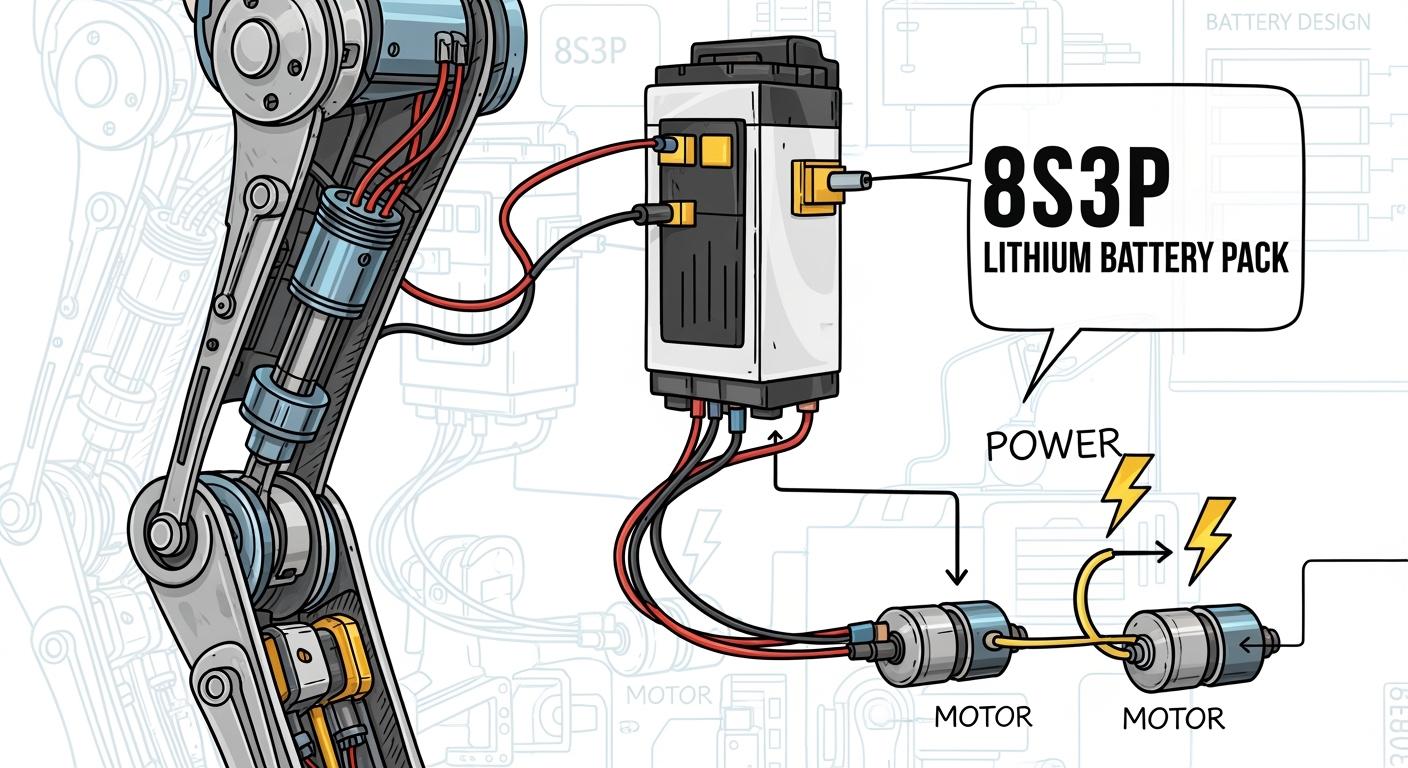
You drive operational efficiency and safety in rehabilitation exoskeleton robots by focusing on power output design that aligns battery configuration with precise power demands. Advances in battery life and power-to-weight ratios enable longer operation and more effective energy use. For rehabilitation equipment, a custom lithium battery pack can help balance runtime, weight, voltage stability, and safety. Adaptive control systems further enhance user safety by supporting personalized movement.
Key Takeaways
Use the 8S3P configuration to enhance voltage and capacity in lithium batteries. This setup improves performance and reliability in rehabilitation exoskeleton robots.
Integrate a Battery Management System (BMS) to monitor battery health. This system protects against overcharging and overheating, ensuring safety and longevity.
Conduct thorough testing of the battery pack in real-world scenarios. This step validates performance and safety, helping to meet the demands of medical and robotics applications.
Part 1: 8S3P Configuration & Power Output Design
1.1 8S3P Series-Parallel Structure
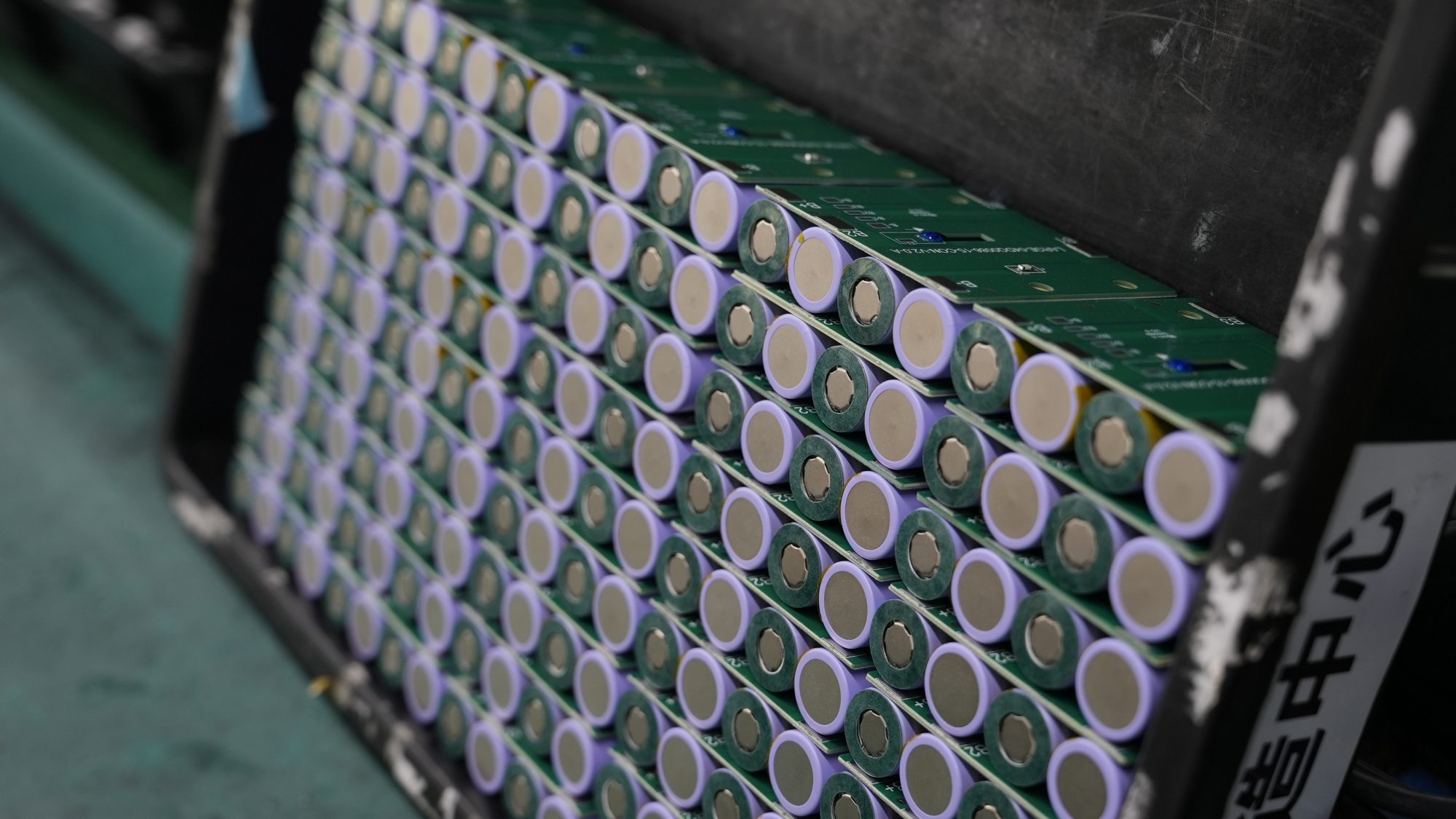
You achieve a robust Power Output Design by using the 8S3P series-parallel structure. This configuration connects eight cells in series to raise the voltage, while three parallel strings increase the capacity and current output. You benefit from improved current sharing, which reduces voltage mismatches and extends battery life. In rehabilitation exoskeleton robots, this structure supports stable operation and high reliability.
Tip: Always balance cells in parallel groups to prevent performance drops from weaker cells.
Specification | Value |
|---|---|
Nominal Voltage | 25.6V |
Nominal Capacity | 9.9Ah |
Energy | 253.44Wh |
Internal Resistance | ≤80mΩ |
Self Discharge Rate | <1%/Month |
Max Continuous Discharge | 20A |
Charge Current | 1.98A |
Max Charge Current | 10A |
Charge Voltage | 29.2V |
1.2 Voltage and Capacity Scaling
You scale voltage by increasing the number of cells in series and boost capacity by adding parallel strings. This approach allows you to tailor Power Output Design for the specific needs of medical and robotics applications. The 8S3P setup delivers a nominal voltage of 29.6V and capacities between 7500mAh and 7800mAh, supporting longer runtimes and higher energy storage.
Feature | Series | Parallel |
|---|---|---|
Increases | Voltage | Capacity |
Current Draw | Lower | Higher |
Typical Use | Motors, inverters | Backup power, long runtime |
Main Challenge | Voltage balancing | Current balancing |
1.3 Cell Format and Energy Density
You must select the right cell format and chemistry for optimal Power Output Design. For example, LiFePO4 offers a platform voltage of 3.2V, energy density of 90-120 Wh/kg, and over 2000 cycles, making Lion batteries ideal for medical and industrial robots. NMC and LCO chemistries provide higher energy density but may require stricter management. Consistent cell selection ensures uniform performance and safety.
1.4 Cycle Stability and Fast Charging
You enhance cycle stability and enable fast charging by using high-quality cells and integrating a reliable Battery Management System (BMS). This system monitors voltage, temperature, and current, protecting your lithium battery pack from overcharge and deep discharge. Fast charging supports operational efficiency in exoskeleton robots, while robust cycle life ensures long-term reliability in demanding environments.
Part 2: Calculation, Optimization & Integration
2.1 Power Output Calculation Steps
You must calculate the core parameters of your 8S3P lithium battery pack to ensure reliable performance in rehabilitation exoskeleton robots. Start by identifying the cell chemistry, such as LiFePO4, which offers a platform voltage of 3.2V, energy density of 90–120 Wh/kg, and over 2000 cycles. Use the following table to guide your calculations:
Formula/Parameter | Description | Example (8S3P LiFePO4, 100Ah cells) |
|---|---|---|
Voltage | Series cells × Cell voltage | 3.2V × 8 = 25.6V |
Capacity | Parallel cells × Cell Ah | 100Ah × 3 = 300Ah |
Energy | Voltage × Capacity ÷ 1000 (in kWh) | 25.6V × 300Ah ÷ 1000 = 7.68 kWh |
You should always verify these calculations with the actual cell specifications provided by your supplier. This step ensures your Power Output Design meets the operational requirements of your exoskeleton robot.
2.2 Matching Battery to Robot Demands
You need to match the battery pack’s output to the real-world demands of your rehabilitation exoskeleton robot. Begin by analyzing the robot’s peak and average power consumption during different movement cycles. For example, walking assistance may require higher bursts of current, while idle states draw less power. Select a battery configuration that supports both the maximum continuous discharge current and the required runtime.
Tip: Always include a safety margin of at least 20% above the calculated peak current to account for unexpected load spikes and aging effects.
You can use application data from similar medical and robotics scenarios to refine your estimates. This approach helps you avoid undersizing or oversizing your battery pack, which can impact both performance and cost.
2.3 Discharge Rate and Thermal Management
You must consider the discharge rate (C-rate) to ensure the battery delivers sufficient current without overheating. High discharge rates can cause excessive heat buildup, which reduces cycle life and increases safety risks.
Managing thermal conditions is crucial to prevent thermal runaway, which can lead to severe safety hazards, including the release of toxic and flammable gases, and even explosions. Effective thermal management strategies, such as early detection of critical conditions and optimizing battery design, are essential to enhance safety and performance in applications like rehabilitation exoskeleton robots.
You should integrate temperature sensors and design the battery enclosure for optimal heat dissipation. Forced air or liquid cooling may be necessary for high-power applications. Always validate your thermal management strategy under real operating conditions.
2.4 Safety, BMS, and Cell Balancing
You must prioritize safety in every aspect of your lithium battery pack design. Integrate a Battery Management System (BMS) to monitor cell voltages, temperatures, and current in real time. The BMS protects against overcharge, over-discharge, short circuits, and thermal events. Cell balancing, either passive or active, ensures uniform performance and extends the service life of your battery pack.
Safety Feature | Function |
|---|---|
Overcharge Protection | Prevents cell damage and fire risk |
Over-discharge Protection | Avoids deep discharge and capacity loss |
Short Circuit Protection | Stops dangerous current surges |
Temperature Monitoring | Detects overheating and triggers shutdown |
Cell Balancing | Maintains uniform voltage across cells |
You should test all safety features under simulated fault conditions before deploying the battery in a medical or robotics environment.
2.5 Integration and Testing
You must integrate the battery pack into your exoskeleton robot with attention to mechanical, electrical, and software interfaces. Secure the battery with vibration-resistant mounts and ensure all connectors meet the current and voltage ratings. Implement communication between the BMS and the robot’s main controller for real-time status updates and fault alerts.
You should conduct comprehensive testing, including:
Functional tests under various load profiles
Thermal cycling and stress tests
Safety validation for all protection features
Field trials in real-world application scenarios
This process ensures your Power Output Design delivers reliable, safe, and efficient performance in demanding rehabilitation and robotics environments.
You ensure reliable exoskeleton robot performance by following these steps: select the right 8S3P configuration, calculate voltage and capacity, implement robust safety features, and integrate the battery pack with thorough testing. Always validate your design to meet operational needs and support long-term, safe use in medical and robotics sectors.
FAQ
What advantages does the 8S3P lithium battery pack offer for exoskeleton robots?
An 8S3P lithium battery pack provides high energy density, stable voltage, and long cycle life. This configuration supports reliable operation in medical, robotics, and industrial applications where lightweight power and consistent output are important. Need a pack for wearable robotics? Large Power can design a custom battery solution around your voltage, capacity, and safety requirements.
How do you ensure safety and reliability in lithium battery packs?
You improve safety and reliability by integrating a Battery Management System for real-time monitoring. Cell balancing and thermal management protect against overcharge, over-discharge, and overheating. These protections are essential for medical rehabilitation devices and mobile robotics.
Where can you get customized lithium battery solutions from Large Power?
You can contact Large Power for customized consultation and battery pack design support. Large Power engineers can tailor lithium battery solutions for rehabilitation exoskeleton robots, medical devices, and industrial robotics. Start with a custom battery solution to match your specific lithium battery pack requirements.


