

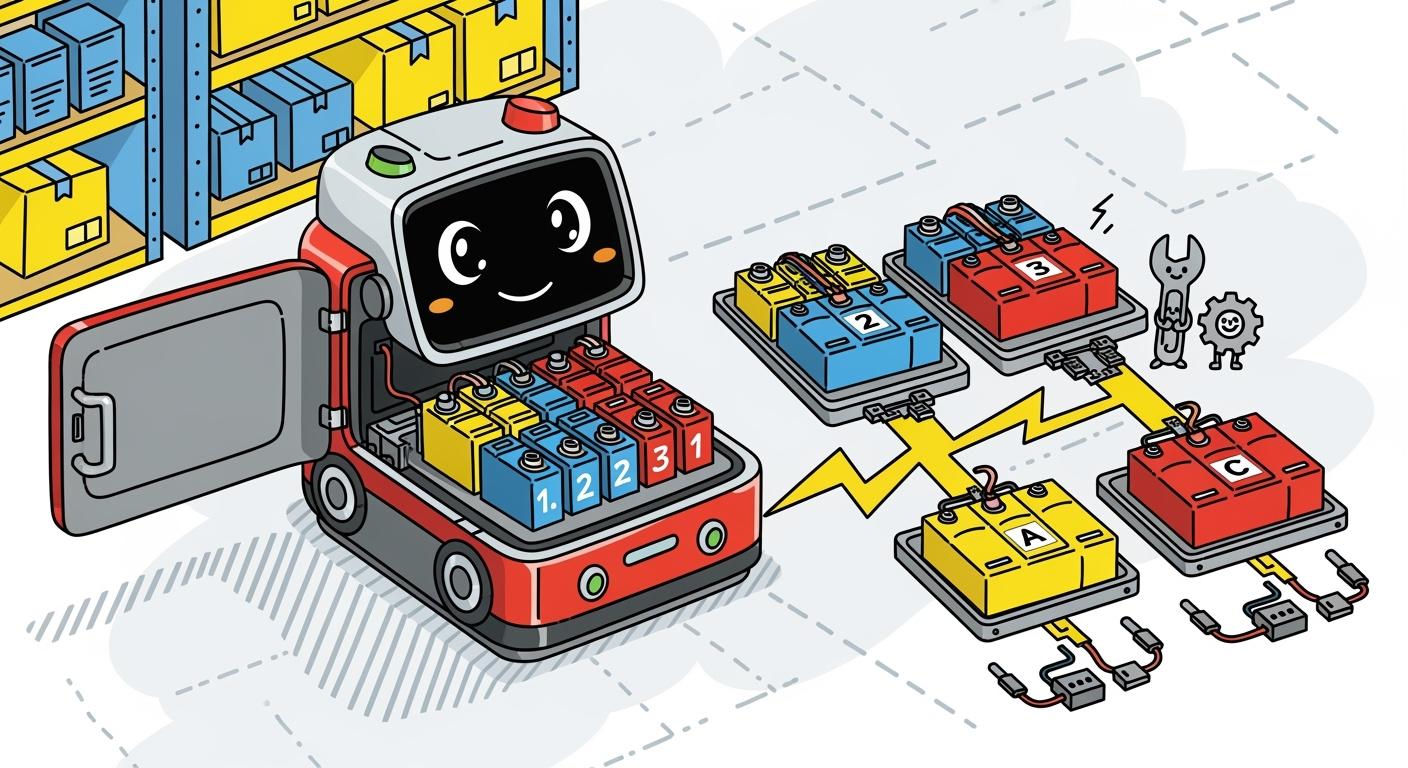
You play a vital role when you design battery packs for autonomous mobile robots and AGV systems. The right battery pack ensures your robots deliver reliable performance, high uptime, and consistent operation. You must match voltage, capacity, and chemistry to real-world demands. Custom shapes, a robust battery management system (BMS), and clear supplier communication all contribute to success.
High energy density extends operational time between charges.
Quick charging and long cycle life help maximize uptime.
Effective thermal management supports reliability in tough environments.
Key Takeaways
Understand your robot’s power needs by defining voltage and capacity requirements. This ensures optimal performance and battery life.
Choose the right battery chemistry, like lithium-ion, for better efficiency and longer lifespan compared to lead-acid batteries.
Integrate a robust Battery Management System (BMS) to monitor battery health and prevent failures, enhancing safety and reliability.
Consider custom battery shapes to maximize space and improve performance in your robot’s design.
Regularly assess battery health and charging patterns to extend lifespan and reduce unexpected downtimes.
Part1: Design Battery Packs for AMR/AGV Needs
1.1 Define Voltage & Capacity Requirements
You must start with a clear understanding of your robot’s power needs. Voltage and capacity are the foundation when you design battery packs for AMR and AGV systems. Different operational profiles demand different voltage levels and capacities. For example:
Higher voltage systems, such as 48V, suit heavy-load applications. These systems reduce current flow and minimize heat generation.
Battery capacity links directly to the average load and required runtime. You must calculate the energy your robot consumes during its typical shift.
48V systems often deliver better efficiency than 24V systems. Lower current draw means less heat loss and improved reliability.
Tip: Always match voltage and capacity to your robot’s peak and average power demands. This prevents performance drops and extends battery life.
1.2 Assess Runtime & Charging Cycles
You need to estimate how long your robot must operate between charges. Warehouse automation, logistics, and industrial robots require different runtimes. The table below shows typical runtimes for various applications and battery types:
Battery Type | Application Type | Average Runtime |
|---|---|---|
NMC | E-commerce AGV | 10 hours |
NMC | Port container AGV | 12 hours |
Lithium-ion | AMR | 4 to 6.5 hours |
You must also consider charging cycles. Frequent charging can shorten battery lifespan. Choose lithium battery chemistries like LiFePO4, NMC, LCO, or LMO for long cycle life and high energy density. These chemistries support demanding duty cycles in industrial and logistics environments.
1.3 Align Battery Specs with Robot Operations
You must align battery specifications with the operational demands of your robot. Each system component draws power differently. The table below highlights how mismatches affect performance:
System Component | Power Draw Characteristics | Operational Impact on Battery |
|---|---|---|
Drive Motor | High, Dynamic Spikes | Dictates maximum peak discharge requirements |
Motherboard Compute | Moderate, Constant | Requires stable voltage to avoid system resets |
Motion Sensors | Low, Sensitive | Susceptible to calibration loss during voltage sag |
You must select battery packs that support these demands. For example, medical robots need stable voltage for sensitive sensors. Security systems require reliable peak discharge for motors. Industrial robots demand robust cycle life and high capacity. Consumer electronics and infrastructure robots benefit from optimized energy density and weight.
Charging methods also influence battery pack design. The table below compares common charging solutions:
Charging Method | Characteristics | Suitable Applications |
|---|---|---|
Plug-in Charging | Power range of 3-6KW, requires precise alignment for connection | Automated charging of unmanned forklifts and sorting robots |
Wireless Charging | Magnetic resonance, flexible, supports multi-device charging | Harsh environments like high-dust or high-risk areas |
Side Charging | Adaptable to various setups | Not specified |
Floor Charging | Adaptable to various setups | Not specified |
Note: When you design battery packs, always consider the operational profile, duty cycle, and charging method. This ensures your robots deliver consistent performance and reliability.
You must tailor your battery pack design to the specific needs of each application sector. Medical, robotics, security, infrastructure, consumer electronics, and industrial robots all require different voltage, capacity, and chemistry combinations. Lithium battery packs, especially those using LiFePO4, NMC, LCO, or LMO, offer the flexibility and performance needed for these diverse environments.
Part2: Battery Chemistry & Form Factor Selection
2.1 Lithium-Ion vs. Lead-Acid Comparison
You must select the right battery chemistry for your AMR or AGV system. Lithium-ion batteries offer clear advantages over lead-acid batteries in industrial robotics. The table below shows key performance differences:
Feature | Lithium-Ion Batteries | Lead-Acid Batteries |
|---|---|---|
Charging Time | 1 to 2 hours | Several hours |
Maintenance Requirements | Low | High |
Energy Density | 90-120 Wh/kg | 30-50 Wh/kg |
Energy Efficiency | 99% or higher | Lower than lithium-ion |
Opportunity Charging | Yes | No |
You also need to consider battery lifespan. Lithium-ion batteries last much longer than lead-acid batteries:
Battery | Cycle Life |
|---|---|
Lithium-Ion | 2,000–5,000 cycles |
Lead-Acid | 500–1,000 cycles |
Tip: Lithium-ion batteries support opportunity charging, which keeps your robots running longer and reduces downtime.
2.2 Custom Pack Shapes for Space Optimization
You can maximize space in your robot chassis by using custom-shaped battery packs. These packs fit into the robot’s structure, such as the torso or limbs. This approach eliminates wasted space and increases payload capacity. You improve performance and efficiency by integrating batteries directly into the robot’s design. When you design battery packs, you must address several constraints:
Charging patterns must match battery chemistry.
Switching from lead-acid to LiFePO4 requires new charging infrastructure.
Suboptimal operations can result if you do not adapt the infrastructure.
Constraint Type | Description |
|---|---|
Size | Custom-shaped battery packs must fit specific dimensions of AMR/AGV systems. |
Weight | The weight of the battery impacts the overall performance and efficiency of the system. |
Performance | Battery performance must meet the operational requirements of the AMR/AGV systems. |
Communication Protocols | Different battery types may require specific communication protocols for optimal integration. |
Environmental Factors | Batteries must be designed to withstand the environmental conditions in which they will operate. |
Note: Optimal charging density varies by battery chemistry. LiFePO4 batteries benefit from frequent shallow charges, while lead-acid batteries do not.
2.3 Balancing Energy Density & Weight
You must balance energy density and weight when you design battery packs for AMR and AGV systems. Higher energy density batteries, such as NMC, reduce weight and increase payload efficiency. This leads to longer runtimes and less wear on your robots. For example, a port container AGV using NMC batteries reduced its battery pack weight by 5kg, extended runtime to 12 hours, and increased daily throughput by 3 containers.
Chemistry | Voltage (V) | Energy Density (Wh/kg) | Cycle Life (cycles) | Application Scenario |
|---|---|---|---|---|
NMC | 3.6-3.7 | 150-220 | 2,000–3,000 | Industrial, logistics, port |
LiFePO4 | 3.2 | 90-140 | 3,000–5,000 | Medical, security, lifting |
LCO | 3.7 | 150-200 | 1,000–2,000 | Consumer electronics |
LMO | 3.7 | 100-150 | 1,000–2,000 | Infrastructure, robotics |
Solid-State | 3.7-4.2 | 250-350 | 5,000+ | Emerging, high-end robotics |
Lithium Metal | 3.7-4.2 | 300+ | 1,000+ | Advanced, future systems |
High energy density is essential for small robots and AGVs.
Large mobile platforms may prioritize cycle life and thermal stability over energy density.
You must select the right chemistry and form factor for your application. Medical, robotics, security, infrastructure, consumer electronics, and industrial sectors each require different battery solutions.
Part3: Battery Management & Safety Integration
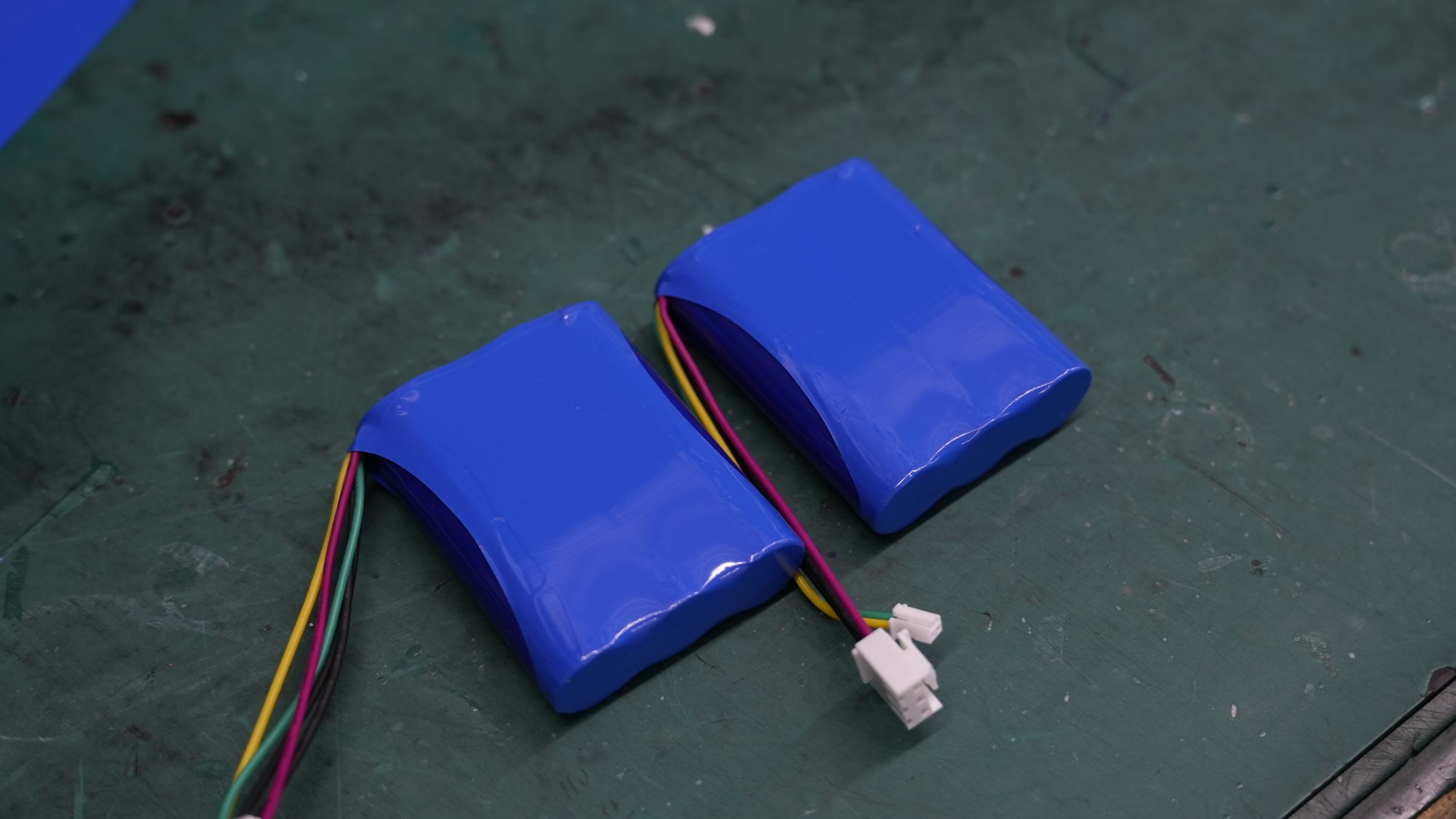
3.1 Battery Management System (BMS) Essentials
When you design battery packs for AMR and AGV systems, you must integrate a robust Battery Management System (BMS). A BMS acts as the control center for your lithium battery packs. It provides accurate measurements of cell voltage, state of charge (SoC), and temperature. This real-time data helps you optimize robot performance and prevent failures.
A well-designed BMS delivers these essential functions:
Monitors voltage, current, and temperature for each cell.
Calculates State of Charge (SoC) and State of Health (SoH).
Balances cells for uniform energy distribution.
Optimizes energy use and reduces energy loss.
Maintains safe operating conditions by preventing overcharge and over-discharge.
Includes cooling mechanisms to regulate battery temperature.
Detects risks like overvoltage, undervoltage, and short circuits, disconnecting the battery if needed.
You can learn more about BMS integration at BMS and PCM Solutions.
A structured BMS reduces risks from overheating, short circuits, and electrical malfunctions. It also extends battery life by balancing cells and monitoring battery health.
3.2 Thermal & Overcharge Protection
Thermal management is critical for lithium battery safety. You can use potting and encapsulation to improve safety in harsh environments. Thermally conductive potting compounds help diffuse heat and prevent localized overheating. Advanced battery ICs add thermal protection, shutting off or limiting current if temperatures rise too high. You can also use DC axial fans or passive cooling to regulate temperature during charging and discharging.
Smart charging circuits and voltage monitoring systems protect against overcharge. These systems automatically cut off power when the battery is full. Fail-safe mechanisms shut down operations if voltage thresholds are exceeded.
Protection Feature | Function | Benefit |
|---|---|---|
Potting/Encapsulation | Enhances heat diffusion, prevents hot spots | Reduces thermal stress |
Smart Charging Circuits | Cuts off power at full charge | Prevents overcharge failures |
Voltage Monitoring | Ensures safe voltage range | Avoids battery damage |
Thermal Sensors/ICs | Limits current or shuts down at high temps | Prevents overheating incidents |
3.3 Safety Protocols for Lithium Packs
You must follow strict safety protocols when you design battery packs for industrial robots. The most common causes of safety incidents include:
Mechanical damage, such as drops or punctures.
Electrical abuse, including overcharging or short circuits.
Thermal stress from extreme temperatures.
Manufacturing defects, like internal shorts or impurities.
Always implement regular inspections, robust housing, and automated monitoring to reduce these risks. Effective communication between the BMS and charger is essential for safety and long battery life.
Part4: Quality, Compliance & Supplier Collaboration
4.1 Industry Standards & Certifications
You must ensure your battery packs meet strict industry standards before deployment in AMR and AGV systems. These standards guarantee safety, reliability, and legal compliance in global markets. The table below summarizes the most relevant certifications:
Standard | Application | Focus | Typical Products |
|---|---|---|---|
IEC 62133-2 | Portable battery applications | Safety for portable use | Handheld devices, medical tools |
IEC 62619 | Industrial battery applications | System-level safety | AGVs, forklifts, robotics |
UN38.3 | Transport Testing | Transport-related abuse tests | Lithium batteries for transport |
You should plan for compliance early in your project. Each region may have unique requirements, and these can change quickly. Early alignment with standards like IEC 62619 and UN38.3 helps you avoid costly redesigns and delays.
Note: Custom battery packs often require several weeks for testing and documentation. This can impact your project timeline and sourcing decisions.
4.2 Supplier Communication & Evaluation
Selecting the right supplier is critical for your project’s success. You need to evaluate suppliers based on their ability to meet industrial safety standards and provide complete documentation. The table below highlights key evaluation criteria:
Topic | IEC 62133-2 | IEC 62619 |
|---|---|---|
Typical use case | Portable products | Industrial systems |
Focus | Cell and battery safety | System-level safety |
Protection assessment | Basic abuse and protection | Stronger emphasis on system protection and industrial conditions |
You should also request the following from your supplier:
UN38.3 test summary
Battery model identification that matches your product
Safety Data Sheet (SDS), if required by your logistics chain
Packaging and labeling information for your carrier or destination market
Underlying reports or additional evidence for custom or high-risk packs
Clear communication with your supplier ensures you receive battery packs that meet your technical and regulatory needs.
4.3 Reliability Testing & Lifecycle
You must validate battery reliability through rigorous testing and lifecycle analysis. This process enhances the dependability of your AMR and AGV systems. Advanced microcontrollers and predictive analytics help you monitor battery health and performance in real time. The table below outlines key aspects of lifecycle validation:
Aspect | Description |
|---|---|
Battery Degradation Modeling | Predicts battery degradation under real-world conditions, supporting warranty and BMS optimization. |
Remaining Useful Life (RUL) | Determines repurposing potential for used batteries, optimizing retirement and recycling strategies. |
Real-time SoH Tracking | Integrates degradation models into BMS for health tracking and anomaly detection. |
You can use AI-powered solutions to minimize degradation and extend battery life. Real-time monitoring of State of Charge (SoC) and State of Health (SoH) provides predictive diagnostics for improved longevity.
Tip: Reliable battery packs reduce downtime and maintenance costs, supporting long-term operational efficiency.
Part5: Practical Tips & Common Pitfalls
5.1 Real-World Design Advice
You can improve your AMR and AGV battery projects by following practical design strategies. Start by mapping out your robot’s daily workload. Measure the actual current draw during peak and idle times. This helps you select the right battery chemistry, such as LiFePO4 or NMC, based on your runtime and cycle life needs.
Use a modular approach for battery integration. Modular packs simplify maintenance and allow for quick swaps, reducing downtime. Always plan for thermal management, especially in compact robot designs. Install temperature sensors and cooling solutions to prevent overheating.
Tip: Schedule regular battery health checks. Predictive maintenance tools can alert you to early signs of degradation, helping you avoid unexpected failures.
You should also document all charging and discharging patterns. This data supports accurate lifecycle analysis and helps you optimize charging schedules for longer battery life.
5.2 Mistakes to Avoid
Many teams encounter common pitfalls when working with lithium battery packs for AMR and AGV systems. Watch out for these issues:
Inconsistent power delivery from voltage or current fluctuations.
Poor thermal management in tight spaces, which can cause overheating.
Inaccurate load measurement, leading to unexpected battery drain.
You can avoid major setbacks by steering clear of these frequent mistakes:
Focusing only on the upfront price and ignoring the total lifecycle cost.
Mixing up the requirements of AGVs and AMRs, which leads to choosing the wrong battery type.
Note: Always match your battery solution to your robot’s operational profile. Consider both technical and financial impacts before making a final decision.
You can design reliable battery packs for AMR and AGV systems by following a clear process. Start with operational requirements and energy needs. Consider environmental conditions and budget constraints. Test for vibration, impact stress, and extreme temperatures. Validate BMS logic to prevent shutdowns. Use fast charging and wireless solutions to reduce downtime. Real-time monitoring and predictive maintenance improve safety. Collaborate with suppliers and experts to align technical specifications, safety, and compliance. This approach supports long-term reliability and efficient operations.
FAQ
What is the best lithium battery chemistry for AMR/AGV systems?
Choose LiFePO4 for long cycle life and safety in AGV fleets. Choose NMC when your AMR platform needs higher energy density and lighter weight. For most robotics battery solutions and AGV battery projects, Large Power can help match chemistry, voltage, capacity, and charging strategy to your operating cycle.
How do you extend the lifespan of lithium battery packs?
Use a Battery Management System (BMS).
Avoid deep discharges.
Keep batteries cool.
Schedule regular maintenance.
Use the correct charger for your chemistry.
These steps help you reduce wear and maximize battery cycles.
Why is BMS important for industrial robots?
A BMS monitors voltage, current, temperature, state of charge, and cell balance. It helps prevent overcharge, over-discharge, short circuits, and thermal risks. You protect your robot platform and maintain safe, reliable operation during continuous warehouse, logistics, inspection, and service robot workflows.
What certifications do lithium battery packs need for AMR/AGV use?
Standard | Focus | Application |
|---|---|---|
IEC 62619 | System safety | Industrial robots |
UN38.3 | Transport safety | Shipping batteries |
IEC 62133-2 | Portable safety | Handheld equipment |
You should verify certification needs before deployment, especially for AGV, AMR, warehouse automation, and industrial robot projects. Contact Large Power to discuss custom battery pack design, BMS protection, certification support, and production planning for your robot platform.


