

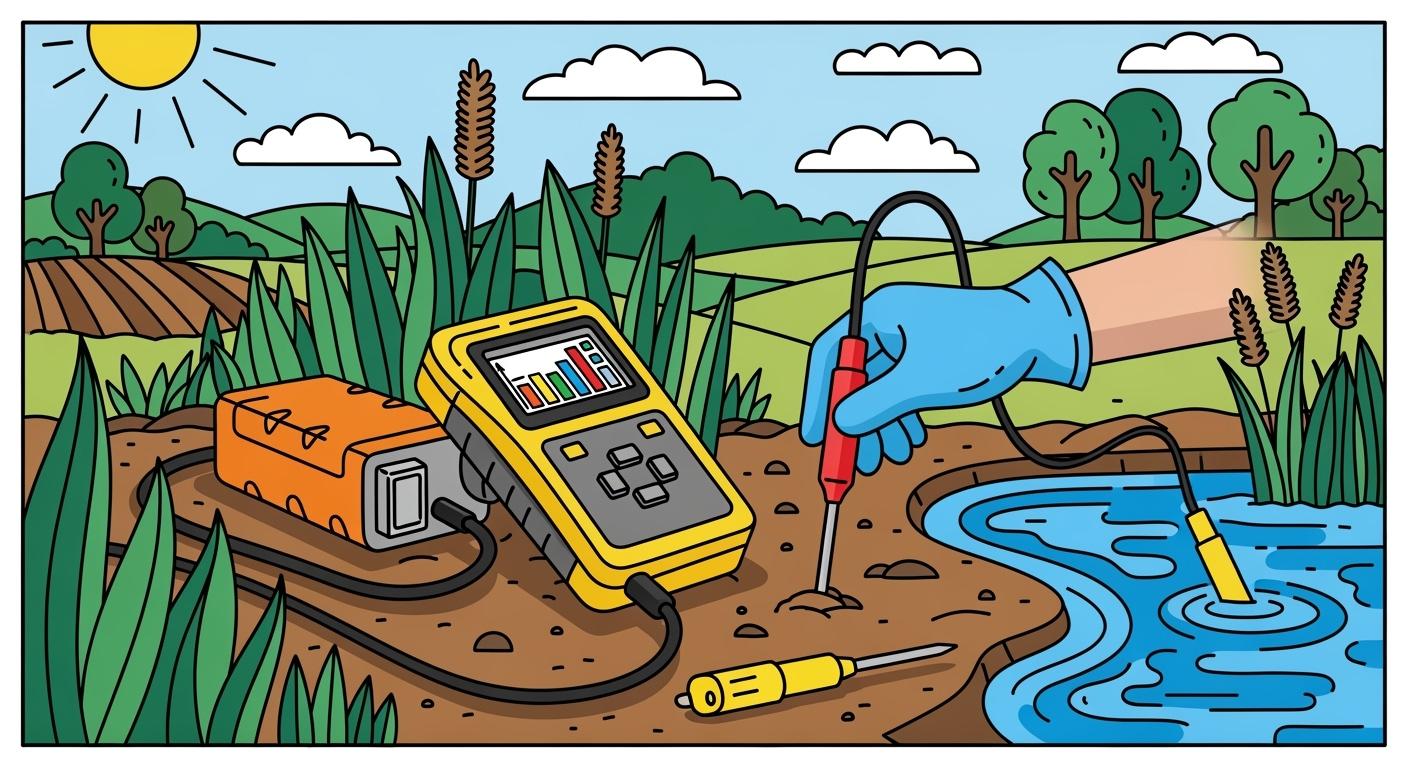
Selecting the right custom battery solution helps portable soil and water testing equipment deliver accurate, continuous measurements during environmental and agricultural fieldwork. Stable power supports sample pumps, analytical sensors, data loggers, GPS modules, and wireless IoT communication, especially in remote locations where charging access is limited.
Reliable operation depends on more than battery capacity. Engineers must evaluate voltage, peak current, runtime, moisture protection, vibration, and operating temperature. Low-temperature batteries can maintain more dependable performance in cold environments, while an integrated Battery Management System (BMS) monitors voltage, current, temperature, and state of charge. These features help field-testing equipment collect consistent data while reducing unexpected shutdowns and maintenance.
Key Takeaways
Choose lithium-ion batteries for high energy density and long life. They support reliable field operations and reduce replacement frequency.
Select batteries with IP65 or IP67 ratings for durability in harsh environments. This protects against humidity and extreme temperatures.
Implement battery management systems to monitor health and prevent issues. This ensures safety and extends battery life during fieldwork.
Follow best practices for battery care, such as avoiding extreme temperatures and using official chargers. This maximizes performance and minimizes downtime.
Consider environmental impact when selecting batteries. Opt for options that support recycling to reduce pollution and promote sustainability.
Part1: Field Testing Battery Needs

1.1 Power and Portability
You need portable soil and water testing equipment that works reliably in the field. Most devices use either mains or battery power. After a full recharge, you can expect at least 8 hours of working time. This long runtime supports a full day of field analysis without interruption.
Power Supply Type | Working Time After Recharge |
|---|---|
Mains cum Battery | At least 8 hours |
When you select Battery Solutions, consider both the energy density and the weight. Lithium-based chemistries like LiFePO4, NMC, LCO, and LMO offer high energy density and lighter weight compared to older battery types. This makes your equipment easier to carry across large fields or remote sites.
1.2 Durability in Harsh Environments
Field conditions can be tough on batteries. You may face high or low temperatures, humidity, and dust. Most batteries perform best between 20-25°C (68-77°F). High temperatures can cut battery life by up to 50% for every 8°C above 25°C. Cold weather can reduce battery efficiency by 20-30% at freezing temperatures. Humidity and moisture can cause corrosion and damage battery management systems.
High humidity can lead to corrosion in electrical connections.
Moisture ingress can damage battery management systems.
Adequate ventilation is necessary to prevent heat buildup and remove gases produced during operation.
When you choose Battery Solutions, look for local batteries with IP65 or IP67 ratings. These offer high humidity resistance and advanced cooling systems. The table below compares local and imported batteries for field use:
Feature | Local Batteries | Imported Batteries |
|---|---|---|
Engineered for Local Climate | Yes | No |
Advanced Cooling Systems | Yes | Limited |
Humidity Resistance | High (IP65/IP67) | Low |
Smart Monitoring Systems | Yes | No |
Performance in High Temperatures | Reliable | Inconsistent |
1.3 Battery Backup Benefits
You cannot afford downtime during critical field analysis. Battery backup systems provide immediate power when your main supply fails. This ensures your testing equipment keeps running, so you do not lose valuable data.
Tip: Use battery backup systems to maintain operational integrity and data continuity during unexpected power interruptions.
Battery Solutions with smart monitoring and backup features help you avoid costly delays and keep your fieldwork on track.
Part2: Battery Solutions and Technologies
2.1 Lithium-Ion Packs
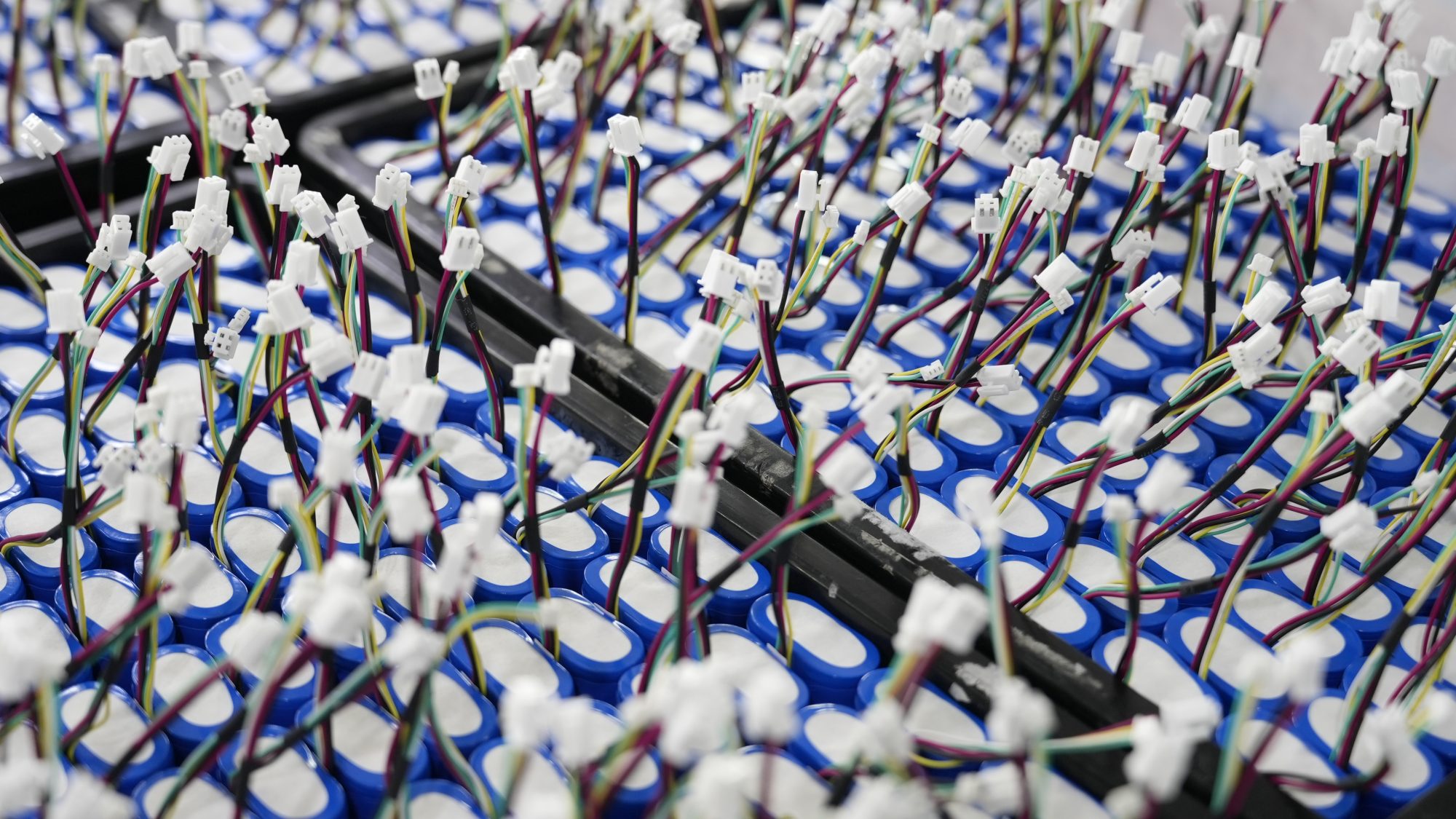
You need reliable power for portable soil and water testing equipment. Lithium-ion battery packs deliver high energy density and long cycle life, making them the preferred choice for field applications. When you use lithium-ion packs, you benefit from:
Long life expectancy—typically 2,000 to 3,000 cycles, which means several years of dependable service.
High power density, so your equipment runs longer between charges.
Slower capacity loss compared to lead-acid batteries, which reduces downtime and replacement costs.
Efficient operation, which is crucial for high-production environments like agriculture, environmental monitoring, and industrial fieldwork.
Proper maintenance of lithium-ion packs maximizes performance and lifespan. You can expect up to 5 years of use or more than 2,000 charging cycles. With careful handling, some packs last up to 3,000 cycles. This durability supports continuous field analysis in sectors such as medical diagnostics, robotics, security systems, infrastructure monitoring, and consumer electronics.
Battery Chemistry | Platform Voltage (V) | Energy Density (Wh/kg) | Cycle Life (cycles) |
|---|---|---|---|
LiFePO4 | 3.2 | 90-160 | 2,000-4,000 |
NMC | 3.7 | 150-220 | 1,000-2,000 |
LCO | 3.7 | 150-200 | 500-1,000 |
LMO | 3.7 | 100-150 | 300-700 |
Tip: Always follow best practices for charging and storage to extend the life of your lithium-ion battery packs.
2.2 Other Battery Types
You may encounter other battery types in portable testing equipment, such as nickel-metal hydride (NiMH), alkaline, and lead-acid batteries. Each type has unique characteristics that affect performance, cost, and environmental impact.
Battery Type | Toxicity | Recyclability | Emissions | Lifespan | Cost-Effectiveness | Material Availability | Environmental Impact |
|---|---|---|---|---|---|---|---|
Nickel Metal Hydride | Low | Easy | Low | Medium | Moderate | Good | Moderate |
Lithium-Ion | Medium | Harder | Medium | High | Dominant | Limited | High |
Lead-Acid | High | Easy | High | Low | High | Widely available | Moderate |
Sodium-Ion | Low | Easy | Low | Medium | Promising | Potentially scalable | Low |
Alkaline | Low | Easy | Low | Low | High | Good | Low |
Nickel-metal hydride batteries offer lower toxicity and easier recyclability. They also produce fewer emissions during production and recycling. However, they have a shorter lifespan than lithium-ion batteries and can be affected by environmental impacts from mining. Alkaline batteries are cost-effective and widely available, but they have a low lifespan and are less suitable for high-demand field applications.
When you select Battery Solutions, consider the balance between lifespan, environmental impact, and cost. Lithium-ion batteries remain the dominant choice for demanding fieldwork, but alternatives like sodium-ion and NiMH may suit specific needs.
2.3 Battery Management Systems
Battery management systems (BMS) play a critical role in maximizing the safety and efficiency of your battery packs. A BMS monitors voltage, temperature, and charge cycles to prevent overcharging, overheating, and deep discharge. This protection extends the life of your batteries and ensures reliable operation in the field.
You can find advanced BMS solutions, such as Large Power, that offer:
Real-time monitoring of battery health and performance.
Automatic balancing of cells to maintain optimal charge levels.
Data logging for maintenance and troubleshooting.
Integration with smart monitoring systems for remote diagnostics.
Battery backup features in portable testing kits provide immediate power during outages, protecting your data and equipment. You should also use battery testing equipment to evaluate battery performance before field deployment. This step helps you avoid unexpected failures and ensures your Battery Solutions deliver consistent results.
Tip: Regularly test and monitor your batteries with a BMS to reduce downtime and extend service life.
By choosing the right Battery Solutions and integrating a robust BMS, you support reliable field analysis across environmental, agricultural, and industrial sectors.
Part3: Choosing the Right Battery
3.1 Capacity and Runtime
Selecting the right battery capacity and runtime is essential for reliable field testing. You should follow a step-by-step approach to ensure your equipment meets operational needs:
Define the load profile, including all devices and their maximum power requirements.
Set the required backup duration, such as 15 minutes at full load, and add a safety margin.
Choose candidate battery models that fit your application.
Calculate the theoretical energy by converting amp-hours (Ah) and voltage (V) to watt-hours (Wh).
Apply derating factors for depth of discharge, temperature, and discharge rate.
Compare the calculated runtime to your required runtime and adjust capacity if needed.
Document all assumptions for future reference.
Field testing sessions help you understand how temperature and discharge rates affect battery performance. High temperatures can increase capacity but may shorten service life. Standard discharge tests do not harm the battery, so you can use them to determine the required runtime for your portable equipment.
3.2 Weight and Compatibility
You need to consider both weight and compatibility when integrating new batteries into your field testing devices. Lighter batteries, such as LiFePO4 or NMC, make equipment easier to transport. However, compatibility issues can arise:
Voltage differences between battery chemistries can cause imbalanced electrical conditions.
Mixing battery types leads to conflicting charging profiles.
Different batteries generate varying heat levels, which can affect reliability.
Mismatched current capacities may result in overcharging or undercharging.
Electromagnetic compatibility problems can cause erratic device behavior.
Always match battery chemistry, voltage, and capacity to your device specifications to avoid these issues.
3.3 Environmental Impact
You play a key role in reducing environmental risks by choosing batteries that support recycling programs. Proper recycling prevents toxic chemical leakage, soil contamination, and water pollution. The table below shows how recycling programs help mitigate risks:
Environmental Risks | Mitigation through Recycling Programs |
|---|---|
Toxic chemical leakage | Reduced potential for leakage into the environment |
Soil contamination | Prevention of soil contamination through proper disposal |
Water contamination | Protection of water sources from harmful substances |
Fires | Decreased risk of fires associated with improper disposal |
3.4 Rechargeability Options
When you work in remote locations, effective rechargeability options are vital. The table below compares two common choices:
Battery Type | Advantages | Disadvantages |
|---|---|---|
Low-self-discharge NiMH | Excellent shelf life, good longevity over cycles | Limited capacity and energy density |
Lithium Iron Phosphate (LiFePO4) | Inherently stable, long cycle life, lightweight, excellent discharge voltage | Higher cost per amp hour |
You should select Battery Solutions that balance rechargeability, weight, and performance for your specific field needs.
Part4: Practical Tips and Best Practices
4.1 Recommended Models and Brands
You need batteries that deliver consistent performance in demanding field environments. Leading brands such as Panasonic, LG Chem, Samsung SDI, and Saft offer lithium-ion packs with proven reliability. These models support applications in medical diagnostics, robotics, security systems, infrastructure monitoring, consumer electronics, and industrial field analysis. When you evaluate battery brands, consider the following criteria:
Criteria | Description |
|---|---|
Performance | Power output, consistency, and suitability for different devices. |
Longevity | Shelf life and usage duration of the batteries. |
Value for Money | Cost per unit and availability of packaging options. |
You can select LiFePO4, NMC, LCO, or LMO chemistries based on your device requirements. For example, LiFePO4 batteries offer platform voltage of 3.2V, energy density of 90-160 Wh/kg, and cycle life of 2,000-4,000 cycles. NMC batteries provide higher energy density and are suitable for high-demand industrial and infrastructure applications.
4.2 Maximizing Performance
You can extend battery life and ensure safe operation in the field by following these best practices:
Avoid extreme temperatures to prolong battery lifespan.
Charge batteries partially rather than full cycles for improved longevity.
Use official chargers to prevent over-voltage.
Keep batteries above 20% charge to avoid deep discharge.
Use batteries regularly to maintain capacity retention.
Monitor battery health metrics for timely replacements.
Calibrate batteries periodically for accurate data.
Avoid using devices while charging to prevent overheating.
Store batteries at about 50% charge if not in use.
Maintain lithium-ion batteries between 20% and 80% state of charge.
Tip: Modern Remote Terminal Units (RTUs) log and report key battery indicators, including temperature. You can set custom thresholds for alerts when conditions exceed safe limits.
4.3 Maintenance and Safety
Proper storage and transport minimize risks in field environments. You should:
Use UN-certified containers with physical separation between battery units.
Label containers clearly with hazard information and emergency contacts.
Limit state of charge to 30% or lower during transport.
Use ventilated containers with real-time monitoring.
Apply thermal insulation and fire-resistant linings.
Check batteries for damage or loose wiring before transport.
Train personnel on battery hazards and safe handling.
Coordinate with local emergency services for response planning.
Facilities use safety systems like temperature monitoring, fire suppression, and advanced battery management systems to detect issues early. These measures protect your equipment and the surrounding area.
You support reliable field analysis by choosing Battery Solutions that feature lithium-ion packs and advanced battery management systems. Proper selection and maintenance help you achieve long-term cost savings and device reliability:
Lithium metal batteries can extend operational life to 10–20 years, reducing maintenance cycles.
Long-life Li-SOCl2 batteries have cut replacement frequency and labor costs by 60% over five years.
Hidden field service costs can reach ten times the battery price, so reliability matters.
Adopt best practices for battery care to maximize performance and minimize downtime.
FAQ
What makes LiFePO4 and NMC batteries suitable for portable soil and water testing equipment?
How do you choose the right battery chemistry for field-testing equipment?
Start with the device’s voltage, average and peak power consumption, required runtime, available space, operating temperature, and expected charging frequency.
Chemistry | Typical Energy Density | Typical Cycle Life | Best Suited For | |
|---|---|---|---|---|
LiFePO4 | 3.2V/cell | 90–160 Wh/kg | 2,000–4,000 cycles | Frequent cycling, long service life, and thermal stability |
NMC | 150–220 Wh/kg | 1,000–2,000 cycles | Compact equipment requiring higher energy density |
These values are typical ranges rather than guaranteed specifications. Final performance should be verified using the selected cells and the equipment’s actual duty cycle.
Why is a Battery Management System important in field applications?
A Battery Management System (BMS) monitors cell voltage, pack current, temperature, and state of charge. It can protect against overcharging, deep discharge, overcurrent, short circuits, and abnormal temperatures. Cell balancing and diagnostic communication also help reduce unexpected shutdowns and support preventive maintenance during critical fieldwork.
Can different battery chemistries be combined in one pack?
Different chemistries should not be mixed within the same battery pack unless the entire system has been specifically engineered for that architecture. LiFePO4 and NMC cells have different nominal voltages, charging limits, discharge curves, and thermal behavior. Combining unmatched cells can cause imbalance, charging faults, reduced service life, or safety hazards. Cells within a pack should also have compatible capacity, internal resistance, age, and production characteristics.
How should lithium-ion batteries for field equipment be stored and transported?
Follow the battery manufacturer’s specified storage temperature and state-of-charge range. For extended storage, lithium-ion batteries are commonly kept partially charged in a cool, dry, ventilated environment away from conductive materials and direct heat. Inspect packs periodically for swelling, leakage, corrosion, or abnormal voltage.
Transportation requirements depend on battery energy, configuration, condition, and shipping method. Batteries should meet UN 38.3 requirements and use packaging, terminal protection, labels, and documentation appropriate to the applicable transport regulations.
Can batteries be customized for extreme field conditions?
Yes. A custom battery solution can incorporate moisture-resistant enclosures, rugged connectors, vibration protection, communication functions, and low-temperature battery technology. The pack should be validated under the equipment’s actual temperature, charging, impact, and operating conditions.
Discuss your field-testing equipment’s voltage, runtime, environmental protection, BMS, and certification requirements with the Large Power engineering team.


