

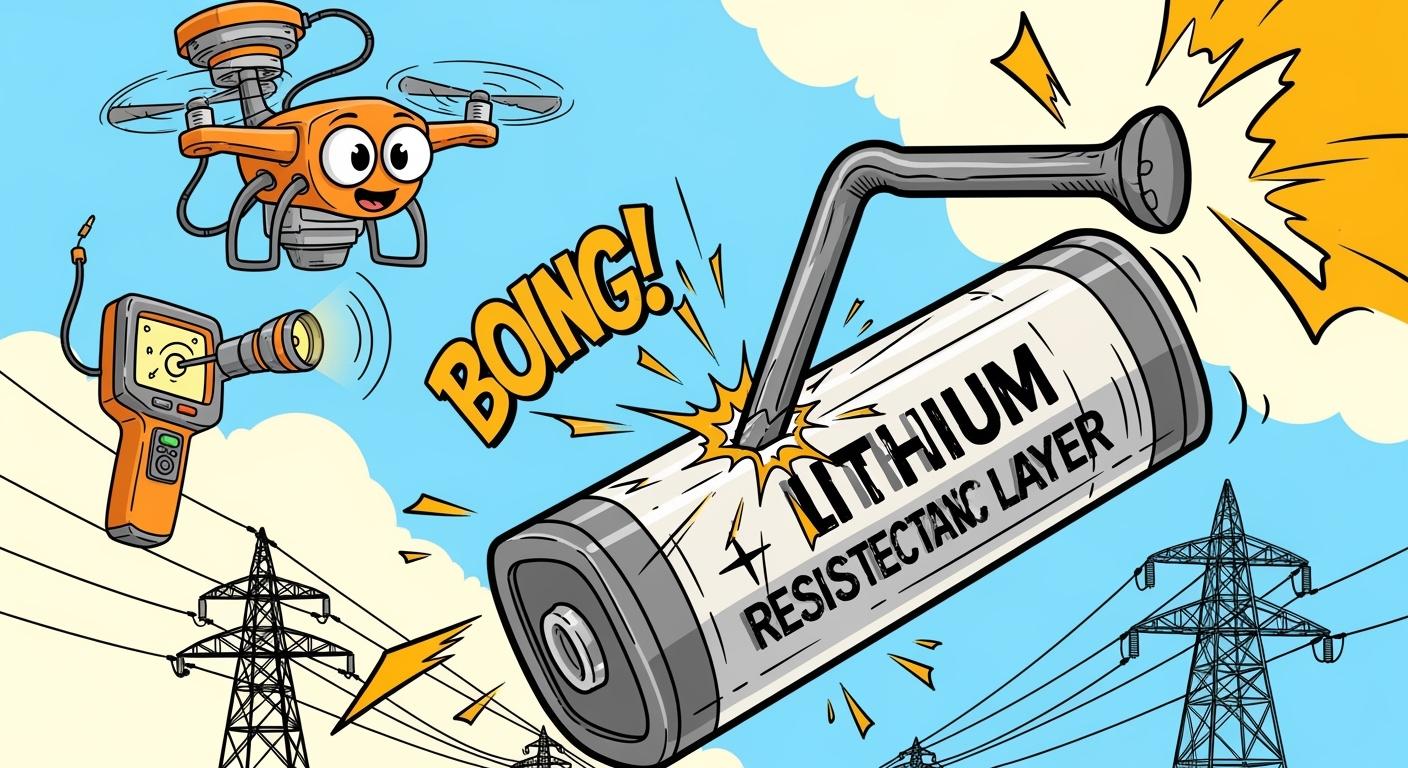
Power grid inspection equipment may be exposed to impact, crushing, vibration, sharp objects, and other forms of mechanical damage during transportation and field operation. If a conventional lithium-ion cell is severely penetrated, the resulting internal short circuit can generate rapid heat and potentially lead to thermal runaway, fire, or explosion.
Nail penetration resistant lithium batteries are engineered to improve tolerance to this type of mechanical abuse. Their cell materials, internal structure, pressure-relief design, and pack-level protection work together to reduce the likelihood of fire or explosion during specified nail penetration testing.
For demanding industrial and power inspection applications, this enhanced safety performance can help protect personnel and equipment while supporting more reliable field operation. However, nail penetration resistance does not make a battery puncture-proof. The complete battery pack must still incorporate a suitable BMS, mechanical enclosure, thermal design, and protection against foreseeable operating hazards.
Key Takeaways
Nail penetration resistant lithium batteries enhance safety by preventing fires and explosions during accidental impacts.
These batteries undergo rigorous testing to ensure they withstand harsh conditions, making them reliable for field operations.
Implementing a battery management system can extend battery life by one to two years and reduce unexpected downtime.
Choosing batteries that meet international safety standards is crucial for protecting your team and equipment during inspections.
Investing in advanced battery technology can lower maintenance costs and improve overall operational efficiency.
Part 1: Lithium Batteries Safety in Field Operations
1.1 Safety Challenges for Power Grid Inspection
You face unique safety challenges when you use lithium batteries in power grid inspection equipment. Field conditions can be unpredictable. Sharp objects, accidental drops, or equipment malfunctions can cause battery damage. This damage may lead to thermal runaway, which is a rapid and uncontrolled increase in temperature. You must also consider the risk of fire or explosion, especially when batteries overcharge or overheat.
The table below shows the most common safety challenges you may encounter:
Safety Challenge | Description |
|---|---|
Overcharging and overheating | Can lead to dangerous incidents if batteries exceed their designed capacity. |
Cycling and aging | Degradation over time can increase risks associated with battery use. |
Chemical exposure | Firefighters must be cautious of potential chemical exposure during firefighting operations. |
Intensive cooling requirements | Effective management of incidents requires strategic cooling methods. |
Risk of reignition | Even after extinguishing a fire, there is a risk of the battery reigniting. |
Thermal runaway | Uncontrolled heating can lead to fire or explosion, requiring careful monitoring. |
Ejection | Batteries may be ejected during incidents, spreading fire or causing secondary ignitions. |
Tip: Always monitor battery temperature and follow proper charging procedures to reduce risks.
1.2 Reliability Requirements
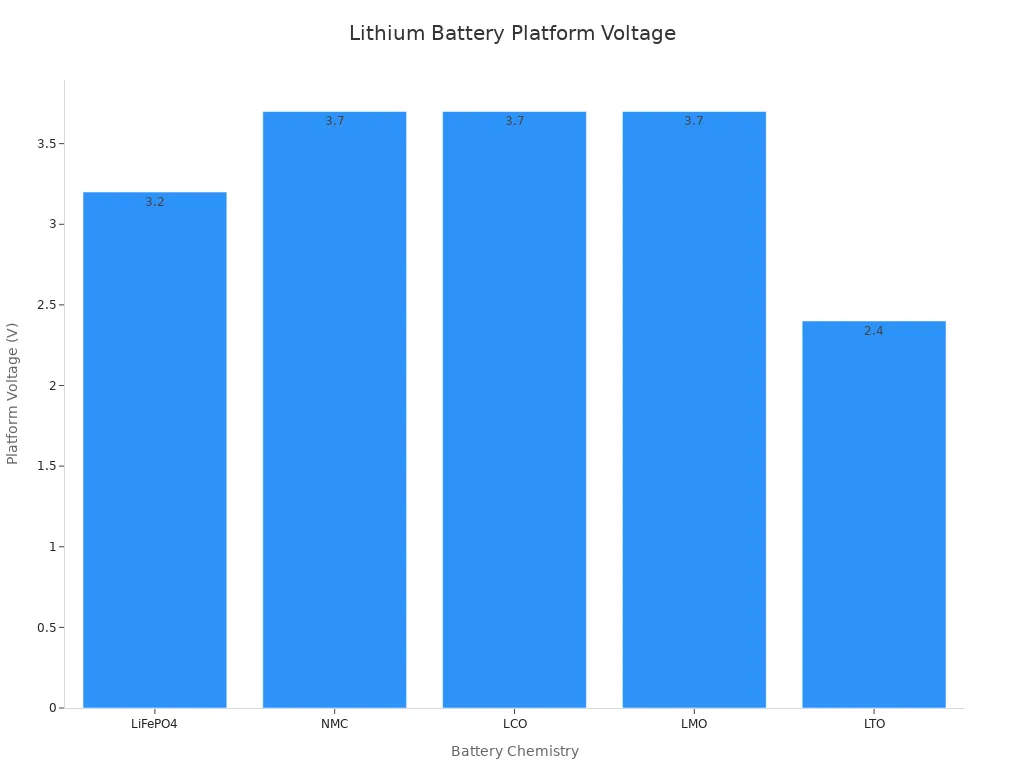
You need reliable lithium batteries to ensure your inspection equipment works safely and efficiently. Reliability depends on battery chemistry, energy density, and cycle life. The table below compares the main lithium battery chemistries used in power grid inspection:
Chemistry | Platform Voltage (V) | Energy Density (Wh/kg) | Cycle Life (cycles) |
|---|---|---|---|
LiFePO4 | 3.2 | 90–160 | 2,000–7,000 |
NMC | 3.7 | 150–220 | 1,000–2,000 |
LCO | 3.7 | 150–200 | 500–1,000 |
LMO | 3.7 | 100–150 | 300–700 |
LTO | 2.4 | 70–110 | 7,000–20,000 |
You must also follow strict safety standards. These include temperature control, compliance with national standards, proper insulation, and regular maintenance. Safety tests such as external short circuit, overcharge, and forced discharge help ensure batteries do not ignite or rupture during abnormal conditions. Training your team on safe operation and emergency procedures is essential for field safety.
Part 2: Nail Penetration Resistant Technology
2.1 What Is Nail Penetration Resistance
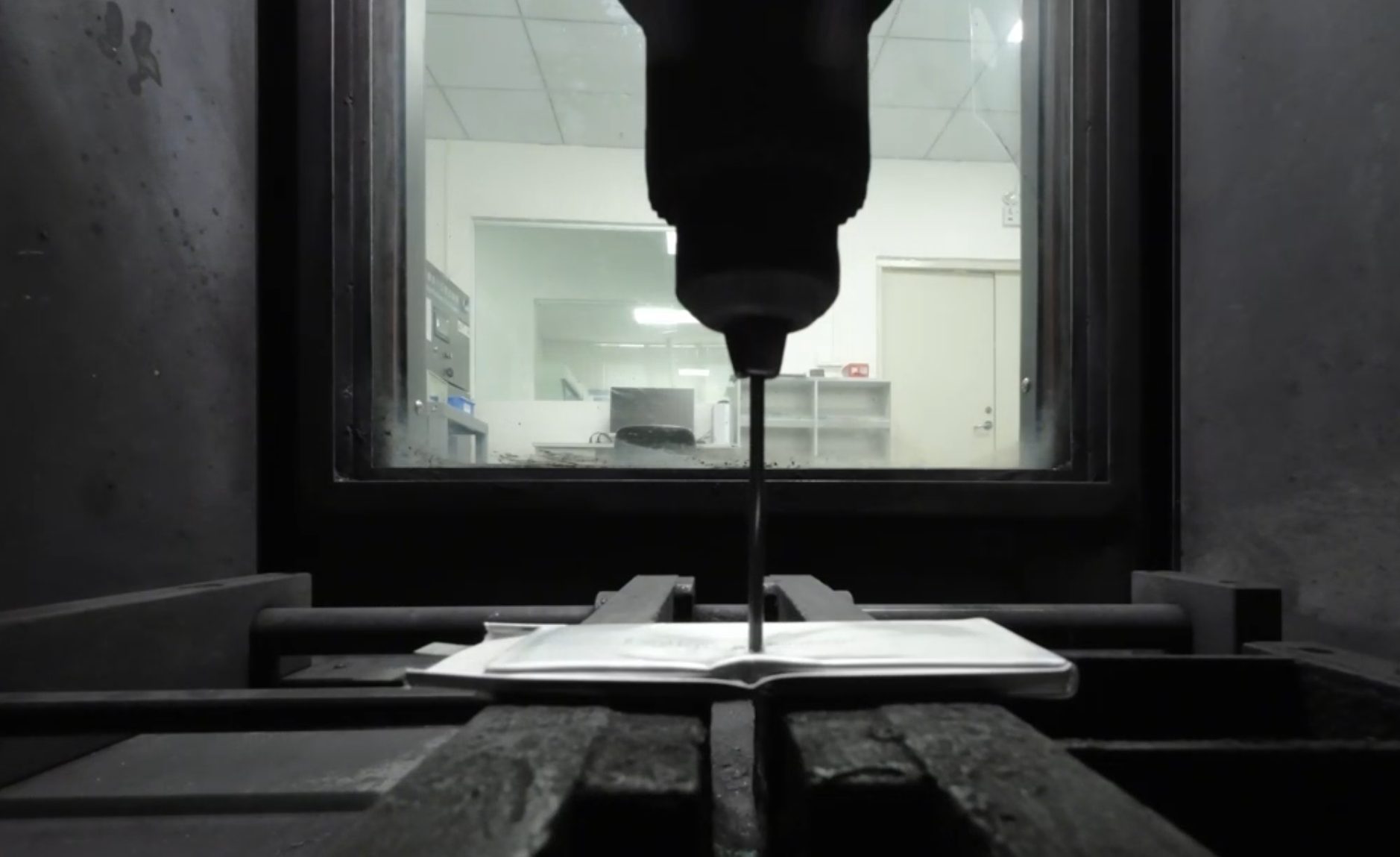
You need to understand nail penetration resistance when you select batteries for power grid inspection equipment. Nail penetration resistance describes a battery’s ability to withstand a sharp object, such as a steel nail, piercing its casing without causing fire or explosion. This feature protects you from hazards during accidental impacts or equipment failures. Nail penetration resistant lithium batteries use advanced materials and design principles to block internal short circuits and limit thermal runaway.
The table below shows key parameters that affect nail penetration resistance:
Parameter | Description |
|---|---|
Nail Penetration Rate | Speed of nail insertion, which influences internal short circuit risk. |
Nail Penetration Position | Location of penetration, which impacts safety outcome. |
State of Charge (SOC) | Battery charge level during test, affecting risk of thermal runaway. |
Temperature Changes | Monitors temperature at different battery positions during penetration. |
Voltage Changes | Observes voltage fluctuations during penetration. |
Burr Formation | Creation of aluminum and copper burrs, which may cause internal short circuits. |
Note: You should always consider these parameters when evaluating battery safety for field operations.
2.2 Key Features and Testing Standards
You benefit from several key features when you use nail penetration resistant lithium batteries. These batteries undergo rigorous safety testing. For example, the Blade Battery passes the Nail Penetration Test without emitting smoke or fire. Surface temperatures only reach 30 to 60 degrees Celsius. The battery withstands crushing, bending, heating to 300 degrees Celsius, and overloading by 260% without fire or explosion.
Key features include:
No smoke or fire during nail penetration.
Surface temperature remains low.
Withstands extreme mechanical and thermal stress.
Organizations such as the Writers Laboratories Japan Battery Association (JBA) and the Chinese National Standards (GB) set safety testing standards for lithium-ion batteries. These standards include nail penetration resistance as a critical safety performance aspect.
2.3 Nail Penetration Test for Lithium Batteries
You can evaluate nail penetration resistance by conducting a standardized test. The process involves several steps:
Prepare a high-temperature resistant steel needle (φ 5~ φ 8 mm) with a smooth surface and a tip angle of 60°.
Insert the needle into the battery at a controlled speed of (25 ± 5) mm/s, perpendicular to the electrode plate.
Aim for the geometric center of the battery’s surface.
Leave the needle inside to trigger an internal short circuit.
Observe the battery’s response for signs of fire, smoke, or explosion.
During the test, you monitor temperature changes, voltage drops, and the possibility of thermal runaway. Higher battery capacities may show worse safety outcomes. You use these results to select safer battery packs for your inspection equipment.
Part 3: Mechanisms and Materials
3.1 Preventing Internal Short Circuits
You need to prevent internal short circuits to ensure the safety of lithium batteries in field operations. Manufacturers use several mechanisms to achieve this:
Layered redundancy adds multiple safety features at each critical layer, so a single failure does not cause a hazard.
Thermally stable materials, such as solid-state electrolytes and ceramic-coated separators, help block internal shorts and reduce fire risks.
Mechanical protection, including puncture-resistant casings and pressure relief valves, shields battery packs from impacts and vents gases safely.
Real-time monitoring uses multi-sensor fusion and predictive analytics to track battery health and adjust charging protocols before problems occur.
These strategies work together to keep your lithium batteries safe during demanding inspections.
3.2 Design Innovations
You benefit from design innovations that improve both safety and reliability. Leading battery platforms use advanced features:
CATL’s Qilin Battery uses multi-directional heat dissipation channels to slow down thermal runaway.
Tesla’s battery management system (BMS) employs AI to predict thermal runaway risks with over 90% accuracy.
GM’s Ultium platform uses modular isolation, which limits damage to individual cells and prevents failures from spreading.
The table below summarizes how these innovations reduce battery failures:
Mechanism | Description |
|---|---|
Advanced Thermal Management Systems | Cooling methods like liquid and air cooling keep batteries at safe temperatures. |
Innovative Battery Cell Designs | Materials with high thermal stability and flame-retardant properties resist decomposition. |
Battery Management Systems | Algorithms monitor health and detect early signs of thermal runaway for quick intervention. |
Physical Isolation Strategies | Barriers and fire-resistant materials contain failures to their origin. |
3.3 Mitigating Thermal Runaway
You can further reduce risks by using materials and structures that block or slow thermal runaway. Manufacturers modify material formulas to include noncombustible and flame-retardant components. Epoxy resin plates of different thicknesses block heat transfer between battery packs. Some designs use thermo-responsive polymers in electrolytes or separators to suppress ionic conduction when heated. Positive thermal coefficient (PTC) materials interrupt electronic conduction if temperatures rise too high.
Thermal runaway often starts with a mechanical breach, such as a nail puncture. This causes rapid heating, separator melting, and electrolyte decomposition, which releases flammable gases. By using these advanced materials and design strategies, you help prevent violent chain reactions and keep your lithium batteries safe during power grid inspections.
Part 4: Benefits for Power Grid Inspection Equipment

4.1 Operator Safety
You need to protect your team during power grid inspections. Nail penetration resistant lithium batteries provide a higher level of safety by preventing fires and explosions, even when sharp objects or accidental impacts occur. These batteries use advanced materials and design features that block internal short circuits. You can see the difference in real-world tests. For example, SRL-equipped batteries recover voltage after a temporary drop during nail penetration, stopping thermal runaway and further damage.
Scenario | Outcome |
|---|---|
SRL-equipped batteries during nail penetration tests | Demonstrated superior safety performance, recovering voltage after a temporary drop, preventing thermal runaway and further damage. |
You can apply this safety advantage in other industries as well. Medical devices, robotics, and security systems all benefit from batteries that resist punctures and prevent hazardous failures. You reduce the risk of injury and property damage, which is critical for field operations.
Tip: Always choose batteries that meet or exceed international safety standards for your inspection equipment.
4.2 Equipment Reliability
You rely on your inspection equipment to perform without interruption. Nail penetration resistant lithium batteries increase reliability by reducing the chance of sudden failures. You benefit from longer battery life and less downtime. Battery management systems extend battery life by one to two years. These systems also eliminate downtime caused by UPS failure by providing real-time insights into battery health. You can schedule proactive maintenance and avoid unexpected breakdowns.
Implementing a battery management system can extend battery life by one to two years.
Real-time monitoring of battery health allows for early detection of issues, minimizing unexpected downtime.
Predictive analytics from battery monitoring systems help forecast performance and extend lifespan.
Proactive maintenance through battery monitoring reduces repair costs and extends battery lifespan.
Early detection of degradation trends prevents system failures, ensuring uninterrupted operations.
You see these benefits in industries such as infrastructure, industrial automation, and consumer electronics. Reliable battery packs keep your systems running, even in demanding environments.
4.3 Performance in Harsh Conditions
You often work in extreme temperatures and challenging weather. Nail penetration resistant lithium batteries maintain performance and safety in these conditions. The IEC 62133-2 testing standard evaluates lithium battery systems for electrical performance and environmental durability. Compliance with this standard ensures safety and quality. You gain confidence knowing your batteries will perform in both hot and cold environments.
Testing covers low and high temperatures, as well as humidity.
Batteries must comply with safety standards such as UL, IEC, SAE, and UN for environmental tests.
Rigorous testing identifies battery performance under extreme conditions.
You should know that lithium-ion batteries degrade more quickly outside their optimal temperature range. Extreme temperatures can cause reduced range and potential failures. Hot weather may lead to thermal runaway, which can result in fires or explosions. By choosing batteries that pass strict environmental tests, you ensure reliable operation for power grid inspection equipment. This reliability also benefits other sectors, including robotics and industrial applications, where harsh conditions are common.
Note: Always verify that your battery packs meet international standards for environmental durability before deploying them in the field.
Part 5: Applications and Implementation
5.1 Case Studies
You can see the impact of nail penetration resistant lithium batteries in real-world applications. Power grid inspection teams in North America and Asia have adopted LiFePO4 and NMC battery packs for drones and portable diagnostic tools. These teams report fewer incidents of battery failure and improved operational uptime. AI and machine learning now play a key role in battery management systems. You benefit from predictive diagnostics and fault detection, which help prevent accidents before they happen. Cloud-based technologies and IoT integration allow you to store and analyze battery data, increasing operational accuracy.
Lessons learned from case studies:
AI and ML improve predictive diagnostics and fault detection, enhancing safety and reliability.
Addressing gaps between standards and regulations streamlines manufacturing and approval, boosting safety.
Cloud and IoT technologies enable better data storage and analysis, raising operational efficiency.
AI tools, such as artificial neural networks and support vector machines, predict battery performance and improve safety.
Hierarchical frameworks using AI-based cloud systems support early diagnosis and risk prediction.
5.2 Integration and Compatibility
You need batteries that integrate smoothly with your inspection equipment. Nail penetration resistant lithium battery packs fit a wide range of devices, including handheld testers, drones, and mobile substations. Manufacturers design these batteries to meet industry standards like UL, IEC, and SAE. You can connect battery management systems to your existing infrastructure using IoT protocols. Compatibility with LiFePO4, NMC, LCO, and LMO chemistries ensures you select the best option for your operational needs.
Battery Chemistry | Compatible Equipment | Integration Features |
|---|---|---|
LiFePO4 | Drones, mobile substations | High cycle life, stable voltage |
NMC | Handheld testers, sensors | High energy density, fast charging |
LCO | Portable analyzers | Compact size, moderate cycle life |
LMO | Robotics, monitoring devices | Good thermal stability, moderate energy density |
5.3 Cost-Benefit Analysis
You must evaluate the cost and benefits before implementing new battery technology. Nail penetration resistant lithium batteries offer longer lifespan and reduced downtime. You save money on maintenance and replacement costs. Enhanced safety lowers insurance premiums and minimizes liability risks. Advanced battery management systems provide real-time monitoring, which helps you schedule maintenance and avoid unexpected failures.
Tip: Consider the total cost of ownership, including initial investment, maintenance, and operational savings. Improved reliability and safety often justify the higher upfront cost.
You gain a competitive advantage by adopting safer, more reliable battery packs for power grid inspection equipment. This investment supports operational excellence and protects your workforce.
You can address safety and reliability challenges in power grid inspection by choosing nail penetration resistant lithium batteries. These advanced battery packs help you prevent fires and equipment failures. You improve operational excellence and protect your workforce.
You gain longer battery life and reduced downtime.
You meet strict industry standards for safety.
Consider adopting this technology to ensure safer, more reliable field operations for your business.
FAQ
What makes nail penetration resistant lithium batteries safer for power grid inspection equipment?
A nail penetration test intentionally creates an internal short circuit by driving a conductive nail through the cell. A nail penetration resistant lithium battery is designed to reduce the severity of the resulting thermal reaction and, under defined test conditions, avoid fire or explosion.
This performance may be achieved through cell chemistry, separator design, electrode materials, internal current interruption, pressure relief, and pack-level protection. It does not make the battery puncture-proof or eliminate the need for a protective enclosure and correct handling.
Which lithium battery chemistry offers the best nail penetration resistance?
LiFePO4 generally provides higher thermal stability than conventional NMC and LCO chemistries. However, nail penetration performance cannot be determined by chemistry alone.
Chemistry | General Thermal Stability | Typical Cycle Life | Important Consideration |
|---|---|---|---|
LiFePO4 | High | 2,000–5,000 cycles | Strong thermal stability but lower energy density |
NMC | Moderate | 500–2,000 cycles | Higher energy density; safety depends heavily on cell and pack design |
LCO | Lower | 500–1,000 cycles | High energy density with less tolerance for thermal abuse |
LMO | Moderate | 500–1,500 cycles | Good power capability and relatively stable spinel structure |
Actual performance depends on the specific cell model, state of charge, nail diameter, penetration speed, test location, temperature, and pass/fail criteria. Buyers should request test data for the exact cell or battery pack being evaluated.
How can nail penetration resistant batteries affect operational costs?
Improved abuse tolerance may reduce the probability and severity of battery-related field incidents. A properly designed battery can also help limit equipment damage, unplanned downtime, and premature pack replacement.
However, lower insurance premiums or liability costs should not be presented as guaranteed outcomes. Total cost of ownership depends on battery price, service life, maintenance requirements, failure rate, certification, and the operating environment.
Can nail penetration resistant batteries replace existing inspection-equipment batteries directly?
Not necessarily. Compatibility must be confirmed for voltage, capacity, discharge current, charging profile, connector, communication protocol, dimensions, mounting method, and environmental protection.
A custom battery solution may be required to integrate the selected cells, enclosure, connectors, thermal design, and Battery Management System with existing power grid inspection equipment.
What testing verifies nail penetration resistance?
There is no single universal nail penetration certification that applies to every lithium battery used in industrial inspection equipment. The applicable test method depends on the battery type, product category, target market, and customer requirements.
The test report should clearly specify:
Cell or pack model
State of charge
Nail material and diameter
Penetration speed and location
Test temperature
Maximum recorded temperature
Whether fire, explosion, smoke, venting, or leakage occurred
Standards such as IEC 62133-2, IEC 62619, UL 1642, UL 2054, and UN 38.3 may address other relevant electrical, mechanical, safety, or transport risks, but buyers should verify whether nail penetration testing is actually included in the selected standard or performed as a separate manufacturer or customer-defined test.
For power grid and other demanding industrial inspection applications, contact Large Power to evaluate the required cell chemistry, mechanical protection, BMS, and abuse-testing plan.


