

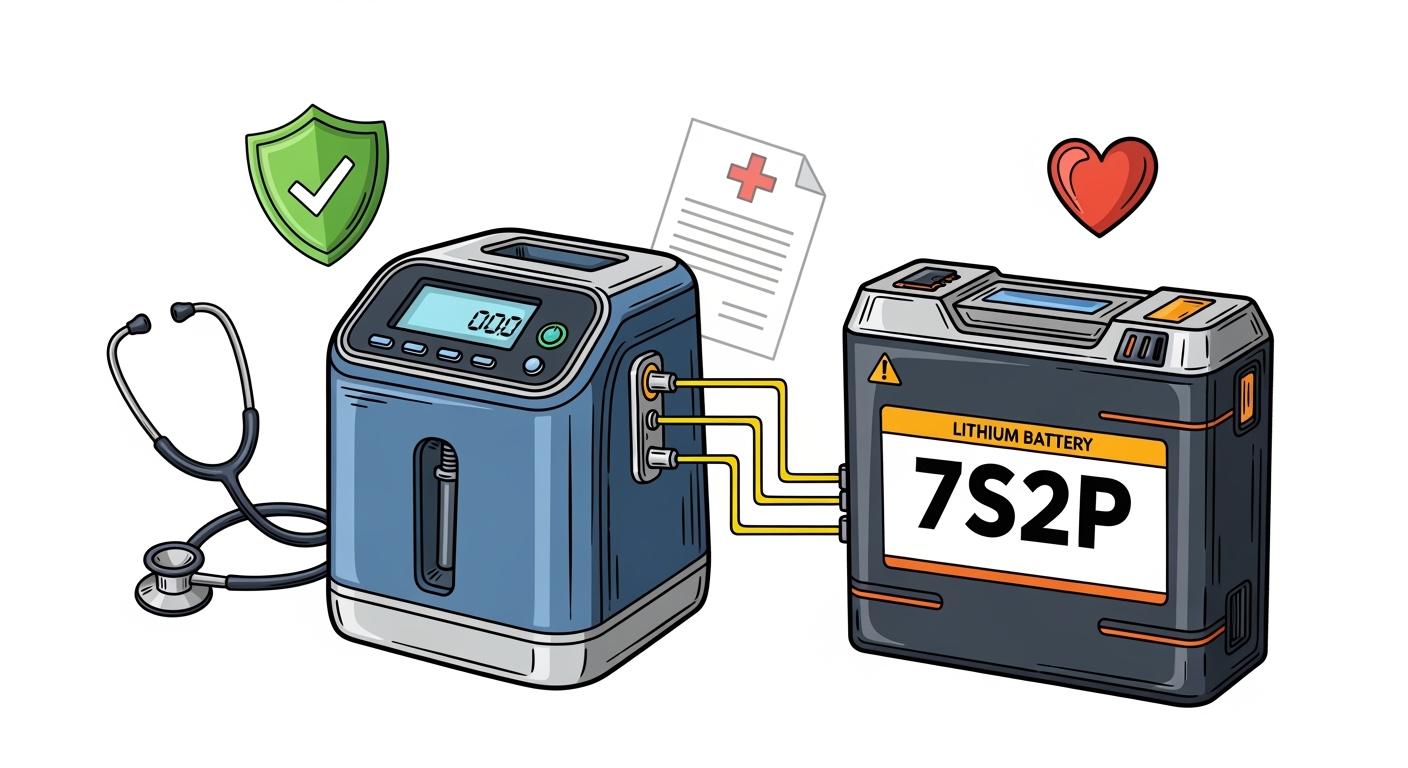
Portable oxygen concentrators require lightweight, dependable battery power to maintain prescribed oxygen delivery during daily use and travel. A 7S2P lithium-ion battery connects seven cell groups in series and two cells in parallel within each group. For conventional NMC cells, this configuration typically provides a nominal voltage of approximately 25.2–25.9V and a maximum charging voltage of 29.4V.
The 7S2P configuration alone does not determine runtime or airline eligibility. Pack capacity, cell energy, device power consumption, oxygen-flow mode, conversion efficiency, temperature, and battery aging must all be considered.
Quick Answer: A 7S2P battery can support long runtime in a portable oxygen concentrator, but its watt-hour rating must be calculated before the design is finalized. For routine passenger air travel, keeping each removable lithium-ion battery at or below 100Wh generally simplifies carriage. Batteries rated from 101Wh to 160Wh require airline approval, and batteries exceeding 160Wh are generally prohibited on passenger aircraft.
Battery Design Consideration | Engineering Requirement |
|---|---|
Pack Voltage | Must match the concentrator, motor, compressor, and power-conversion architecture |
Watt-Hour Rating | Calculated by multiplying nominal pack voltage by amp-hour capacity |
Required Runtime | Based on device power consumption, oxygen-flow setting, temperature, and aging margin |
BMS Protection | Includes cell monitoring, balancing, overcurrent, short-circuit, and temperature protection |
Battery Labeling | Clearly identifies voltage, capacity, watt-hours, chemistry, model, and safety information |
Spare Battery Design | Must support safe terminal protection, transport, and replacement during travel |
Medical Quality Controls | Require documented design, supplier qualification, traceability, verification, and change control |
For example, a 7S2P NMC battery rated at 25.2V and 4.0Ah stores approximately 100.8Wh:
25.2V × 4.0Ah = 100.8Wh
Although this is only slightly above 100Wh, it enters the 101–160Wh category and may require airline approval. A manufacturer targeting easier passenger carriage may need to reduce pack capacity, use multiple compliant removable batteries, or redesign the electrical architecture.
Runtime must be calculated from measured device power rather than copied from another oxygen concentrator:
Estimated runtime = usable battery energy ÷ average device power
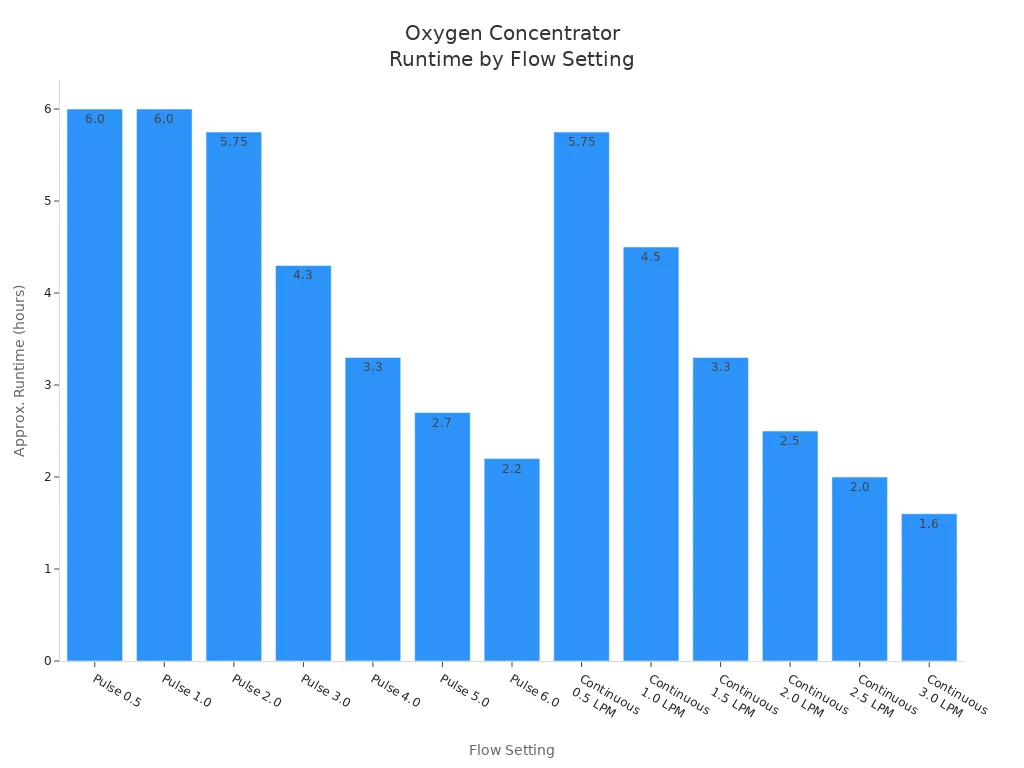
Actual runtime normally decreases at higher oxygen-flow settings, during continuous-flow operation, at low temperatures, and as the battery ages. Published runtime tables should therefore be based on testing of the specific concentrator, battery pack, operating mode, and environmental conditions.
FAA acceptance criteria apply to the complete portable oxygen concentrator, not only its battery. The device must be legally marketed in the United States under applicable FDA requirements, must not interfere with aircraft systems, must not generate compressed gas, and must comply with applicable hazardous-material restrictions. A qualifying device must also carry the required manufacturer conformity label unless it is covered by an earlier accepted-device provision.
For passengers using a POC onboard, an airline may require enough fully charged batteries to power the device for at least 150% of the expected maximum flight duration. Spare batteries must be carried and protected according to applicable airline and dangerous-goods requirements.
The final battery design should coordinate cell selection, usable capacity, Battery Management System, charger, enclosure, labeling, transport testing, and medical-device quality controls. Learn more about Large Power’s battery solutions for portable oxygen concentrators.
Key Takeaways
The 7S2P lithium battery pack design offers long runtime and safety for portable oxygen concentrators, making it ideal for travel and daily use.
Compliance with FAA, IEC, and FDA standards ensures that your portable oxygen concentrator remains safe and reliable during operation.
Choosing the right battery involves balancing runtime, weight, and cost, ensuring you receive consistent oxygen therapy wherever you go.
Part1: Portable Oxygen Concentrators and Battery Needs
1.1 Device Overview
You depend on portable oxygen concentrators to deliver oxygen therapy in medical settings and during travel. These devices use advanced lithium-ion battery packs to ensure reliable performance. You find several types of portable oxygen concentrators, each with unique power requirements. The table below compares top portable oxygen concentrators and their power consumption:
Model | Power Consumption (Watts) |
|---|---|
Drive DeVilbiss 10L | 639 |
DeVilbiss 5 Liter | 310 (Average), 275 @ 1.2 LPM and Below |
You see that medical applications require efficient energy management. Lithium-ion batteries provide high energy density and stable output, making them ideal for portable oxygen concentrators.
1.2 Runtime and Power Requirements
You want your portable oxygen concentrator to last through extended outings. Battery runtime varies from two to six hours, depending on flow settings and device efficiency. FAA regulations limit lithium-ion battery packs to 160 Wh for air travel. The table below outlines these limits:
Battery Type | Watt-Hour Limit | Additional Notes |
|---|---|---|
Lithium Ion | Up to 100 Wh | Unlimited spare batteries allowed under 100 Wh. |
Lithium Ion | 100 Wh to 160 Wh | Up to two larger spare batteries allowed. |
You must consider battery life and charging frequency when planning your day. Proper charging techniques help maximize battery performance and safety.
1.3 Battery Selection Criteria
When choosing the right battery, you balance runtime, weight and portability, and cost. You select a battery with higher capacity for longer operation, but it may feel heavier and increase device size. You prioritize lightweight design for easy carrying. The types of portable oxygen concentrator batteries include lithium-ion, lithium-polymer, and LiFePO4. You evaluate battery life, charging techniques, and weight and portability to match your oxygen needs. Choosing the right battery ensures you receive consistent oxygen therapy wherever you go.
Part2: 7S2P Lithium Battery Pack Design
2.1 7S2P Configuration Explained
You need a battery pack that delivers reliable oxygen therapy and meets strict safety standards. The 7S2P configuration combines seven cells in series and two parallel strings. This design gives you a balanced solution for portable oxygen concentrators. You achieve a nominal voltage of 25.2V, which matches the requirements for medical devices. Two parallel strings double the amp-hour capacity, so you get longer runtime without increasing voltage. You benefit from a compact design that fits inside lightweight oxygen concentrators.
Tip: The 7S2P configuration helps you meet FAA battery limits for air travel. You stay within the 160 Wh restriction, so you can carry your device on flights.
You see the advantages of 7S2P compared to other lithium battery pack designs:
Configuration | Nominal Voltage | Capacity Range | Typical Application Scenario |
|---|---|---|---|
7S2P | 24.5V – 25.9V | 2000mAh – 6700mAh | Medical, robotics, security systems |
6S2P | 21.6V – 22.2V | 2000mAh – 6000mAh | Consumer electronics, industrial |
8S2P | 28.8V – 29.6V | 2000mAh – 7000mAh | Infrastructure, industrial |
You select 7S2P for portable oxygen concentrators because it balances voltage, capacity, and safety. You avoid excessive weight and size, so you maintain portability and comfort.
2.2 Voltage and Capacity Optimization
You want your portable oxygen concentrator to deliver oxygen for hours without interruption. Optimizing voltage and capacity in the 7S2P battery pack extends runtime and improves device functionality. You achieve a nominal voltage of 25.2V (7 × 3.6V), and fully charged packs reach 25.9V (7 × 3.7V). You select cells with high quality to maximize capacity, ranging from 4000mAh to 6700mAh.
Nominal voltage is typically 25.2V.
Fully charged packs reach 25.9V.
Total capacity ranges from 4000mAh to 6700mAh, depending on cell quality and configuration.
You benefit from a design that doubles amp-hour capacity through parallel strings. This arrangement gives you sustained energy delivery, ideal for medical devices that require continuous oxygen therapy. You maximize runtime while staying within FAA limits. You avoid frequent charging, so you enjoy long battery life and user convenience.
2.3 Safety and Battery Management
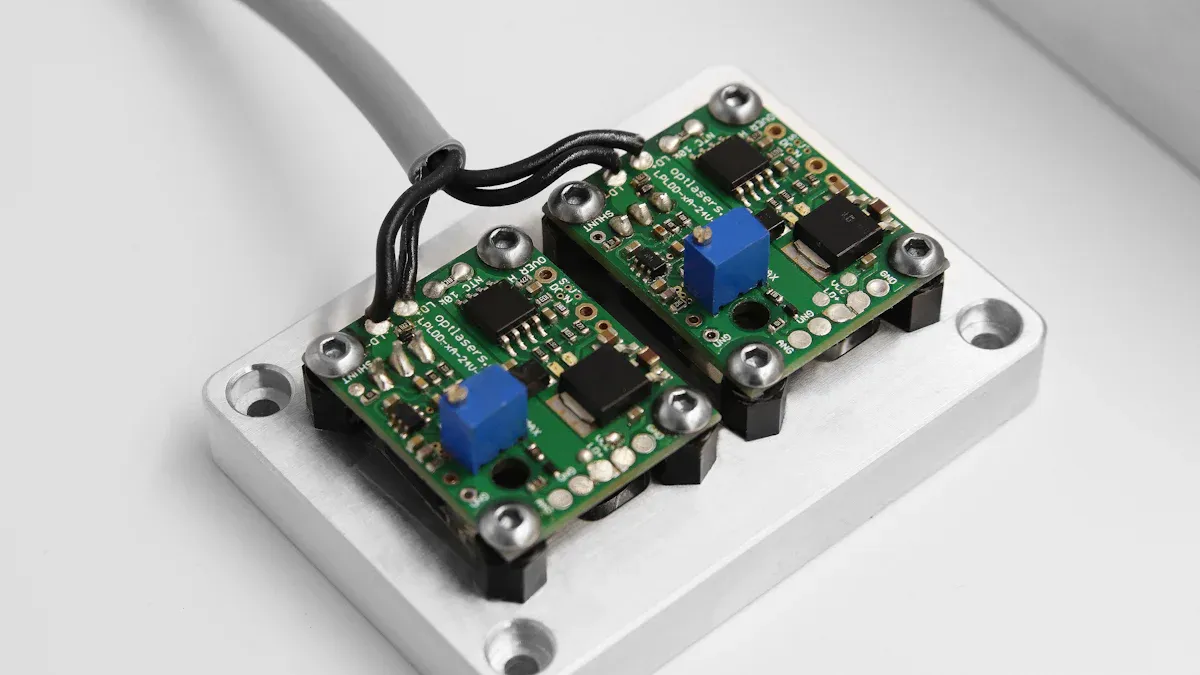
You rely on your portable oxygen concentrator for safe oxygen therapy. Safety is critical in battery design. You need a battery management system (BMS) that meets medical-grade standards. You require comprehensive protection mechanisms, including overvoltage, undervoltage, overcurrent, short-circuit, and temperature monitoring. You depend on fail-safe shutdown and emergency power reserve modes to protect against unexpected failures.
Feature | Description |
|---|---|
Safety Certifications | Meets medical-grade safety and certification standards (e.g., IEC 60601) |
Fail-Safe Modes | Supports fail-safe shutdown and emergency power reserve modes |
Comprehensive Protection Mechanisms | Includes overvoltage, undervoltage, overcurrent, short-circuit, and temperature monitoring |
Remote Monitoring | Enables remote monitoring of battery health in fleet-managed devices |
Environmental Protection | For industrial use, choose BMS with conformal coating and IP67-rated enclosures to withstand dust, moisture, and vibration |
You face risks such as thermal runaway, fires, or explosions if you neglect safety. You avoid bad cell design, poor manufacturing quality, battery aging, unchecked operating conditions, and external factors. You mitigate these risks by selecting high-quality cells and robust battery management systems.
Note: You extend battery lifespan by following proper charging practices and avoiding extreme temperatures. You achieve 500 to 1000+ charge/discharge cycles, so you enjoy reliable battery life and long battery life for your portable oxygen concentrator.
2.4 Integration with Portable Oxygen Concentrator
You integrate the 7S2P battery pack seamlessly into your portable oxygen concentrator. You ensure the design fits within the device’s compact enclosure. You maintain lightweight construction, so you carry your oxygen therapy device comfortably. You select high-quality lithium-ion cells for medical applications. You optimize the battery pack for consistent oxygen delivery and stable functionality.
You use the 7S2P design in medical, robotics, security systems, infrastructure, consumer electronics, and industrial scenarios. You benefit from a battery pack that supports extended runtime, reliable charging, and robust safety features. You achieve high quality and performance, so you trust your portable oxygen concentrator for critical oxygen therapy needs.
Alert: You must verify battery certifications and safety documentation before deploying your device in medical environments. You ensure compliance with FAA, IEC, and FDA standards for safe oxygen therapy.
Part3: Certification for Portable Oxygen Concentrator Battery
3.1 IEC 60601-1 Compliance
You must ensure your portable oxygen concentrator battery meets IEC 60601-1 standards. This certification is essential for medical devices, including those used in oxygen therapy for chronic obstructive pulmonary disease and COPD management. IEC 60601-1 evaluates battery safety during charging, discharging, and fault conditions. You protect patients by confirming the device remains safe in normal and fault scenarios. You assess how the battery interacts with the entire system, which is critical for medical, robotics, and security system applications.
Requirement | Description |
|---|---|
Battery Evaluation | Assess how the battery behaves during charging, discharging, and fault conditions. |
Overall Device Safety | Ensure the device remains safe with the battery in normal and fault conditions. |
Interaction with System | Evaluate how the battery interacts with the rest of the medical electrical equipment. |
You integrate advanced safety features into your portable oxygen concentrator battery design. You use thermal cutouts to prevent overheating. You install venting mechanisms to reduce explosion risks. You rely on smart battery management system algorithms to monitor battery health and predict lifespan. You implement robust thermal management systems to prevent thermal runaway. Compliance with IEC 60601-1 ensures your battery packs meet safety, reliability, and electromagnetic compatibility standards for medical use.
Safety Feature/Challenge | Description |
|---|---|
Thermal Cutouts | Prevent overheating by disconnecting the battery when temperatures exceed safe limits. |
Venting Mechanisms | Allow gases to escape in case of battery failure, reducing explosion risks. |
Smart BMS Algorithms | Monitor battery health and performance, predicting lifespan and preventing degradation. |
Thermal Management Systems | Essential to prevent thermal runaway, ensuring safe operation in medical devices. |
Compliance with IEC 60601-1 | Ensures that the battery packs meet safety, reliability, and electromagnetic compatibility standards for medical use. |
Tip: You improve safety assurance by selecting lithium battery packs that meet IEC 60601-1 standards. You reduce risks for patients who depend on oxygen therapy during travel.
3.2 UN38.3 Safety Testing
You must test your portable oxygen concentrator battery according to UN38.3 protocols. This standard verifies the safety of lithium battery packs during transport, especially for air travel. You simulate conditions such as vibration, shock, temperature extremes, and altitude changes. You confirm the battery can withstand these stresses without leaking, exploding, or catching fire. You protect users and ensure compliance with international shipping regulations.
You follow FAA regulations for air travel with portable oxygen concentrators. You keep lithium batteries within the aggregate lithium content limit of 8 grams unless exceptions apply. You carry spare batteries in the cabin, protected from short circuits. You may leave installed batteries in your device if it has at least two protective features.
Requirement | Description |
|---|---|
Battery Size | Lithium batteries must have an aggregate lithium content of 8 grams or less unless exceptions apply. |
Carrying Method | Spare lithium batteries must be carried in the cabin in carry-on baggage and protected from short circuits. |
Installed Batteries | Batteries in portable oxygen concentrators may remain installed if the device has at least two protective features. |
Note: FAA approval for air travel assures you that your portable oxygen concentrator battery meets rigorous safety standards. You gain confidence and reliability during travel, knowing your device is accepted by airlines worldwide.
You must document all testing protocols for your portable oxygen concentrator battery. You reference standards such as IEC 62133-2 and IEC 60601-1. You maintain detailed records for audits and regulatory reviews.
Standard | Description |
|---|---|
IEC 62133-2 | Focuses on the safety of portable, sealed, rechargeable lithium battery packs and cells. |
IEC 60601-1 | Addresses safety and essential performance requirements for medical electrical equipment. |
3.3 FDA and CE Requirements
You must comply with FDA and CE certification requirements for your portable oxygen concentrator battery. FDA certification involves rigorous documentation, testing protocols, and annual compliance audits. You demonstrate safety assurance and reliability for medical applications. CE certification requires self-declaration by the manufacturer to meet EU safety standards. You must meet safety requirements for the EU market, but annual audits are not required.
Certification Type | FDA Requirements | CE Requirements |
|---|---|---|
Regulatory Process | Involves rigorous documentation, testing protocols, and annual compliance audits | Self-declaration by the manufacturer to meet EU safety standards |
Compliance Standards | Must pass annual audits to maintain certification | No annual audits required, but must meet safety requirements for EU market |
You prepare comprehensive documentation for your portable oxygen concentrator battery. You include test results, safety evaluations, and performance data. You ensure your device meets all regulatory standards for medical, industrial, and consumer electronics applications.
Battery Safety Tips:
Always use certified lithium battery packs for oxygen therapy devices.
Follow proper charging procedures to maximize battery lifespan and safety assurance.
You support patients with COPD and chronic obstructive pulmonary disease by providing reliable oxygen therapy during travel. You maintain high standards for portable oxygen concentrator battery certification, ensuring safety and performance in every scenario.
Alert: You must verify all certifications before deploying your portable oxygen concentrator battery in medical environments. You protect users and meet global regulatory requirements for oxygen therapy devices.
You recognize that 7S2P lithium battery pack design delivers reliable oxygen therapy for portable oxygen concentrators. Certification and compliance ensure long-term safety and device reliability. Manufacturers should focus on compact, lightweight, and certified solutions for medical, robotics, security system, infrastructure, consumer electronics, and industrial applications.
Certification | Description |
|---|---|
UL/IEC 60601-1 | Medical electrical equipment safety standard |
UN 38.3 | Required for air transport of lithium batteries |
FCC Compliance | Ensures electromagnetic compatibility |
FAQ
What advantages can a 7S2P lithium battery pack offer for portable medical equipment?
A 7S2P configuration combines seven series-connected cell groups with two parallel cells in each group. For an NMC battery, it can provide approximately 25.2–25.9V nominal voltage while increasing capacity and allowable discharge current compared with a 7S1P pack.
This configuration may support longer runtime and stable operation in a portable oxygen concentrator, but suitability depends on the device voltage range, power consumption, enclosure space, weight limit, charging system, and required watt-hour rating.
Does a 7S2P battery automatically comply with FAA limits?
No. FAA carriage limits are determined by watt-hours rather than the series-parallel configuration.
Calculate battery energy using:
Watt-hours = nominal voltage × amp-hour capacity
For example:
7S2P NMC Pack | Approximate Energy | General Passenger-Aircraft Category |
|---|---|---|
25.2V, 3.6Ah | 90.7Wh | At or below 100Wh |
25.2V, 4.0Ah | 100.8Wh | 101–160Wh; airline approval may be required |
25.2V, 6.0Ah | 151.2Wh | 101–160Wh; airline approval and spare-battery limits apply |
25.2V, 8.0Ah | 201.6Wh | Exceeds the general 160Wh passenger-aircraft limit |
Airline policies may be stricter, so manufacturers and passengers should confirm requirements with the applicable carrier.
How can a lithium battery pack be customized for a portable oxygen concentrator?
A custom battery solution can be developed around:
Required runtime and oxygen-flow modes
Maximum battery watt-hours
Continuous and peak current
Battery dimensions and weight
Removable or internal battery architecture
Charger and docking-station compatibility
Operating and storage temperature
Labeling and traceability
Transport and medical-device requirements
Testing should use the actual oxygen concentrator because compressor behavior, flow settings, alarms, display functions, and environmental conditions affect power consumption.
Why is a BMS important in a 7S2P medical battery pack?
A Battery Management System monitors the seven series-connected cell groups and provides cell balancing, voltage protection, current protection, short-circuit protection, and temperature monitoring.
For a portable oxygen concentrator, the BMS may also report state of charge, state of health, remaining runtime, cycle count, and fault information to the host device. Protection thresholds must be coordinated with the selected cells, charger, and concentrator operating range.
Which testing and compliance requirements should manufacturers evaluate?
Applicable requirements depend on the battery design, complete medical device, target market, and transportation method.
Requirement | |
UN 38.3 | Lithium battery transport testing |
IEC 62133-2 | |
IEC 60601-1 | Basic safety and essential performance of the complete medical electrical equipment |
ISO 13485 | Medical-device quality management system |
FDA requirements | U.S. legal marketing and regulatory requirements for the complete medical device |
CE marking | Conformity of the final product with applicable European Union legislation |
FAA acceptance criteria | Use and carriage of the complete portable oxygen concentrator onboard applicable aircraft |
These requirements do not guarantee product reliability by themselves. Manufacturers must also perform application-specific electrical, thermal, mechanical, charger-compatibility, runtime, alarm, and device-level verification.
For support with battery voltage, runtime, watt-hour limits, BMS functions, labeling, and compliance planning, contact Large Power for an engineering consultation.


