

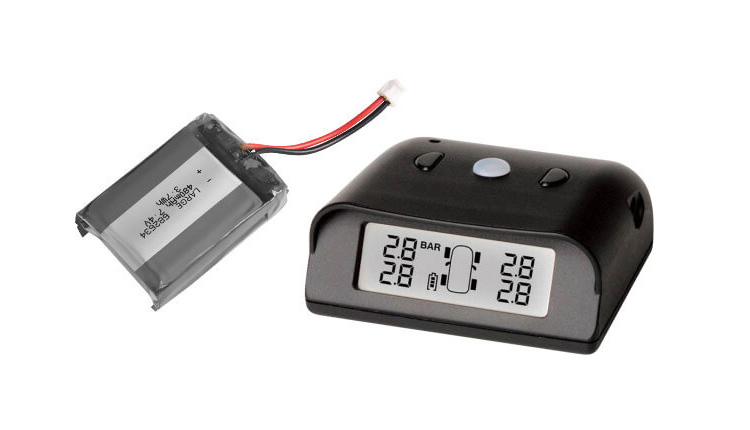
High Temperature Battery has six grades: 100℃ 125℃ 150℃ 175℃ 200℃ and above 5 grade. At present, electrochemical systems of massively used high temperature battery is Li/SOCL2 and Li/SO2CL2. These systems have highest energy density, widest application temperature, longest storage time and highest work voltage.
100℃ application: battery doesn’t need special design and a proper improvement enables batteries to work at this temperature..
125℃ application: proper adjustment and control can produce qualified battery.
Between 150 and 175℃, battery requires special design.
Above 180 and 200℃, since lithium melting point is 180.5℃. At this time, lithium is not suitable for cathode material, which requires lithium alloy as cathode material. Because the requirement is not very strict, it needs safety protection measure that occur high input and this project has not started.
High temperature principle: from worldwide samples we got, most batteries belong to 150℃ grade. Take Lithium ion Battery for petroleum pump for example: the key is to meet high temperature under pump requirement, ensuring battery performance safety and reliable. In order to reach it, some factors should be considered as below,
a. battery material thermodynamics characteristic;
b. battery case mechanics characteristic;
c. high temperature safety design (anti-short circuit, anti-reverse, anti-charge, anti-heat, anti-vibration etc.);
d. high temperature electrical property design (anode and cathode activate material ratio, electrode thickness, additive etc.).


