

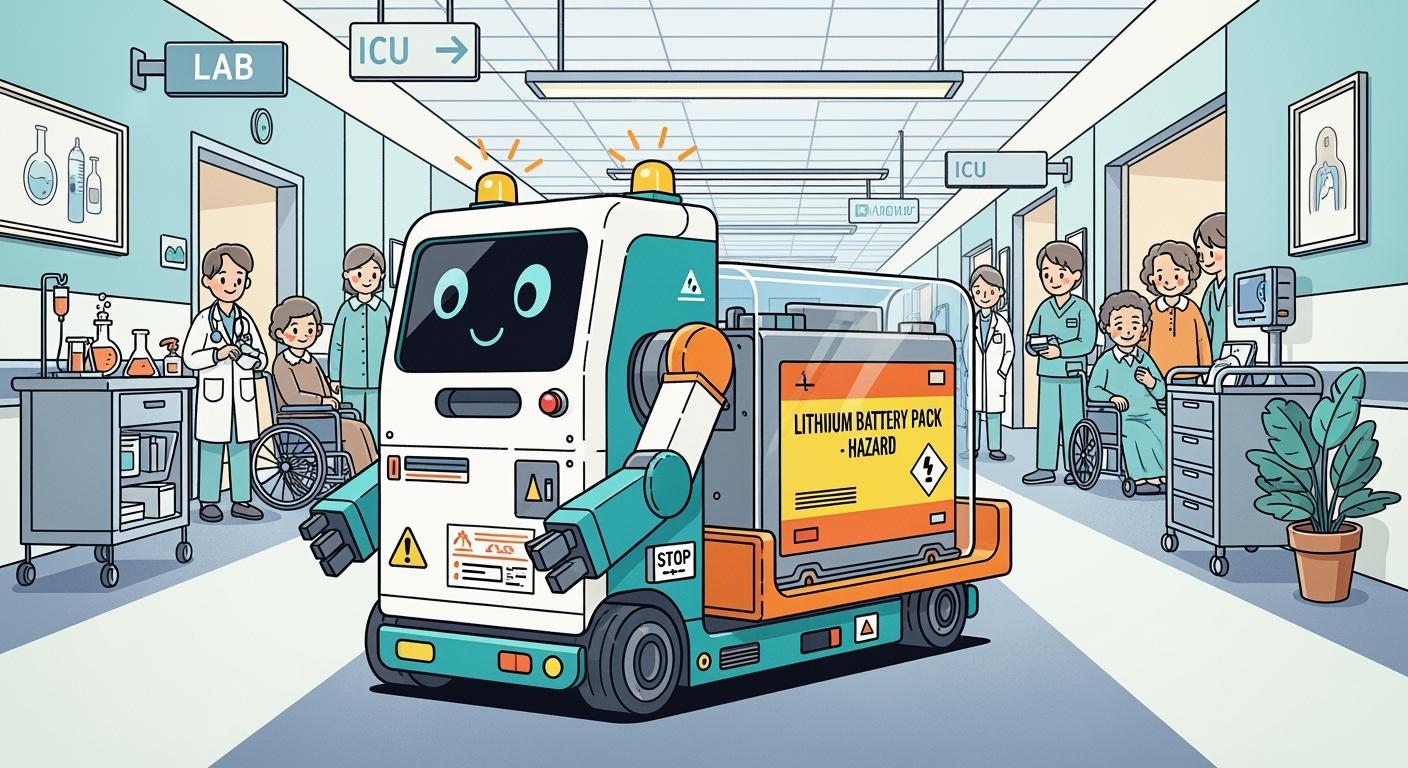
You need reliable power when deploying autonomous mobile robots and smart logistics equipment in hospitals. A properly engineered lithium battery system must support continuous operation while controlling electrical, thermal, and mechanical risks. Although serious battery incidents are uncommon in certified systems, cell damage, charging faults, poor thermal management, or inadequate protection can lead to the following hazards:
Potential Safety Hazard | Possible Impact |
|---|---|
Off-gassing | A damaged or overheated cell may release flammable or irritating gases, requiring equipment isolation and ventilation. |
Thermal runaway | Internal short circuits, overcharging, or excessive heat can trigger rapid temperature rise and possible cell-to-cell propagation. |
Fire | Ignition may damage robots, charging stations, medical equipment, or nearby facilities. |
Electrolyte leakage | Mechanical damage may expose personnel and equipment to electrolyte and corrosive decomposition products. |
Unexpected power loss | Battery shutdown or capacity degradation can interrupt material transport and reduce hospital workflow efficiency. |
You can reduce these risks by selecting certified cells, integrating a robust Battery Management System (BMS), using multi-level electrical protection, monitoring temperature in real time, and validating the battery under realistic charging, movement, vibration, and fault conditions. These measures help medical devices and robotics operate safely and reliably in demanding hospital environments.
Key Takeaways
Select certified lithium batteries to ensure safety and compliance in hospital settings. This reduces risks of fire, chemical leaks, and equipment interference.
Implement real-time monitoring systems to track battery health and performance. This proactive approach helps prevent failures and enhances operational continuity.
Establish a rigorous maintenance schedule for battery systems. Regular inspections and proper care extend battery life and ensure safety in medical logistics.
Part1: 10S2P Lithium Battery System Overview
1.1 Configuration and Hospital Relevance
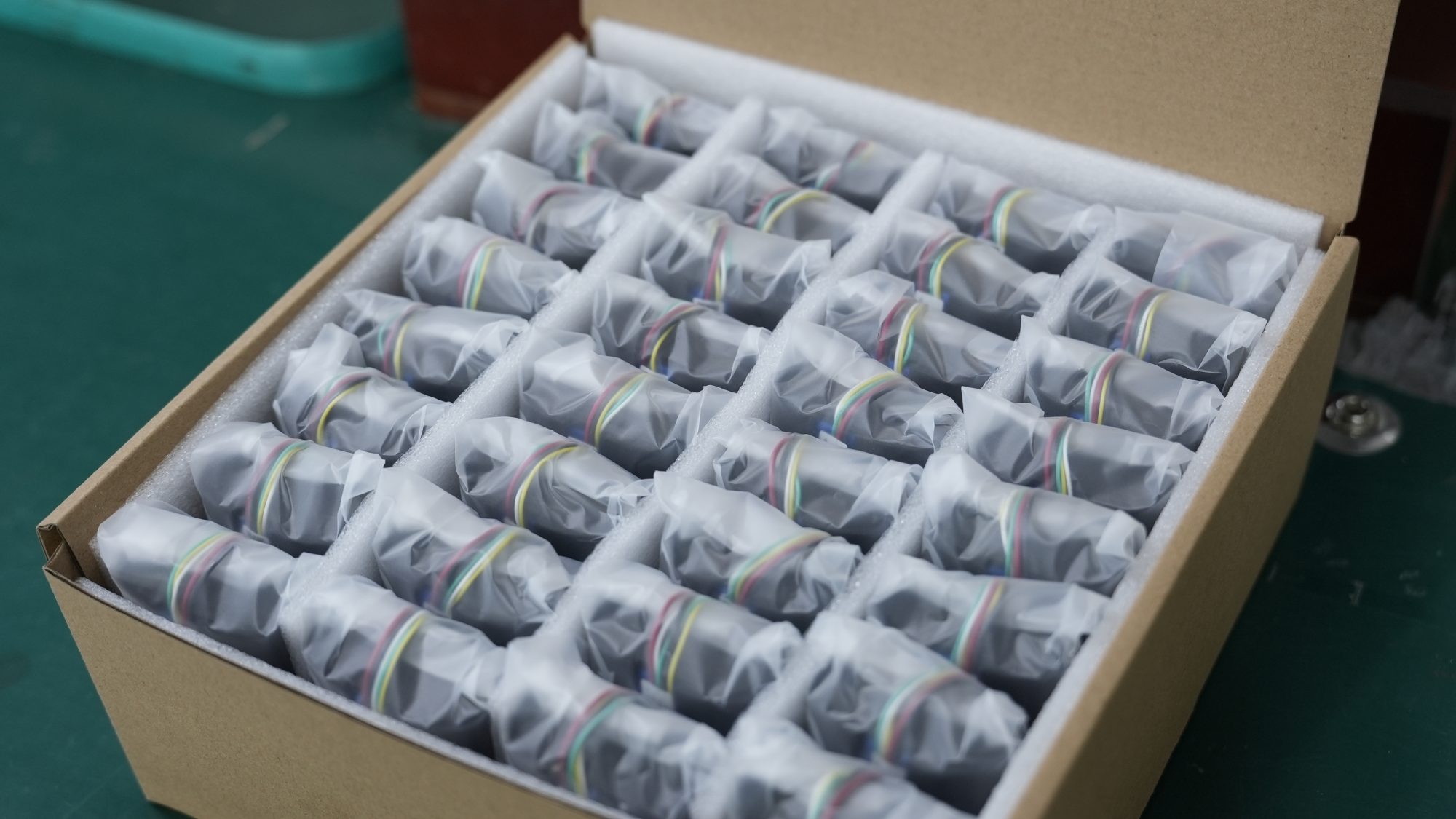
You need to understand the 10S2P configuration to make informed decisions for your hospital’s smart robotics fleet. In a 10S2P Lithium Battery System, ten cells connect in series (10S) to increase voltage, while two parallel strings (2P) boost capacity. This setup delivers a nominal voltage of 36V and supports higher energy density, which is essential for continuous operation in demanding environments like hospitals.
Tip: The 10S2P configuration balances power and runtime, making it ideal for medical logistics robots that require reliable, long-lasting energy sources.
1.2 Benefits and Challenges
A 10S2P Lithium Battery System offers several advantages for your hospital logistics robots:
High energy density: You get more power in a compact form, which allows robots to operate longer between charges.
Stable platform voltage: Consistent voltage output ensures smooth robot performance and reduces downtime.
Long cycle life: Lithium-ion chemistries such as NMC (Nickel Manganese Cobalt Oxide) and LFP (Lithium Iron Phosphate) provide 1,000–2,000 cycles, supporting years of daily use.
Chemistry Type | Platform Voltage | Energy Density (Wh/kg) | Cycle Life (cycles) |
|---|---|---|---|
NMC | 3.7V/cell | 150–220 | 1,000–2,000 |
LFP | 3.2V/cell | 90–160 | 2,000–4,000 |
However, you must address challenges such as:
Thermal management: Hospitals require strict temperature control to prevent overheating.
Safety compliance: You need to meet regulatory standards for medical environments.
Maintenance: Regular inspection ensures system reliability and safety.
For tailored solutions, consult with battery system experts to match your hospital’s unique needs.
Part2: Safety Risks in Hospitals
2.1 Fire and Thermal Runaway
You must recognize that fire and thermal runaway present the most critical risks when deploying a Lithium Battery System in hospital environments. High-capacity battery packs can overheat due to internal faults, overcharging, or exposure to high ambient temperatures. When thermal runaway occurs, cells release heat rapidly, which can ignite nearby materials and cause chain reactions. Hospitals contain sensitive equipment and vulnerable patients, so even a small fire can escalate quickly. You should always install battery packs with certified fire-resistant enclosures and ensure proper ventilation in robot charging areas.
2.2 Electrical and Chemical Hazards
Safety Warning: Lithium-ion batteries, especially high-capacity packs like the 10S2P configuration (10 cells in series, 2 in parallel), can pose serious fire, explosion, and chemical hazards if mishandled. Never attempt internal repairs without proper training, tools, and protective equipment.
You face several hazards when handling or maintaining these systems:
Fire hazards due to overheating
Explosion risks from short circuits
Chemical exposure from punctured cells
Repairing a Samsung 18650 10S2P battery pack should be considered a last resort and is strongly discouraged for untrained individuals. These high-energy-density packs require specialized knowledge, tools, and safety protocols to handle safely. You must implement strict access controls and provide staff with appropriate training to minimize risks.
2.3 Equipment Interference
You should consider electromagnetic interference (EMI) as a potential risk. Lithium Battery System-powered robots can emit EMI that disrupts sensitive medical devices, such as monitors and infusion pumps. You need to ensure proper shielding and grounding for all battery-powered robots. Regular EMI testing helps maintain compliance with hospital safety standards and protects critical infrastructure.
Part3: Safety Strategies for Lithium Battery System
3.1 Certified Battery Selection
You must select batteries that meet strict international standards to ensure safety and compliance in hospital environments. Certified batteries reduce the risk of fire, chemical leaks, and equipment interference. When choosing a Lithium Battery System for medical logistics robots, verify that each battery pack meets the following certifications:
IEC 60950-1: Safety standard for battery chargers.
IEC 60601 / UL 60601: Medical electrical equipment standards.
UN 38.3 Test Summary Report: Confirms safe transport of lithium batteries.
IEC 62133-2: Ensures safe operation and supports CE Marking.
UL 1642 and UL 2054: North American safety standards for cells and battery packs.
FDA, UL, and EU MDR: Required certifications for medical device battery solutions.
Tip: Request documentation from your supplier to confirm compliance with these standards. This step protects your hospital from regulatory violations and operational risks.
If your organization prioritizes sustainability or conflict minerals compliance, review your supplier’s sustainability statement and conflict minerals policy before procurement.
3.2 Built-in Protection Features
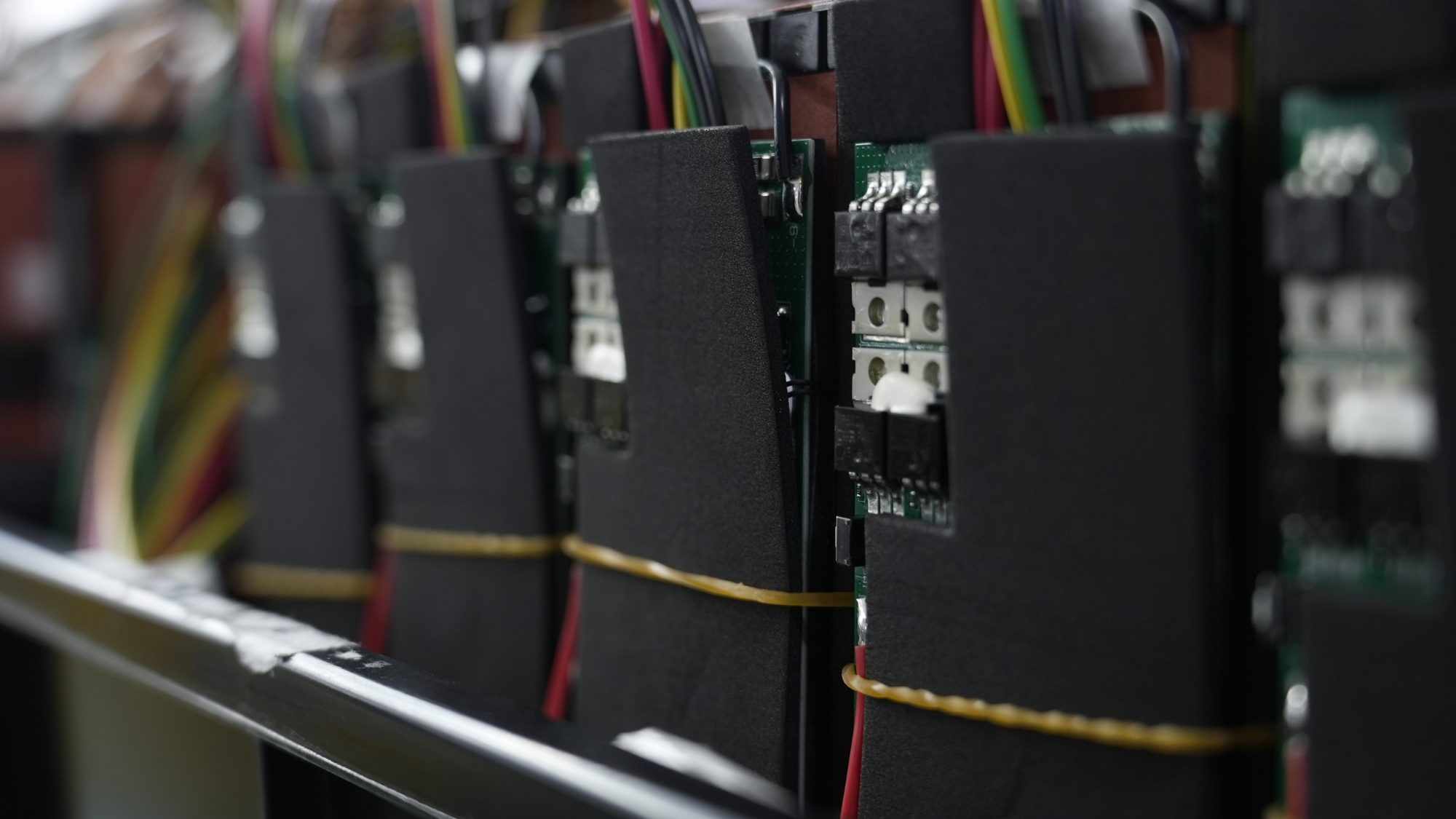
You should demand robust built-in protection features in every Lithium Battery System. These features prevent common failures and extend battery life. The table below summarizes the most effective protection mechanisms:
Protection Feature | Description |
|---|---|
Charge and Discharge Protection | Prevents overcharge, over-discharge, over-current, short circuit, reverse wiring, and excessive temperature rise. |
Real-Time Cell State Monitoring | Continuously monitors cell voltage, pack voltage, charging and discharging current, internal resistance, and temperature. |
Auxiliary Protection Components | Includes PTC for high temperature resistance, fuses for irreversible protection, and NTC sensors for thermal shutdown. |
Note: Built-in protections are essential for medical robots operating near sensitive equipment and patients. You should verify these features during system integration and commissioning.
3.3 Real-Time Monitoring (RS485)
You can enhance safety by implementing real-time monitoring using RS485 communication protocols. This technology allows you to track battery health, temperature, and charge status remotely. You receive alerts for abnormal conditions, enabling rapid intervention before failures occur. Real-time monitoring supports predictive maintenance and reduces downtime.
Install RS485-enabled battery management systems (BMS) in all robots.
Set up dashboards for live data visualization and automated alerts.
Schedule regular reviews of monitoring logs to identify trends and potential risks.
Callout: Real-time monitoring is a proactive strategy that helps you maintain operational continuity and comply with hospital safety standards.
3.4 Thermal Management Systems
You must control battery temperature to prevent overheating and thermal runaway. Effective thermal management systems include heat sinks, active cooling fans, and temperature sensors. These components maintain optimal operating conditions and protect both the Lithium Battery System and surrounding medical equipment.
Integrate temperature sensors and automatic shutdown features.
Use heat-resistant enclosures and proper ventilation in charging areas.
Consider advanced solutions such as solid-state battery packs, which offer improved thermal stability and safety. For more information, see solid-state battery technology.
Tip: Regularly inspect thermal management components and replace faulty parts immediately. Advanced chemistries like solid-state batteries reduce the risk of fire and extend system lifespan.
3.5 Maintenance and Inspection
You must establish a rigorous maintenance and inspection schedule for every Lithium Battery System in your hospital. Routine checks prevent unexpected failures and ensure compliance with safety standards.
Inspect batteries regularly for wear, swelling, or leakage. Examine connectors for corrosion.
Clean surfaces with a damp cloth and terminals with a brush. Avoid abrasive materials.
Monitor temperature and avoid exposing batteries to extreme heat or cold.
Charge batteries between 20% and 80% to maximize lifespan.
Update firmware and software according to manufacturer recommendations.
Consult professionals for maintenance or repair advice.
Note: Document all inspections and maintenance activities. This practice supports regulatory compliance and improves traceability in case of incidents.
If you require a custom maintenance plan or technical consultation, contact your battery system provider for tailored support.
Part4: Case Studies
4.1 Hospital Implementation Examples
You can learn from hospitals that have successfully integrated a Lithium Battery System into their smart medical logistics robots. For example, a large urban hospital in the United States upgraded its fleet with 10S2P battery packs using Lithium Iron Phosphate (LFP) chemistry. The hospital reported a 30% increase in robot uptime and a 20% reduction in emergency maintenance calls. Staff used real-time monitoring with RS485 to track battery health and prevent failures. Another hospital in Europe adopted Nickel Manganese Cobalt Oxide (NMC) batteries for their robots. They focused on strict maintenance schedules and thermal management, which resulted in zero battery-related incidents over 18 months.
Hospital Location | Battery Chemistry | Platform Voltage | Energy Density (Wh/kg) | Cycle Life (cycles) | Key Outcome |
|---|---|---|---|---|---|
USA | LFP | 3.2V/cell | 120 | 3,000 | 30% more uptime |
Europe | NMC | 3.7V/cell | 180 | 1,500 | Zero battery incidents |
Note: Both hospitals prioritized certified battery selection and staff training to ensure compliance and safety.
4.2 Lessons and Best Practices
You should apply several best practices from these case studies:
Choose certified batteries that meet international medical and safety standards.
Implement real-time monitoring to detect issues early.
Schedule regular maintenance and inspections.
Train staff on safe handling and emergency procedures.
Consider sustainability and conflict minerals compliance when selecting suppliers. For more information, see sustainability statement and conflict minerals policy.
By following these strategies, you can improve safety, reduce downtime, and extend the lifespan of your robotics fleet. For custom consultation, contact your battery system provider.
You strengthen hospital safety by selecting certified 10S2P lithium battery systems, implementing real-time monitoring, and prioritizing staff training. Maintain compliance by following these steps:
Verify CE marking and proper labeling.
Ensure batteries remain removable and replaceable.
Provide clear safety, disposal, and replacement instructions.
Adopt systematic battery safety management for reliable medical logistics.
FAQ
What lithium battery chemistry is best for medical logistics robots?
The best chemistry depends on runtime, available space, charging frequency, and safety requirements.
Chemistry | Nominal Voltage | Typical Energy Density | Typical Cycle Life | Primary Advantage |
|---|---|---|---|---|
NMC | 3.6–3.7V/cell | 150–220 Wh/kg | 1,000–2,000 cycles | Higher energy density and lower pack weight |
LiFePO4 | 3.2V/cell | 90–160 Wh/kg | 2,000–4,000 cycles | Longer cycle life and strong thermal stability |
LiFePO4 batteries are often suitable for hospital logistics robots that require frequent charging, long service life, and stable thermal performance. NMC may be preferable when the robot requires longer runtime within a compact and lightweight battery enclosure.
How do you improve the safety of lithium battery systems in hospitals?
You should use qualified cells, a robust Battery Management System (BMS), multi-point temperature monitoring, cell balancing, overcurrent protection, and a mechanically secure enclosure. The complete battery should also be tested under realistic charging, vibration, impact, communication-loss, and fault conditions.
Which certifications apply to batteries for medical logistics robots?
Applicable requirements depend on how the robot is classified and where it will be sold. UN 38.3 generally applies to lithium battery transportation, while IEC 62133-2 or IEC 62619 may apply depending on the battery and equipment category. UL requirements and medical-device regulations must be confirmed for the complete product and target market. FDA clearance, when required, applies to the finished medical device rather than automatically to the battery pack itself.
How does a BMS support reliable operation?
A BMS monitors cell voltage, pack current, temperature, state of charge, and fault conditions. It can balance cells, limit charging or discharging, activate protective devices, and communicate battery status to the robot controller. These functions reduce unexpected shutdowns and support predictive maintenance.
Can the battery pack be customized for an existing medical logistics robot?
Yes. A battery pack can be tailored around the robot’s voltage, capacity, peak current, enclosure dimensions, connector, charging method, communication protocol, and operating environment. Large Power develops custom battery solutions for medical devices and robotics.
Discuss your medical logistics robot’s power, runtime, BMS, and certification requirements with the Large Power engineering team.


