

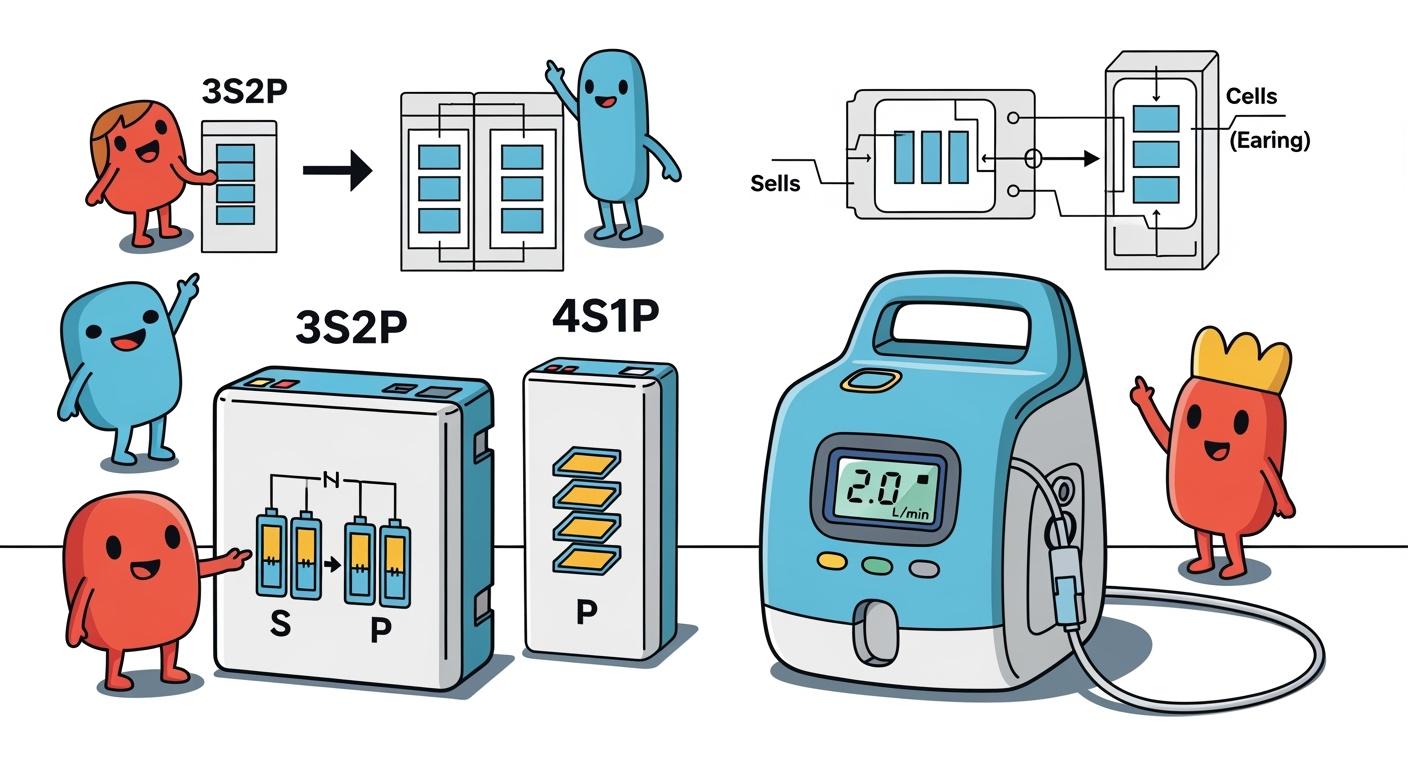
When you select a battery configuration for portable oxygen concentrators, you must compare the 3s2p configuration and the 4s1p configuration. The 3s2p configuration delivers lower voltage but higher capacity, while the 4s1p configuration offers higher voltage and more stable power delivery. Your choice impacts battery life, device reliability, and continuous oxygen supply, which is critical for oxygen therapy and oxygen-dependent environments.
Key Takeaways
Choose the 3S2P configuration for higher capacity and longer runtime, ideal for continuous oxygen supply in medical settings.
Opt for the 4S1P configuration when voltage stability is crucial, as it provides consistent power delivery for demanding applications.
Consider weight and portability when selecting a battery configuration; lighter options enhance mobility, while heavier ones may offer extended use.
Part1: Battery Configuration Basics
1.1 3S2P Configuration Overview
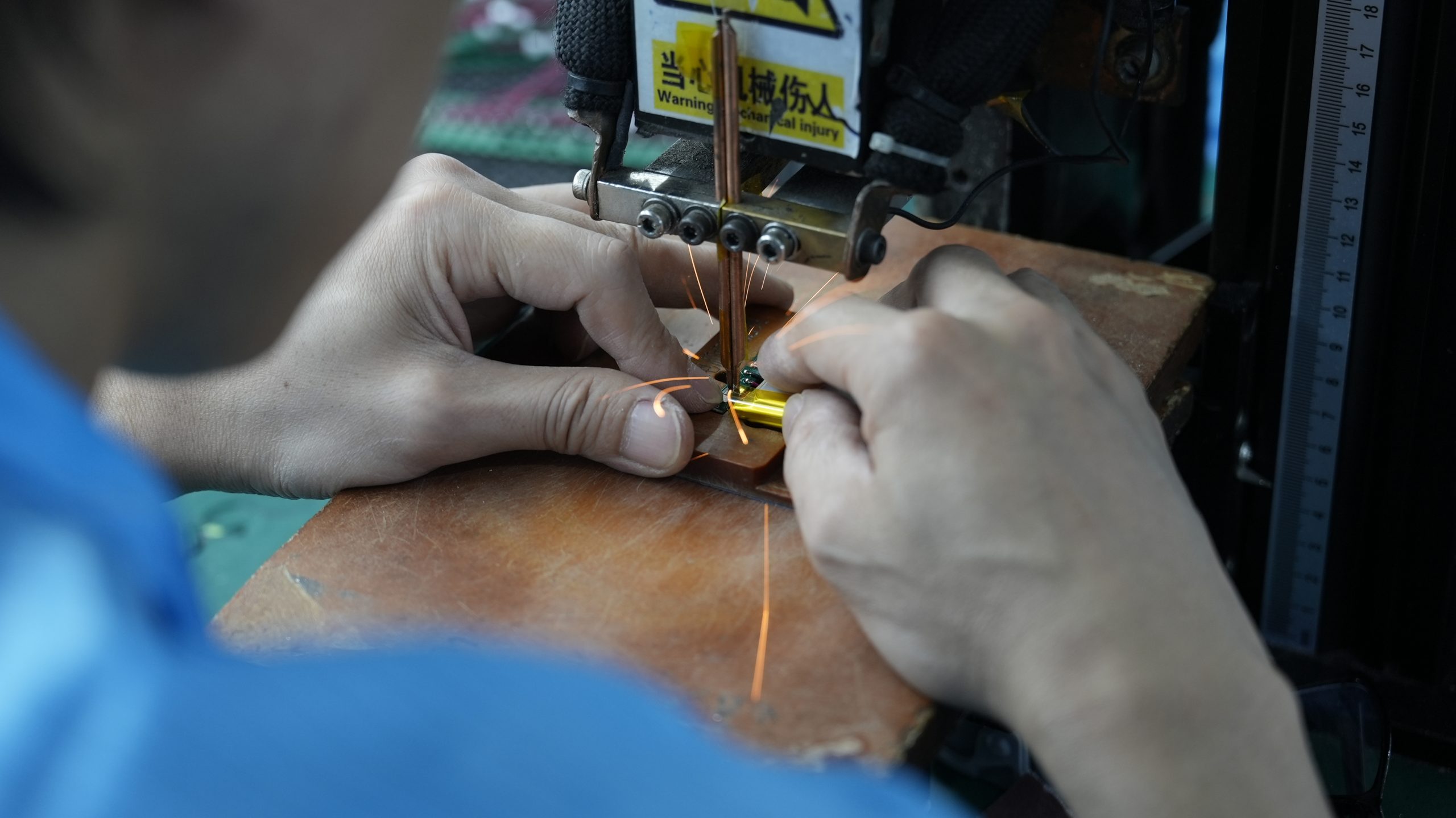
You encounter the 3s2p configuration often in lithium-ion battery packs for portable oxygen concentrators. This battery configuration uses three cells in series and two in parallel. The series connection increases the voltage, while the parallel connection boosts the capacity and current output. In medical devices, such as oxygen concentrators, you benefit from a nominal voltage of 11.1V and a maximum voltage of 12.6V. The total pack capacity ranges from 6,700 mAh to 10,000 mAh, depending on cell selection. You gain longer runtime and higher current delivery, which supports continuous oxygen supply.
Voltage Output: 11.1V nominal, 12.6V maximum
Capacity: 6,700 mAh typical, up to 10,000 mAh
Current Output: Higher due to parallel cells
1.2 4S1P Configuration Overview
The 4s1p configuration features four cells in series and one in parallel. You achieve a higher voltage output, typically 14.4V, which suits devices requiring stable power delivery. This battery configuration offers a capacity between 3,350 mAh and 6,000 mAh. In portable oxygen concentrators, you experience more consistent oxygen flow, especially in high-demand environments. The single parallel cell limits current output but enhances voltage stability.
Tip: You should select the 4s1p configuration for applications where voltage stability is critical, such as advanced medical equipment or industrial oxygen delivery systems.
1.3 Key Specs Table
You can compare the main specifications of both battery configurations in the table below:
Feature | 3S2P Configuration | 4S1P Configuration |
|---|---|---|
Voltage | 10.8V – 12.6V | 14.4V |
Capacity | 6.7Ah – 10Ah | 3.35Ah – 6Ah |
Current Output | Higher | Lower |
Series Cells | 3 | 4 |
Parallel Cells | 2 | 1 |
You see that the 3s2p configuration delivers higher capacity and current, ideal for portable oxygen concentrators needing extended battery life. The 4s1p configuration provides higher voltage and stable power, supporting reliable oxygen delivery in demanding medical and industrial settings.
Part2: Battery Configuration Comparison
2.1 Voltage Differences
When you evaluate battery configuration options for portable oxygen concentrators, voltage stands out as a critical factor. The 3S2P configuration uses three lithium cells in series, resulting in a nominal voltage of 11.1V and a maximum of 12.6V. In contrast, the 4S1P configuration connects four lithium cells in series, delivering a higher nominal voltage of 14.4V. This higher voltage supports devices that require stable power delivery and high power output, especially in medical and industrial applications.
Configuration | Series Cells | Nominal Voltage | Max Voltage | Typical Application Scenarios |
|---|---|---|---|---|
3S2P | 3 | 11.1V | 12.6V | Medical, Consumer Electronics |
4S1P | 4 | 14.4V | 16.8V | Medical, Industrial, Robotics |
Lithium battery packs with higher voltage, such as the 4S1P configuration, provide more consistent oxygen flow and support devices that demand stable power. You will notice that voltage stability directly impacts oxygen output and device performance. In a side-by-side comparison, the 4S1P configuration excels in applications where stable power delivery is essential for continuous oxygen therapy.
Note: Always match the voltage requirements of your oxygen concentrator to the battery configuration to avoid device malfunction or reduced oxygen flow.
2.2 Capacity and Runtime
Capacity and runtime determine how long your portable oxygen concentrator can operate before needing a recharge. The 3S2P configuration offers higher capacity, typically ranging from 6,000 mAh to 7,000 mAh. This translates to extended uptime and longer operating time, which is crucial for users who need uninterrupted oxygen therapy.
The 4S1P configuration, while providing higher voltage, usually has a lower capacity, around 3,000 mAh to 3,500 mAh. This means you may experience shorter runtime between charges. However, the higher voltage can improve energy efficiency in some devices, allowing for more effective oxygen output per cycle.
Configuration | Capacity (mAh) | Typical Runtime | Energy Density | Application Focus |
|---|---|---|---|---|
3S2P | 6,700–12,000 | Longer | High | Medical, Consumer Electronics |
4S1P | 3,350–6,000 | Shorter | Moderate | Medical, Industrial, Robotics |
You should select the 3S2P battery configuration if your priority is maximum capacity and extended runtime. This is especially important for portable oxygen concentrators used in medical environments where continuous oxygen flow is vital. The 4S1P configuration suits applications where voltage and stable power delivery outweigh the need for high capacity.
2.3 Weight and Size
Weight and size play a significant role in the portability of oxygen concentrators. Lighter lithium battery packs enhance mobility and make it easier for users to carry their devices throughout the day. Heavier battery packs can limit activity and require careful planning for battery life.
Weight Category | Implication on Portability |
|---|---|
Light (e.g., 5 lbs) | Enhances mobility, easy to carry |
Heavy (e.g., 10 lbs) | Limits activity, requires planning for battery life |
Portable oxygen concentrators can weigh as little as 1.75 pounds, making them accessible for users with physical limitations.
Heavier units (around 10 pounds) can be challenging for many users, especially those with back pain or mobility issues.
The 3S2P configuration, with its higher capacity, often results in a slightly larger and heavier battery pack. However, advances in lithium battery chemistry, such as lithium-ion and lithium-polymer, have improved energy density, allowing for more compact designs. The 4S1P configuration, while offering higher voltage, typically results in a smaller and lighter pack, which can benefit users who prioritize portability over extended runtime.
As individuals age, their ability to carry heavy items decreases. Many people experience back pain, making it impractical to transport a 10-pound oxygen concentrator. Lightweight portable oxygen concentrators, some weighing as little as 1.75 pounds, provide a solution and enable users to maintain mobility and independence.
Tip: For medical applications where portability and ease of use are critical, choose a battery configuration that balances weight, capacity, and voltage to match your specific oxygen flow requirements.
In this comprehensive comparison, you see that the technical differences between 3S2P and 4S1P configurations affect not only voltage and capacity but also weight, size, and overall device performance impact. Your choice should align with the oxygen flow needs, power stability, and portability requirements of your application, whether in medical, industrial, or other sectors.
Part3: Device Performance Impact for Portable Oxygen Concentrators
3.1 Battery Life and Reliability
You rely on portable oxygen concentrators to deliver consistent oxygen flow, especially in medical environments. The battery configuration directly affects battery life and reliability. When you choose a 3S2P configuration, you benefit from higher capacity, which means extended uptime and longer operating time. This configuration supports continuous oxygen supply, reducing the frequency of recharging and maintenance. The 4S1P configuration, with its higher voltage, provides stable power delivery but usually offers shorter operating time due to lower capacity.
The long-term reliability of your concentrator depends on several factors. Total energy capacity, lifecycle ratings, and recharge time play crucial roles. A higher total energy capacity allows you to use the device longer between charges. Lifecycle ratings indicate how many charge cycles the battery can endure before performance drops. You must follow proper maintenance practices, such as avoiding extreme temperatures and partial charging, to maximize battery lifespan and ensure consistent device performance.
Battery Configuration | Capacity (mAh) | Typical Operating Time | Lifecycle Rating | Maintenance Needs |
|---|---|---|---|---|
3S2P | 6,700–12,000 | Longer | High | Moderate |
4S1P | 3,350–6,000 | Shorter | Moderate | Low |
You see that the 3S2P configuration is ideal for applications requiring extended uptime and high reliability. The 4S1P configuration suits scenarios where stable power delivery and voltage are more important than capacity, such as advanced medical devices or industrial oxygen delivery systems.
3.2 Power Output and Efficiency
Power output and efficiency are critical for portable oxygen concentrators. You need a battery that delivers high power and maintains stable voltage to ensure consistent oxygen flow. The 3S2P configuration provides higher current output, supporting devices that require robust oxygen delivery. This configuration is suitable for medical applications where uninterrupted oxygen flow is essential.
The 4S1P configuration offers higher voltage, which improves power efficiency in some devices. You experience more stable oxygen output, especially in high-demand environments. However, the lower capacity may limit operating time. In a comprehensive comparison, you notice that the technical differences between these configurations impact power delivery and efficiency.
Configuration | Voltage (V) | Current Output | Power Efficiency | Oxygen Output Stability |
|---|---|---|---|---|
3S2P | 11.1–12.6 | Higher | High | Moderate |
4S1P | 14.4 | Lower | Moderate | High |
You must match the battery configuration to your device’s power requirements. For medical, robotics, security, infrastructure, consumer electronics, and industrial applications, selecting the right lithium battery packs ensures optimal performance and reliable oxygen flow.
Tip: If your device uses a battery management system (BMS), you can monitor voltage, capacity, and energy flow to maximize efficiency and extend battery life.
3.3 Portability and User Experience
Portability and user experience are essential for professionals using portable oxygen concentrators. The weight and size of lithium battery packs influence how easily you can transport your device. The 3S2P configuration, with its higher capacity, often results in a heavier battery. You may find this configuration less portable but beneficial for extended operating time and continuous oxygen flow.
The 4S1P configuration, with its higher voltage and lower capacity, typically produces a lighter and more compact battery. You gain improved portability, making it easier to carry the concentrator throughout the day. This configuration is ideal for applications where mobility and ease of use are priorities.
You experience greater independence and flexibility with lightweight lithium battery packs.
You benefit from stable power delivery and consistent oxygen output, enhancing user satisfaction.
You must consider weight, capacity, and voltage when selecting a battery configuration for your application.
Configuration | Weight | Portability | User Experience | Application Focus |
|---|---|---|---|---|
3S2P | Higher | Moderate | Extended uptime | Medical, Industrial |
4S1P | Lower | High | Easy transport | Medical, Robotics, Consumer Electronics |
You improve device performance and user experience by choosing the battery configuration that aligns with your oxygen flow needs and application requirements. In medical, robotics, security, infrastructure, consumer electronics, and industrial sectors, the right lithium battery packs deliver reliable oxygen supply and enhance operational efficiency.
Note: Always evaluate the technical differences between battery configurations to ensure your portable oxygen concentrator meets the demands of your application.
You should match the battery configuration to your concentrator’s oxygen and weight needs. For portable oxygen concentrators, select higher capacity for longer use or lighter weight for mobility. Review the table below to compare weight and user mobility:
Weight Range | User Mobility Impact |
|---|---|
4 to 10 pounds | Essential for daily use and movement |
Less than 4 pounds | Increases ease of carrying and comfort |
Battery life is crucial for portable devices.
Always check device compatibility and consult manufacturers for your application.
FAQ
What makes Large Power’s lithium battery packs suitable for medical and industrial applications?
You benefit from stable voltage, high energy density, and reliable cycle capability. Large Power offers custom battery solutions for medical, robotics, and industrial sectors.
How does a battery management system (BMS) improve lithium battery pack performance?
You monitor voltage, capacity, and energy flow. A battery management system (BMS) extends battery life and ensures safe operation.
Which configuration, 3S2P or 4S1P, delivers longer runtime for portable oxygen concentrators?
You achieve longer runtime with 3S2P due to higher capacity. See the table below for a quick comparison:
Configuration | Capacity (mAh) | Typical Runtime |
|---|---|---|
3S2P | 6,700–12,000 | Longer |
4S1P | 3,350–6,000 | Shorter |


