

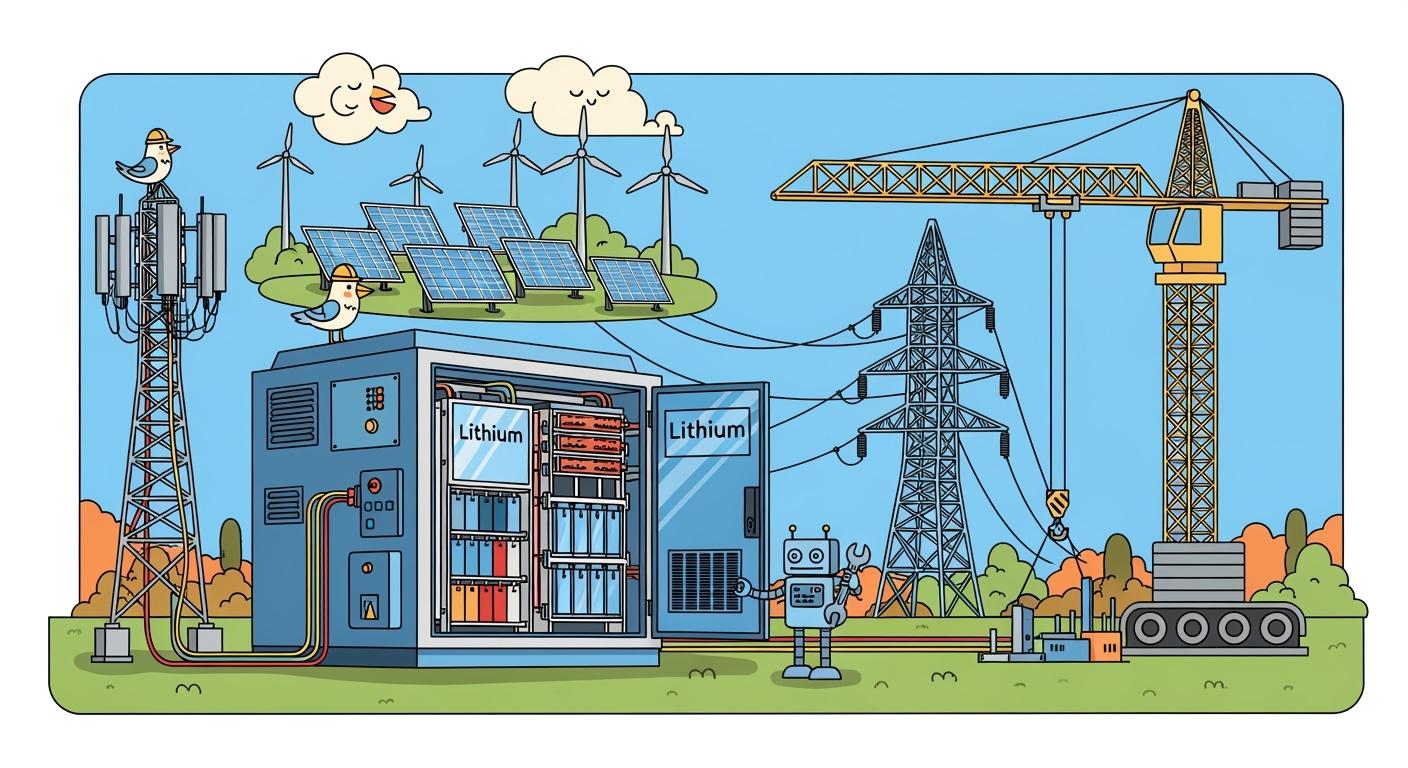
You face tough demands in telecom, construction, and microgrid operations. Lithium battery energy storage systems help you achieve reliable power, strong performance, and fast deployment. Growing market demand for grid resilience and renewable integration drives the need for modular solutions.
The table below shows how lithium battery packs deliver key benefits for industrial applications:
Feature | Benefit |
|---|---|
Superior energy density | Consistent power supply reduces downtime and enhances reliability. |
Long cycle life | Longevity lowers replacement frequency and boosts performance. |
Quick charging capabilities | Continuous operation minimizes downtime. |
Advanced safety features | Overcharging and thermal protection ensure safety in harsh conditions. |
Key Takeaways
Lithium battery energy storage systems provide reliable power for telecom, construction, and microgrid applications, ensuring minimal downtime.
Choose lithium batteries like LiFePO4 for their long cycle life and superior energy density, which reduce maintenance costs and enhance performance.
Modular designs of lithium battery systems allow for easy scalability, adapting to your growing power needs in various industrial settings.
Advanced thermal management in lithium batteries ensures safe operation in extreme temperatures, making them ideal for harsh environments.
Utilizing lithium battery systems supports sustainability goals by integrating renewable energy sources and reducing carbon emissions.
Part 1: Energy Storage Systems Overview
1.1 Definition and Components
You rely on Energy Storage Systems to deliver consistent power in demanding environments. These systems use lithium battery packs to store and release electricity efficiently. You find them in telecom towers, construction sites, microgrids, and even medical, robotics, security, and infrastructure applications.
Energy Storage Systems combine several advanced components to ensure safe and reliable operation:
Component | Description |
|---|---|
Power Conversion System (PCS) | Manages the flow of electricity, converting AC to DC during charging and DC to AC during discharging. This keeps energy transfer efficient and supports grid stability. |
Battery | Stores electricity in multiple packs for higher capacity. Lithium batteries offer high energy density and modular scalability. |
Battery Management System (BMS) | Monitors battery performance and protects against overcharging, overheating, and other risks. This extends battery life and ensures safety. |
Thermal Management System (TMS) | Maintains optimal temperatures for batteries. This improves performance and safety in harsh environments. |
Lithium battery chemistries such as LiFePO4, NMC, LCO, and LMO provide different advantages. You select the chemistry based on your application needs. The table below compares key technical specifications:
Chemistry | Platform Voltage (V) | Energy Density (Wh/kg) | Cycle Life (cycles) |
|---|---|---|---|
LiFePO4 | 3.2 | 90–160 | 3,000–8,000 |
NMC | 3.7 | 150–220 | 2,000–5,000 |
LCO | 3.7 | 150–200 | 1,000–2,000 |
LMO | 3.7 | 100–150 | 1,000–2,000 |
1.2 Key Features for Industrial Use
You need Energy Storage Systems that meet strict industrial requirements. Lithium battery packs deliver high efficiency, long cycle life, and robust safety features. You benefit from modular and stackable designs, which allow easy expansion as your power needs grow.
Feature | Our ESS (LiFePO4) | Conventional Units (Lead-acid/NMC) |
|---|---|---|
Chemistry | LFP (safe, stable) | Lead-acid/NMC (less stable) |
Efficiency | 92–95% | 80–85% |
Cycle Life | 8,000+ | 3,000–5,000 |
Safety | Multi-layer protection | Basic monitoring only |
Control | AI-enabled EMS | Manual dispatch |
Expansion | Modular & stackable | Fixed size |
Lithium batteries operate through the movement of lithium ions between electrodes. This enables faster charging and higher performance compared to traditional batteries, which rely on slower chemical reactions. You experience less maintenance and greater reliability, even in extreme temperatures ranging from -40 to 85 °C.
Tip: You can reduce operational costs and downtime by choosing lithium battery Energy Storage Systems with advanced management and modular scalability.
Part 2: Lithium Battery Advantages
2.1 Reliability and Longevity
You need Energy Storage Systems that deliver consistent performance and minimize downtime. Lithium battery packs, especially those using chemistries like LiFePO4 and LTO, stand out for their long cycle life and reliability. The table below compares the cycle life of different lithium battery types:
Battery Type | Cycle Life (Cycles) |
|---|---|
Lithium-Ion (NMC/NCA) | 500 to 1,500 |
Lithium Iron Phosphate (LiFePO4) | 2,000 to 5,000 |
Lithium Polymer (LiPo) | 300 to 500 |
Lithium-Titanate (LTO) | 10,000 to 20,000 |
Solid-State Lithium | 5,000 to 10,000 (potential) |
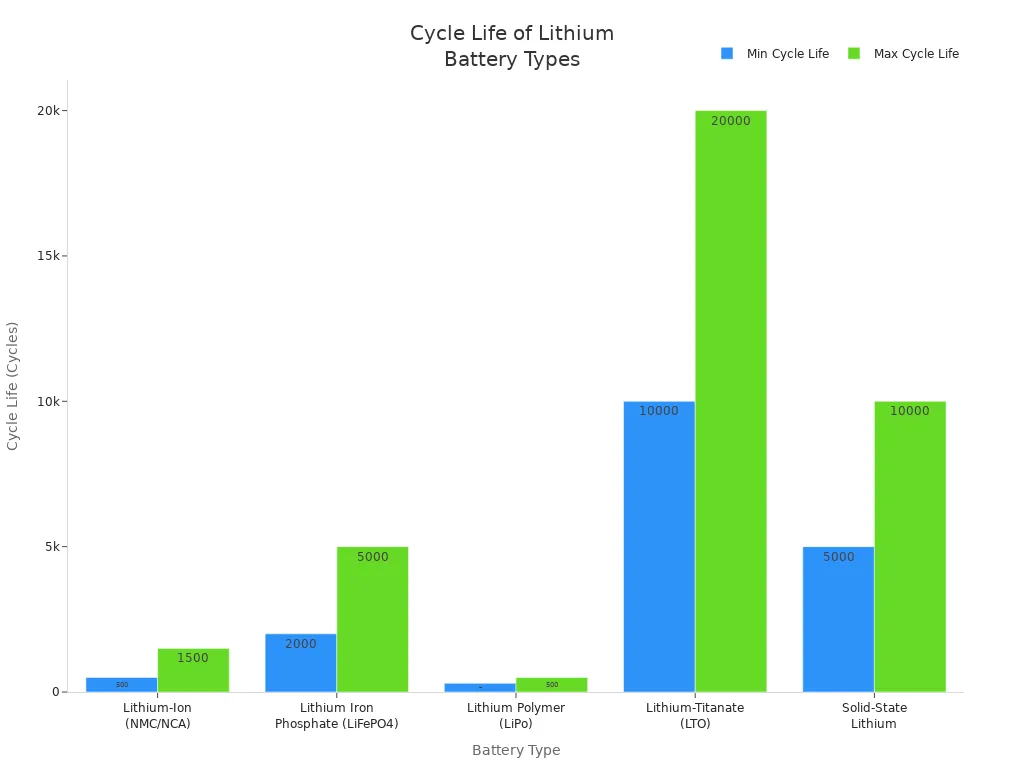
You benefit from fewer replacements and lower maintenance costs over time. While lithium polymer and traditional lithium-ion batteries may seem cost-effective at first, their shorter lifespan increases long-term expenses. LiFePO4 and LTO batteries justify their higher initial investment by offering extended service life and reduced maintenance.
2.2 Performance in Harsh Environments
Industrial sites often face extreme temperatures and challenging weather. Lithium battery packs, especially those using LiFePO4 chemistry, maintain stable performance in both hot and cold conditions. You can rely on these batteries for telecom towers in remote areas, robotics in cold storage, or security systems exposed to outdoor elements.
LiFePO4 and LTO batteries tolerate high temperatures better than other chemistries.
LTO batteries deliver excellent charge and discharge efficiency, even with rapid cycling.
Traditional batteries lose capacity quickly when exposed to temperature swings.
Proper temperature management, such as a robust Battery Management System (BMS), is essential for maximizing battery lifespan and safety.
Note: In cold weather, lithium batteries may experience reduced power output. High temperatures can accelerate internal wear. Always ensure your Energy Storage Systems include advanced thermal management for best results.
2.3 Environmental and Operational Benefits
Lithium battery Energy Storage Systems support your sustainability goals and operational efficiency. These systems help lower carbon emissions and enable renewable energy integration in microgrids, construction, and infrastructure projects. You also benefit from their recyclability, which supports a circular economy. For more on sustainability, visit our sustainability page.
Lithium-ion batteries enhance sustainability in manufacturing and deployment.
They enable the use of renewable energy sources, reducing energy waste.
Recyclable components allow for reuse and repurposing.
Operationally, lithium battery packs offer several advantages:
Advantage | Description |
|---|---|
Energy Efficiency | High charge/discharge efficiency (90-95%) reduces energy loss and operating costs. |
Reliability | Stable power supply minimizes downtime and supports continuous productivity. |
Space Efficiency | Compact design stores more energy in less space, ideal for medical, robotics, and industrial sites. |
Reduced Downtime | Fast charging keeps equipment running, improving overall productivity. |
Low Maintenance | Minimal upkeep compared to lead-acid systems, saving you time and resources. |
You gain a competitive edge by choosing lithium battery Energy Storage Systems for your telecom, construction, microgrid, and other industrial applications.
Part 3: Application Solutions
3.1 Telecom Networks
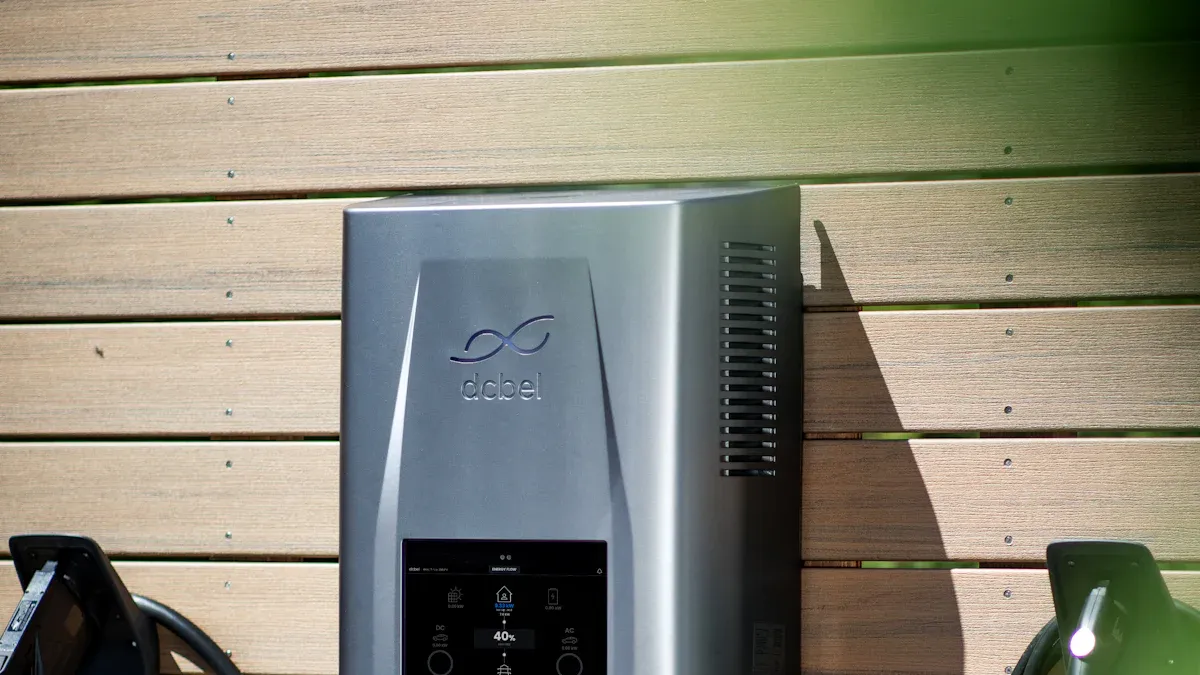
You face unique challenges when managing telecom networks in off-grid, rural, and mountaintop locations. Utility grids often fail to reach these areas, leaving you with unreliable or nonexistent power. Lithium battery packs, especially those using LiFePO4 and NMC chemistries, provide a sustainable and cost-effective alternative to diesel generators. You can store clean energy for continuous use, which eliminates the logistical difficulties and costs of refueling in remote sites. Modular lithium battery systems deliver multi-day autonomy, especially when paired with solar panels. This ensures greater reliability and reduces maintenance compared to older generator-based solutions.
You gain a competitive advantage by deploying lithium battery energy storage systems in telecom towers, medical facilities, and security installations. These systems offer robust backup power, support renewable integration, and minimize downtime.
Market trends show rapid growth in telecom battery applications:
The North American telecom battery market is projected to grow from approximately $7.5 billion in 2024 to over $16 billion by 2029.
This growth represents a compound annual growth rate (CAGR) exceeding 16%.
The overall battery for energy storage in telecom is expected to expand at a CAGR of 8.66% from 2026 to 2033, reaching an estimated value of $29.52 billion by 2033.
Application Scenario | Battery Chemistry | Platform Voltage (V) | Energy Density (Wh/kg) | Cycle Life (cycles) | Key Benefit |
|---|---|---|---|---|---|
Telecom Tower | LiFePO4 | 3.2 | 90–160 | 3,000–8,000 | Multi-day autonomy |
Rural Medical | NMC | 3.7 | 150–220 | 2,000–5,000 | Reliable backup power |
Security System | LMO | 3.7 | 100–150 | 1,000–2,000 | Fast response, compact size |
3.2 Construction Sites
You need portable and robust power solutions for construction sites. Lithium battery energy storage systems serve as effective alternatives to traditional diesel generators. You can power tools, lighting, and temporary systems with quiet operation and zero emissions. This improves the work environment and supports sustainability goals. Modular lithium battery packs allow you to scale power as your project grows. You can deploy these systems quickly, move them easily, and rely on consistent performance in harsh conditions.
You benefit from reduced noise, improved air quality, and lower maintenance costs. Lithium battery packs also support robotics, infrastructure upgrades, and temporary medical facilities on construction sites.
The construction industry sees strong market growth for lithium battery energy storage systems:
The global lithium-ion battery energy storage market was valued at USD 24.80 billion in 2024.
It is projected to reach USD 32.37 billion in 2025.
Expected to grow to USD 113.64 billion by 2032, with a CAGR of 19.65% during the forecast period.
Application Scenario | Battery Chemistry | Platform Voltage (V) | Energy Density (Wh/kg) | Cycle Life (cycles) | Key Benefit |
|---|---|---|---|---|---|
Construction Site | LiFePO4 | 3.2 | 90–160 | 3,000–8,000 | Portable, robust power |
Robotics Deployment | NMC | 3.7 | 150–220 | 2,000–5,000 | High energy density |
Temporary Lighting | LCO | 3.7 | 150–200 | 1,000–2,000 | Compact, fast charging |
3.3 Microgrid Integration
You can integrate lithium battery energy storage systems into microgrids to support renewable energy sources and enhance grid resilience. Modular lithium battery packs, such as those using LiFePO4 and LTO chemistries, allow you to scale capacity as needed. You achieve certification for extreme conditions, which ensures reliable operation in industrial, infrastructure, and consumer electronics applications. These systems help you balance supply and demand, store excess solar or wind energy, and provide backup power during outages.
You improve energy management and reduce operational costs by using lithium battery packs in microgrids. These systems support medical, security, and industrial operations, offering flexibility and scalability.
Application Scenario | Battery Chemistry | Platform Voltage (V) | Energy Density (Wh/kg) | Cycle Life (cycles) | Key Benefit |
|---|---|---|---|---|---|
Microgrid Integration | LiFePO4 | 3.2 | 90–160 | 3,000–8,000 | Renewable integration |
Industrial Backup | LTO | 2.4 | 70–90 | 10,000–20,000 | Extreme cycle durability |
Consumer Electronics | NMC | 3.7 | 150–220 | 2,000–5,000 | High energy density |
You can deploy lithium battery energy storage systems across a broad range of sectors, including medical, robotics, security, infrastructure, and consumer electronics. You gain reliable, scalable, and sustainable power solutions that meet the demands of modern industrial applications.
Part 4: Deployment Considerations
4.1 Durability and Safety
You need Energy Storage Systems that withstand harsh industrial environments. Lithium battery packs, especially those using LiFePO4 and LTO chemistries, offer robust durability. You benefit from advanced thermal management systems, such as liquid cooling, which maintain optimal battery temperatures. High temperatures can cause rapid growth of the solid-electrolyte interphase layer, increase internal resistance, and reduce battery lifespan. Elevated temperatures may also lead to thermal runaway and fire risks. You avoid these issues by choosing systems with certified safety features and temperature controls. Many lithium battery packs achieve certifications for extreme temperatures, ensuring reliable operation from -40°C to 85°C.
4.2 Maintenance and Costs
You reduce maintenance requirements by using lithium battery packs with effective cooling systems. Traditional air cooling is being replaced by liquid cooling, which provides better temperature control and longer warranties. You save on operational costs because lithium-ion batteries require less maintenance and have a longer lifespan than lead-acid alternatives. You also benefit from high energy efficiency, which minimizes energy loss and lowers overall energy consumption.
Effective thermal management prevents uneven degradation.
Liquid cooling extends battery life and warranty periods.
Reduced maintenance needs lower operational costs.
High energy efficiency decreases manufacturing energy consumption.
You achieve significant cost savings over the lifecycle of your battery system. Lithium battery packs help you minimize downtime and replacement expenses, making them ideal for medical, robotics, security, infrastructure, and industrial applications.
4.3 Scalability and Flexibility
You gain deployment flexibility with modular lithium battery Energy Storage Systems. Modular designs allow you to scale capacity from small units to large industrial complexes. You can expand your system as your power needs grow, supporting a wide range of applications.
Evidence Description | Details |
|---|---|
Market Share | The industrial segment accounted for 39.42% in 2024, showing strong demand. |
Deployment Flexibility | Modular and scalable designs enable use across diverse industrial settings. |
You adapt quickly to changing requirements by adding or removing battery modules. This flexibility supports growth in sectors like consumer electronics, infrastructure, and security. You ensure your energy storage solution remains efficient and cost-effective as your operations evolve.
Note: Modular scalability and certified durability make lithium battery packs a smart investment for industrial clients seeking reliable and flexible power solutions.
Part 5: Real-World Energy Storage Systems Cases
5.1 Telecom Example
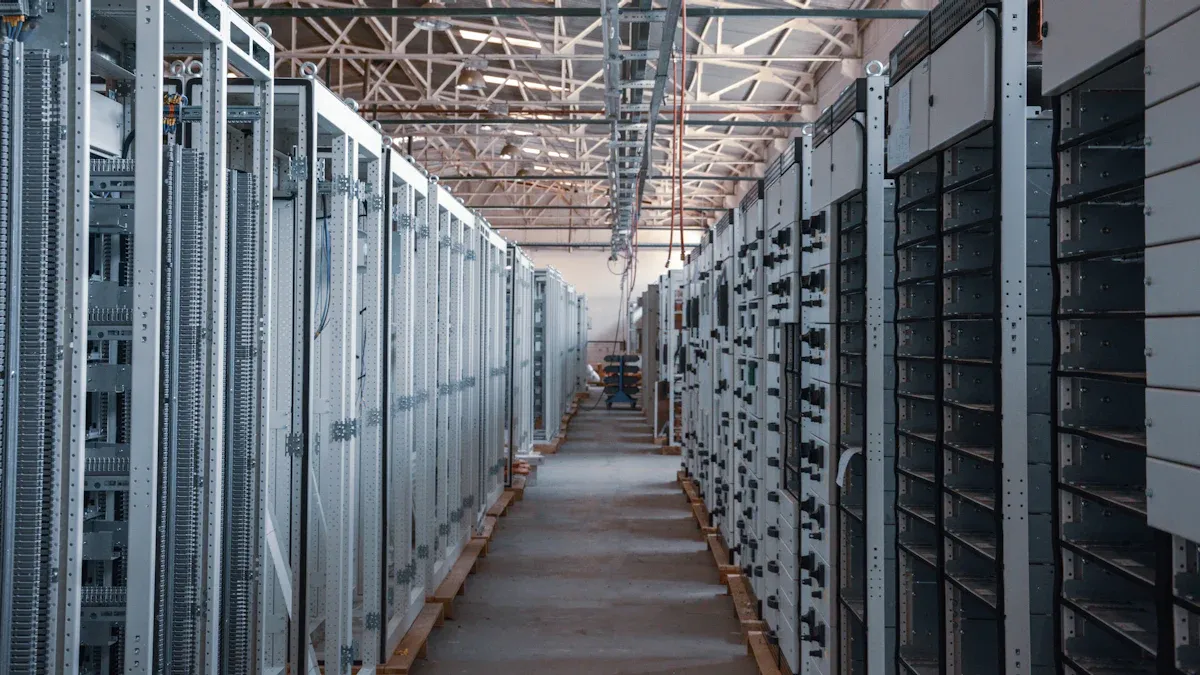
You manage telecom networks that require reliable backup power. Lithium battery packs, such as LiFePO4 and NMC, help you maintain uninterrupted service during outages. You deploy Energy Storage Systems at cell towers, small cell sites, and network data centers. These systems support 5G densification and optimize power management. You also use lithium batteries in remote infrastructure to connect off-grid areas.
Cell tower backup power keeps your network running during emergencies.
Small cell and DAS solutions deliver high efficiency for expanding coverage.
Network data centers benefit from reduced operational costs.
Remote sites gain connectivity where traditional power sources fail.
Lithium battery energy storage systems provide a dependable backup source. You keep critical infrastructure operational during power disruptions. This reliability prevents financial losses and maintains customer satisfaction.
5.2 Construction Example
You operate construction sites that demand portable and robust power. Lithium battery packs, especially LiFePO4, replace noisy diesel generators. You power tools, lighting, and robotics with clean energy. Modular battery systems allow you to scale power as your project grows. You move these systems easily and deploy them quickly.
Application Scenario | Battery Chemistry | Platform Voltage (V) | Energy Density (Wh/kg) | Cycle Life (cycles) |
|---|---|---|---|---|
Portable Power | LiFePO4 | 3.2 | 90–160 | 3,000–8,000 |
Robotics Deployment | NMC | 3.7 | 150–220 | 2,000–5,000 |
Temporary Lighting | LCO | 3.7 | 150–200 | 1,000–2,000 |
You reduce noise and emissions. You improve air quality and lower maintenance costs. Lithium battery packs support infrastructure upgrades and temporary medical facilities on site.
5.3 Microgrid Example
You integrate lithium battery packs into microgrids to support renewable energy and enhance grid resilience. LiFePO4 and LTO chemistries allow you to scale capacity for industrial and infrastructure applications. You achieve certification for extreme conditions, ensuring reliable operation from -40°C to 85°C.
Application Scenario | Battery Chemistry | Platform Voltage (V) | Energy Density (Wh/kg) | Cycle Life (cycles) |
|---|---|---|---|---|
Microgrid Integration | LiFePO4 | 3.2 | 90–160 | 3,000–8,000 |
Industrial Backup | LTO | 2.4 | 70–90 | 10,000–20,000 |
Consumer Electronics | NMC | 3.7 | 150–220 | 2,000–5,000 |
You balance supply and demand. You store excess solar or wind energy. You provide backup power during outages. Lithium battery Energy Storage Systems help you reduce operational costs and support medical, security, and industrial operations.
You gain reliable, scalable, and sustainable power solutions by deploying lithium battery packs across telecom, construction, and microgrid sectors. Industry trends show that modular designs and advanced chemistries deliver best practices for modern energy management.
You see how lithium battery energy storage systems deliver reliable power for telecom, construction, and microgrid operations. These systems use modular designs, so you can scale solutions for any industrial need. Lithium-ion batteries help you manage peak loads and support renewable energy, such as solar and wind. As demand for grid stability and adaptable power grows, you will find these systems become essential in modern energy management. You gain flexibility, efficiency, and a path toward a more sustainable future.
FAQ
What makes LiFePO4 batteries ideal for industrial outdoor energy storage?
LiFePO4 batteries offer high safety, long cycle life, and stable performance. You can use them in telecom, construction, and microgrid applications. Their platform voltage is 3.2V, energy density ranges from 90–160 Wh/kg, and cycle life reaches 3,000–8,000 cycles.
How do lithium battery packs perform in extreme temperatures?
You can rely on lithium battery packs like LiFePO4 and LTO in harsh environments. These chemistries operate from -40°C to 85°C. Advanced thermal management systems help maintain performance and safety in both hot and cold conditions.
Can I scale lithium battery energy storage systems for different applications?
Yes. You can expand modular lithium battery systems as your power needs grow. This flexibility supports telecom towers, construction sites, microgrids, medical devices, robotics, and security systems.
How do lithium battery packs compare to lead-acid batteries?
Feature | Lithium (LiFePO4) | Lead-Acid |
|---|---|---|
Cycle Life | 3,000–8,000 | 500–1,000 |
Energy Density | 90–160 Wh/kg | 30–50 Wh/kg |
Maintenance | Low | High |
You get longer service life, higher energy density, and less maintenance with lithium battery packs.
What certifications should I look for in industrial lithium battery packs?
You should look for certifications like UL, IEC, and UN38.3. These ensure safety, reliability, and compliance for use in industrial, medical, robotics, and infrastructure applications.


