

You rely on lithium battery design to deliver high energy density and robust reliability in portable drug delivery systems. Lithium battery design enables compact medical devices, ensuring safety and efficiency. You must comply with standards such as:
ANSI/AAMI ES 60601-1
IEC 62133
UL 1642
UL 2054
ISO 10993
Battery management systems safeguard device performance. Drug delivery pens and smart infusion pumps use advanced lithium battery design for consistent operation.
Key Takeaways
The 1S3P lithium battery design enhances energy density and reliability for portable drug delivery systems, allowing for compact and efficient medical devices.
Choosing the right battery chemistry, like NMC or LiFePO4, is crucial for balancing energy density, safety, and cycle life in drug delivery pens.
Implementing a robust Battery Management System (BMS) is essential for ensuring safety, reliability, and compliance with medical standards in portable medical batteries.
Part1: Lithium Battery Design for Drug Delivery Pens

1.1 1S3P Configuration Overview
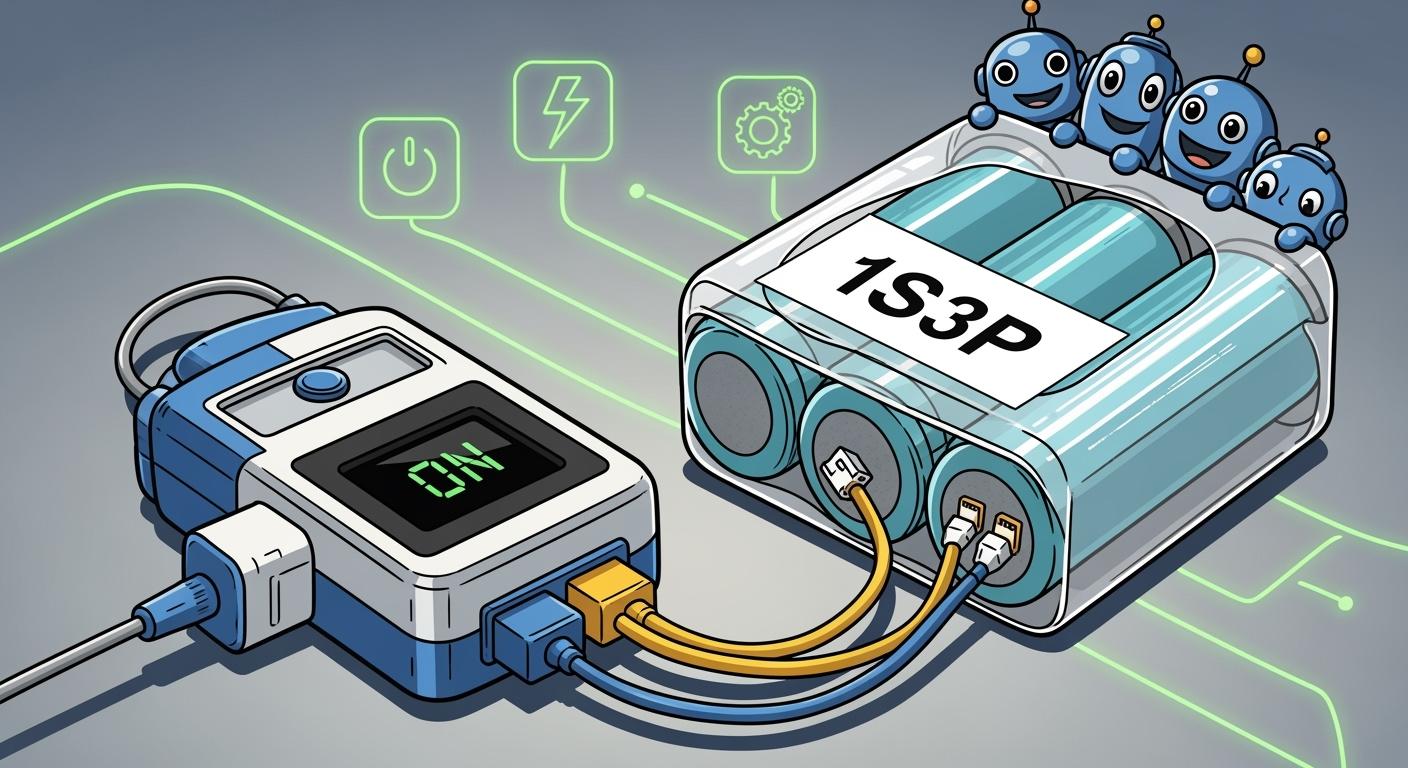
You need to understand the 1S3P configuration to optimize portable medical batteries for drug delivery pens. In this setup, you connect three lithium cells in parallel to form one series group. This design increases the total capacity while maintaining a low, safe voltage. You gain the following advantages:
Enhanced energy storage without increasing device voltage.
Improved reliability due to parallel redundancy.
Consistent power delivery for sensitive medical applications.
You often select lithium-ion coin cells for their compact form factor. These cells fit easily into the slim profiles required by drug delivery pens. The 1S3P arrangement allows you to meet strict space and energy requirements, which are critical for portable medical batteries.
Tip: When you design for medical devices, always prioritize configurations that balance safety, capacity, and size.
1.2 Energy Density and Compactness
You face strict limitations on space and weight in drug delivery pens. High energy density becomes essential. The 1S3P lithium battery design helps you maximize energy storage in a small footprint. You can see the differences in lithium battery chemistries in the table below:
Chemistry | Platform Voltage (V) | Typical Energy Density (Wh/kg) | Cycle Life (cycles) | Medical Suitability |
|---|---|---|---|---|
LiFePO4 Lithium battery | 3.2 | 90–120 | 2000+ | High |
NMC Lithium battery | 3.7 | 150–220 | 1000–2000 | High |
LCO Lithium battery | 3.7 | 150–200 | 500–1000 | Moderate |
LMO Lithium battery | 3.7 | 100–150 | 500–1000 | Moderate |
You should choose a chemistry that matches your device’s needs. For drug delivery pens, you often select NMC lithium battery or LiFePO4 lithium battery. These chemistries offer a strong balance between energy density, safety, and cycle life. You can achieve longer battery life and reduce the need for frequent replacements.
You must also consider the following requirements for battery integration in drug delivery pens:
Use compact battery types, such as lithium-ion coin cells, to minimize space consumption.
Keep power consumption exceptionally low to prolong battery life.
Ensure accurate monitoring of drug administration.
Minimize the physical size of the device for patient comfort and portability.
Balance battery type, physical size, and power consumption for reliability and efficiency.
By focusing on these factors, you ensure your portable medical batteries deliver consistent performance in demanding environments.
1.3 Application in Drug Delivery Pens
You apply the 1S3P lithium battery design to drug delivery pens to meet the unique demands of medical use. These devices require precise, reliable power for accurate dosing and patient safety. You benefit from the following features:
Slim, ergonomic designs that enhance patient comfort.
Extended operational time between charges or replacements.
Stable voltage output for sensitive electronic controls.
Integration with advanced monitoring systems for accurate drug delivery.
You also address the challenge of minimizing power consumption. By optimizing your battery design, you extend battery life and reduce maintenance. You ensure that drug delivery pens remain lightweight and easy to use, which is vital for patient adherence.
You see the impact of these design choices in real-world applications. Drug delivery pens now support advanced features like wireless connectivity and smart dosing algorithms. These improvements rely on the robust performance of portable medical batteries.
Note: When you design for drug delivery pens, always test for reliability and safety under real-use conditions. This approach helps you meet regulatory standards and deliver better outcomes for patients.
Part2: Safety, Integration, and Management of Portable Medical Batteries

2.1 Safety Standards and Reliability
You must prioritize safety standards when designing portable medical batteries. International regulations require strict compliance to ensure patient safety and device reliability. The table below outlines the most critical safety standards for lithium battery packs in medical devices:
Standard | Purpose | Key Tests |
|---|---|---|
IEC 62133 | Minimize hazards from battery misuse, including short circuit, overcharging, excessive discharge, and mechanical abuse. | Overcharge & Forced Discharge, External Short Circuit, Vibration & Mechanical Shock, Temperature Cycling, Molded Case Stress Test |
UN 38.3 | Ensure batteries can be safely transported without leakage, venting, fire, or explosion. | Altitude Simulation, Thermal Test, Vibration, Shock, External Short Circuit, Impact/Crush, Overcharge, Forced Discharge |
You need to meet these safety standards to prevent failures caused by overcharging, overheating, or mechanical damage. Reliable portable medical batteries must pass rigorous tests for vibration, shock, and temperature cycling.
2.2 Thermal Management and BMS
Thermal management is essential for portable medical batteries. You must address risks like thermal runaway, which can result from overcharging, overheating, or internal short circuits. You can mitigate these risks by using thermal sensors to monitor device temperature and by designing enclosures that dissipate heat efficiently. Proper enclosure design protects internal components and extends battery life.
You should integrate battery management systems (BMS) to enhance safety and reliability. These systems provide:
Overcharge protection
Over-discharge protection
Temperature monitoring
A robust BMS ensures accurate monitoring of charge levels and temperature, keeping lithium battery packs within safe operating limits.
A robust Battery Management System (BMS) is critical for medical battery packs. Key features include: Overcharge protection, Over-discharge protection, Temperature monitoring, Short-circuit protection, Compliance with UL 2054 safety standard.
2.3 Integration in Portable Medical Batteries
You must ensure reliable integration of lithium battery packs in compact medical devices. Focus on continuous operation, electrical and mechanical safety, and thermal stability. Custom battery solutions allow you to tailor chemistry and form factor to meet specific requirements. Use thermal sensors for early detection of abnormal conditions and reinforced enclosures for mechanical protection.
You should design for ergonomics and modularity, making batteries easy to replace in handheld or wearable devices. Integrate connectivity and smart diagnostics for predictive maintenance and accurate monitoring. These strategies help you deliver safe, reliable, and efficient portable medical batteries for advanced drug delivery systems.
You gain higher energy density, robust safety, and seamless integration with 1S3P lithium battery designs in portable drug delivery systems.
Prioritize rugged construction and compact packaging.
Implement advanced BMS for reliability.
Ensure compliance with global medical standards.
Innovations in solid-state batteries and smart BMS will drive the next wave of portable medical device performance.
FAQ
What advantages does the 1S3P lithium battery design offer for portable drug delivery systems?
You gain higher energy density, stable voltage, and improved reliability. This configuration supports precise drug administration and extends device runtime in compact medical platforms.
How do low-power components impact battery life in drug delivery pens?
You optimize battery life by selecting low-power components. These components reduce energy consumption, allowing lithium battery packs to support longer operation and consistent performance.
Where can you get custom lithium battery solutions for medical devices?
You can consult Large Power for custom lithium battery packs. Their team specializes in medical device integration and compliance.


