

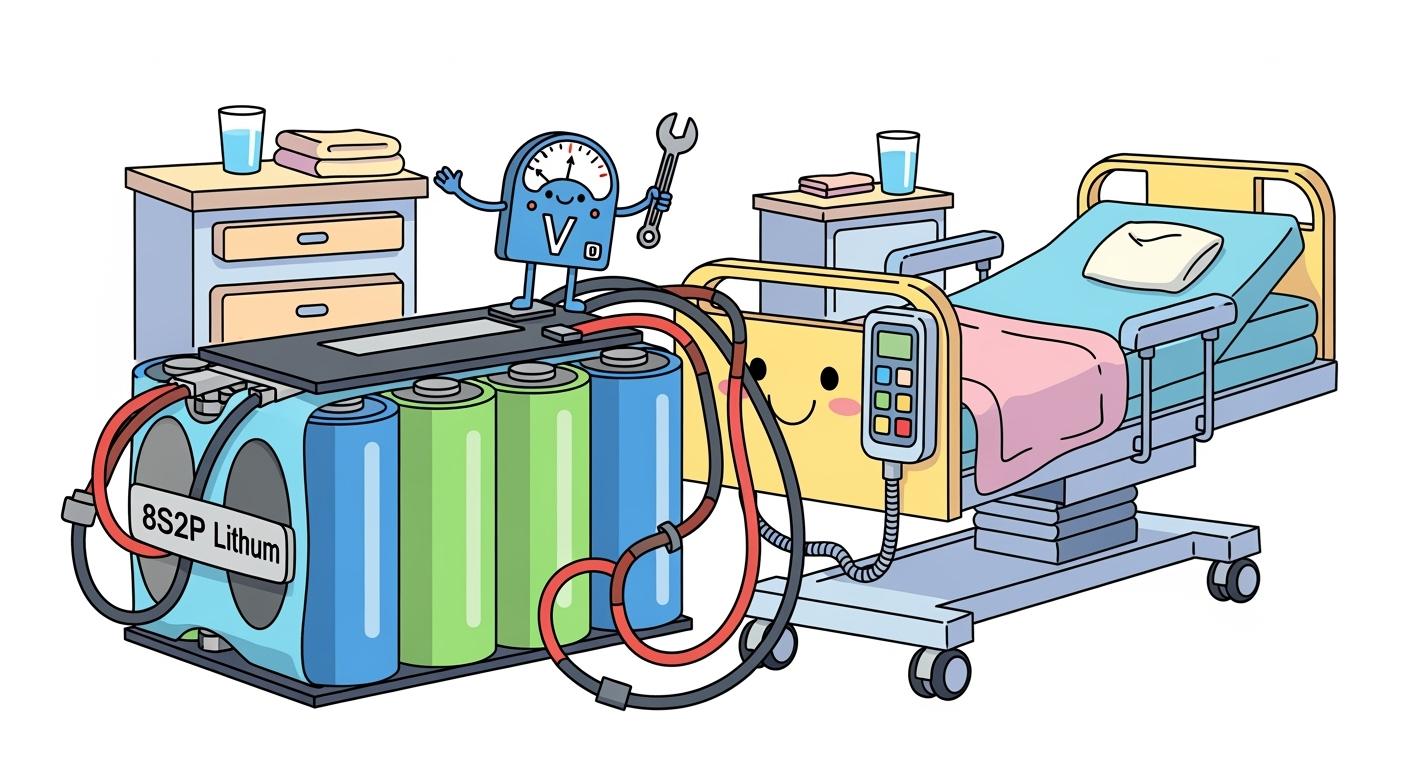
You need an efficient lithium battery design to power high-load electric nursing beds in demanding environments. The 8S2P configuration offers a nominal voltage of 25.6V and a capacity of 8000mAh, making it ideal for medical and industrial applications. See the key specifications below:
Specification | Value |
|---|---|
Nominal Voltage | 25.6V |
Capacity | 8000mAh (8Ah) |
Working Voltage Range | 16V~29.2V |
Max Charge Voltage | 29.2V |
Key Takeaways
The 8S2P lithium battery configuration provides a nominal voltage of 25.6V and a capacity of 8000mAh, making it ideal for high-load applications like electric nursing beds.
Using LiFePO₄ cells enhances battery safety and longevity, offering a cycle life of over 2000 charges, which is crucial for medical environments.
Integrating a robust Battery Management System (BMS) ensures safety by preventing overcharging and monitoring temperature, which is vital for maintaining battery performance.
Part1: 8S2P Lithium Battery Design & Configuration
1.1 8S2P Batteries: Series and Parallel Explained
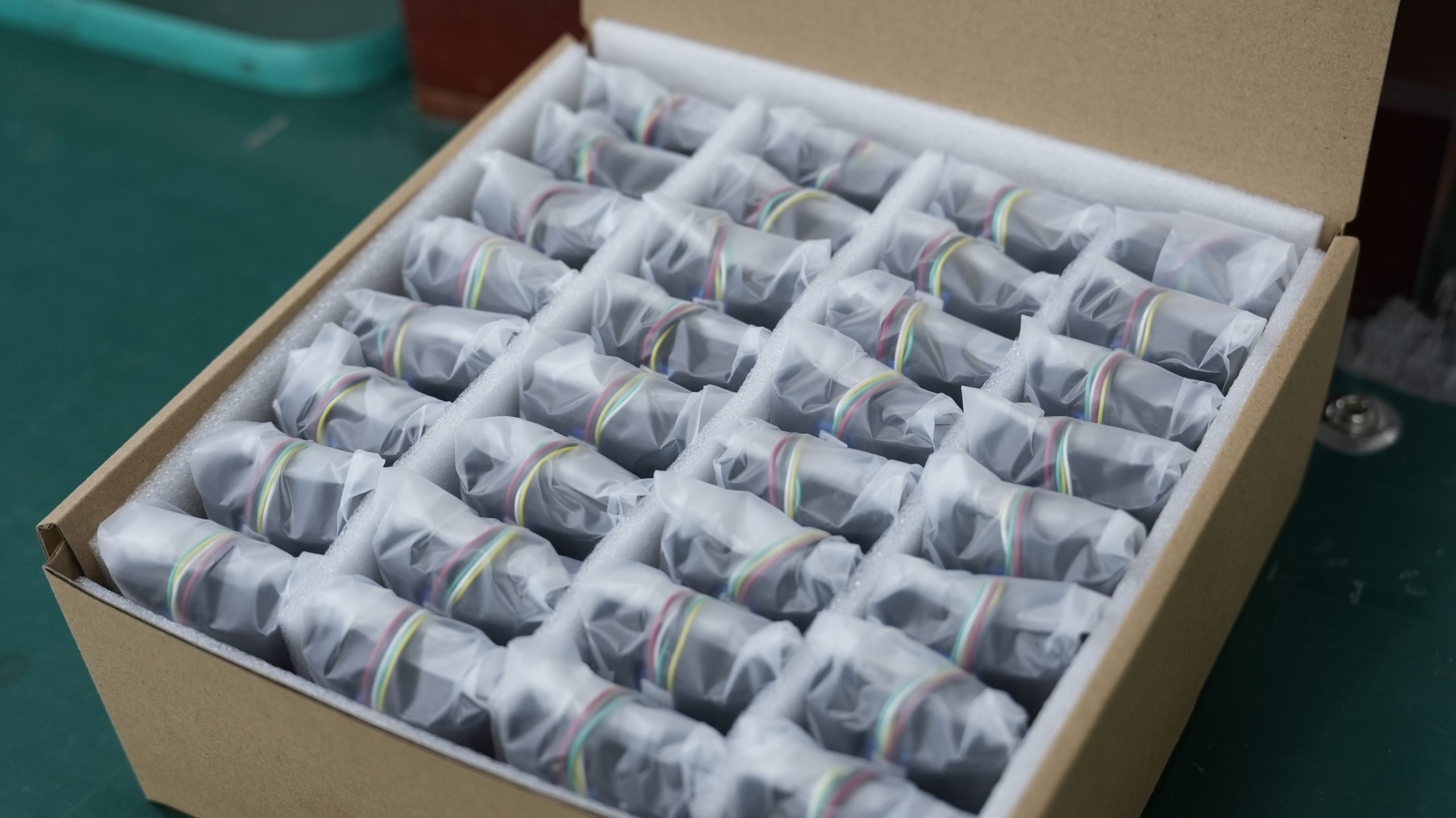
You need to understand how series and parallel arrangements impact lithium battery design. In an 8S2P configuration, you connect eight cells in series and two sets in parallel. This structure combines the voltage of each cell in series while increasing capacity through parallel connections. Here is how these arrangements affect performance:
Series connections add up the voltage of each cell, resulting in a higher total voltage for the battery pack.
Parallel connections increase the capacity, allowing the battery pack to store more energy and deliver higher currents.
For example, connecting eight 3.2V LiFePO4 cells in series gives you a nominal voltage of 25.6V. When you add a parallel set, the capacity doubles, making the battery pack safer for battery discharging and battery charging cycles.
Tip: Parallel arrangements enhance energy storage and provide a robust reserve, which is critical for medical devices that require uninterrupted operation.
1.2 Voltage, Capacity, and High-Load Benefits
You must select a lithium battery design that meets the demanding requirements of electric nursing beds. The 8S2P configuration delivers a nominal voltage of 25.6V and a capacity of 8000mAh, supporting high-load applications. This setup ensures reliable performance during dynamic movements and lifting operations. The table below highlights the electrical and mechanical advantages of using an 8S2P configuration for high-load environments:
Advantage | Description |
|---|---|
High Energy Density | Up to three times that of lead-acid batteries, allowing longer operation between charges. |
High Discharge Rates | Supports peak power demands during dynamic movements or lifting operations. |
Enhanced Performance | Built-in Battery Management Systems (BMS) ensure safety and reliability in demanding environments. |
You benefit from high energy storage and efficient battery packs that minimize downtime. The lithium-ion chemistry, especially LiFePO4, offers superior cycle life and safety compared to traditional batteries. Optimized wiring layouts reduce voltage drops and energy loss, improving power delivery and thermal management. Cell balancing ensures uniform battery charging and battery discharging, extending the lifespan and maintaining consistent performance.
1.3 Compatibility with Nursing Bed Requirements
You must ensure that your lithium battery design aligns with the operational needs of electric nursing beds. The 8S2P configuration matches standard inverter inputs and medical device power requirements. Nursing beds often demand stable voltage and high capacity for motors, actuators, and control systems. The 25.6V output fits seamlessly with most medical equipment, supporting both continuous and peak loads.
Battery packs with this configuration provide reliable energy storage for extended use.
The lithium-ion chemistry meets medical safety standards and supports frequent battery charging cycles.
Efficient battery discharging ensures smooth operation during patient transfers and adjustments.
You achieve compliance with medical regulations and maintain operational efficiency. The lithium battery design minimizes wiring size and energy loss, making it ideal for high-load medical applications. You can also adapt this configuration for other sectors, such as robotics, security, infrastructure, consumer electronics , and industrial environments.
Note: Always optimize cell balancing and wiring layout to maximize efficiency and safety in your lithium battery design.
Part2: Cell Selection, BMS, and Assembly

2.1 Choosing Cells for High-Load Batteries
You must select the right cells to ensure your batteries deliver reliable performance in high-load medical environments. For electric nursing beds, LiFePO₄ cells stand out due to their long cycle life, stable voltage, and strong battery safety profile. You should always choose cells that meet strict quality and safety standards. The table below outlines the main criteria for selecting LiFePO₄ cells for high-load applications:
Criteria | Details |
|---|---|
Capacity | 30 Ah |
Cycle Life | 2000+ @ 80% DoD |
Charge Temperature | 0°C to 45°C |
Discharge Temperature | -20°C to 60°C |
Safety Certifications | Recognized Safety Certifications |
Quality Considerations | Buy from Reputable Manufacturers |
BMS | Ensure Reliable Battery Management |
Safety Precautions | Inspect for Physical Damage |
Charger Compatibility | Use a Dedicated Charger |
Short Circuit Prevention | Prevent Short Circuits |
Thermal Management | Ensure Proper Ventilation |
You should always match cell capacity and discharge rates to your application. For example, a 25.6V 10Ah LiFePO₄ battery pack with a maximum discharge rate of 5A supports most electric nursing bed motors. For higher-demand systems, you can scale up to 100Ah packs. Always verify that your cells come from the same batch to avoid imbalance, which can reduce battery safety and lifespan.
Tip: LiFePO₄ chemistry offers superior battery safety, long cycle life, and stable performance compared to NMC, LCO, LMO, and LTO chemistries. You can see the comparison below:
Chemistry | Cycle Life | Safety | Energy Density | Cost |
|---|---|---|---|---|
LiFePO₄ | 2000+ | High | Medium | Medium |
NMC | 1000–2000 | Medium | High | High |
LCO | 500–1000 | Low | High | High |
LMO | 1000–2000 | Medium | Medium | Medium |
LTO | 10000+ | Very High | Low | High |
You can apply these batteries in robotics, security, infrastructure, consumer electronics, and industrial sectors, where high reliability and battery safety are essential.
2.2 BMS Integration for Safety & Efficiency
You must integrate advanced battery management systems to protect your battery packs and ensure efficient operation. A robust BMS provides several critical functions:
Overcharge and over-discharge protection
Short circuit prevention
Temperature monitoring and control
Cell balancing for uniform battery charging and battery discharging
Fault diagnosis and operational limit enforcement
You should always select a BMS with safety certifications such as UN 38.3 and IEC 62619. These certifications guarantee that your batteries meet international standards for battery safety and transportation. The BMS monitors current, voltage, and temperature for each cell, ensuring accurate data for balancing and protection. In high-load medical applications, battery management systems play a vital role in preventing hazardous conditions and maintaining reliability.
Note: You should request cell grading reports and review quality assurance protocols from your supplier. This step ensures your battery management system operates with high-quality cells and reduces the risk of failure.
2.3 Assembly Process & Thermal Management
You must follow best practices during assembly to maximize battery safety and performance. The table below summarizes key aspects of assembling 8S2P lithium battery packs:
Aspect | Recommended Practice | Risk of Neglect | Tools/Components Needed |
|---|---|---|---|
Cell Selection | Use matched, branded cells from the same batch | Imbalance, reduced lifespan, overheating | Cell checker, datasheet, multimeter |
BMS Integration | Install 8S-rated BMS with balancing and protection | Overcharge, fire, cell damage | 8S BMS, soldering iron, wiring |
Thermal Control | Use heat sinks, ventilation, or active cooling | Thermal runaway, reduced efficiency | Aluminum heat sinks, fans, thermal tape |
Assembly Safety | Work on non-conductive surface with protective gear | Short circuits, burns, eye injury | Insulated gloves, goggles, non-slip mat |
Storage & Charging | Charge in fire-safe container; store at 40–60% charge | Fire hazard, capacity loss | Fire bag, Li-ion charger, storage box |
You should always assemble batteries on a non-conductive surface and wear protective gear. Proper wiring and secure connections reduce the risk of short circuits and improve battery safety. You must address temperature effects by using heat sinks, fans, or thermal tape to prevent overheating during battery charging and battery discharging. Good thermal management extends battery life and maintains consistent performance.
Callout: Recent battery innovations include custom battery design for medical devices, advanced safety features, and compliance with regulatory standards. These advancements improve reliability and battery safety in electric nursing beds and other high-load applications.
You can apply these assembly and management practices to batteries used in robotics, security, infrastructure, consumer electronics, and industrial equipment. By following these guidelines, you ensure your battery packs deliver safe, efficient, and long-lasting performance.
Part3: Safety, Compliance, and Testing Batteries
3.1 Safety Features & Medical Compliance
You must prioritize safety and regulatory compliance when designing battery packs for electric nursing beds. Medical environments require strict adherence to standards that minimize risks. The table below outlines essential safety features:
Safety Feature | Description |
|---|---|
Compliance with NFPA 99 | Minimizes fire and electrical failure risks in patient care areas. |
Compliance with NFPA 70 | Ensures proper wiring, grounding, and outlet usage for charging stations. |
UL 2054 and UL 62133 | Governs safe design and performance of lithium-ion battery packs. |
Safe Charging Practices | Requires designated areas with ventilation and smoke detection. |
Storage Protocols | Mandates temperature-controlled storage away from combustibles. |
Staff Education | Training on battery failure signs and emergency procedures. |
You should always charge batteries in designated areas with proper ventilation. Avoid charging near patient beds or in oxygen-rich environments. Store batteries in cool, dry locations away from sunlight and moisture. Train staff to recognize battery failure signs and follow emergency protocols.
3.2 Testing Batteries for Performance
You must test battery packs rigorously to ensure reliability in medical battery applications. Performance testing involves evaluating how the device interacts with batteries, focusing on function, reliability, and safety. Quality assurance benchmarks include cycling performance and cell construction assessments. Regulatory compliance with FDA 21 CFR Subchapter H and EU Battery Regulation 2023/1542 is vital. Manufacturers implement quality control measures, environmental tests, and endurance testing to verify battery packs withstand repeated charge-discharge cycles. You must assess risk at the battery-cell level and use process failure modes, effects, and criticality analysis to identify potential issues.
3.3 Maintenance for Long-Term Reliability
You must follow maintenance procedures to extend the lifespan of batteries in electric nursing beds. Treat batteries with care and adopt smart charging habits to slow capacity decline. Keep battery terminals clean and free of corrosion. Ensure connections remain tight and secure. Store batteries in cool, dry environments and maintain around 50 percent capacity during storage. Perform visual inspections every month and comprehensive evaluations every three to six months. Regular checks help identify early issues and reduce maintenance costs in battery applications.
Tip: Routine maintenance and staff training improve reliability and safety in medical battery applications. You can apply these practices to robotics, security, infrastructure, consumer electronics, and industrial sectors.
You achieve reliable performance by following each step: select high-quality cells, configure 8S2P packs, integrate robust BMS, and assemble with care.
Maintain batteries to prevent degradation and extend life.
Avoid physical damage and extreme temperatures.
Adhere to standards for safety in medical, robotics, security, and industrial sectors.
FAQ
What advantages do 8S2P lithium battery packs offer for medical application battery packs?
You gain stable voltage, high energy density, and long cycle life. These features support critical equipment in hospitals, clinics, and other healthcare environments.
How does a battery management system improve safety in high-load environments?
You use a battery management system to monitor voltage, current, and temperature. This system prevents overcharge, over-discharge, and thermal events in demanding sectors.


