

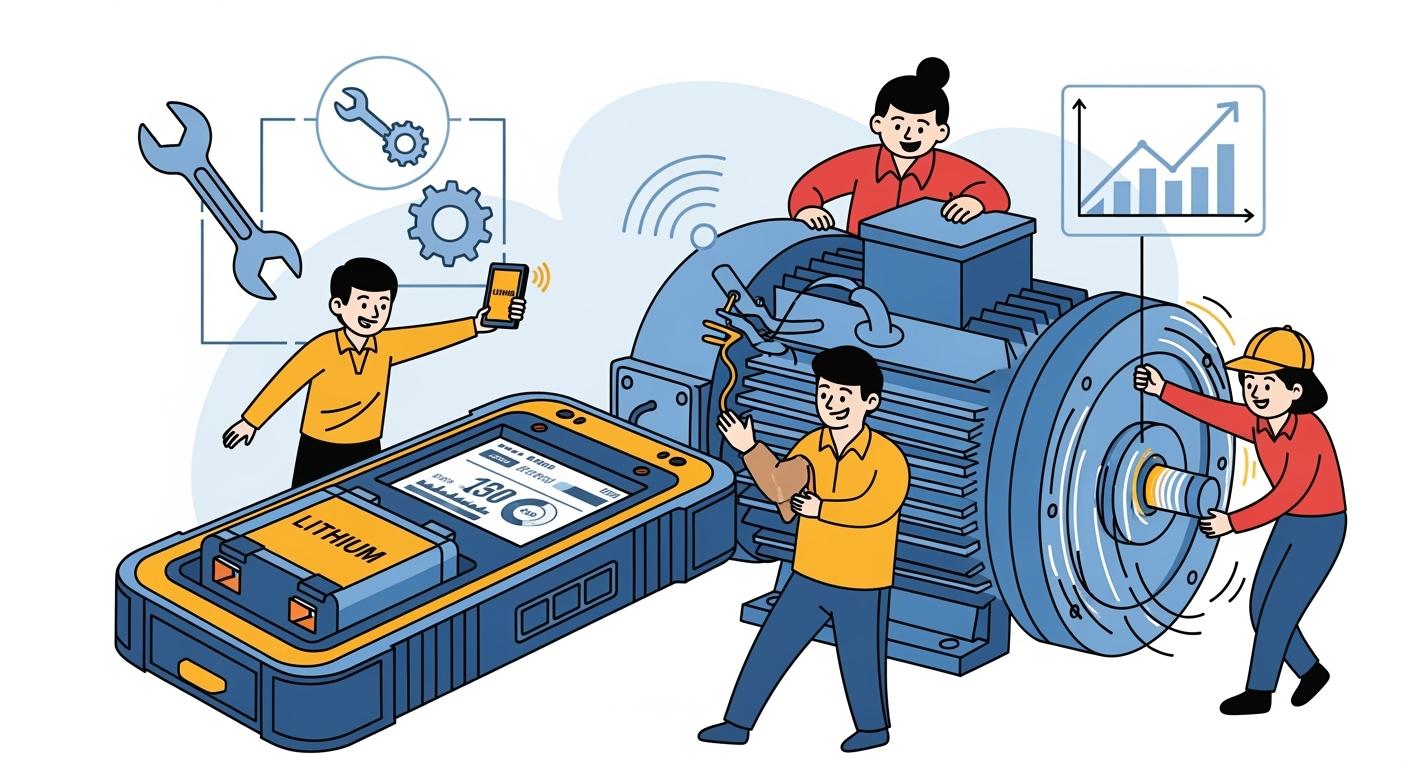
You rely on portable vibration and condition monitoring systems to keep critical equipment running smoothly. These tools need reliable, long-lasting power to deliver accurate data in real time. Lithium Battery Solutions offer high energy density, stable voltage, and compact size, which suit the demands of modern predictive maintenance. For example, lithium-ion batteries deliver 195–220 Wh/kg, while lithium iron phosphate options provide 90–130 Wh/kg, ensuring longer runtimes without extra weight.
Battery Type | Energy Density (Wh/kg) |
|---|---|
Lithium-ion | 195 – 220 |
Lithium Iron Phosphate | 90 – 130 |
You can trust these batteries to perform under vibration, meet strict safety standards, and support advanced health monitoring. Reliable batteries help you maximize uptime and maintain operational efficiency.
Key Takeaways
Lithium batteries provide high energy density and stable voltage, making them ideal for portable monitoring systems that require long runtimes.
Choose batteries designed for vibration resistance to ensure reliable performance in harsh environments, such as industrial and medical applications.
Implement real-time health monitoring systems to track battery performance and prevent unexpected failures, enhancing predictive maintenance.
Select battery chemistries that match your device’s needs, considering factors like energy density, cycle life, and environmental conditions.
Regular maintenance practices, such as monitoring temperature and avoiding deep discharges, can significantly extend battery life and reliability.
Part1: Power Needs and Challenges
1.1 Power Demands in Portable Monitoring
You need portable monitoring systems that can run for long periods without frequent battery changes. These devices often collect data from sensors in industrial, medical, robotics, and security applications. The power consumption depends on several factors:
Battery life changes with temperature and how often you set the device to measure.
Manufacturers may say a battery lasts for years, but these estimates often use ideal conditions.
Real-world energy use can change, so predicting battery life is not always easy.
Technologies like LoRaWAN help devices send data over long distances and work well in noisy places, but they can also affect how much power the system uses.
You must choose batteries that match your device’s needs and the environment where you use them.
1.2 Environmental and Vibration Challenges
Your monitoring equipment often faces tough conditions. High or low temperatures, humidity, and constant vibration can all impact battery performance. The table below shows how temperature affects batteries:
Environmental Factor | Effect on Battery Performance |
|---|---|
High Temperature | Speeds up chemical reactions and material breakdown, which shortens battery life. |
Low Temperature | Makes the battery’s electrolyte thicker, slows lithium-ion movement, and lowers capacity. |
Temperature Fluctuations | Changes reaction rates and material stability, which can reduce overall performance. |
Vibration is another challenge. Devices in industrial or infrastructure settings may shake or move, which can damage batteries if they are not designed for these conditions. You need Lithium Battery Solutions that can handle these stresses and keep your systems running.
1.3 Impact on Predictive Maintenance
Reliable batteries play a key role in predictive maintenance. If a battery fails, your monitoring system may miss important data, which can lead to unexpected equipment problems. In battery storage systems, sensors check temperature, charge cycles, and voltage to find issues early and trigger maintenance. This approach helps you avoid downtime and costly repairs. When you use robust battery packs, you support continuous monitoring in many fields, including consumer electronics and industrial automation.
Part2: Lithium Battery Solutions Overview
2.1 Key Chemistries and Features
You can choose from several lithium battery chemistries for portable vibration and condition monitoring systems. Each chemistry offers unique advantages for different application scenarios, such as medical devices, robotics, security sensors, infrastructure monitoring, consumer electronics, and industrial automation.
Chemistry | Platform Voltage (V) | Energy Density (Wh/kg) | Cycle Life (cycles) |
|---|---|---|---|
Lithium Cobalt Oxide (LCO) | 3.7 | 150-200 | 500-1,000 |
Lithium Nickel Manganese Cobalt (NMC) | 3.7 | 180-220 | 1,000-2,000 |
Lithium Iron Phosphate (LiFePO4) | 3.2 | 90-130 | 2,000-5,000 |
Lithium Manganese Oxide (LMO) | 3.7 | 100-150 | 1,000-2,000 |
Solid-State | 3.7 | 250-350 | 2,000-10,000 |
Lithium Metal | 3.7 | 350-500 | 1,000-2,000 |
You see these chemistries used in different sectors. For example, lithium iron phosphate batteries provide enhanced safety and stability for infrastructure and industrial monitoring. Lithium-ion and lithium polymer batteries deliver high energy density and flexible form factors for medical and robotics applications. Solid-state and lithium metal batteries represent the latest advancements, offering higher energy density and longer cycle life.
Common lithium battery chemistries for portable monitoring:
Lithium-ion: High energy density, widely used in portable electronics.
Lithium polymer: Flexible form factors, reliable performance for compact designs.
Lithium iron phosphate: Enhanced safety and stability for challenging conditions.
You can select the chemistry that best matches your device requirements and operational environment.
2.2 Energy Density and Voltage Stability
You need batteries that deliver consistent power and maximize operational uptime. Lithium Battery Solutions stand out because they offer high energy density and stable voltage, which are critical for sensor nodes and portable monitoring devices.
Feature | Description |
|---|---|
High Energy & Power Density | Lightweight lithium packs deliver compact, long-lasting performance for persistent monitoring systems. |
Adaptive & Advanced BMS | Custom BMS solutions enable real-time battery status and health monitoring, accessible locally or remotely. |
Custom Battery Housing & PCB Designs | Designed to match your device’s casing and electromagnetic requirements using advanced PCB layouts, including flex-rigid formats. |
Certified Safety & Compliance | Designed to meet UL, IEC, UN38.3 certifications and other main certifications. |
You benefit from high energy density, which allows for compact designs and improved operational efficiency. Lithium-ion batteries can reduce total system mass by up to 80%. Compact batteries can decrease UPS system area by 50-80%, enabling more computing resources in existing spaces. These features help you deploy monitoring systems in tight spaces, such as medical devices or robotics platforms, without sacrificing performance.
Evidence Description | Impact on Operational Uptime |
|---|---|
High energy density allows for compact designs | Improves operational efficiency and reliability |
Lithium-ion batteries reduce total system mass by up to 80% | Facilitates better space utilization and efficiency |
Compact batteries can reduce UPS system area by 50-80% | Enables more computing resources in existing spaces |
2.3 Safety Standards and Vibration Testing
You must ensure your batteries meet international safety standards and pass rigorous vibration testing. Lithium Battery Solutions comply with certifications such as IEC62133 and UN38.3, which are essential for safe operation and transport.
Standard | Focus Areas |
|---|---|
IEC62133 | Electrical safety, Mechanical testing, Thermal testing, Short-circuit protection |
UN38.3 | Transportation safety requirements for lithium batteries |
Safety tests are conducted under controlled conditions to ensure safety under extreme conditions.
UN 38.3 tests simulate various conditions (thermal, vibration, altitude, etc.) to ensure safety for global transport.
UN 38.3 vibration testing plays a crucial role in battery safety. Mechanical vibration can increase the temperature of thermal runaway in lithium-ion batteries under low voltage conditions. Low frequency and large amplitude vibrations can accelerate battery short circuits. High-frequency vibrations can raise the ignition temperature and exhaust volume of lithium batteries. The safety valve for 18650 lithium-ion batteries pops out at temperatures between 140-150 ℃, marking a critical safety threshold.
Tip: Always verify that your battery packs have passed UN38.3 and IEC62133 tests before deploying them in portable monitoring systems. This step protects your equipment and ensures compliance with global transport regulations.
You can rely on Lithium Battery Solutions to deliver safe, reliable power for sensor nodes and portable monitoring devices in demanding environments.
Part3: Durability and Performance Under Vibration

3.1 Effects of Vibration on Battery Life
You need to understand how vibration impacts the lifespan of lithium batteries in portable monitoring systems. Continuous vibration exposure can cause several issues that affect both performance and safety.
Vibration can degrade the accuracy of Battery Management Integrated Circuits (BMICs), which monitor battery health and performance.
Mechanical stress from vibration increases noise and offset drift in voltage reference circuits and current sensing amplifiers. This makes it harder for your system to estimate the state of charge and monitor safety.
Protection circuits inside BMICs may become less reliable under vibration. This can lead to false alarms or, worse, a failure to trigger safety mechanisms when needed.
These effects matter in industrial, medical, and robotics applications, where portable monitoring devices often operate in environments with constant movement or shaking. If you use Lithium Battery Solutions that are not designed for vibration, you risk reduced battery life and unexpected failures.
Tip: Always check if your battery packs are rated for vibration resistance, especially for use in infrastructure monitoring, security, and industrial automation.
3.2 Mechanical Design for Vibration Resistance
Manufacturers use several methods to ensure lithium battery packs can withstand mechanical stress and vibration. You benefit from these design strategies, which help maintain battery performance in demanding environments.
Testing Method | Purpose |
|---|---|
Sinusoidal Vibration Testing | Identifies resonance frequencies and evaluates structural integrity at specific points. |
Random Vibration Testing | Replicates real-world conditions to assess battery durability and vibration resistance. |
Axial Testing | Evaluates performance across three axes to account for irregular shapes and mounting. |
Environmental Testing | Assesses battery performance under varying temperature and humidity conditions. |
Manufacturers also follow strict standards to ensure safety and reliability:
The UN 38.3 T3 standard requires lithium batteries to survive sinusoidal vibration tests from 7 Hz to 200 Hz without failure.
Compliance with standards like UN 38.3 and UL 1642 ensures your battery packs perform safely under mechanical stress.
When you select batteries for portable monitoring in medical, robotics, or infrastructure applications, look for products that have passed these tests. This ensures your devices will operate reliably, even in environments with frequent vibration.
You can also follow a simple inspection process after vibration testing:
Inspect for external damage such as cracks or leaks.
Check for internal stability, including signs of short circuits.
Measure performance metrics like voltage and capacity retention post-testing.
3.3 Cycle Life and Aging Factors
You need to consider several factors that influence the cycle life and aging of lithium batteries, especially in vibration-prone environments. These factors can affect the long-term reliability of your monitoring systems.
Low-frequency vibrations (5–18 Hz) can cause fatigue damage and internal structural problems in battery cells.
High temperatures speed up the breakdown of the solid electrolyte interphase (SEI) membrane, which shortens battery life.
High charge and discharge rates can lead to lithium deposition, making battery aging more complex.
The combination of vibration, temperature, and cycling creates microstructural changes inside the battery. These changes can reduce performance and reliability over time.
If you use Lithium Battery Solutions in industrial automation, security, or consumer electronics, you must monitor these factors closely. Regular maintenance and battery health checks help you catch early signs of aging and prevent unexpected failures.
By understanding these durability and performance factors, you can make better decisions when selecting and maintaining lithium battery packs for your portable monitoring systems.
Part4: Battery Health Monitoring and Diagnostics
4.1 Real-Time Health Monitoring Systems
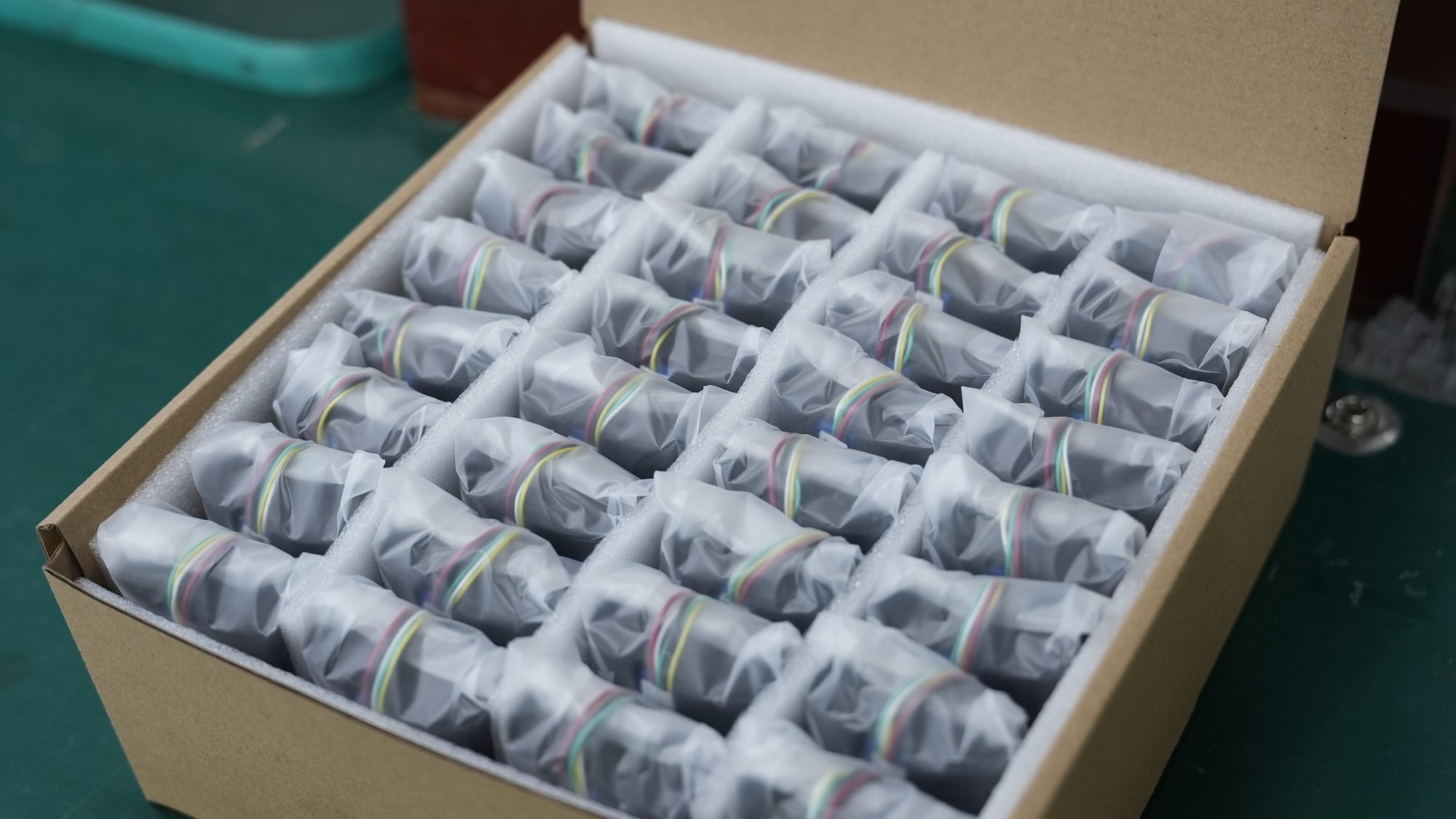
You need real-time health monitoring to keep your lithium battery packs safe and reliable in portable vibration and condition monitoring systems. Advanced Battery Management Systems (BMS) use sensors to track key parameters like voltage, temperature, and current. These systems also monitor mechanical factors such as acceleration and displacement. In medical, robotics, and industrial applications, real-time data helps you spot early signs of cell degradation or thermal issues. This approach supports predictive maintenance and reduces the risk of sudden failures. Recent research highlights the value of health monitoring algorithms that adapt to changing vibration conditions, improving safety and performance.
4.2 Vibration and Acoustic Sensing for Diagnostics
You can use vibration and acoustic signals to diagnose faults in lithium battery packs. Accelerometers detect strong shocks, which can trigger the BMS to cut power and prevent damage. Microphones listen for ultrasonic sounds that may signal micro-shorts inside the cells. Studies show that acoustic emissions increase just before a cell vents, allowing you to predict failures with advanced algorithms. These diagnostic tools are important in security, infrastructure, and consumer electronics, where batteries face dynamic environments. Recent developments focus on self-healing materials and adaptive protection systems that respond to vibration.
Tip: Monitor both mechanical and electrical parameters for a complete view of battery health.
Real-time acceleration and frequency shifts
Voltage stability and insulation resistance
Temperature changes across cells
4.3 Predictive Maintenance for Battery Packs
You can improve predictive maintenance by integrating cell monitoring units (CMUs) and advanced BMS. These tools detect early signs of cell degradation and thermal runaway. They use algorithms to enhance charging profiles and balance loads, which keeps your batteries safe and efficient. This strategy is essential in portable monitoring for medical, robotics, and industrial sectors. Prognostic health monitoring in battery management ICs now supports real-time assessment of component wear, helping you prevent safety incidents before they happen.
Lithium Battery Solutions give you the tools to maintain battery health, extend service life, and ensure reliable operation in demanding environments.
Part5: Integration Tips for Portable Systems
5.1 Battery Management Systems (BMS)
You need a robust Battery Management System (BMS) to ensure safe and efficient operation of lithium battery packs in portable vibration and condition monitoring devices. A BMS monitors and controls key battery parameters, which is essential for applications in medical, robotics, security, infrastructure, consumer electronics, and industrial sectors. The table below shows the main functions of a BMS:
Function | Description |
|---|---|
Prevent hazardous operating conditions | Ensures safe operation by monitoring and controlling battery parameters. |
Optimize energy utilization | Enhances the efficiency of energy use within the device. |
Extend usable battery life | Prolongs the lifespan of the battery through effective management. |
Support system-level performance | Maintains overall reliability and performance of the monitoring device. |
Cell voltage & current sensing | Monitors the voltage and current of each cell to ensure they operate within safe limits. |
Temperature monitoring | Keeps track of the temperature to prevent overheating and thermal runaway. |
Charge/discharge control | Manages the charging and discharging cycles to optimize battery health. |
Cell balancing | Equalizes the state of charge among cells to prevent overcharging and undercharging. |
Data logging and event traceability | Records operational data for analysis and maintenance planning. |
Communication with other systems | Interfaces with inverters and controllers for coordinated operation. |
5.2 Practical Integration and Maintenance
You should integrate lithium batteries with a BMS that controls charge and discharge, calculates State of Charge (SOC) and State of Health (SOH), and withstands shock, vibration, and temperature extremes. This is critical for devices used in harsh environments, such as industrial automation or infrastructure monitoring. You can improve battery readiness by minimizing self-discharge and using hibernation modes during storage.
Regular maintenance extends battery life and reliability. You should:
Monitor battery temperature to prevent overheating.
Avoid deep discharges by recharging when the battery reaches about 20%.
Charge the battery to only 80% to extend its lifespan.
Research shows that high temperatures can reduce lithium-ion battery life by up to 30%. Charging only to 80% can double battery life. For lithium iron batteries, cycle unused batteries every 6–12 months to maintain capacity. These practices help you avoid unexpected failures and keep your monitoring equipment running efficiently.
Tip: Incorporate pressure measurement during battery operation. This helps prevent material deformation and safety risks, improving battery performance and longevity.
5.3 Customization for Monitoring Devices
You can customize lithium battery packs to meet the unique needs of your portable monitoring devices. Custom options support sensitive electronics in medical, robotics, security, infrastructure, consumer electronics, and industrial applications. The table below highlights key customization features:
Customization Option | Features |
|---|---|
Stable voltage output | Ensures sensitive electronics operate correctly |
Long runtime | Supports extended field inspections and continuous monitoring |
Compact configurations | Allows for lightweight and space-efficient designs |
Environmental performance | Withstands harsh conditions, including temperature extremes and mechanical shock |
Smart battery integration | Provides real-time status reporting for better monitoring and management |
IP-rated enclosures | Protects against dust and moisture ingress, suitable for various industrial environments |
Low-temperature performance | Maintains functionality in cold environments |
Integrated fuel gauging | Monitors runtime effectively, enhancing usability in field applications |
Custom battery solutions give you stable voltage, long runtime, and durability in challenging environments. You can select features like IP-rated enclosures and smart integration to match your device’s requirements. This flexibility ensures your portable monitoring systems perform reliably, no matter the application.
Lithium Battery Solutions give you reliable power, advanced diagnostics, and strong safety for portable monitoring in industrial, medical, and robotics sectors. You should select batteries that meet strict standards like NFPA 855, UL 9540, and IEC 62133. Use enhanced random forests and hybrid modeling to improve battery health monitoring. Keep tracking battery status and follow evolving safety guidelines. Next-generation cells will boost energy density and efficiency, while digital twins and smart features will support predictive maintenance.
FAQ
What makes lithium batteries ideal for portable vibration and condition monitoring systems?
You get high energy density, stable voltage, and compact size with lithium batteries. These features support long runtimes and reliable data collection in medical, robotics, and industrial monitoring devices. Contact Large Power to design custom lithium batteries for your portable vibration and condition monitoring systems.
How do lithium batteries handle vibration and harsh environments?
Manufacturers design lithium battery packs with strong casings and advanced materials. These batteries pass vibration and environmental tests, so you can trust them in security, infrastructure, and industrial settings.
Why is battery health monitoring important for predictive maintenance?
You need battery health monitoring to spot early signs of wear or failure. This helps you schedule maintenance, avoid downtime, and extend battery life in your monitoring equipment.
What safety standards should lithium battery packs meet?
You should look for batteries certified to IEC62133 and UN38.3. These standards ensure safe operation and transport in all sectors, including medical and consumer electronics.


