

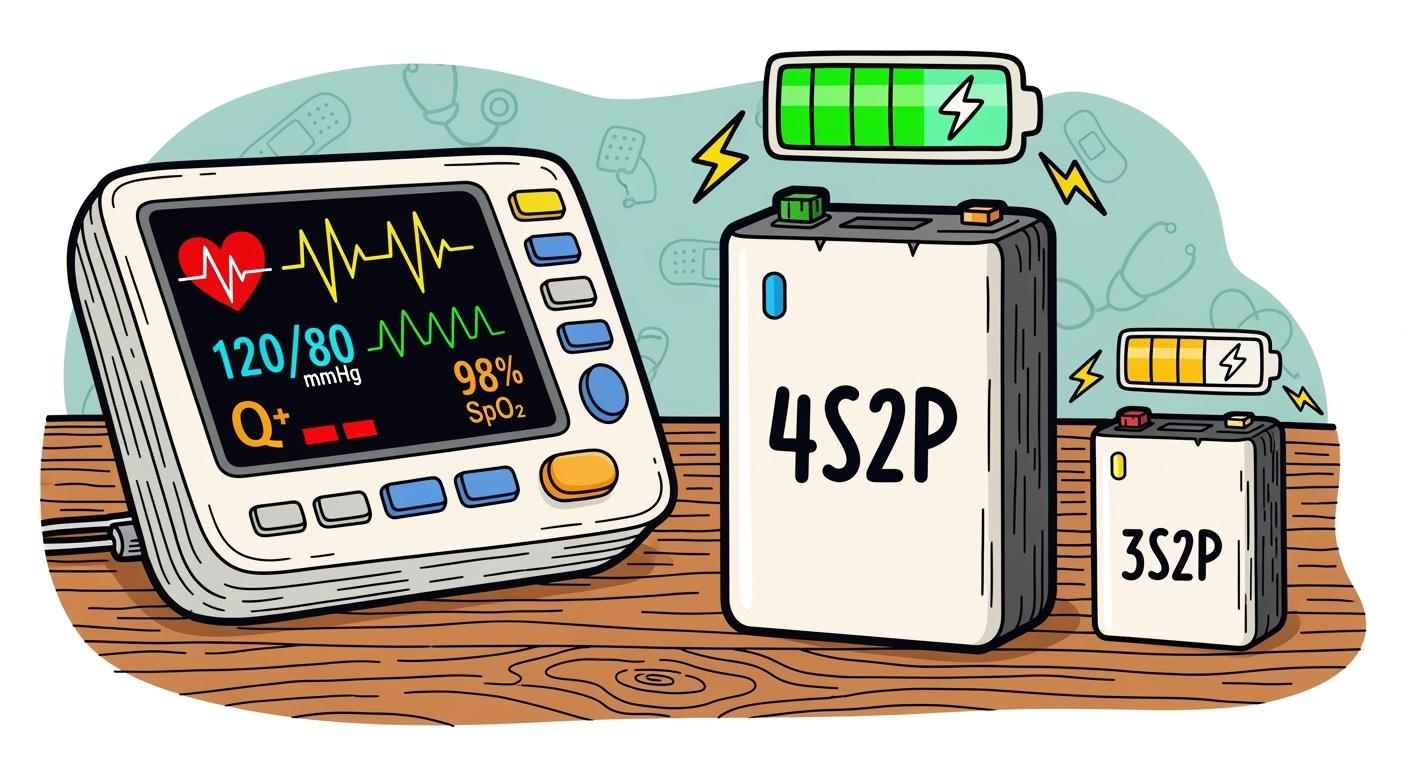
You want your patient monitors to deliver maximum uptime and reliability. In most cases, a 4S2P lithium-ion battery configuration provides better battery life than a 3S2P setup. Lithium-ion packs offer longer lifespan, lower maintenance, and higher energy density compared to lead-acid options. Battery Life Optimization depends on choosing the right configuration, monitoring temperature, and using a Battery Management System to extend service life. Regular testing catches weak units early, preventing unexpected failures and costly downtime.
Key Takeaways
Choose a 4S2P lithium-ion battery for patient monitors to achieve longer battery life and higher energy density, ensuring reliable performance in critical care.
Regularly monitor battery temperature and charge levels between 20% and 80% to extend battery lifespan and prevent unexpected failures.
Implement advanced power management strategies, such as adaptive power management and selective component disabling, to optimize battery efficiency and reduce maintenance costs.
Part 1: Battery Pack Basics
1.1 4S2P Explained
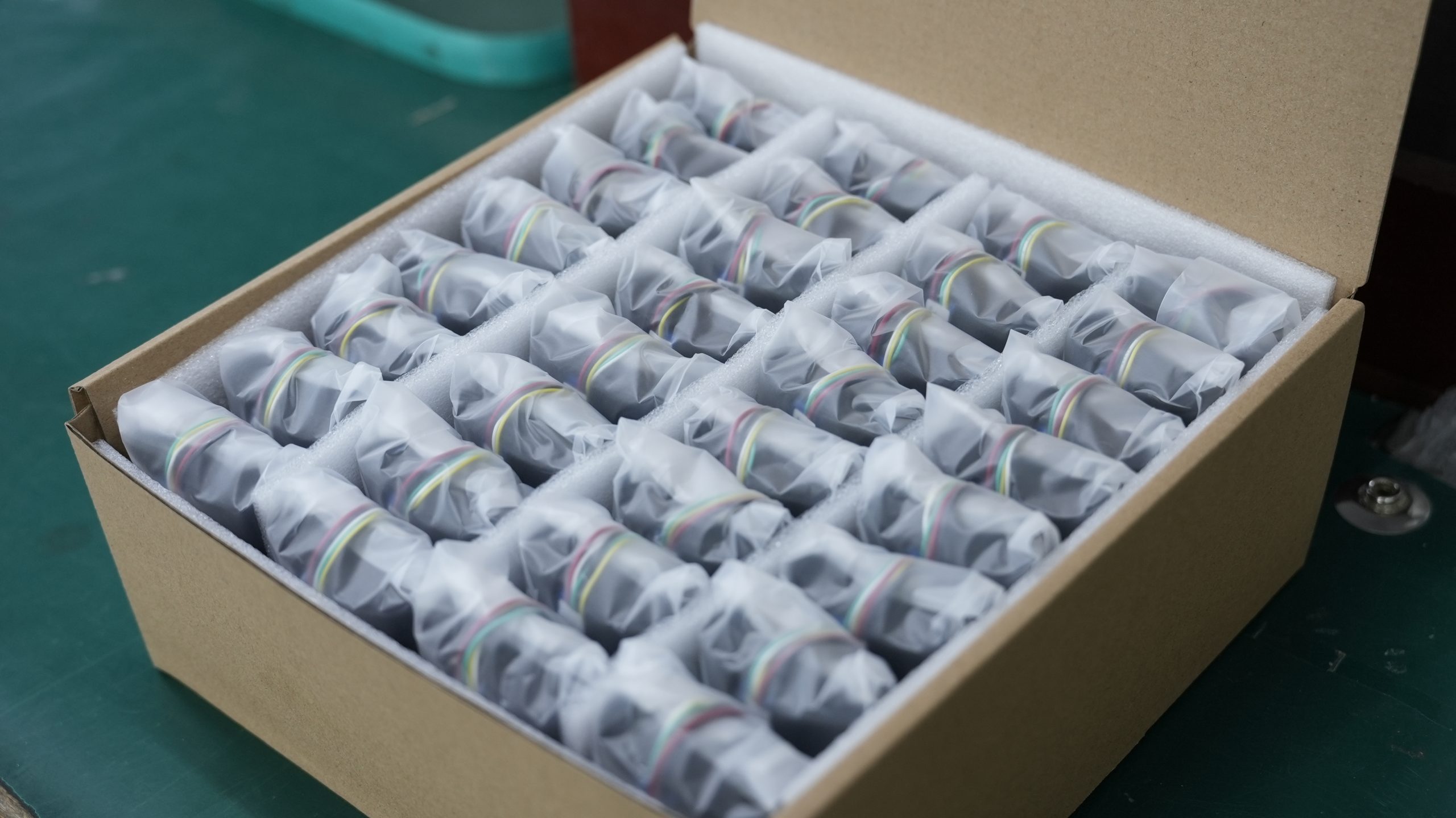
You often see the 4S2P lithium-ion battery pack in portable patient monitors. This configuration uses eight cells, arranged in four series and two parallel groups. You benefit from higher voltage and increased capacity, which supports longer device operation.
Nominal Voltage: 14.4 V
Typical Voltage: 14.8 V
Nominal Capacity: 6400 mAh to 6700 mAh
Tip: Higher voltage allows your device to run more efficiently, reducing the frequency of battery replacements.
Pack | Nominal Voltage | Typical Cells | Use Case |
|---|---|---|---|
4S2P | 14.8V | 8 | |
2S | 7.4V | 2 | Lower capacity applications |
3S | 11.1V | 3 | Moderate capacity |
1.2 3S2P Explained
You may encounter 3S2P packs in moderate-capacity medical devices. This setup combines six cells, arranged in three series and two parallel groups.
Voltage: 11.1 V
Capacity: 4000 mAh to 6000 mAh
Voltage | Capacity |
|---|---|
11.1V | 6000mAh |
11.1V | 4000mAh |
1.3 Series vs Parallel Effects
You must understand how series and parallel wiring impacts battery performance. Series wiring increases voltage, while parallel wiring boosts capacity.
Feature | Series Wiring | Parallel Wiring |
|---|---|---|
Voltage | Increases (adds up) | Remains the same |
Capacity (Ah) | Remains the same | Increases (adds up) |
Current Output | Limited by one battery | Higher due to combined cells |
Note: Series arrangements limit performance to the weakest cell, while parallel setups can suffer from current imbalance. Aging cells in series cause voltage drops, and parallel packs may destabilize if resistance changes suddenly.
You optimize battery life by choosing the right configuration for your device’s needs.
Part 2: Battery Life Optimization in Patient Monitors
2.1 Voltage and Runtime
You need to understand how voltage and runtime relate to battery configuration in patient monitors. The number of cells in series directly affects the total voltage output. A 4S2P pack delivers higher voltage than a 3S2P pack. This higher voltage allows your device to operate more efficiently, especially when the system requires stable power for critical monitoring.
Here is a comparison of 3S and 4S configurations:
Aspect | 3S Configuration | 4S Configuration |
|---|---|---|
Total Voltage | Lower voltage output | Higher voltage output |
Capacity (Ah) | Same as single battery | Same as single battery |
Runtime | Dependent on Ah rating | Dependent on Ah rating |
Energy Storage (Wh) | Voltage × Capacity | Voltage × Capacity |
You see that energy storage increases with voltage when capacity remains constant. This means a 4S2P pack can store more energy (watt-hours) than a 3S2P pack of the same amp-hour rating. As a result, you achieve longer runtime between charges, which is essential for uninterrupted patient care.
Tip: Choose a configuration that matches your device’s voltage requirements. Over-voltage or under-voltage can damage sensitive electronics or reduce performance.
2.2 Efficiency and Uptime
You want to maximize efficiency and uptime in your patient monitors. Battery Life Optimization depends on more than just voltage and capacity. The right configuration reduces the frequency of recharging cycles, lowers maintenance costs, and extends the lifespan of your equipment.
Consider the following comparison:
Feature | Lithium-Ion Batteries | Conventional Batteries |
|---|---|---|
Typical Lifespan | 8-10 years | Shorter lifespan |
Frequency of Replacements | Fewer | More frequent |
Maintenance Costs | Lower | Higher |
Efficiency in Critical Environments | High | Low |
You benefit from lithium-ion battery packs because they require fewer replacements and less maintenance. This translates to lower total cost of ownership and higher reliability in critical care environments.
To further enhance Battery Life Optimization, you should:
Maintain battery charge between 20% and 80%.
Avoid deep discharges to prevent stress on cells.
Control temperature to prevent degradation.
Modern patient monitors use advanced power management systems to extend battery life. You can leverage low-power microcontrollers, multiple sleep modes, and intelligent peripherals. These technologies minimize active computation time and reduce energy waste.
Here are some strategies you can implement:
Strategy | Description |
|---|---|
Adaptive Power Management | Disconnects battery from voltage regulator when not needed, saving power. |
Selective Component Disabling | Disables components based on battery conditions to reduce energy waste. |
Self-Powered Sensor Architectures | Uses sensors as a power source during sleep mode, extending battery life. |
Intelligent Data Scheduling | Employs FIFO buffers and low-power sleep states to minimize power usage. |
You can also use Bluetooth Low Energy (BLE) for efficient data transmission and implement subsystem shutdown controls to further optimize battery performance.
Note: Battery Life Optimization is not just about choosing the highest capacity pack. You must consider voltage compatibility, power management features, and operational environment to achieve the best results.
By selecting the right battery configuration and leveraging modern power management, you ensure your patient monitors deliver reliable, long-lasting performance.
Part 3: 4S2P vs 3S2P Comparison Table
You need a clear comparison to make informed decisions about battery packs for patient monitors. The table below highlights the differences between 4S2P and 3S2P lithium-ion configurations. You see how each option impacts platform voltage, energy density, cycle life, and suitability for medical environments.
Feature | 4S2P Lithium-Ion Pack | 3S2P Lithium-Ion Pack |
|---|---|---|
Platform Voltage | 14.8 V | 11.1 V |
Energy Density | 180 Wh/kg | 160 Wh/kg |
Cycle Life | 800–1,000 cycles | 700–900 cycles |
Typical Capacity | 6,400–6,700 mAh | 4,000–6,000 mAh |
Runtime | Longer | Moderate |
Weight | Slightly higher | Lower |
Device Compatibility | High for advanced monitors | Moderate for basic models |
Safety Features | Integrated BMS required | Integrated BMS required |
Application | Critical care, transport | General monitoring |
You should focus on Battery Life Optimization when selecting a battery pack. Higher platform voltage and energy density in the 4S2P configuration support longer uptime and more reliable performance in demanding medical settings. You benefit from extended cycle life, which reduces maintenance and replacement costs over time.
For advanced patient monitors, you gain more value from the 4S2P pack due to its superior runtime and energy storage.
For basic monitoring devices, the 3S2P pack may offer adequate performance with lower weight.
Tip: Always verify device voltage requirements before choosing a battery pack. Battery Life Optimization depends on matching the right configuration to your application.
Part 4: Choosing the Right Battery Pack
4.1 Key Factors
When you select a battery pack for patient monitors, you must weigh several critical factors. The right choice ensures your devices perform reliably in demanding healthcare settings. Consider the following:
Factor | Description |
|---|---|
Performance | Confirm the battery meets your device’s operational needs. |
Reliability | Ensure consistent performance under all expected conditions. |
Safety | Identify and mitigate hazards like overheating or leakage. |
Regulatory Compliance | |
Risk Assessment | Address potential failure modes proactively. |
You must also account for regulatory standards. The IEC 60601 series governs safety and performance for medical electrical equipment. Custom battery designs must comply with these standards to ensure risk mitigation and patient safety. For more information on these standards, you can refer to IEC 60601.
Environmental factors play a role as well. Temperature and humidity can affect battery performance. For example, high temperatures above 40°C can cause rapid self-discharge, while humidity above 85% increases the risk of short circuits. You should use insulated pouches in cold environments and sealed dry bags in humid conditions.
Tip: Always perform a risk assessment before finalizing your battery choice. This step helps you avoid unexpected failures and maintain compliance.
4.2 Application Scenarios
Critical Care and Transport: Choose 4S2P packs for advanced monitors that require longer runtime and higher energy density.
General Monitoring: Select 3S2P packs for basic models where moderate capacity and lower weight are priorities.
Wearable Devices: Evaluate if the battery should be user-replaceable or permanently enclosed based on workflow and patient needs.
High-Data Applications: Balance detailed data collection with power consumption to avoid frequent replacements.
Healthcare professionals often integrate battery charging or replacement into their workflow to minimize downtime. Some facilities explore wireless charging to enhance ease of use, provided safety regulations are met.
You gain longer battery life and higher energy density with 4S2P lithium-ion packs, making them ideal for advanced patient monitors.
Reliability and safety features, such as over-discharge protection and temperature monitoring, remain essential.
Lightweight, compact designs support portability and continuous monitoring.
Best Practice | Description |
|---|---|
Certification Verification | Always verify IEC 62133 certification for lithium-ion batteries. |
Consult technical experts to ensure compliance, optimal performance, and device compatibility.
FAQ
What advantages does a 4S2P lithium-ion pack offer over a 3S2P pack for patient monitors?
You gain higher platform voltage (14.8 V), greater energy density (180 Wh/kg), and longer runtime with 4S2P. This supports advanced monitoring and critical care applications.
How do you ensure battery safety and compliance in medical environments?
You should select packs with integrated Battery Management Systems and verify IEC 62133 and IEC 60601 certifications. Large Power provides custom battery solutions that meet these standards.


