

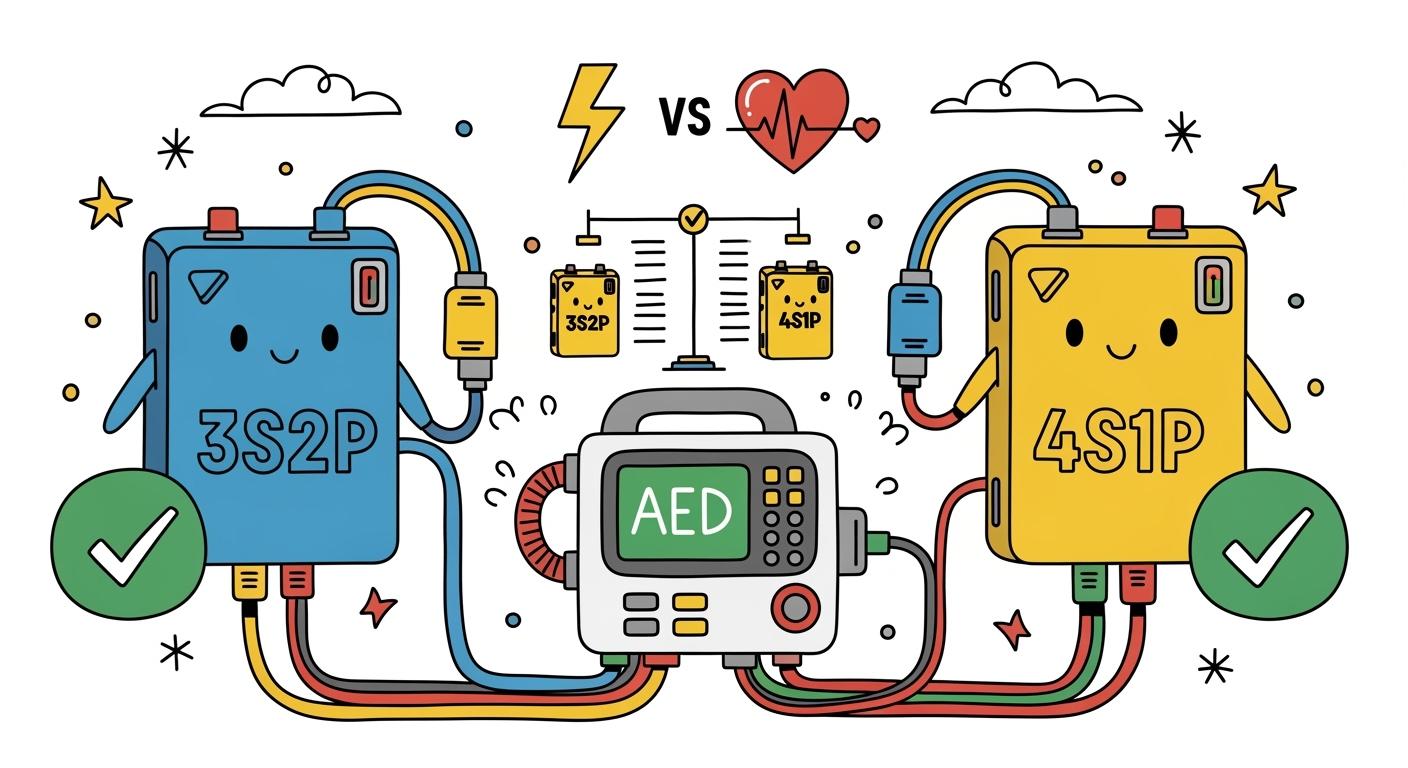
You need backup battery safety in every medical device, especially those used for defibrillation. Battery-related failures, such as premature depletion, remain the leading cause of device unreliability in medical settings. Lithium battery pack configurations like 3S2P and 4S1P impact safety, reliability, and performance. Safety features—protection circuits and gas sensors—help you maintain consistent medical device operation. Medical and other sectors, including robotics, security, infrastructure, consumer electronics, and industrial systems, depend on lithium battery reliability.
Finding | Description |
|---|---|
Premature Battery Depletion (PBD) | Identified as the most common adverse event in S-ICD therapy. |
Causes of PBD | Includes low-voltage capacitor failure and lithium cluster disposition. |
Detection | Can be identified through technical evaluation of explanted devices. |
Changes Post-2018 | No cases of PBD due to hydrogen release in S-ICD generators manufactured after August 2018. |
Key Takeaways
The 3S2P battery configuration offers redundancy, ensuring device operation even if one cell fails, making it safer for critical medical applications.
Advanced safety features like protection circuits and gas sensors are essential for maintaining battery reliability and preventing failures in medical devices.
Choosing the right battery configuration, such as 3S2P, enhances device performance and extends operational time, crucial for emergency situations like defibrillation.
Part1: 3S2P vs. 4S1P Device Configurations
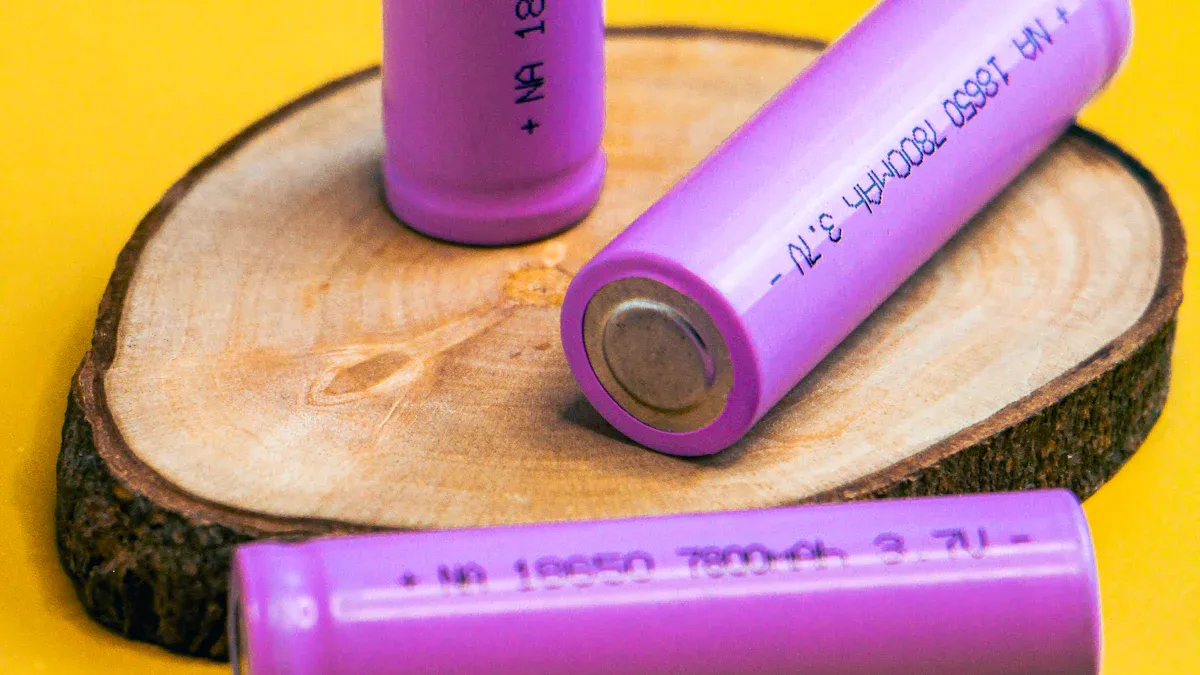
1.1 3S2P Battery Pack Explained
You often see the 3S2P configuration in backup battery packs for portable medical equipment, including medical infusion pumps and defibrillation devices. This configuration combines three cells in series and two in parallel, giving you a balance of voltage and capacity. In medical applications, this setup provides reliable power and enhances safety. The parallel arrangement increases capacity, while the series connection raises voltage. You benefit from redundancy, which improves reliability if one cell fails. The table below outlines the technical specifications for a typical 3S2P battery pack used in medical devices:
Item | Specifications |
|---|---|
Nominal Capacity | 4000mAh |
Minimum Capacity | 3950mAh |
Nominal Voltage | 11.1V |
Charge Current | Standard: 0.5C, Rapid: 1.0C |
Charging Time | Standard: ~5h, Rapid: ~2.5h |
Max. Discharge Current | 1.0C5A to 9.0V |
Discharge Cut-off Voltage | 9.0V |
Weight | 270g |
Operating Temperature | Charge: 0-45°C, Discharge: -20-60°C |
Tip: The 3S2P configuration supports safety features like advanced protection circuits and gas sensors, which are essential for medical infusion pumps and other portable medical equipment.
1.2 4S1P Battery Pack Explained
The 4S1P battery pack configuration uses four cells in series and one in parallel. You get a higher voltage output, which suits devices that require more power in a compact form. This configuration is common in medical infusion pumps and portable medical equipment where space and weight matter. However, the lack of parallel redundancy means you rely on each cell’s performance for safety and reliability. The 4s1p battery pack can deliver reliable power, but you must ensure robust protection and monitoring systems to maintain safety.
1.3 Core Differences in Device Design
When you compare the two configurations, you notice key differences in safety, reliability, and protection. The 3S2P configuration offers redundancy, which increases reliability for critical medical devices. If one cell fails, the device can still operate safely. The 4s1p battery pack, while compact, depends on each cell’s integrity, so any failure can compromise device safety. Both configurations require advanced protection circuits and gas sensors to meet medical safety standards. For medical infusion pumps and other portable medical equipment, you must prioritize safety features and protection to ensure reliable power and device reliability.
Feature | 3S2P Configuration | 4S1P Configuration |
|---|---|---|
Voltage | Moderate | Higher |
Capacity | Higher | Lower |
Redundancy | Yes | No |
Safety Features | Enhanced | Essential |
Protection | Strong | Critical |
Reliability | High | Moderate |
Application | Medical devices, portable medical equipment, medical infusion pumps | Medical infusion pumps, portable medical equipment |
Part2: Safety Features in Medical Device Batteries
2.1 Protection Circuits and Gas Sensors
You need advanced safety features in every medical battery pack to ensure patient safety and high reliability. Protection circuits form the backbone of robust protection features in lithium battery packs for medical devices. These circuits monitor battery state, report data, balance cells, and control the operating environment. The table below summarizes the most common protection types:
Protection Type | Function |
|---|---|
Overvoltage Protection | Limits the maximum charge voltage to prevent battery damage. |
Undervoltage Protection | Prevents the battery from discharging below a safe voltage level. |
Overcurrent Protection | Restricts current flow to avoid overheating and potential thermal runaway. |
Overtemperature | Monitors temperature to prevent overheating during operation. |
Secondary Protection | Provides additional safety if primary circuits fail, especially during charging. |
Gas sensors add another layer of safety. These sensors detect gases like hydrogen and carbon dioxide, which signal internal battery issues. Fast detection of cell venting and long performance life—up to 20 years—make gas sensors essential for continuous operation in critical care environments.
2.2 Redundancy and Failure Modes
Redundant safety features are vital for patient safety and device reliability in critical care. The 3S2P configuration offers redundancy by using parallel cells, so your device can maintain operation even if one cell fails. Medical-grade safety certifications, advanced battery management systems (BMS), and secondary protection circuits further enhance safety and compliance. The table below highlights recommended redundancy features:
Feature | Description |
|---|---|
Medical-Grade Safety Certifications | UL 2089, FDA 510(k), IEC 60601-1 compliance |
Advanced Battery Management | Real-time monitoring, predictive maintenance, remote monitoring, self-testing |
Secondary Protection Circuits | Added redundancy for long-term safety assurance |
Redundancy in Safety Features | TCOs and CIDs for layered protection |
2.3 Safety in Emergency Use
In critical applications like defibrillation, battery safety directly impacts patient safety and device reliability. Battery-related failures account for a significant portion of adverse events in critical care. The chart below shows the frequency of battery-related events in defibrillation devices:
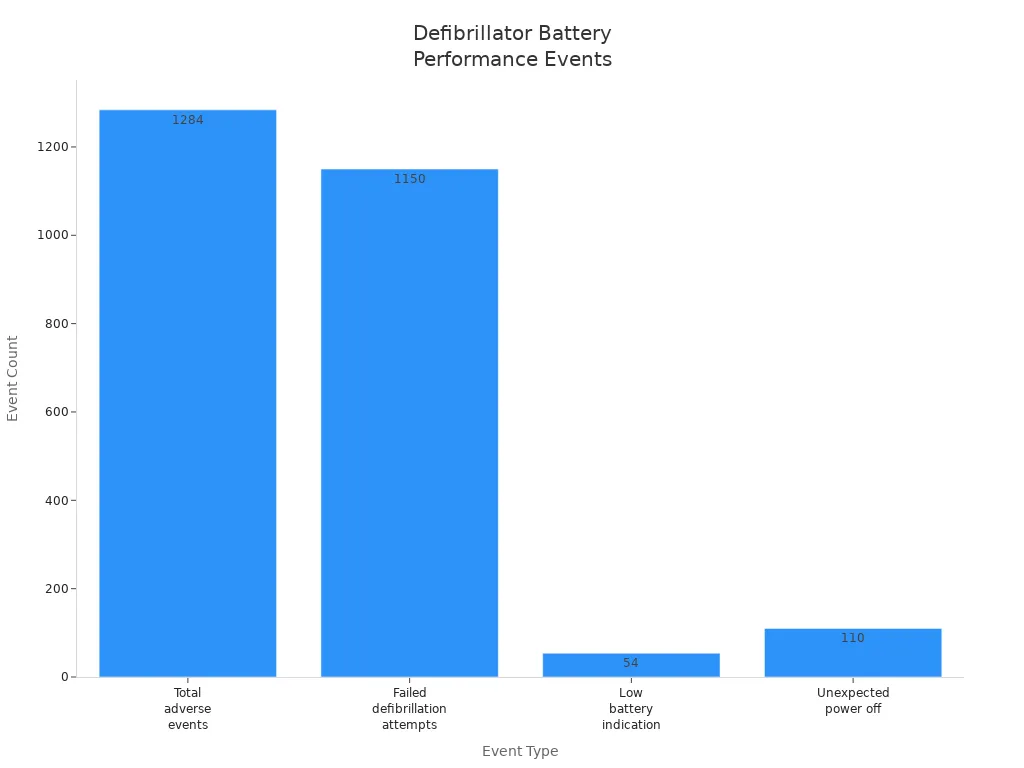
You must prioritize over-charge protection, over-discharge protection, and continuous operation to prevent unexpected power loss. Gas sensors provide early warnings of thermal runaway, supporting high reliability in medical and other sectors. By choosing lithium battery packs with advanced safety features, you ensure safety and compliance for every critical care scenario.
Part3: Voltage, Capacity, and Device Performance
3.1 Voltage Output Comparison
You must evaluate voltage output when selecting a lithium battery pack for a medical device. The 3S2P and 4S1P configurations deliver different voltage levels, which impact device compatibility and safety. The 3S2P battery pack provides a nominal voltage of 11.1V and a maximum charge voltage of 12.6V. The 4S1P battery pack offers a higher nominal voltage of 14.8V. This difference affects how your device manages power delivery and extended runtime.
Battery Pack | Nominal Voltage | Max Charge Voltage |
|---|---|---|
3S2P | 11.1V | 12.6V |
4S1P | 14.8V | N/A |
A higher voltage can support devices that require rapid energy bursts, such as defibrillation units. You should always match the voltage output to your device’s requirements to maintain safety and reliability.
3.2 Capacity and Longevity
Battery capacity and runtime determine how long your medical device can operate without interruption. The 3S2P configuration increases battery capacity by using parallel cells, which supports extended runtime and higher reliability. The 4S1P configuration, with only one cell per series, offers less battery capacity and shorter runtime. You gain longer operational periods and improved safety with higher battery capacity, especially in critical medical applications. Extended runtime reduces the risk of device shutdown during emergencies and supports continuous care.
3.3 Performance in Critical Scenarios
In critical scenarios, such as emergency defibrillation, your device must deliver consistent performance. Key performance metrics include energy density, discharge rate, internal resistance, state of health, and self-test integration.
Performance Metric | Description |
|---|---|
Energy Density | Ensures longevity and sufficient rate capability for high power pulses. |
Discharge Rate | High current delivery is critical; large voltage drops indicate aging cells. |
Internal Resistance | Increased resistance leads to efficiency loss and potential shutdown. |
State of Health | Measured over time through charge capacity retention and voltage stability. |
Self-Test Integration | Automated diagnostics draw power, affecting standby life if not managed. |
You must monitor these metrics to ensure safety, reliability, and extended runtime. High discharge rates and low internal resistance support immediate power delivery, which is vital for medical devices. Regular self-tests help maintain battery health but can reduce runtime if not managed properly. By focusing on these factors, you ensure your device delivers reliable performance in every critical situation.
You gain the highest safety and reliability for backup use in defibrillation devices with the 3S2P lithium battery pack. This device configuration offers redundancy, extended battery life, and robust safety features for medical applications. You should follow best practices:
Conduct factory audits for cleanroom standards.
Request third-party lab reports on battery performance.
Check customer feedback and reorder rates.
Validate device samples before bulk orders.
Consult experts for custom medical battery solutions. You ensure device safety and performance by selecting the right battery configuration.
FAQ
What makes the 3S2P lithium battery pack safer for defibrillation devices?
You gain redundancy with 3S2P. If one cell fails, your device continues operating. This configuration supports advanced protection circuits and gas sensors for enhanced safety.
How does Large Power support custom lithium battery solutions for medical applications?
Large Power provides tailored lithium battery packs for medical, robotics, and industrial sectors.
You can request a custom consultation here: Custom Battery Solution.
Which industries benefit most from advanced lithium battery safety features?
Industry | Application Example |
|---|---|
Defibrillation devices | |
Automated guided vehicles | |
Surveillance systems | |
Backup power units | |
Portable medical equipment | |
Process automation |


