

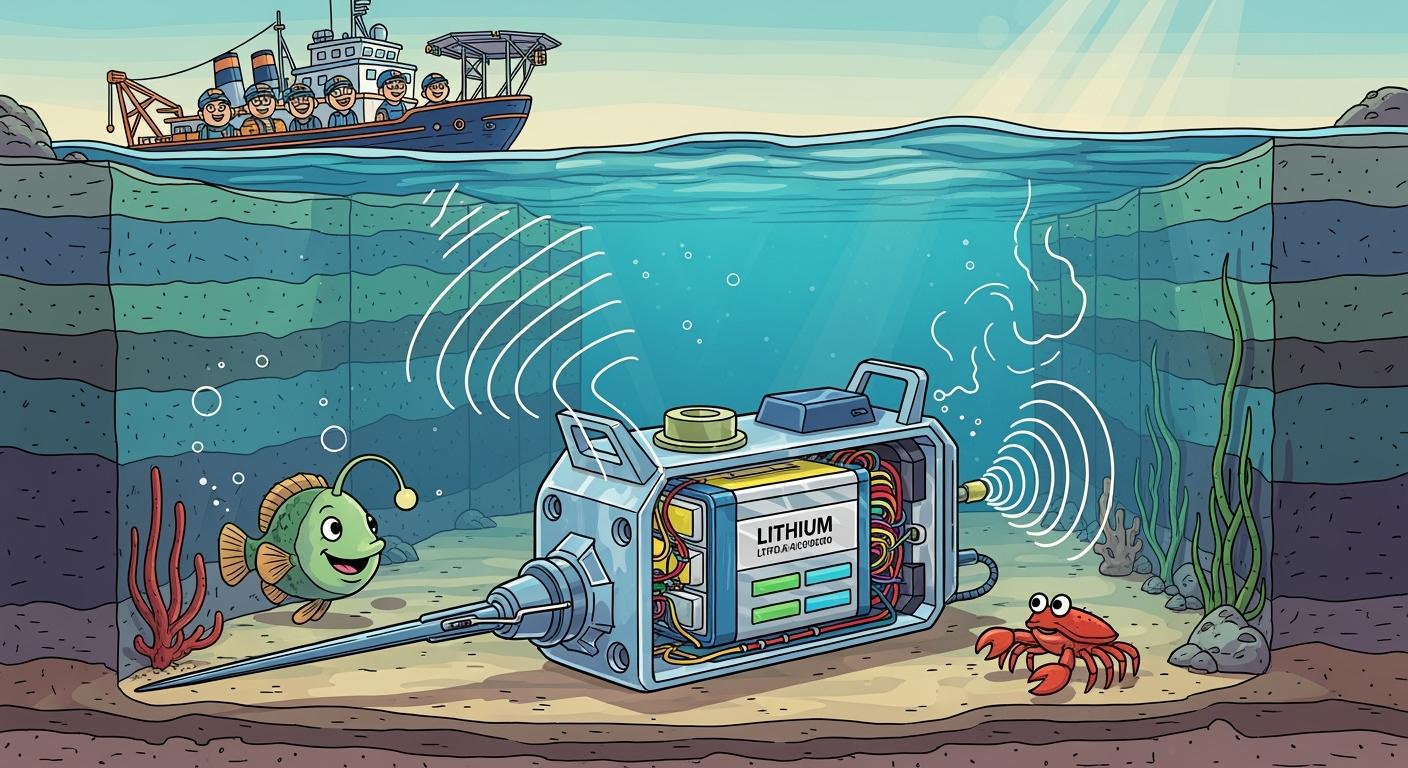
You face unique challenges when powering offshore seismic nodes. Lithium Battery Design gives you solutions that withstand harsh ocean environments and deliver reliable performance. High energy density in lithium batteries, ranging from 160–270 Wh/kg, enables ocean bottom nodes to operate for up to 90 days without recharging. This reduces maintenance needs and boosts seismic data collection efficiency. You gain uninterrupted operation, ruggedness, and enhanced safety, making your offshore exploration safer and more productive.
High energy density extends deployment time.
Long battery life minimizes maintenance.
Robust design ensures reliability in extreme marine conditions.
Key Takeaways
Lithium batteries offer high energy density, allowing seismic nodes to operate for up to 90 days without recharging.
Robust design and corrosion-resistant materials ensure reliability in extreme ocean conditions.
Safety features like thermal runaway protection and built-in circuits enhance battery safety in marine environments.
Battery management systems extend battery life and improve efficiency by monitoring and balancing energy flow.
Advanced cell chemistry and protective packaging keep batteries safe from deep-sea dangers and extend operational life.
Part1: Power Challenges Offshore

1.1 Extreme Ocean Conditions
You operate seismic nodes in some of the harshest environments on Earth. The ocean floor exposes your equipment to high pressure, strong currents, and constant vibrations. Saltwater accelerates corrosion, and temperature swings can stress battery components. Lithium Battery Design must address these factors to ensure your nodes keep working without interruption. Batteries with robust construction and corrosion-resistant materials help you avoid failures caused by moisture and mechanical stress.
Note: In marine environments, batteries must endure significant vibrations, moisture exposure, and extreme temperatures. Selecting batteries with enhanced resistance to corrosion is vital to mitigate safety risks.
1.2 Long Deployment Needs
Offshore seismic surveys often require nodes to remain underwater for months. You need batteries that deliver consistent power over long periods. If a battery fails early, you risk losing valuable data and increasing operational costs. High energy density in lithium batteries allows for extended deployments, reducing the need for frequent retrieval and maintenance. This reliability ensures your seismic data collection continues smoothly, even in remote locations.
Extended battery life minimizes interruptions.
Reliable power supply supports continuous monitoring.
1.3 Safety Risks in Marine Use
Safety remains a top concern when you deploy batteries in marine environments. Lithium batteries can face risks such as thermal runaway, overcharging, and short circuits, especially under extreme conditions.
Thermal runaway can occur when batteries overheat or get overcharged.
Overcharge and short-circuit protection mechanisms are essential to prevent hazardous situations.
Environmental factors like moisture and temperature extremes can increase risks.
“Lithium-ion batteries exhibit good safety performance under normal conditions. However, when exposed to high-temperature pyrogens, subjected to external forces, or overcharged, the battery components may decompose and trigger exothermic reactions, eventually leading to thermal runaway (TR).”
You can improve safety by choosing lithium iron phosphate batteries, which offer greater chemical stability and reduce the risk of thermal runaway. Enhanced safety features, such as built-in protection circuits, further minimize risks.
Aspect | Lithium Batteries | Alternative Power Sources |
|---|---|---|
Safety | Built-in safety features prevent risks | Higher risk of overcharging and failure |
Maintenance | Requires less maintenance | More frequent maintenance needed |
Cold Weather Performance | Performs well in cold conditions | Often less effective in cold climates |
Backup Power | Reliable during outages | May not provide consistent backup |
Harsh Operating Conditions | Designed to withstand extreme conditions | May fail in rugged environments |
You see similar safety and reliability demands in other sectors, such as medical devices and industrial robotics, where uninterrupted power and robust design are critical.
Part2: Lithium Battery Design Essentials

2.1 Reliability and Redundancy
You need reliable power for offshore seismic nodes. Reliability means your batteries keep working, even in harsh ocean conditions. Redundancy adds another layer of safety. If one battery fails, a backup takes over. This approach prevents data loss and reduces downtime.
You see this strategy in other industries. Medical devices, security systems, and industrial robots all use redundant battery packs to ensure continuous operation. In offshore environments, you must choose batteries with long life and proven durability. Some lithium battery packs have powered seismic nodes for over 200 days without failure. These batteries use advanced sealing and corrosion-resistant materials to withstand saltwater, pressure, and vibration.
Tip: Select lithium battery packs with built-in management systems. These systems monitor battery health and switch to backup power if needed.
Key factors for reliability and redundancy include:
Long cycle life for extended deployments
Robust construction to resist mechanical stress
Advanced sealing to prevent water ingress
Built-in monitoring for early fault detection
2.2 High Energy Density
High energy density lets you deploy seismic nodes for months without retrieval. You reduce maintenance trips and collect more data. Lithium Battery Design focuses on maximizing energy storage in a compact space. Ocean drones and IoT nodes use high energy density batteries to operate for years without service. This technology now powers your offshore seismic nodes.
You can fit more energy into a smaller battery pack.
You extend operational periods and reduce costs.
You support continuous monitoring in remote locations.
Innovative materials, such as piezoelectric components, help convert mechanical energy into electrical energy. This feature supports low-power electronics and extends battery life even further.
Here is a comparison of common lithium battery chemistries used in offshore applications:
Chemistry Type | Nominal Voltage (V) | Energy Density (Wh/kg) | Cycle Life (cycles) |
|---|---|---|---|
Lithium Iron Phosphate (LiFePO4) | 3.2 | 90–160 | 2000–7000 |
Lithium Nickel Manganese Cobalt (NMC) | 3.7 | 150–220 | 1000–2000 |
Lithium Cobalt Oxide (LCO) | 3.7 | 150–200 | 500–1000 |
Lithium Manganese Oxide (LMO) | 3.7 | 100–150 | 500–1500 |
Lithium Titanate Oxide (LTO) | 2.4 | 60–110 | 5000–15000 |
Solid-State | 3.7 | 250–500 | 1000–5000 |
Lithium Metal | 3.6 | 300–500 | 500–1000 |
Note: Choose the chemistry that matches your deployment needs. LiFePO4 offers high safety and long life. NMC and solid-state batteries provide higher energy density for longer missions.
2.3 Safety Mechanisms
Safety is critical in Lithium Battery Design for offshore use. You must prevent hazards like thermal runaway, short circuits, and water ingress. Modern lithium battery packs use several layers of protection.
Key safety mechanisms include:
Ceramic-coated separators and flame-retardant interlayers
Vent channels and fast hydrogen sensors
Smart battery management systems (BMS) and active cooling
Positive temperature coefficient (PTC) switches and current interrupt devices (CID)
Robust battery boxes and flame-retardant additives
Separator shutdown and venting mechanisms
You can learn more about advanced BMS and protection circuit modules (PCM) on our dedicated page.
Here is how different battery types address safety in ocean-bottom environments:
Battery Type | Key Features |
|---|---|
Lithium Iron Phosphate (LiFePO4) | Excellent thermal stability, low temperature resistance, long cycle life, high safety, durability |
Lithium Titanate Oxide (LTO) | Superior safety, fast-charging, resistance to thermal runaway |
Advanced Battery Management | Ensures optimal performance and safety, enhances reliability and longevity |
You also benefit from:
Advanced sealing technologies that block water
Corrosion-resistant materials for long-term durability
Thermal management systems that keep batteries at safe temperatures
Pressure-tolerant designs that withstand deep-sea conditions
These features work together to keep your seismic nodes safe and operational, even in the toughest marine environments.
Part3: Engineering Solutions & Innovations
3.1 Advanced Cell Chemistry
You need batteries that last long and stay safe in the ocean. The chemistry inside each cell makes a big difference. Some chemistries work better in harsh conditions. For example, lithium iron phosphate (LiFePO4) batteries handle wide temperature swings and keep working when others fail. They also last longer and resist overheating. You can see these benefits in many industries, such as medical devices and industrial robots, where reliability is critical.
Modern lithium-ion batteries include overcharge, thermal, and short-circuit protection.
LiFePO4 batteries perform well under temperature changes and offer superior cycle life.
Graphite anodes give high energy density but can age faster. Lithium-titanate-oxide (LTO) anodes last longer but store less energy.
The electrolyte and cell format also affect safety and lifespan.
Here is a comparison of common cell chemistries for offshore use:
Chemistry | Safety Features | Cycle Life | Temperature Performance |
|---|---|---|---|
LiFePO4 | High thermal stability | Very High | Excellent |
LTO | Superior safety | Highest | Good |
NMC | Good, less stable | Moderate | Good |
3.2 Battery Management Systems
You rely on battery management systems (BMS) to keep your batteries safe and efficient. A good BMS uses smart algorithms to monitor each cell. It balances the charge, prevents overcharging, and detects faults quickly. This technology extends battery life by up to 30%. In offshore seismic nodes, BMS must handle extreme temperatures, humidity, and vibration.
Benefit | |
|---|---|
Intelligent algorithms | Optimize battery performance |
Peak shaving and load shifting | |
Cell-level control | Extends cycle life, reduces complexity |
Increased battery lifetime | Up to 30% improvement in longevity |
3.3 Protective Packaging
Protective packaging shields your batteries from deep-sea dangers. It stops water from getting in and keeps the battery safe from pressure and shocks. Good packaging prevents thermal runaway and contains fires if they start. Fire suppression systems and thermal management inside containers add another layer of safety. These features protect both your batteries and the transport vessel.
Packaging prevents thermal runaway and contains fires.
Fire suppression technology detects and stops fires fast.
Thermal management systems keep batteries cool and safe.
You see similar packaging solutions in consumer electronics and security systems, where safety and durability matter most. With these engineering advances, Lithium Battery Design meets the toughest offshore challenges and supports deployments lasting over 200 days.
Part4: Case Studies & Future Trends
4.1 Offshore Node Deployments
You can see the impact of lithium battery packs in real-world offshore seismic node projects. These batteries power nodes for months, even in deep-sea environments. Operators have achieved continuous recording times of up to 13 months. This long duration means you collect more data with fewer interruptions and less maintenance.
Duration of Operation | Description |
|---|---|
Up to 13 months | Continuous recording time with lithium batteries |
7–8 months | Recordings made using lithium batteries |
You benefit from fewer retrievals and lower operational costs. Lithium batteries also reduce maintenance intervals. You may only need to service your nodes every 5–7 years, compared to the 14-month cycles required by hydrogen fuel cells. This improvement leads to a 23% reduction in downtime and costs. Industries such as medical devices, robotics, and security systems also rely on lithium batteries for long-term, reliable power.
Note: Longer deployments and reduced maintenance help you maximize efficiency and data quality in challenging marine environments.
4.2 Next-Gen Battery Design
You will see new materials and technologies shape the future of lithium battery packs for offshore seismic nodes. Battery management systems (BMS) play a key role in safety and efficiency. A BMS monitors temperature and energy flow, balances charge across cells, and shuts down the battery if hazardous conditions arise.
A BMS monitors battery temperature and energy flow.
It balances the charge across cells to prevent overcharging and over-discharging.
The BMS enhances safety by shutting down the battery under hazardous conditions.
Next-generation batteries use advanced chemistries and solid-state designs. These innovations promise higher energy density, longer life, and even greater safety.
Battery Type | Energy Density (Wh/kg) | Cycle Life (cycles) | Key Benefit |
|---|---|---|---|
Solid-State Lithium | 250–500 | 1000–5000 | High safety, long life |
Lithium Metal | 300–500 | 500–1000 | Ultra-high capacity |
LiFePO4 | 90–160 | 2000–7000 | Excellent stability |
You can expect these advances to further reduce downtime and improve reliability. As technology evolves, lithium battery packs will continue to support longer, safer, and more efficient offshore seismic surveys.
You rely on advanced Lithium Battery Design to power offshore seismic nodes for long-term exploration. These batteries deliver stable voltage, high energy density, and maintenance-free operation. You benefit from technology that withstands extreme temperatures and pressure. The table below shows key features:
Feature | Description |
|---|---|
Battery Type | Lithium Thionyl Chloride (Li-SOCl2) |
Voltage | Stable at 3.67V OCV |
Temperature | -55°C to +225°C |
Resilience | Designed for extreme conditions |
You see similar battery solutions in medical, robotics, and security systems.
Innovation drives safer, more efficient, and reliable offshore exploration.
FAQ
What makes lithium battery packs ideal for offshore seismic nodes?
You get high energy density, long cycle life, and strong resistance to harsh conditions. Lithium battery packs keep your seismic nodes running longer with less maintenance. You also see similar benefits in medical devices, robotics, and security systems.
How do lithium battery chemistries compare for offshore use?
Chemistry | Energy Density (Wh/kg) | Cycle Life (cycles) | Safety Level |
|---|---|---|---|
LiFePO4 | 90–160 | 2,000–7,000 | Excellent |
NMC | 150–220 | 1,000–2,000 | Good |
LTO | 60–110 | 5,000–15,000 | Superior |
Note: Choose the chemistry that matches your deployment needs. See more on battery chemistries above.
Why is a Battery Management System (BMS) important?
A BMS protects your battery from overcharging, overheating, and faults. It extends battery life and improves safety. You can learn more about BMS features in our Battery Management Systems section.
Are lithium batteries sustainable and free from conflict minerals?
You should check for responsible sourcing and recycling programs. Many suppliers now follow strict standards to reduce environmental impact. Learn more about sustainability in lithium batteries.
Where else do you see lithium battery packs used?
You find lithium battery packs in medical equipment, industrial robots, security systems, and consumer electronics. These sectors rely on the same reliability and safety you need for offshore seismic nodes.


