

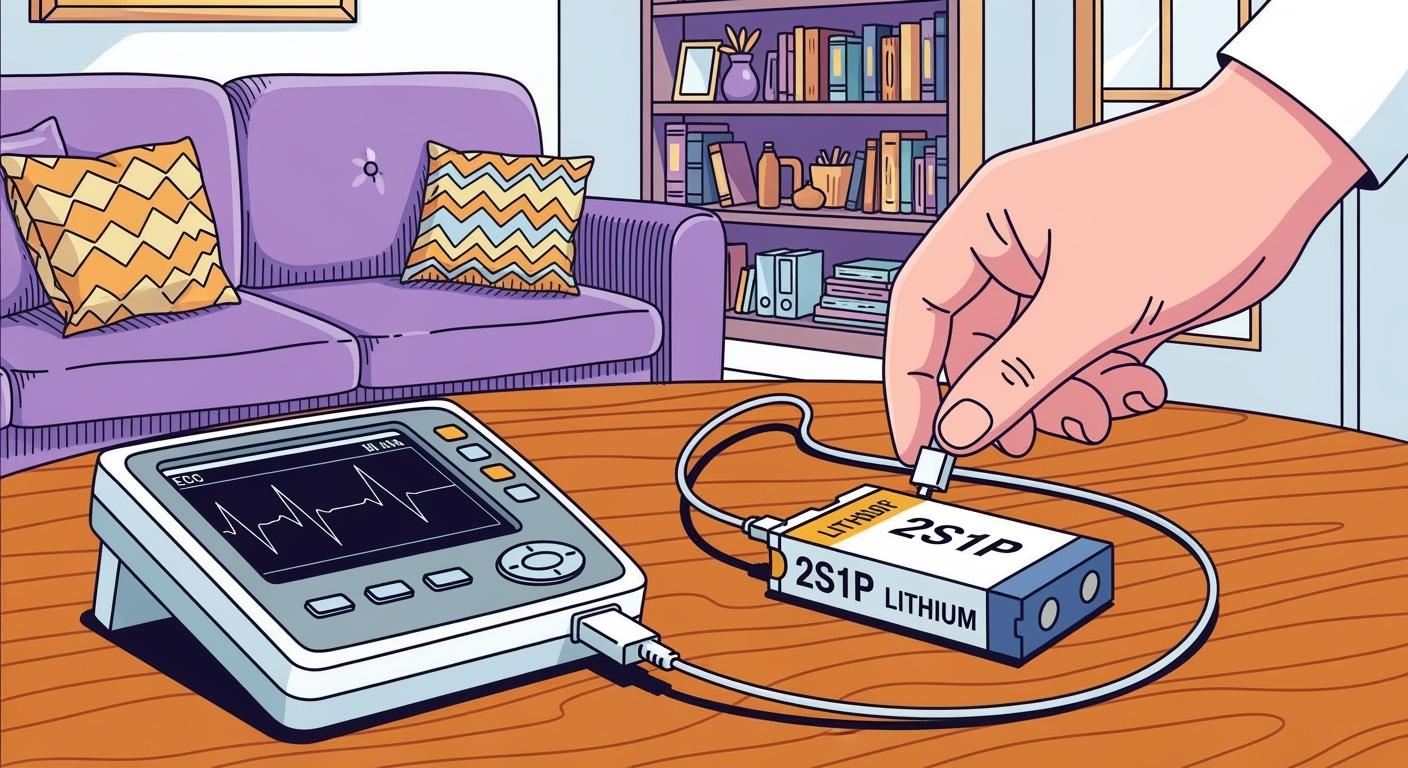
You face critical challenges when managing lithium battery selection for home ECG monitoring devices. Reliable power ensures your monitor records data continuously. Medical devices demand batteries that meet strict safety standards, including IEC 60601-1 and clinical accuracy. You must evaluate factors such as chemistry, capacity, voltage, and safety to match your wearable monitoring device’s needs.
Safe and reliable power sources are essential for medical electronics.
Compliance with safety regulations and certifications increases design complexity and costs.
Accurate readings require minimizing self-heating in wearable ECG devices.
Tip: Choose suppliers who offer customizable battery packs and maintain a strong industry reputation.
Key Takeaways
Choose batteries that meet strict safety standards to ensure reliable operation in medical devices.
Select the right battery chemistry, like LiFePO4, for optimal cycle life and safety in continuous monitoring.
Follow a systematic selection process to match battery capacity and configuration with your device’s power needs.
Part1: Battery Requirements for ECG Monitoring
1.1 Performance Criteria for Medical Monitors
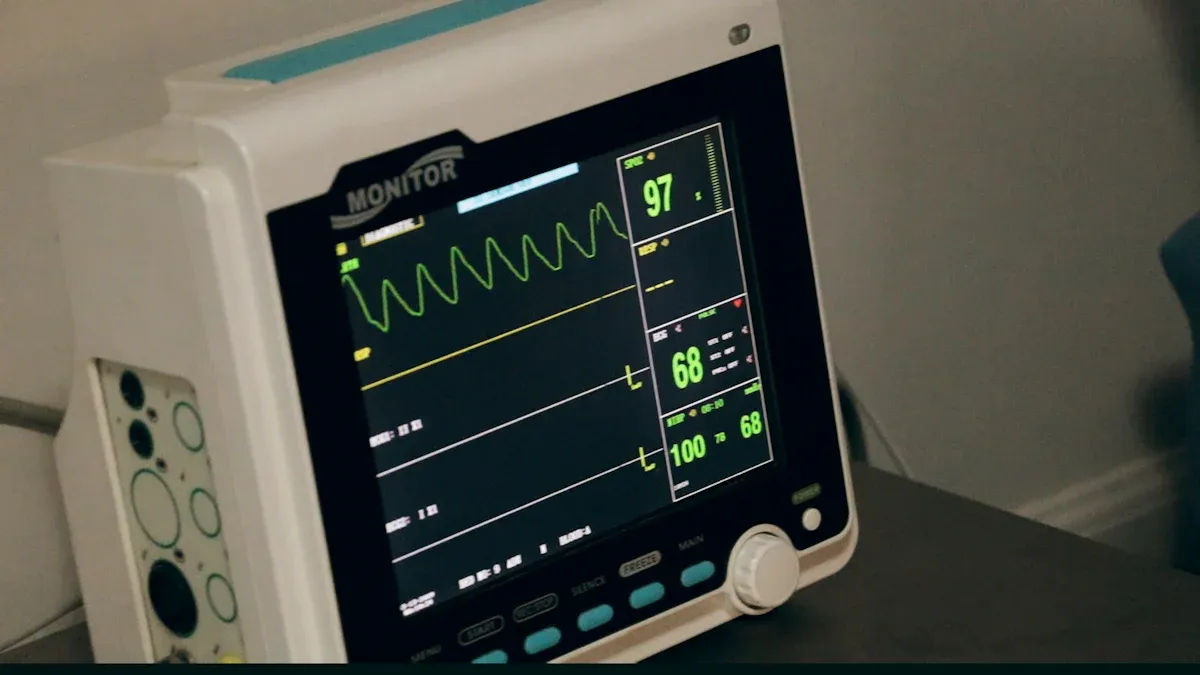
You must prioritize continuous operation and reliability when selecting a battery for an ECG monitoring device. Wearable monitors require long-lasting batteries that deliver stable voltage and support continuous diagnostic data collection. Stationary monitors often use backup batteries to ensure uninterrupted operation during power outages. The table below highlights the differences in battery requirements for wearable and stationary ECG devices:
Device Type | Battery Requirement | Key Considerations |
|---|---|---|
Wearable ECG | Long-lasting operation, stable voltage, high safety standards | Used in mobile and ambulatory settings, must support continuous monitoring tasks. |
Stationary ECG | Backup batteries for uninterrupted operation | Stability and safety are critical in clinical environments, especially during outages. |
Continuous monitoring in medical devices demands batteries with high energy density and consistent performance. You must also consider the impact of battery self-heating on diagnostic accuracy and patient comfort.
1.2 Safety and Compliance in Battery Selection
You need to ensure that every lithium battery selection meets strict safety and certification requirements for medical devices. The following table summarizes the main international standards and certifications:
Standard/Certification | Description |
|---|---|
IEC 60601 | Governs basic safety and essential performance of medical electrical equipment. |
ISO 13485 | Defines quality management system requirements for medical device design and manufacture. |
UN 38.3 | Requires testing for lithium batteries to ensure safety during transport under severe conditions. |
ANSI/CAN/UL 2271 | Ensures safety in battery systems. |
IEC 62133 | Safety requirements for portable sealed secondary cells. |
You must select batteries that minimize risks such as thermal runaway, leaks, and fumes. Proper user education and protective packaging further enhance safety for both patient and device.
1.3 Chemistry Comparison: Li-Ion, LiPo, LiFePO4
You should compare battery chemistries based on cycle life, reliability, and cost for ECG monitoring. The table below outlines key differences:
Battery Type | Cycle Life | Reliability | Initial Cost (per Wh) | Long-term Cost per Cycle |
|---|---|---|---|---|
Li-Ion | 500–1000 | Good | $0.15 – $0.25 | $0.12 |
LiPo | 400–800 | Very good | $0.15 – $0.25 | $0.12 |
LiFePO4 | 3000+ | Excellent | $0.25 – $0.35 | $0.03 |
LiFePO4 batteries offer the highest cycle life and safety, making them ideal for continuous diagnostic monitoring in medical devices. Li-Ion batteries provide higher energy density but present greater safety risks. LiPo batteries are lightweight and flexible, which benefits wearable monitors, but their safety profile is less robust for critical medical applications. You must match the chemistry to your device’s continuous monitoring and patient safety needs.
Part2: 2S1P Lithium Battery Selection Guide
2.1 2S1P Configuration for Wearable Monitors
You need to understand the 2S1P configuration when designing power systems for wearable ECG monitors. In this setup, two lithium cells connect in series (2S) to increase voltage, while one parallel string (1P) maintains capacity. This configuration delivers a nominal voltage of 7.4V for Li-Ion or LiPo chemistries, which matches the requirements of most diagnostic and monitoring devices. You gain stable voltage output and enhanced energy delivery, which supports continuous operation in wearable medical devices.
The 2S1P lithium battery pack offers several advantages for wearable ECG monitors:
You achieve higher voltage, which improves device efficiency and reduces current draw.
You maintain compact size, which is critical for patient comfort and device portability.
You enhance safety by balancing cell loads and reducing the risk of over-discharge.
You also see 2S1P packs in continuous glucose monitors, blood pressure monitors, and remote patient monitoring systems. These applications require reliable, continuous data recording and medical-grade certifications.
2.2 Step-by-Step Battery Selection Process
You must follow a systematic approach for lithium battery selection in wearable ECG monitors. This process ensures optimal performance, safety, and compliance with medical standards.
Step 1: Define Device Power Requirements
Start by calculating the average and peak power consumption of your device. Consider the following factors:
Factor | Description |
|---|---|
Essential for wearable ECG devices to ensure long-term operation. | |
Optimization Methods | Optimize MCU operation, RF parameters, and data compression to reduce power. |
Battery Capacity Relation | Directly affects operational time and lifetime based on power calculations. |
You should optimize device settings to minimize energy use. For example, reducing display brightness and limiting alert frequency extends battery life.
Step 2: Select Appropriate Battery Chemistry
Choose the chemistry that best matches your device’s needs. LiFePO4 offers superior cycle life and safety, which is ideal for continuous diagnostic monitoring. Li-Ion provides higher energy density for portable medical devices, while LiPo suits lightweight wearable applications. Always verify medical-grade certifications and compliance with safety standards.
Step 3: Determine Battery Capacity and Configuration
Match battery capacity to your device’s operational profile. Calculate required ampere-hours (Ah) based on continuous monitoring duration and average current draw. Select a 2S1P configuration if your device needs higher voltage and moderate capacity.
Step 4: Evaluate Safety Features
Ensure your battery pack includes protection circuits for overcharge, over-discharge, and short-circuit events. Consider integrating a battery management system (BMS) for advanced monitoring and safety. Learn more about BMS solutions.
Step 5: Assess Certification and Compliance
Verify that your battery meets IEC 60601, ISO 13485, and other relevant standards. Certification ensures safety and reliability in medical devices.
Step 6: Consult with Battery Experts
Engage with suppliers who offer custom lithium battery packs for diagnostic and monitoring devices. Request technical support and design consultation for your specific application. Contact our team for custom consultation.
2.3 Installation and Maintenance for Continuous Monitoring
You must install and maintain your 2S1P lithium battery pack correctly to ensure continuous operation and patient safety. Follow these best practices for installation:
Avoid extreme temperatures during installation and operation.
Prevent overcharging or discharging to maintain battery health.
Ensure compatibility with appropriate charging systems to avoid damage.
Implement proper charge-discharge cycles and manage temperature effectively to enhance battery longevity.
Routine maintenance maximizes battery lifespan in wearable ECG monitors:
Avoid full discharges and charge the battery more frequently to reduce stress on the pack.
Maintain low temperatures during charging and discharging to prevent premature aging.
Reduce peak charge voltage to extend cycle life. Charging to 4.1V can increase lifespan to 600-1000 cycles, while 4.0V can extend it to 1200-2000 cycles.
Store batteries at low charge levels in cool environments to maximize longevity.
You must monitor common causes of battery degradation in wearable medical devices:
Device usage: Continuous monitoring or frequent data transfers can quickly deplete the battery.
Age and condition of the battery: Batteries degrade over time, necessitating regular replacements.
Device settings: High-definition displays and frequent alerts consume more battery power.
Environmental conditions: Extreme temperatures and humidity can negatively impact battery performance.
Tip: Schedule regular battery health checks and replace packs before performance drops below diagnostic standards.
You ensure reliable operation in wearable ECG monitors and other therapeutic devices by following these installation and maintenance guidelines. Proper lithium battery selection and care support continuous data recording, patient safety, and long-term device performance.
You ensure continuous diagnostic monitoring in medical devices by following these steps for lithium battery selection:
Conduct rigorous testing under various conditions.
Verify regulatory compliance and certification.
Provide user manuals for battery maintenance.
Matching battery chemistry, capacity, and safety to device requirements supports reliable, long-term operation in wearable ECG monitors. The table below highlights essential performance factors:
Performance Factor | Description |
|---|---|
Reliable Long-Term Operation | Medical devices require consistent operation for hours or days, needing stable power without degradation. |
Safety and Durability | Essential to prevent risks like overheating or malfunctions, requiring robust safety mechanisms. |
Size and Integration | Compact batteries are necessary for wearable devices, balancing size with energy capacity. |
Performance Under Different Conditions | Batteries must function reliably across various environments, including temperature and usage variations. |
You improve patient safety and continuous data recording by consulting battery experts for custom lithium solutions.
FAQ
What makes a lithium battery pack suitable for continuous medical monitoring in wearable devices?
You need a battery with medical-grade certifications, stable voltage, and high cycle life. LiFePO4 chemistry offers excellent safety and reliability for continuous operation in portable medical devices.
How do you ensure medical devices meet certification standards for battery safety and reliability?
You verify certification for each battery pack, including IEC 60601 and ISO 13485. Large Power provides custom battery consultation here to help you select compliant lithium solutions for medical, therapeutic, and implantable devices.
Can you use the same battery pack for portable medical devices in robotics, security, and industrial sectors?
You can use standardized lithium battery packs with medical-grade certifications across portable medical devices, robotics, security systems, infrastructure, and industrial applications. Continuous energy delivery and reliability remain essential.


