

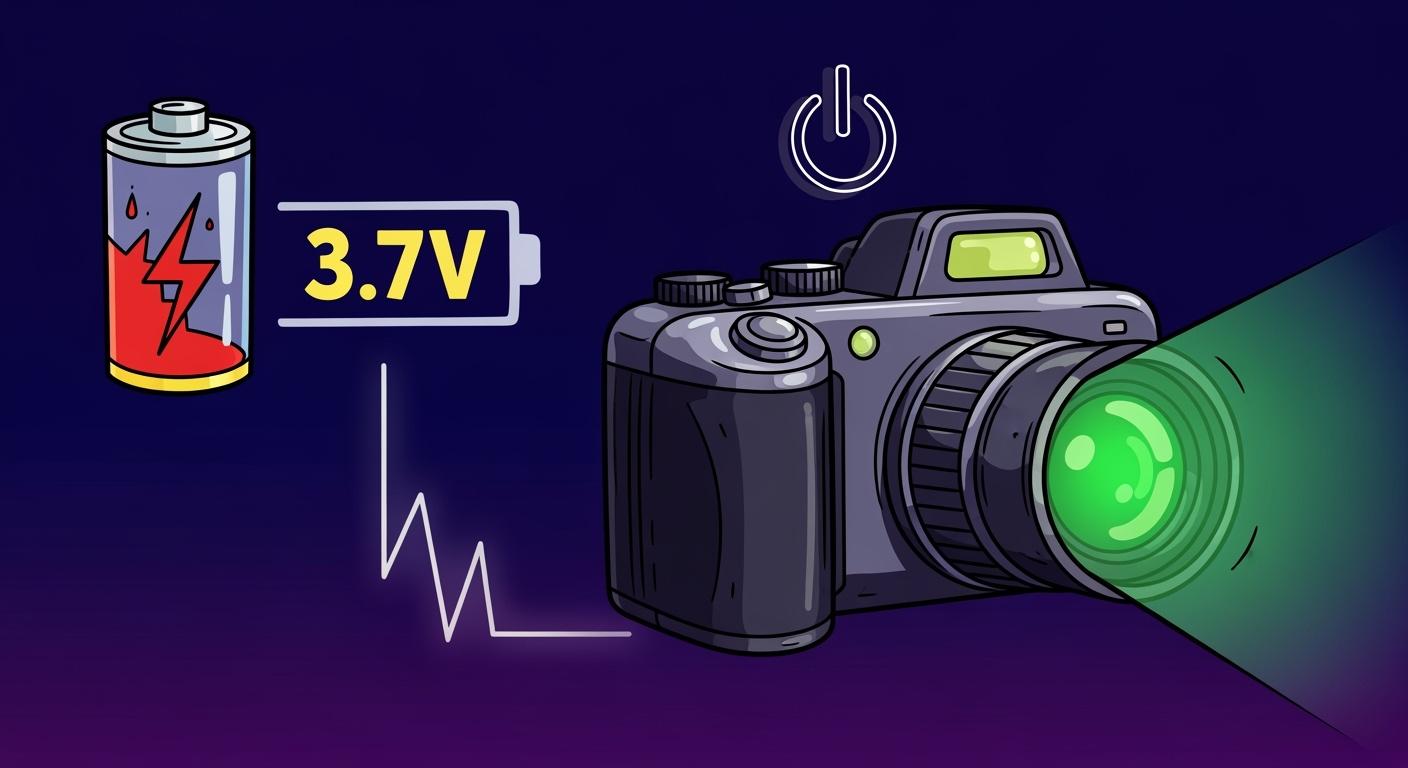
You may notice your 3.7V camera shuts down when night vision activates. Voltage sag is the main reason for this problem. When your camera draws more power, lithium-ion batteries can drop below the voltage needed for operation—even if some capacity remains. Reliable cameras use professional batteries that keep voltage steady. Standard batteries often drop quickly, causing unexpected shutdowns and unreliable runtime. Good battery management keeps your devices working when you need them most.
Key Takeaways
Night vision significantly increases power demand, which can lead to unexpected camera shutdowns. Choose batteries that can handle higher loads.
Voltage sag occurs when the battery voltage drops under heavy load. Monitor battery health to prevent shutdowns during critical operations.
Select lithium battery chemistries like LiFePO4 for stable voltage and long cycle life. This choice enhances reliability in high-demand situations.
Regularly replace lithium-ion batteries every 12–18 months to maintain performance. Schedule replacements to avoid failures during important moments.
Implement real-time monitoring of battery voltage and temperature. This practice helps identify risks and ensures reliable camera operation.
Part1: Camera Shutdown Causes
1.1 Night Vision Power Demand
When your camera switches to night vision, it needs more power. Infrared (IR) LEDs activate to illuminate dark scenes, which increases the current draw from the battery. You may notice that the camera works fine during the day, but at night, the power demand rises sharply. This change can double the electricity consumption compared to standard operation.
Night vision mode significantly increases power demand compared to standard operation.
The current draw from infrared (IR) LEDs can sometimes double electricity consumption.
For example, a camera that draws 0.5 A during the day may require 1 A at night.
This surge in power demand puts extra stress on lithium battery packs. In industries like Security Systems and Infrastructure, cameras often run continuously. If you use standard batteries, the increased load can cause Voltage Sag, which leads to sudden shutdowns. Medical and Robotics applications also rely on stable power for night vision, making battery selection critical.
1.2 Battery Voltage Drop
Lithium-ion batteries have specific voltage ranges that determine their performance. When your camera draws more current, the battery voltage drops. If the voltage falls below the camera’s shutdown threshold, the device turns off—even if the battery still has some charge left.
Voltage Type | Voltage Value |
|---|---|
Full Charge Voltage | 4.2V |
Discharge Cut-off Voltage | 3.0V to 2.8V |
The camera needs a minimum voltage to operate. If the battery voltage drops quickly under load, you experience unexpected shutdowns. This problem is common in Consumer Electronics and Industrial devices that use lithium battery packs.
Internal resistance in lithium-ion batteries affects voltage stability. When your camera demands high power, increased internal resistance causes Voltage Sag. Cold temperatures make this effect worse. Extreme cold dramatically increases internal resistance, which can hinder the battery’s ability to deliver power during high demand situations. You may see sudden shutdowns in outdoor Security Systems or Infrastructure cameras during winter.
Different lithium battery chemistries offer varying performance. Here is a comparison of common types used in B2B applications:
Chemistry | Platform Voltage | Energy Density (Wh/kg) | Cycle Life | Typical Applications |
|---|---|---|---|---|
LiFePO4 | 3.2V | 90-120 | 2000+ | Medical, Industrial, Robotics |
NMC | 3.7V | 150-220 | 1000-2000 | Security, Consumer Electronics |
LCO | 3.7V | 100-150 | 500-1000 | Consumer Electronics |
LMO | 3.7V | 100-150 | 300-700 | Infrastructure, Industrial |
You should choose the right battery chemistry for your application. LiFePO4 offers long cycle life and stable voltage, which helps prevent Voltage Sag. NMC provides high energy density for devices that need compact power sources. In Security Systems and Medical devices, reliable battery packs ensure continuous operation during night vision.
Tip: Always monitor battery voltage and temperature in critical applications. This practice helps you avoid unexpected shutdowns and maintain reliable performance.
Part2: Voltage Sag in Lithium Batteries

2.1 What Is Voltage Sag
You encounter voltage sag when your lithium battery pack experiences a sudden drop in voltage as your camera demands more power. This drop happens because the battery’s internal resistance slows the flow of electricity. Voltage sag describes the decrease in voltage that occurs when a load is applied, especially during high-demand moments like night vision activation.
Voltage sag results from electrical resistance inside the battery.
The severity depends on the battery’s internal resistance and the amount of current your camera draws.
You measure voltage sag by observing the RMS (Root Mean Square) voltage decrease during operation.
Think of voltage sag like water flowing through a narrow pipe. When you turn on more taps, the water pressure drops because the pipe cannot handle the increased flow. In lithium batteries, the “pipe” is the internal resistance, and the “water” is the electrical current. If your camera needs more power, the voltage drops, just like water pressure falls when too many taps run at once.
Temperature also affects voltage sag. Cold weather thickens the battery’s electrolyte, which increases internal resistance and slows ion movement. At 0°C, you can see up to a 30% reduction in battery capacity. Below 0°C, ion diffusion rates fall by over 60%, making your battery appear depleted even if it still holds energy.
Temperature (°C) | Capacity Reduction | Ion Mobility Impact |
|---|---|---|
0°C | Up to 30% | Slowed significantly |
Below 0°C | Apparent battery depletion | |
Below -10°C | Usable capacity drops to 30% | Chemical reaction slows |
2.2 Impact on Camera Performance
Voltage sag directly affects your camera’s reliability. When voltage drops below the operating threshold, your device shuts down, even if the battery still has charge. This issue becomes critical in sectors like security cameras, medical devices, robotics, and industrial applications, where uninterrupted operation matters.
You see performance changes based on temperature and battery chemistry. Cold climates increase internal resistance and voltage sag, lowering battery performance. High temperatures improve discharge performance but shorten battery lifespan.
Temperature Condition | Effect on Voltage | Performance Impact |
|---|---|---|
Cold Climate | Increased internal resistance and voltage sag | Lower battery performance |
High Temperature | Enhanced performance but accelerated aging | Shortened overall battery life |
Different lithium battery chemistries offer varying resistance to voltage sag. You can compare their platform voltage, energy density, and cycle life to select the best option for your application.
Chemistry | Platform Voltage | Energy Density (Wh/kg) | Cycle Life | Typical Applications |
|---|---|---|---|---|
LiFePO4 | 3.2V | 90-120 | 2000+ | Medical, Industrial, Robotics |
NMC | 3.7V | 150-220 | 1000-2000 | Security, Consumer Electronics |
LCO | 3.7V | 100-150 | 500-1000 | Consumer Electronics |
LMO | 3.7V | 100-150 | 300-700 | Infrastructure, Industrial |
Note: You should choose battery packs with low internal resistance and stable chemistry for critical applications.
You can minimize voltage sag by monitoring battery temperature and selecting the right chemistry for your camera. Reliable lithium battery packs ensure your devices operate smoothly during night vision and other high-demand scenarios.
Part3: Night Vision and Battery Load
3.1 Day vs. Night Power Use
You see a clear difference in power use between day and night operation in camera systems. During the day, your camera relies on ambient light. The battery only needs to power the image sensor and basic electronics. At night, the situation changes. The camera activates infrared (IR) LEDs to provide illumination in low-light conditions. This action increases the current draw from the lithium battery pack.
IR LEDs require much more energy than daytime operation.
Battery-powered cameras often limit IR range to save power.
Some cameras delay recording at night to conserve battery life.
You should consider these factors when selecting batteries for Security Systems, Medical devices, or Industrial monitoring. High power demand at night can shorten runtime and reduce reliability. In Robotics and Infrastructure, stable night vision performance ensures continuous operation and safety.
Operation Mode | Typical Current Draw | Main Power Consumers |
|---|---|---|
Day | 0.3–0.5 A | Image sensor, processor |
Night | 0.7–1.2 A | IR LEDs, sensor, processor |
3.2 Why Night Vision Triggers Voltage Sag
Night vision triggers Voltage Sag because the battery must deliver a sudden surge of power. When IR LEDs turn on, the internal resistance of the lithium battery pack causes a drop in voltage. If the voltage falls below the camera’s minimum requirement, the system shuts down.
You notice this effect more in cold environments or with older batteries. High internal resistance and low temperatures make Voltage Sag worse. In Security Systems and Infrastructure, this can lead to missed events or gaps in surveillance. Medical and Robotics devices also risk losing critical data if the battery cannot handle the load.
Tip: Choose lithium battery chemistries with low internal resistance for night vision applications. LiFePO4 batteries offer stable voltage and long cycle life. NMC batteries provide high energy density for compact devices.
Chemistry | Platform Voltage | Energy Density (Wh/kg) | Cycle Life | Application Sectors |
|---|---|---|---|---|
LiFePO4 | 3.2V | 90-120 | 2000+ | Medical, Robotics, Industrial |
NMC | 3.7V | 150-220 | 1000-2000 | Security, Consumer Electronics |
LCO | 3.7V | 100-150 | 500-1000 | Consumer Electronics |
LMO | 3.7V | 100-150 | 300-700 | Infrastructure, Industrial |
You can improve camera reliability by matching the battery chemistry to your application’s needs. Always monitor battery health and temperature to reduce the risk of shutdowns during night vision.
Part4: Preventing Shutdowns
4.1 Battery Management Tips
You can prevent unexpected camera shutdowns by following a proactive battery management routine. Regular maintenance keeps your lithium battery packs reliable, especially in Security Systems, Medical devices, and Industrial applications.
Replace lithium-ion batteries every 12–18 months for consistent night vision performance.
Schedule battery replacements instead of waiting for low battery alerts. This approach reduces downtime and avoids failures during critical moments.
Monitor battery voltage and temperature, especially in outdoor environments. Cold weather and high demand increase the risk of voltage sag.
Choose batteries from reputable manufacturers. Look for features like overcharge protection and durable casing to improve safety and reliability.
Consider sustainability practices in battery selection and disposal. Learn more about sustainable battery management.
Tip: Proactive battery management ensures your cameras stay operational during high-demand periods.
4.2 Product Upgrades
Upgrading your battery technology can improve camera uptime and reduce voltage sag. You should select battery packs that match your application needs in Robotics, Infrastructure, and Security Systems.
Battery Type | Advantages | Limitations |
|---|---|---|
Lithium-Ion | High energy-to-weight ratio, fast charging, low self-discharge, wide compatibility | Sensitive to extreme temperatures, gradual capacity loss, needs protection circuits |
Quality Batteries | Better performance and safety, overcharge protection, durable casing | Low-quality batteries can lead to hazards |
LiFePO4 batteries deliver steadier voltage through discharge. This chemistry minimizes voltage sag and nuisance resets during night vision. You gain standby readiness and longer cycle life, which is ideal for Security and Medical devices.
LiFePO4 batteries maintain a flatter voltage curve, reducing shutdown risk.
Upgraded battery packs extend camera uptime and improve reliability.
4.3 Monitoring Strategies
You can use real-time monitoring to prevent voltage sag-related shutdowns. Environmental temperature monitoring helps you identify risks and maintain safe operating conditions.
Key Point | Explanation |
|---|---|
Continuous Monitoring | Detects unexpected temperature increases, signaling potential failures |
Predicting Failures | Identifies issues like loose connections or overloading before shutdowns |
Safe Operating Parameters | Ensures equipment operates within safe limits, reducing voltage sag risk |
You should monitor battery health and temperature during peak loads.
Note: Real-time monitoring and scheduled maintenance keep your lithium battery packs reliable and extend device lifespan.
You face camera shutdowns during night vision because voltage sag and increased power demand strain lithium battery packs. Night vision performance also suffers from dome scratches, fingerprints, and environmental factors like fog or sudden bright lights. You improve reliability by understanding voltage sag and practicing proactive battery management.
Clean dome covers and check placement to prevent image issues.
Schedule preventive maintenance and monitor power in real time.
Upgrade to LiFePO4 or NMC batteries for stable voltage and longer cycle life.
Reliable cameras depend on your commitment to maintenance and smart product upgrades. Take action to ensure uninterrupted operation in Security, Medical, and Industrial applications.
FAQ
What causes voltage sag in lithium battery packs during night vision?
Voltage sag happens when your camera demands high current for night vision. Internal resistance in lithium battery packs increases voltage drop. Cold temperatures and older batteries make this effect worse.
Which lithium battery chemistry offers the best stability for night vision?
You get the best voltage stability from LiFePO4 batteries. These packs deliver steady voltage and long cycle life.
Chemistry | Platform Voltage | Energy Density (Wh/kg) | Cycle Life |
|---|---|---|---|
LiFePO4 | 3.2V | 90–120 | 2000+ |
NMC | 3.7V | 150–220 | 1000–2000 |
LCO | 3.7V | 100–150 | 500–1000 |
LMO | 3.7V | 100–150 | 300–700 |
How can you prevent camera shutdowns in Security Systems?
You prevent shutdowns by using quality lithium battery packs, scheduling regular maintenance, and monitoring battery voltage and temperature. Upgrading to LiFePO4 or NMC batteries improves reliability.
Does temperature affect lithium battery performance in Industrial applications?
Temperature changes impact lithium battery performance. Cold weather increases internal resistance and voltage sag. High temperatures speed up battery aging. You should monitor battery packs in Industrial and Infrastructure sectors.
Why should you monitor battery health in Medical and Robotics devices?
You maintain device reliability by monitoring battery health. Real-time checks help you detect voltage sag early. This practice prevents unexpected shutdowns and protects critical medical device and robotics equipment.


