

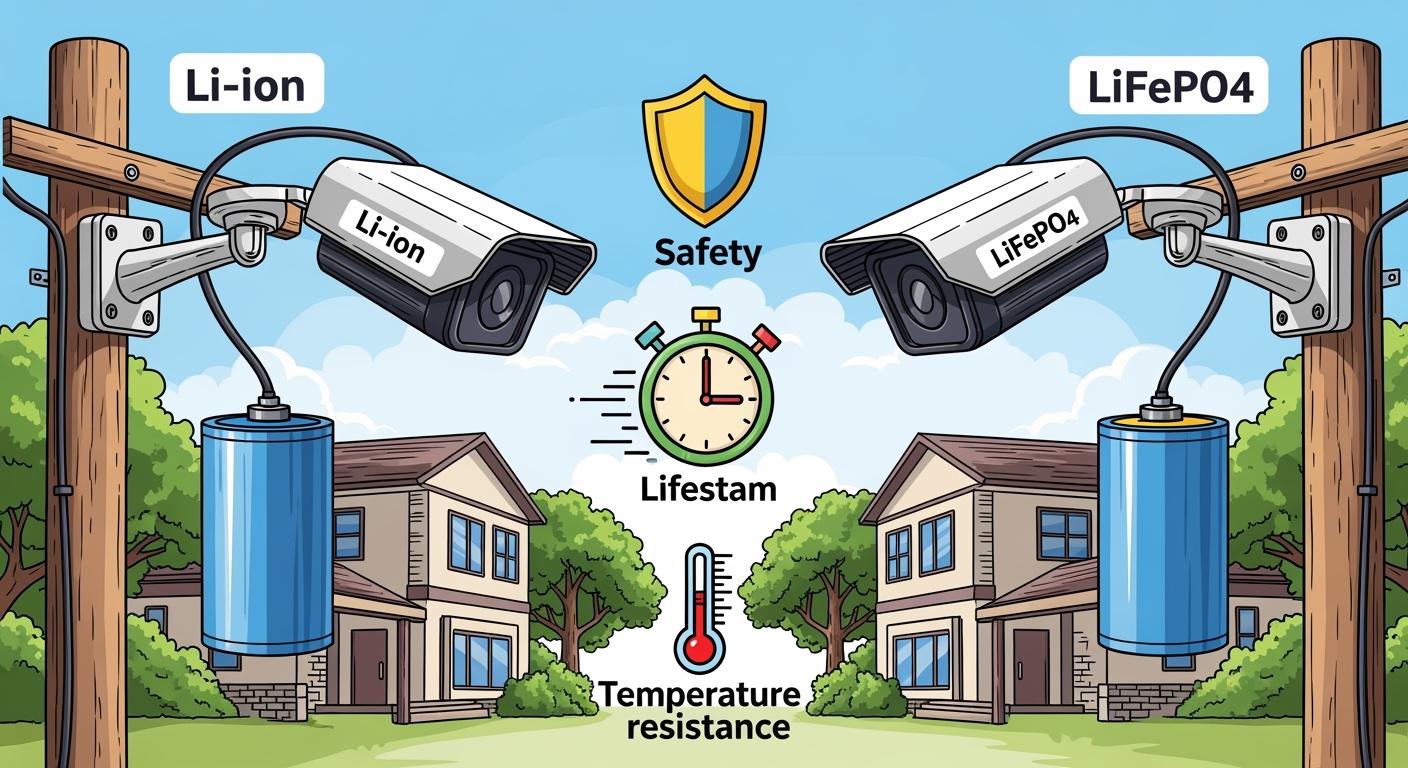
When picking a battery for outdoor cameras, you should think about safety, how long it lasts, how much energy it holds, how heavy it is, voltage, price, and how well it works. The best battery helps your camera stay on longer and means fewer times you need to fix it. Choosing between Li-ion vs LiFePO4 is important for companies that need strong power in tough places. The battery you pick will change how well it works over time and how much it costs to use.
Key Takeaways
Pick LiFePO4 batteries for outdoor cameras. They are safer. They last longer. They need less care.
LiFePO4 batteries work well in hot and cold weather. They can run from -20°C to 60°C. This makes them good all year.
Think about the total cost. LiFePO4 batteries cost more at first. But they save money later because they last longer.
Always check if the voltage matches. Using the wrong voltage can hurt your camera. It can also make it work worse.
Li-ion batteries are lighter and smaller. They may be good for indoor use. They are helpful when weight matters.
Part1: Li-ion vs LiFePO4 Quick Verdict
1.1 Which Is Better for Outdoor Cameras
You want your outdoor surveillance cameras to work all year. They need to work even when the weather is bad. When you look at Li-ion vs LiFePO4, you will see LiFePO4 batteries are safer. They also last longer. Most outdoor camera systems need a battery that can handle heat and cold. They also need to handle many charges. LiFePO4 batteries do this job well. They are less likely to catch fire or get too hot.
Tip: If your camera is far away or hard to reach, pick LiFePO4. You will not need to fix or check it as much. This saves you time and money.
1.2 Main Reasons for the Recommendation
It is important to know why LiFePO4 batteries are better for outdoor surveillance. Here are the main reasons:
Safety: LiFePO4 batteries stay cool and do not overheat easily. This makes them safer for outside use.
Lifespan: LiFePO4 batteries can be charged and used many more times. You will not have to buy new batteries as often.
Weather Resistance: LiFePO4 batteries work well in both hot and cold weather. Your cameras will keep working in every season.
Low Maintenance: You do not need to check or change LiFePO4 batteries a lot.
Stable Voltage: LiFePO4 batteries give steady power. Your cameras will not turn off because of low voltage.
Here is a simple table to help you choose:
Feature | Li-ion (NMC, LCO, LMO) | LiFePO4 |
|---|---|---|
Safety | Moderate | High |
Lifespan (cycles) | 500-1,000 | 2,000+ |
Weather Tolerance | Good | Excellent |
Maintenance | Moderate | Low |
Cost | Lower upfront | Higher upfront |
Fire Risk | Higher | Very low |
You might still pick Li-ion batteries if you want a lighter battery. You may also pick them if you want to spend less money at first. But for most outdoor surveillance cameras, LiFePO4 is the best choice. It is safer, works better, and saves money in the long run.
Note: Always check your camera’s voltage and make sure the battery fits before you buy one.
Part2: Battery Basics
2.1 Li-ion Overview
Li-ion batteries are used in many things. They use metal oxides like nickel, cobalt, or manganese for the cathode. You can find them in security systems and medical devices. They are also in robots. Li-ion batteries hold a lot of energy in a small size. This is good when you need something light and small.
There are different types of Li-ion batteries. Some are LCO, NMC, and LMO. Each type is good for different jobs. LCO is small, so it is used in medical tools and electronics. NMC is strong and lasts long, so it is used in big machines and buildings. LMO is safe and not too expensive. It is used in power tools and some security devices.
Li-ion batteries do not like very hot or cold weather. They can also get damaged if charged too much. You need a good battery management system to keep them safe.
Here is a table that shows the main types of lithium batteries:
Chemistry | Nominal Voltage (V) | Energy Density (Wh/kg) | Cycle Life (cycles) | Typical Applications |
|---|---|---|---|---|
LCO | 3.7 | 150-200 | 500-1,000 | Medical, Consumer Electronics |
NMC | 3.6-3.7 | 150-220 | 1,000-2,000 | Robotics, Industrial, Infrastructure |
LMO | 3.7 | 100-150 | 300-700 | Security, Power Tools |
LiFePO4 | 3.2 | 90-140 | 2,000-5,000 | Security, Industrial, Infrastructure |
Solid-state | 3.2-3.7 | 250-350 | 2,000+ | Emerging, High-Safety Applications |
Lithium Metal | 3.4-3.7 | 350+ | 500-1,000 | Research, Next-Gen Devices |
2.2 LiFePO4 Overview
LiFePO4 batteries use iron-phosphate for the cathode. These batteries are very safe and last a long time. They do not get too hot or catch fire easily. This is important for outdoor cameras and important places. You can trust them in bad weather and hard jobs.
LiFePO4 batteries do not store as much energy as other Li-ion types. But they are very steady and work well for a long time. You will see them in security systems and robots. They are also used for backup power. Because they last long, you do not need to change them often. This saves money on fixing and buying new batteries.
Here is a quick table to compare Li-ion and LiFePO4 batteries:
Feature | Li-ion Batteries | LiFePO4 Batteries |
|---|---|---|
Safety | More susceptible to fire and combustion | Safer due to stable structure |
Chemical Composition | Metal oxides (NMC, LCO, LMO) | Iron-phosphate |
Energy Density | High | Lower |
Lifespan | Shorter, sensitive to extremes | Longer, stable performance |
Cost | Generally more expensive | Lower due to simpler materials |
When you look at Li-ion and LiFePO4, you see both are useful. The best one depends on what you need. You may want more energy or you may want more safety and longer life.
Part3: Li-ion vs LiFePO4 Safety
3.1 Thermal Stability
When picking batteries for outdoor cameras, you must think about heat. Li-ion vs LiFePO4 batteries act differently with high temperatures. LiFePO4 batteries use iron-phosphate chemistry that stays stable. This makes them much less likely to get too hot or catch fire. You can trust them in hot places or under sunlight. They also have built-in protection to stop overheating.
Li-ion batteries like NMC, LCO, or LMO can get very hot. They have a higher risk of thermal runaway. This means they might catch fire if something goes wrong. You need extra safety systems with these batteries outside.
Here is a table to compare thermal stability:
Battery Type | Thermal Runaway Risk | Stability in High Temperatures |
|---|---|---|
Li-ion | Higher | Moderate |
LiFePO4 | Lower | High |
Tip: If your camera is in a hot place, LiFePO4 batteries are safer.
3.2 Overcharge Protection
Overcharging can hurt batteries and cause safety problems. Both Li-ion and LiFePO4 battery packs use many layers of protection. These keep your equipment safe. Most modern battery packs have these features:
Battery Management Systems (BMS) watch voltage and current to stop overcharging.
Protection Circuit Modules (PCM) check battery health and prevent overcharge.
Integrated Circuits (ICs) stop charging when voltage gets too high.
MOSFET switches act quickly to stop charging if voltage is too high.
Secondary fuses give backup safety if other systems fail.
Adaptive voltage thresholds help balance charging in all cells.
LiFePO4 batteries handle overcharging better than most Li-ion types. Still, you should always use battery packs with good protection systems. This keeps your outdoor surveillance cameras safe and working longer.
Part4: Li-ion vs LiFePO4 Lifespan
4.1 Cycle Life
Cycle life is important when picking batteries for cameras outside. It shows how many times you can charge and use a battery before it gets weak. If a battery lasts longer, you do not need to change it often. This means you spend less time fixing your camera.
Here is how cycle life compares for these batteries:
Li-ion batteries last about 500 to 1,500 cycles.
LiFePO4 batteries last from 3,000 up to more than 10,000 cycles.
LiFePO4 batteries last much longer than Li-ion batteries. You will not have to replace them as much. This helps if your camera is far away or hard to reach. You save time and money because you do not need to visit the site often.
Tip: LiFePO4 batteries are good if you want fewer trips and less work.
4.2 Reliability
Reliability means your camera works every day, no matter what happens. Both Li-ion and LiFePO4 batteries can have problems outside. Here are some things that can go wrong:
Wet weather can cause rust or short circuits.
Using the camera all the time can make the battery weaker.
How well batteries work depends on daily charging and using.
Batteries need to be tough to handle bumps and bad weather.
LiFePO4 batteries deal with these problems better. Their chemistry stops rust and damage from water. They keep steady power even after many uses. Li-ion batteries lose power faster and need more checks.
LiFePO4 batteries last longer and work better for outdoor cameras. They are a smart choice for keeping your cameras running.
Part5: Temperature and Weather Performance
5.1 High and Low Temperature Tolerance
You want batteries that work all year. Outdoor cameras face cold winters and hot summers. Li-ion and LiFePO4 batteries handle temperatures differently. LiFePO4 batteries work from -20°C (-4°F) to 60°C (140°F). Lithium-ion batteries work best from 0°C (32°F) to 45°C (113°F). If your cameras are in cold or sunny places, LiFePO4 batteries give you more options.
Battery Type | Minimum Temperature | Maximum Temperature |
|---|---|---|
LiFePO4 | -20°C (-4°F) | 60°C (140°F) |
Lithium-ion | 0°C (32°F) | 45°C (113°F) |
LiFePO4 batteries give steady power in tough weather. Lithium-ion batteries might stop working if it gets too hot or cold. This can make your cameras less reliable and need more fixing.
Tip: Pick LiFePO4 batteries for cameras in very hot or cold places. You will have fewer problems and save money on repairs.
5.2 Outdoor Weather Resistance
Rain, wet air, and dust can hurt battery packs. You need batteries that keep out water and dirt. Companies use special coatings, seals, and cases to protect lithium batteries. These things help stop water and rust.
Coatings keep water off the battery case.
Rubber seals and gaskets block wet air.
Water-resistant cases protect the inside from rain.
New LiFePO4 systems use smart Battery Management Systems and strong cases with high IP ratings. These features keep out dust and water, so your cameras keep working even when it is wet outside.
Lithium batteries can handle rain or splashes but should not go underwater. Too much water can break important parts.
A school fair used a LiFePO4 battery system.
The battery worked well during light rain.
The weatherproof case kept the battery safe.
When you pick batteries with good weather protection, they last longer. This means you do not have to fix your cameras as much and they stay on.
Part6: Energy Density and Weight
6.1 Size and Weight Impact
When you pick batteries for outdoor cameras, size and weight matter. These things change how easy it is to put in and take care of your cameras. Lithium-ion batteries have more energy density than LiFePO4 batteries. This means they can hold more power in a smaller and lighter battery.
Here is a quick comparison:
Battery Type | Energy Density (Wh/kg) |
|---|---|
Lithium-ion | 150–220 |
LiFePO4 | 90–160 |
If a battery has higher energy density, it can be smaller. You can use a small battery and still get the same power. This helps if you need to hide cameras or put them in small spots. Lighter batteries are easier to put on poles, walls, or ceilings. They do not make the mounts as heavy. This lowers the chance of damage from wind or shaking.
Tip: If you want a small and light battery, lithium-ion batteries might work better. But you should also think about safety and how long the battery lasts.
6.2 Installation Considerations
You also need to think about how battery size and weight change how you set up cameras. Heavy batteries can make it harder to install cameras, especially if they go high up or far away. LiFePO4 batteries are usually bigger and heavier for the same power. You may need stronger mounts and more planning to put them in.
Think about these things when you plan your project:
Mounting Strength: Make sure your mounts can hold the battery.
Space Limits: Check if the battery fits in your camera case.
Access for Maintenance: Heavier batteries are harder to change or fix.
Weatherproofing: Bigger batteries may need larger, tougher cases.
Picking the right battery size and weight helps your cameras stay safe. It also means your cameras will not break as much. Always choose a battery that fits your setup and where you want to put it.
Part7: Voltage and Compatibility
7.1 Voltage Differences
It is important to know your battery’s voltage before you use it. Li-ion batteries like NMC, LCO, and LMO have a nominal voltage of 3.6–3.7V. LiFePO4 batteries have a nominal voltage of 3.2V. This difference matters because your camera needs a certain voltage to work right.
Battery Type | Nominal Voltage |
|---|---|
Li-ion | 3.6–3.7V |
LiFePO4 | 3.2V |
If you use a battery with lower voltage, your camera may not last as long. It might not work as well. Some devices need higher voltage for best performance. If you put a LiFePO4 battery (3.2V) in a camera made for Li-ion (3.6V), the camera may run for less time. It could also work weaker.
Tip: Always check what voltage your camera needs before picking a battery. Using the wrong voltage can cause problems or damage your camera.
7.2 System Compatibility
You must make sure your battery fits your camera system. Devices work within certain voltage ranges. If you use a battery with the wrong voltage, your camera may not work well. It could even get damaged. Problems can happen when you swap Li-ion batteries for LiFePO4 batteries.
Charging systems may not see LiFePO4 batteries as empty because they discharge at a higher voltage.
Some chargers made for Li-ion batteries may not charge LiFePO4 batteries the right way.
You might need thicker cables to handle more power from LiFePO4 batteries, especially compared to old lead-acid systems.
If you want to upgrade your battery pack, check the charger, cables, and power system. Make sure everything works with the new battery chemistry. This helps your outdoor surveillance cameras stay safe and reliable.
Note: Ask your battery supplier or system integrator for help with compatibility. Matching parts the right way keeps your cameras working and protects your investment.
Part8: Charging and Maintenance
8.1 Charging Requirements
You have to charge batteries the right way for cameras to work. LiFePO4 and Li-ion batteries need different charging voltages. Using the wrong voltage can hurt the battery or make it not last as long. Always check the right settings before charging.
Here is a table that shows the best charging voltages for common battery packs:
Battery Type | Bulk Voltage | Float Voltage | Equalize Voltage |
|---|---|---|---|
3.2V | 3.65V | 3.375V | 3.65V |
12V | 14.6V | 13.5V | 14.6V |
24V | 29.2V | 27.0V | 29.2V |
48V | 58.4V | 54.0V | 58.4V |
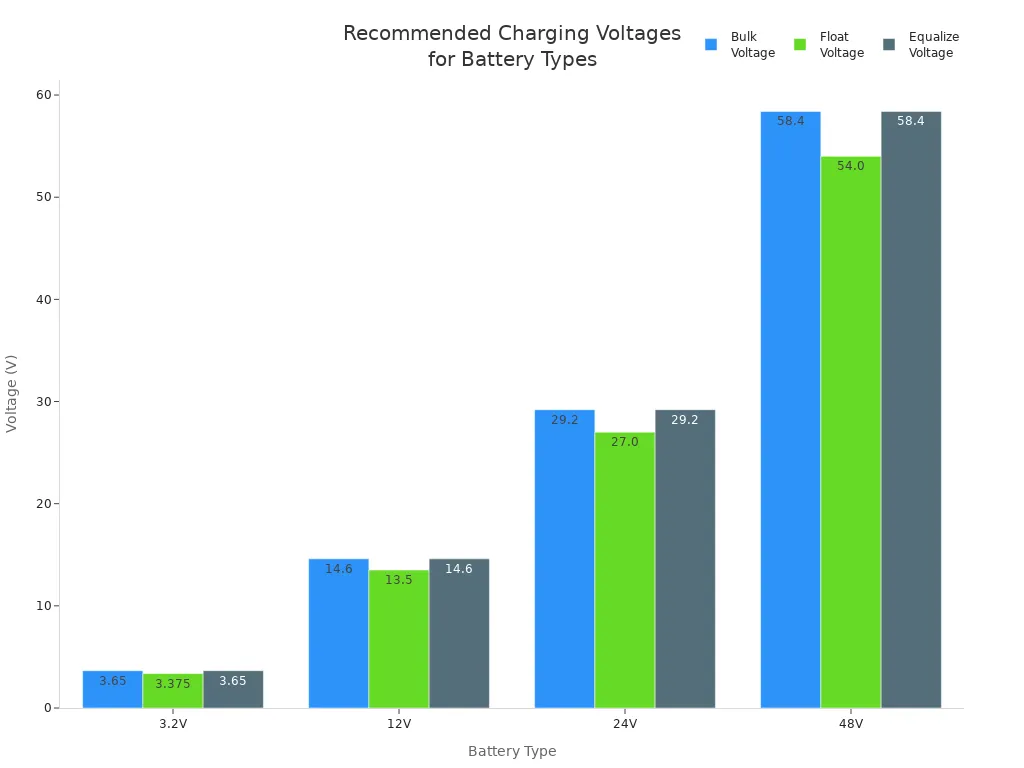
You should use a charger that matches these voltages. Battery Management Systems help control charging and keep batteries safe. A BMS checks each cell and stops overcharging or overheating.
Tip: Always use a charger with a BMS for lithium battery packs. This helps your cameras stay safe and last longer.
8.2 Maintenance Needs
You want your batteries to last a long time. LiFePO4 batteries do not need much care. You can just set them up and leave them alone. You do not have to check water or clean the ends. Li-ion batteries need more checking. You must watch the Battery Management System and charging.
Here is a table that compares maintenance needs:
Battery Type | Maintenance Requirements | Remarks |
|---|---|---|
LiFePO4 | Minimal maintenance | ‘Set it and forget it’ approach, no water checks or terminal cleaning needed. |
Li-ion | Requires more attention | Needs monitoring of Battery Management System and careful management of charging conditions. |
Note: If you want less work and fewer trips, LiFePO4 batteries are a smart pick for outdoor cameras.
You save time and money with batteries that need little care. This lets you focus on security instead of fixing batteries.
Part9: Cost and Value
9.1 Upfront Cost
When you look at Li-ion and LiFePO4 batteries for outdoor cameras, you will see they cost different amounts at first. LiFePO4 batteries usually cost more when you buy them. For example, a 100Ah LiFePO4 battery can cost between $700 and $900. A similar Li-ion battery costs about $500 to $700. You might think Li-ion batteries are a better deal because they are cheaper. But you should not just look at the first price.
Battery Type | Upfront Cost (100Ah) | Lifespan (Cycles) | Total Cost Over 10 Years |
|---|---|---|---|
LiFePO4 | $700 – $900 | 5,000 cycles | $800 |
Li-ion | $500 – $700 | 1,000 cycles | $3,000 |
You should also think about how these batteries are made. LiFePO4 batteries use iron and phosphate. These materials are easy to find and not as bad for the earth.
9.2 Total Cost of Ownership
The total cost of ownership means how much you spend on a battery over its whole life. LiFePO4 batteries last much longer than Li-ion batteries. You pay more at first, but you do not need to buy new ones as often. In ten years, you might only need one LiFePO4 battery. But you could need five Li-ion batteries to do the same job.
Battery Type | Cost per Unit | Lifespan (Cycles) | Total Cost Over 10 Years |
|---|---|---|---|
LiFePO4 | $800 | 5,000 | $800 |
Li-ion | $600 (x5) | 1,000 | $3,000 |
You save money because you do not have to change batteries as much. You also save on work and time. Using fewer batteries means less trash, which is better for the planet. Picking the right battery helps you spend less and be more responsible.
Tip: Always think about both the first price and the total cost over time. This will help you make a smart choice for your outdoor cameras.
Part10: Pros and Cons Summary
10.1 Li-ion Pros and Cons
Li-ion batteries are used in many security systems. They have high energy density. This means they give lots of power in a small pack. You can put them in tight spaces. They are good for light mounts. Li-ion batteries give steady voltage. They do not have a memory effect. This helps cameras work well.
But it is hard to know how much power is left. The price can be higher for some types. Li-ion batteries need careful charging. You must watch them to keep them safe. They can get too hot if not managed right.
Here is a table with the main pros and cons:
Advantages | Disadvantages |
|---|---|
High energy density | Hard to calculate remaining capacity |
Long cycle life | Higher cost |
Low self-discharge | Needs careful management |
No memory effect | Fire risk in harsh conditions |
No smell |
Best for: Li-ion batteries are good when you need a small, light power source. They work well indoors or in mild weather. Pick them if weight and size are important.
10.2 LiFePO4 Pros and Cons
LiFePO4 batteries are very safe and last a long time. You can trust them outside in tough weather. They resist heat, cold, and wet air. You do not need to check them often. They almost never catch fire. They give steady voltage.
Here is a table with the main pros and cons:
Advantages | |
|---|---|
Excellent safety | Lower energy density |
Longest cycle life | Heavier and larger |
Stable voltage | Higher upfront cost |
Wide temperature range | Needs voltage compatibility check |
Low maintenance | |
Low fire risk |
Best for: LiFePO4 batteries are best for cameras that are far away or hard to reach. They are good for places with bad weather. Pick them if you want safety and reliability.
You want your outdoor cameras to be safe and work well. Li-ion and LiFePO4 batteries both have special benefits. Most businesses pick LiFePO4 because it lasts longer and is safer. It also needs less care. Li-ion batteries are good if you want something lighter or smaller. The best battery depends on what your camera needs and where you put it. Look at the table below to see what things matter most when picking a battery:
Factor | Impact on Battery Life or Use |
|---|---|
Battery Capacity | Longer usage time |
Recording Mode (HD/SD) | HD uses more power, SD saves battery |
Wi-Fi/LTE, GPS | Increases power use, shortens battery life |
FAQ
What makes LiFePO4 batteries safer for outdoor surveillance cameras?
LiFePO4 batteries use iron-phosphate chemistry that is very stable. This lowers the chance of fire or overheating. They are a safer pick for cameras outside in tough places.
Can you use LiFePO4 batteries in cold or hot weather?
Yes, LiFePO4 batteries work from -20°C to 60°C. They keep cameras working in winter and summer. You get steady performance in most outdoor weather.
How often do you need to replace LiFePO4 batteries compared to Li-ion?
LiFePO4 batteries need to be replaced much less often. They last for 2,000 to 5,000 cycles. Regular Li-ion batteries last for 500 to 2,000 cycles. You spend less money and time on maintenance.
Are LiFePO4 batteries compatible with all outdoor camera systems?
You need to check voltage and charger compatibility first. LiFePO4 batteries have a nominal voltage of 3.2V. Many Li-ion systems use 3.6–3.7V. Always ask your equipment supplier before changing battery types.
What is the main advantage of using Li-ion batteries for surveillance cameras?
Li-ion batteries have higher energy density. You get smaller and lighter battery packs. This helps when you need to save space or reduce weight.


