

Your laptop battery is acting up, and with how old it is, it’s no wonder.
Naturally, you want to replace it, but you’re also not really looking forward to it because you already know it’s not going to be cheap. Unless, of course, you look for an affordable replacement battery. That one costs half of what the official one costs, but do you dare give it a shot?
A bunch of people on Reddit said those are dangerous, and manufacturers don’t recommend them, either. In fact, they warn their users about them.
So… What now? Fork over a chunk of money for the official stuff or save and go for the cheaper alternative?
How dangerous could those be, if they are dangerous at all?
| Key Takeaways
➔ Cheap/low-quality aftermarket batteries usually lack safety features and they rarely undergo safety testing. ➔ Devices are (usually) designed to rely on precise battery behavior. So even if the battery fits, a non-OEM battery can cause unstable charging, excess heat, faster degradation, and has a higher risk of critical failure. ➔ Lower cost in products is linked to higher uncertainty levels. |
Part 1: Where Problems Start With Aftermarket Batteries
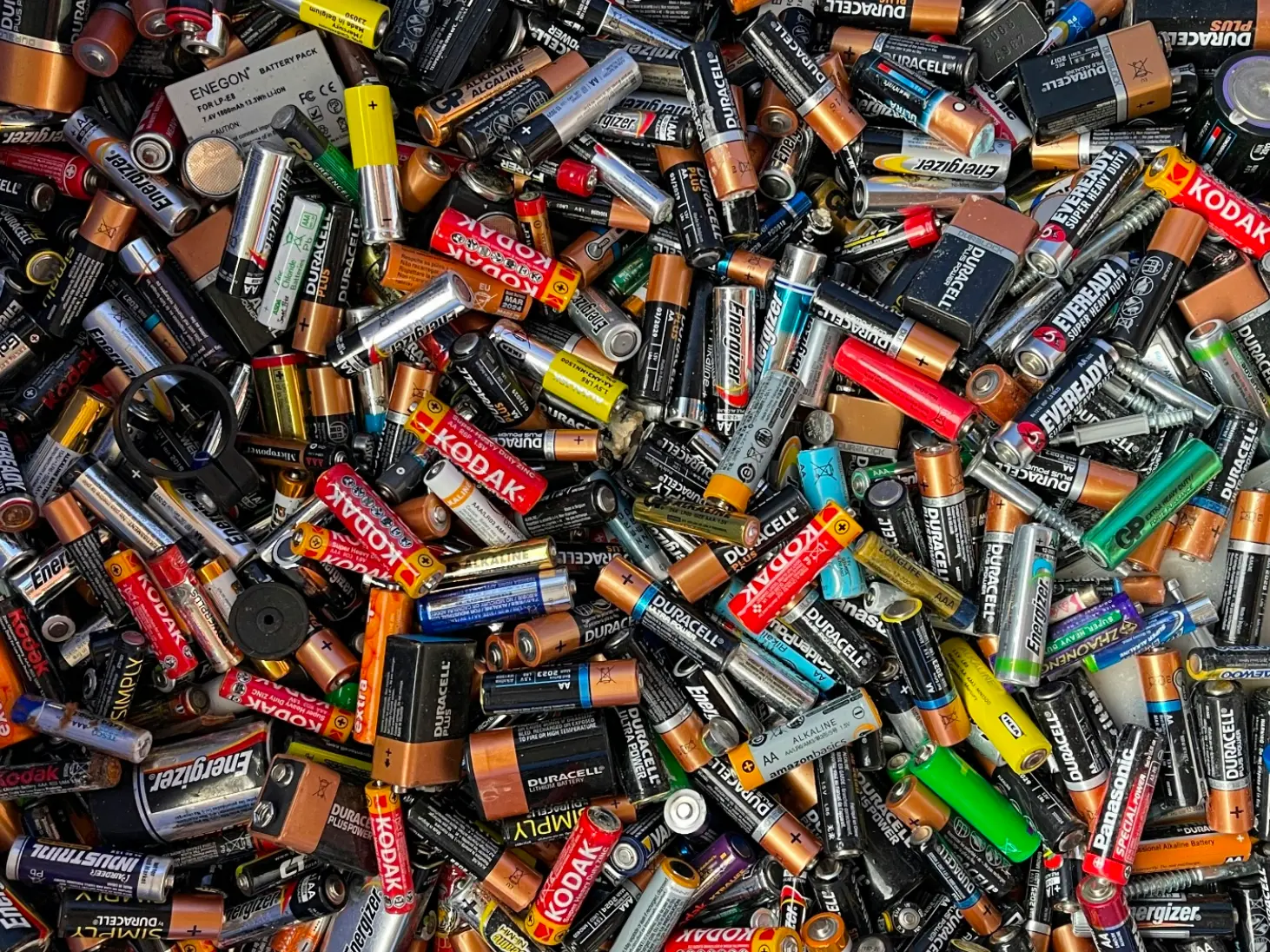
What do OEM and aftermarket mean? Let’s clear those up first.
OEM stands for ‘original equipment manufacturer’, which means that the battery that came with your device or an exact copy was made by the same company. Aftermarket means someone else made the battery, and that someone is usually a third party you have never heard of.
| OEM lithium-ion batteries have to meet UL safety certification (UL 2054 / UL 1642); they’re tested for fire risk, short circuits, and overcharging. – U.S. Consumer Product Safety Commission |
They’re just trying to make a battery that fits the same space and delivers power at the right voltage.
And that right there is your answer.
“Dangerous” might sound a bit dramatic to some, but aftermarket batteries are anything but ideal. You’ll find listings that say something like “compatible with Dell XPS 15” or “fits RadPower bikes.” They show matching numbers and capacity, which seems good enough. The plug fits, the device turns on, so what’s the issue here? Many people will think the original manufacturer is trying to rob their users of their money by recommending only OEM options.
That’s not true, though.
The problem is that your device wants more than a physical connection. Laptops, e-bikes, power tools, it’s all designed around very specific battery behavior, not just size and shape, which is what aftermath batteries offer.
They’re always checking things like how fast the battery drains, how it handles heat, etc.
Modern lithium-ion battery systems (early 2000s onwards) work and rely on closed-loop control via a battery management system (BMS). BMS monitors voltage (3.0-4.2 V per cell) and temp. (32℉-113℉). If any deviation from these safety thresholds is detected, then protective cutoffs are automatically activated. This prevents the battery from bursting into flames (not 100% effective). OEM batteries are calibrated to match charge curves CC-CV (constant current-constant voltage). Non-OEM batteries (aftermarket) typically lack these, which increases the risk of overcurrent/thermal stress.
| Aftermarket/counterfeit/low-quality batteries are known to lack proper safety mechanisms, plus they’re more likely to fail. – U.S. Consumer Product Safety Commission |
So, when you buy a cheap replacement, it might not have the smart communication chip that tells your laptop when to slow down charging. And without that, the device keeps pushing power, which is why it gets warmer and warmer (chemical reaction).
Warning: Lithium-ion batteries can enter a state called ‘thermal runaway’ – a chain reaction that can start even at 248℉, where rising temperature causes more internal reactions (e.g., electrolyte decomposition, solid electrolyte interphase), which can potentially lead to fire or even an explosion in severe cases.
That’s why you have BMS, which are designed to monitor factors such as voltage, charge rate, temperature, etc., and are designed to prevent overcharging and overheating.
Early on, you’ll notice issues like your battery draining much faster than your old one did, the device getting hotter in spots that never used to be hot, charging time becoming irregular, etc.
None of this means you should have the fire extinguisher ready, but it does mean that the battery isn’t working the way it should.
| In the U.S. alone, lithium-ion batteries are responsible for 25,000+ fire/overheating incidents between 2017 and 2022, with most being tied to low-quality batteries. – U.S. Consumer Product Safety Commission |
Of course, it does sometimes lead to fires and accidents, in which case it’s good to know what your rights are.
If anything like that happens, contact a lawyer. Depending on what state you live in, the outcome might differ, so keep that in mind. In Illinois, if you contact a Chicago product liability lawyer, they’ll tell you that you’ll need to prove that the product was unreasonably dangerous and that you used it properly.
In other words, a defect in the product caused your injury.
Other states, such as Texas, have stricter rules, while states like California are more consumer-friendly.
Basically, it all depends on where you live/where the incident happened.
Part 2: What Makes a Battery Unsafe

Just because a battery isn’t damaged or wonky-looking doesn’t mean it’s safe.
| Lithium-ion batteries can suffer failure without any external/visible damage. – National Fire Protection Association |
Here’s where danger comes from.
2.1 Cell Quality and Internal Materials
If a battery pack were a team of workers who carried buckets of energy, then high-grade lithium cells would be the reliable ones who all moved at a steady pace. OEM high-quality lithium-ion cells are known to maintain energy densities of approx. 150-250 Wh/kg and a cell life of 500-1000 complete charges.
Low-grade ones are a mess. They’re well below these benchmarks.
Some cells are recycled from old laptops, some are factory rejects, but one thing they all have in common is that none work the same way. It’s basically a bunch of mismatched cells in a cheap pack, where a few of them will drain faster than others and get a lot hotter.
2.2 Poor Assembly and Weak Connections
Every cell has to be connected to its neighbor, and that’s done with small metal strips that are either welded or soldered in place.
If the battery is cheap, those connections can be loose and poorly done (they’re usually both). If a connection is loose, you get electrical resistance, and resistance creates heat (during operation) in a tiny spot that was never supposed to get hot.
Even a minor increase in contact resistance – e.g., from 1 mΩ (milliohm) to 10 mΩ – can massively increase localized heat when under load. If the battery is tightly packed, then the effect compounds.
Now, imagine that in an e-bike or a power tool that vibrates all the time.
Those weak connections can literally snap or shake loose, and the next thing after that is a short circuit. This is also the reason why batteries undergo mechanical stress testing (e.g., IEC 60068 standard), but aftermarket battery manufacturers are known to forgo this type of testing.
In this sense, cheap batteries can actually be dangerous, and that statement isn’t the least bit dramatic.
2.3 Inaccurate Claims About Capacity
The label on the battery might say 5000 mAh in big bold numbers, but that doesn’t guarantee that you’ll get 5000 mAh. What’s inside might be 3000 mAh. Or higher. Or lower. You never know with these things.
This isn’t some small rounding error but a straight-up lie.
Your device will pull power as if the real capacity is there, which means it will ask the cells for more energy than what they can (safely) give.
That’ll push the battery too hard, make it hotter, and it’ll run out faster.
2.4 Mismatch Between the Charger and the Battery
Every charger has a specific charging curve.
In other words, it expects the battery to behave in a certain way as it fills up. Once the percentage gets to 80%, the charger might slow down, or it can stop once the battery is full.
Cheap aftermarket batteries don’t follow that same curve, and they’ll keep accepting more power even when they shouldn’t.
| Incompatible chargers/batteries increase overheating and combustion risk. – Federal Emergency Management Agency |
That’ll cause them to overcharge, and that’s a huge issue. Overcharging is one of the fastest ways to overheat lithium cells and turn the battery into a source of actual danger. This happens because lithium plating and internal shortcuts – both increase risk of thermal runaway.
Part 3: Conclusion
So, the answer to the question from the title is most likely.
Cheap aftermarket batteries can absolutely be dangerous, and there’s a good reason manufacturers warn against them.
With that being said, it’s important to mention that cheap doesn’t automatically mean dangerous, and expensive doesn’t automatically mean safe. The issue you have here is uncertainty. The cheap battery might be great, or it might be absolute trash. You don’t know, and that could be dangerous.
Make your life easier and just buy OEM batteries.
Yes, you’ll spend more money, but the risk isn’t worth those couple of bucks you’ll save.


