

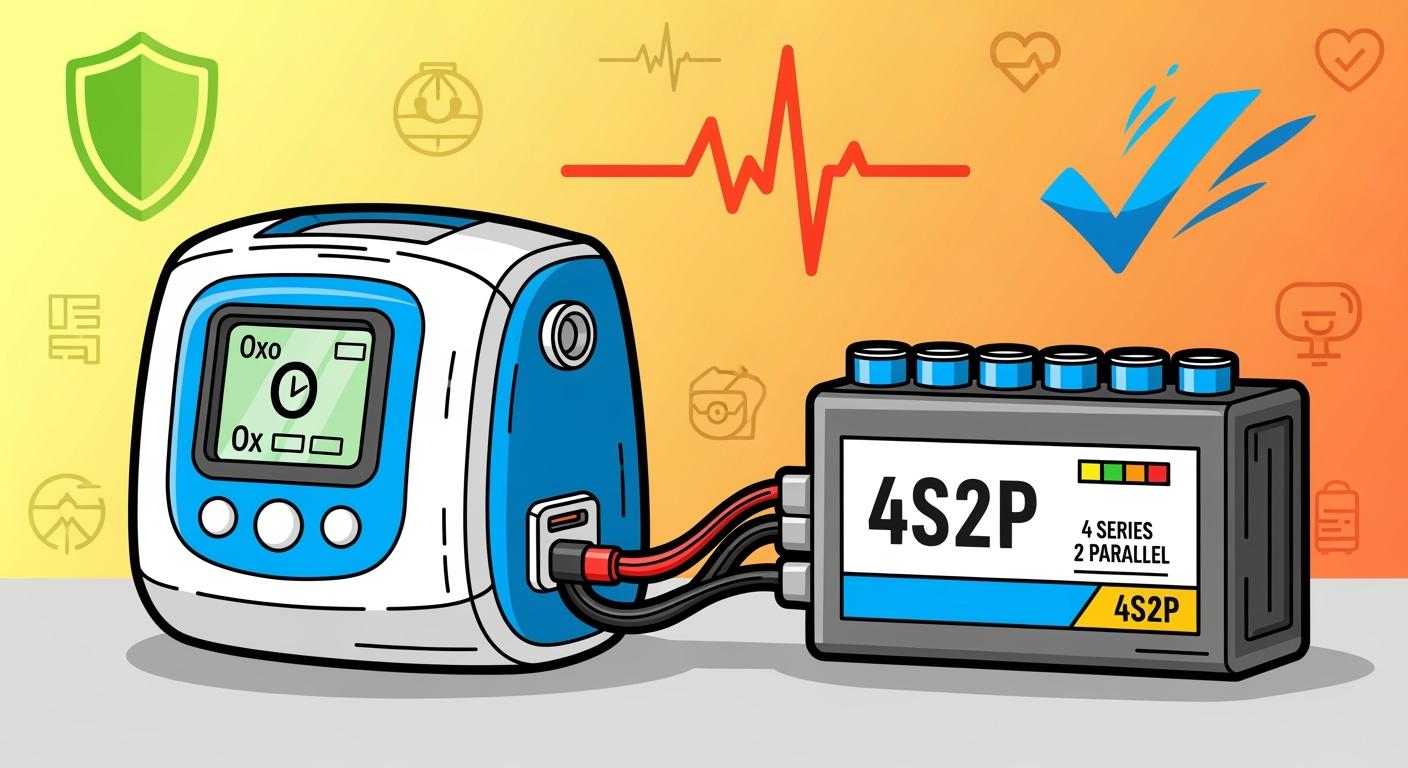
You need a reliable power source for point-of-care devices in medical applications. A 4S2P lithium ion battery pack offers voltage stability and extended runtime, reducing downtime from battery failures. Device returns often trace back to battery problems, including swollen cells and broken holders, making this configuration the ideal power source.
Key Takeaways
A 4S2P lithium ion battery pack provides stable voltage and high energy density, ensuring reliable performance for point-of-care devices.
This battery configuration offers extended runtime and long cycle life, reducing downtime and maintenance needs for critical applications.
Safety features in 4S2P packs, such as matched cells and robust construction, enhance reliability and minimize risks in medical and industrial environments.
Part 1: 4S2P Battery Structure and Relevance
1.1 What is a 4S2P Battery
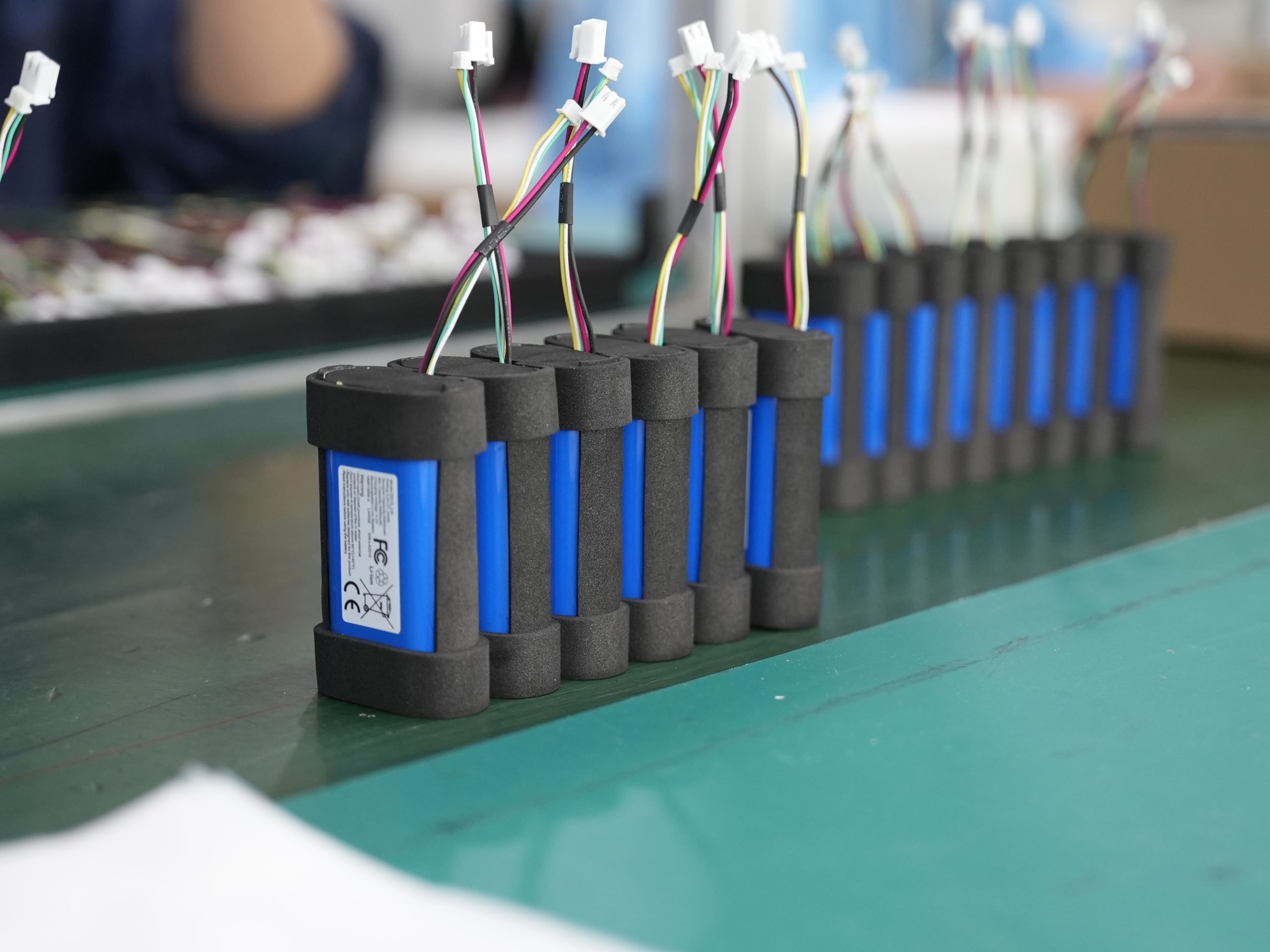
You encounter the 4S2P configuration often when evaluating batteries for medical, robotics, security, infrastructure, consumer electronics, and industrial applications. This structure uses four cells in series and two in parallel, totaling eight cells. The series connection increases voltage, while the parallel arrangement boosts capacity. You gain a reliable power source that meets the demands of critical POC devices.
Here is a summary of typical technical specifications for a standard 4S2P lithium-ion battery pack:
Parameter | Value |
|---|---|
Nominal voltage | 14.8V |
Capacity | 8000mAh |
Battery configuration | 4S2P |
Battery chemistry | Li-Ion |
You see that this configuration delivers the voltage and capacity required for stable device operation. The high energy density and compact size make it ideal for space-constrained environments.
1.2 Why 4S2P for POC Devices
You choose the 4S2P structure for POC devices because it offers:
High safety due to thermal stability, especially when using LiFePO4 chemistry.
Long cycle life, often exceeding 15,000 cycles, which means years of reliable service.
Strong temperature adaptability, supporting consistent performance in varied conditions.
High energy density, providing substantial capacity without increasing size.
Cells in multi-packs must be matched, especially when used under heavy loads. A weak cell may not fail immediately but will get exhausted more quickly than the strong ones when on a load. On charge, the low cell fills up before the strong ones because there is less to fill and it remains in over-charge longer than the others. On discharge, the weak cell empties first and gets hammered by the stronger brothers.
You ensure safety and optimal performance by selecting batteries with matched cells and robust battery management systems. This approach minimizes risks and maximizes the reliability of your ideal power source.
Part 2: Key Benefits of 4S2P Lithium Ion Batteries for POC

2.1 Stable Voltage and Reliable Power
You rely on lithium ion batteries for point-of-care devices because voltage stability is critical. The 4S2P battery pack delivers a consistent output, typically around 14.8V to 16.8V, depending on the cell chemistry. When you select LiFePO₄ cells, you benefit from a flat discharge curve, maintaining 3.2 to 3.3 volts per cell throughout most of the cycle. This stability simplifies power system design and ensures predictable battery performance in medical, robotics, security, infrastructure, consumer electronics, and industrial applications. Compared to NMC or NCA chemistries, which show more variable voltage during discharge, LiFePO₄ batteries provide a more reliable power source for critical operations. You minimize device downtime and avoid unexpected shutdowns, which is essential for uninterrupted operation in healthcare and industrial environments.
Matched cells in a 4S2P configuration contribute to overall device safety and reliability by ensuring that the cells operate within similar voltage and capacity ranges, which helps prevent premature failure and damage.
2.2 Extended Runtime and Capacity
You demand extended runtime from your battery packs to support continuous operation. The 4S2P configuration increases both battery capacity and energy density, allowing you to achieve up to 8000mAh or more, depending on the cell selection. High energy density means you can store more energy in a compact form factor, which is vital for portable medical devices and equipment. You experience longer battery life, fewer interruptions, and reduced maintenance cycles. The parallel arrangement of cells in the battery pack boosts capacity, while the series connection ensures the voltage meets device requirements. You can expect cycle life exceeding 2,000 to 15,000 cycles, especially with LiFePO₄ chemistry, which translates to years of reliable service and lower total cost of ownership.
Feature | Description |
|---|---|
Energy Density | High energy density ensures efficient power storage for medical devices. |
Cycle Life | Long cycle life provides reliability over extended use, crucial for medical applications. |
Power Output | Reliable power output guarantees uninterrupted operation during outages. |
Capacity | 8000mAh capacity allows for exceptional power delivery over long periods. |
Charging Rate | Faster charging ensures the battery is ready for use when needed. |
2.3 Safety and Performance in Critical Use
You prioritize safety when deploying lithium ion batteries in POC devices. The 4S2P battery pack integrates multiple safety features and robust construction. Manufacturers design each battery pack with an internal structural frame that isolates mechanical stresses from the cells and interconnects, maintaining electrical integrity and improving long-term durability. Comprehensive quality control covers every stage of production, from initial cell inspection and sorting to final voltage and performance testing. Facilities certified to ISO 13485 and products certified by IEC, CE, and MSDS standards guarantee compliance and safety for medical and industrial applications.
You should always follow best practices for battery safety:
Store and transport batteries in a protective case or box.
Charge batteries only on fire-resistant surfaces using smart chargers compatible with the specific battery chemistry.
Never overcharge or over-discharge batteries.
Keep batteries away from pets, children, and flammable materials.
Use only matched sets of cells to prevent premature failure.
Stop use immediately if the battery emits an unusual smell, becomes hot, changes shape or color, or behaves abnormally.
Dispose of batteries according to local regulations.
Thermal management is another critical factor. Advanced numerical modeling and experimental evaluations show that 4S2P battery packs with immersion cooling can maintain optimal temperatures, even during high current discharge. You reduce the risk of thermal runaway, swelling, leakage, and over-discharge by using matched cells and proper cooling methods. Regular maintenance, such as storing batteries in cool, dry places and keeping them at around 50% charge for long-term storage, further extends battery life and enhances safety.
2.4 Comparing 4S2P with Other Batteries as the Ideal Power Source
You need to compare the 4S2P configuration with other battery technologies to select the ideal power source for your application. The table below summarizes key differences in voltage, energy density, cycle life, and suitability for POC devices:
Chemistry/Type | Nominal Voltage (V) | Energy Density (Wh/kg) | Cycle Life (cycles) | Key Features & Suitability |
|---|---|---|---|---|
Lithium-ion (LCO) | 3.7 | 150-200 | 500-1,000 | High energy density, moderate cycle life, used in consumer electronics. |
Lithium-ion (NMC) | 3.6-3.7 | 200-250 | 1,000-2,000 | Good balance of energy density and cycle life, used in medical and industrial applications. |
LiFePO₄ | 3.2-3.3 | 90-120 | 2,000-15,000 | Exceptional voltage stability, long cycle life, high safety, ideal for medical, robotics, and infrastructure. |
Lithium-ion (LMO) | 3.7 | 100-150 | 300-700 | Moderate energy density, shorter cycle life, used in power tools and some industrial devices. |
Lithium-ion (LTO) | 2.4 | 70-80 | 7,000-20,000 | Very long cycle life, lower energy density, used in specialty industrial applications. |
Lithium-polymer/LiPo | 3.7 | 150-200 | 300-800 | Lightweight, flexible form factor, used in consumer electronics and drones. |
Solid-state | 3.7-4.2 | 250-400 | 2,000-10,000 | High energy density, enhanced safety, emerging technology for medical and industrial applications. |
Prismatic Cells | Varies | Varies | Varies | Better thermal stability, less customization, manufacturing consistency issues. |
Pouch Cells | Varies | Varies | Varies | Lightweight, flexible, less efficient thermal management, more susceptible to physical damage. |
4S2P Configuration | 14.8-16.8 | 90-250 | 2,000-15,000 | Combines voltage stability, high energy density, extended battery life, and robust safety features. |
You see that the 4S2P lithium ion battery pack stands out as the ideal power source for POC devices. It offers superior voltage stability, high energy density, extended battery life, and unmatched safety features. Custom battery packs also provide lower maintenance requirements and achieve payback within 2-4 years due to reduced replacement frequency. You benefit from improved operational efficiency and long-term value.
For uninterrupted operation in portable medical devices during power outages, you rely on high energy density, long cycle life, and reliable power output from your battery packs.
You maximize device reliability and safety by choosing matched cells, following recommended maintenance practices, and selecting battery packs produced under strict quality control. You ensure your POC devices deliver consistent performance in demanding medical, robotics, security, infrastructure, consumer electronics, and industrial applications. For custom solutions tailored to your needs, you can request a consultation with battery experts.
You secure reliable, safe, and efficient operation for your POC devices by choosing a 4S2P lithium ion battery pack. This battery delivers stable voltage, extended runtime, and robust safety features. You evaluate battery quality using these criteria:
Specification | Details |
|---|---|
Voltage | 14.8V nominal |
Capacity | ≥5,000mAh |
Discharge Rate | ≥2C continuous |
Cell Chemistry | NMC, LiFePO4 |
Physical Dimensions | Under 150mm × 70mm × 30mm |
Audit suppliers for ISO 9001 certification
Check spot-weld integrity and batch traceability
Confirm battery safety systems and compliance
You prioritize battery safety, robust battery management, and strict regulatory standards for every battery. You match battery capacity to operational needs and select battery packs with advanced safety systems. You ensure battery safety and reliability for medical, robotics, security, infrastructure, consumer electronics, and industrial sectors.
FAQ
What makes a 4S2P lithium ion pack ideal for medical POC devices?
You benefit from stable voltage, high energy density, and robust safety features. The pack uses matched cells and advanced safety devices for reliable performance in demanding environments.
How do lithium polymer batteries compare to other lithium ion chemistries for POC applications?
Lithium polymer batteries offer flexible form factors and high energy density. You achieve longer lifespan and improved safety features, especially when using Large Power custom packs for medical and robotics.
Where can you request a custom lithium ion battery pack consultation for your application?
You can contact Large Power for a custom lithium ion battery pack solution.


